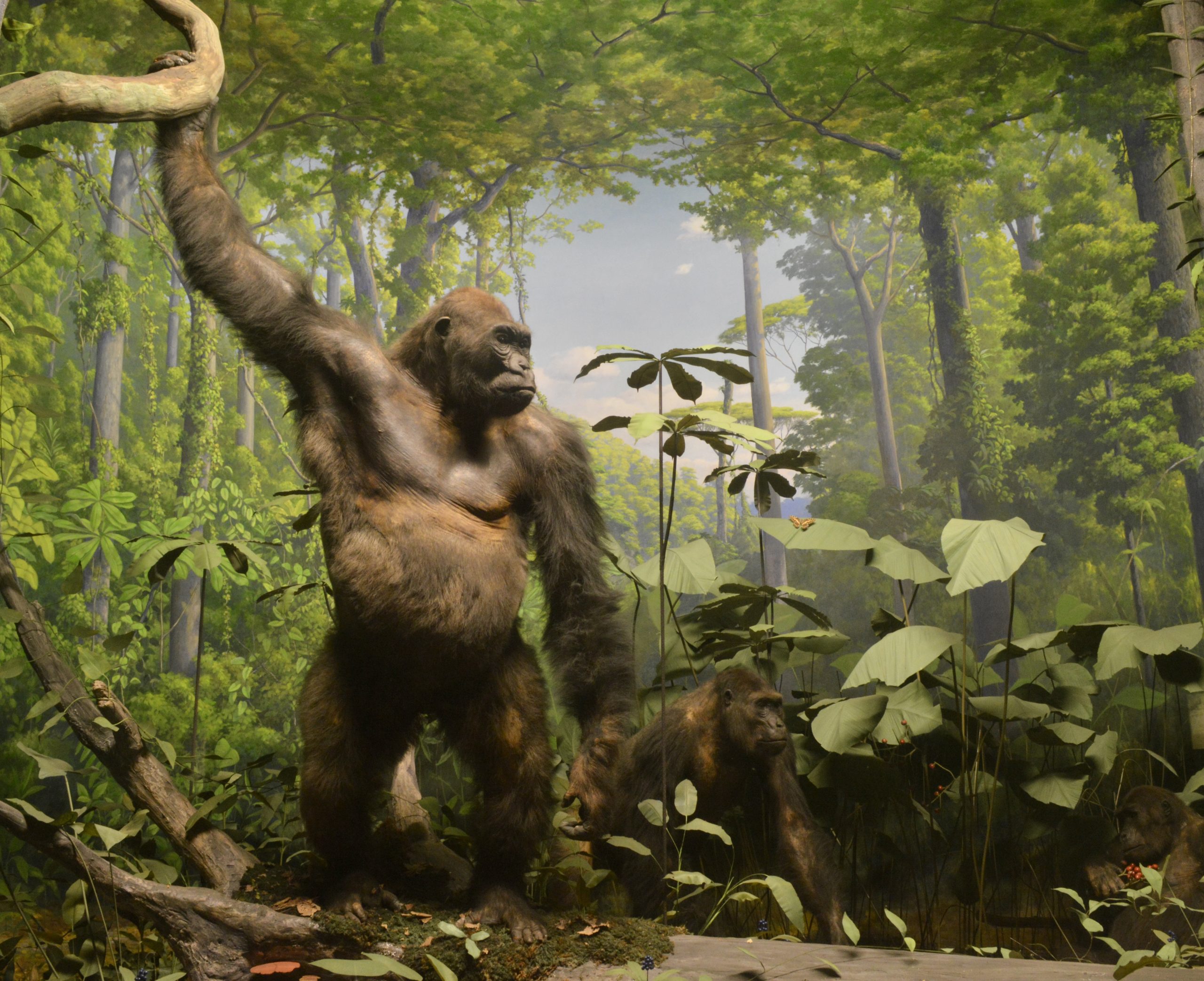
The Lowlands Rainforest Habitat Diorama was completed in 1938 at the Academy of Natural Sciences in Philadelphia. It features three specimens of the Western Lowland Gorilla (Gorilla gorilla gorilla), a critically endangered subspecies native to the tropical rainforests of Central Africa. Not scientifically described until 1847, the gorilla and its taxonomy remained poorly understood well into the 20th century. Following the publication of Darwin’s On the Origin of Species in 1859, the gorilla was sometimes portrayed as a “missing link” in human evolution, a misconception that became entangled with scientific racism. As a result of their rarity and the fascination they inspired, gorillas were increasingly hunted both as natural history specimens and as big game trophies. Because live gorillas rarely survived overseas transport and captivity during this era, taxidermy became a primary means by which the public encountered these human like apes. Thus, the ferocity of the gorilla described in the hunting narratives of the time was embodied in early gorilla displays and further perpetuated by scientific misconceptions.
Founded in 1812, the Academy of Natural Sciences of Philadelphia, is the oldest natural science research institution and museum in the Americas. There are 37 dioramas at the Academy, mostly created between the 1930s and 1960s. The western lowland gorillas were hunted and collected by the wealthy American tycoon and sportsman George Washington Vanderbilt III, who was an associate and trustee of the Academy. In 1934, he organized, financed, and led the George Vanderbilt African Expedition: “The special desiderata in the way of specimens and accessories for habitat groups were the bongo, okapi, Derby or giant eland, west African gorilla, the smaller forest elephant. . . and a group of Saharan desert antelope.” Additional specimens were secured for groups of the east African bushbok, lesser kundu, sitatunga and forest buffalo. Documentary material included photographs, sketches and botanical specimens. Accessories collected on location included trees, bushes and ground cover vegetation for each of the groups.
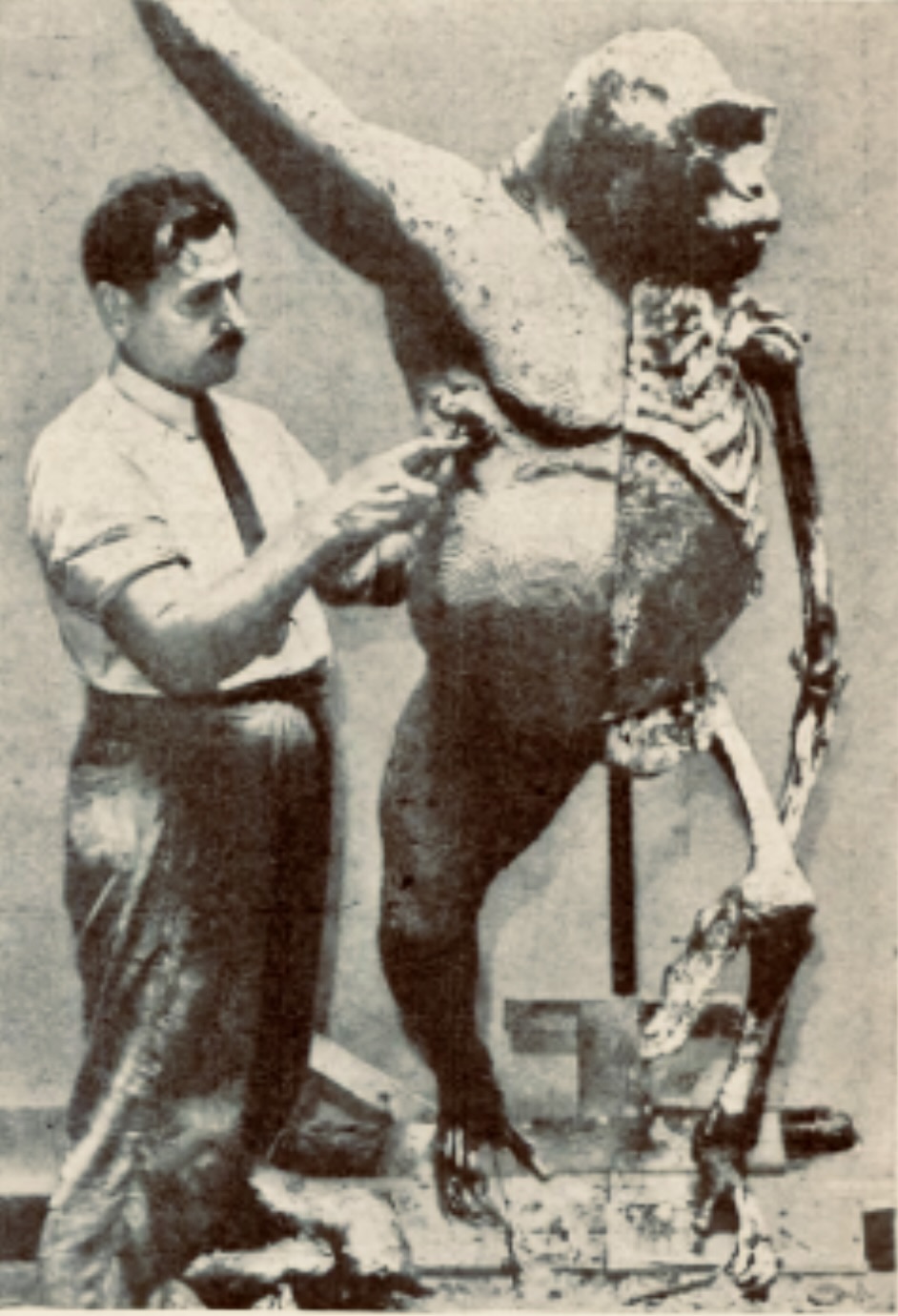
Vanderbilt shot a massive silverback male gorilla, an adult female and a juvenile male. Weighing 500 pounds, the 35 year old silverback trophy was claimed to be the world’s largest gorilla. Standing six feet high with both arms extended; he had a reach of nine feet; his neck was 28 inches in circumference; his contracted chest measured 68 inches and 78 inches expanded. The mounting of the gorilla, described as a “brut,” was done by the Jonas Brothers taxidermy studio using the sculptural technique of “dermoplastic” whereby after the skeleton was assembled, the muscles were modelled in clay from which a mold was made to create an exact replica or shell onto which the skin of the animal was arranged. The background landscape for the gorilla habitat diorama was painted by the impressionist artist Clarence C. Rosenkranz (1871 – 1959).
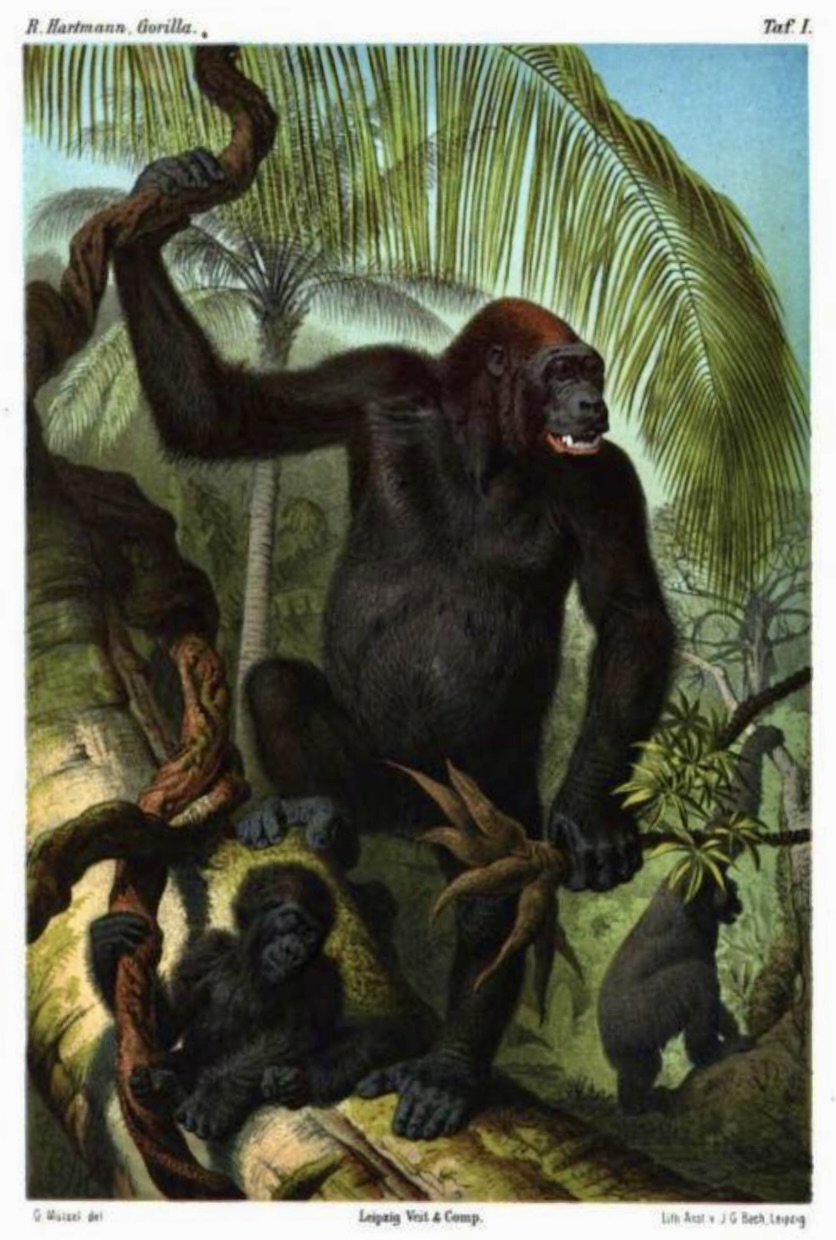
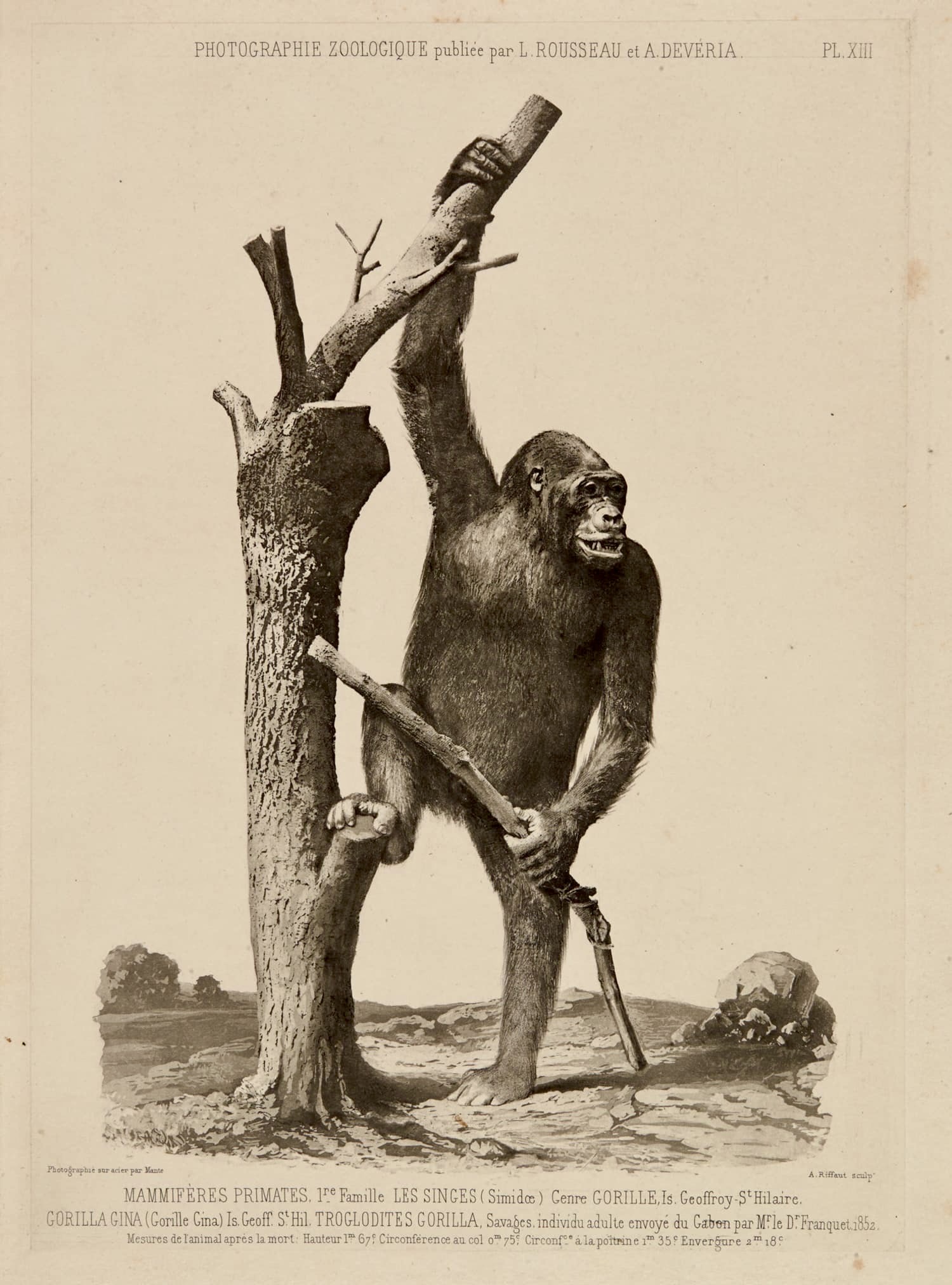
Mützel’s portrait depicted three gorillas: an old male, a female, and young male in a family scene. Hartmann gave botanical details about their habitat, stating that the dominant male is “about to climb a fig tree (Urostigma) with a bundle of uprooted yams (Dioscoraea).” Also depicted by Mützel were olive palms (Elaei guineensis), silk cotton tree (Eriodendron anfractuosum), bananas and so on. Hartmann explained that Mützel’s chromolithographed portrait of the gorilla group was based on a representation of a specimen so “excellently stuffed” and so “true to nature” that he had asked Mützel to copy it. This was the gorilla photograph taken by the Bisson frères and reproduced in Louis Rousseau and Achille Devéria’s album, Photographie zoologique (1853), a path breaking project that utilized early photographic techniques to document rare specimens in the Muséum d’Histoire Naturelle in Paris. The same mounted male gorilla was represented five years later by the zoologist Geoffroy Saint Hilaire in his treatise on gorillas. The photograph shows a grimacing ape standing upright with one arm raised above. Both arms are grasping branches to show off the anatomy of his hands and feet. The tree is a generic one used as a prop and the landscape has no naturalistic relationship to the subject.
One of the earliest instances of presenting the gorilla in a landscape setting was by Gustav Mützel (1839 – 1893), a prominent German scientific illustrator. As the chief artist for the popular illustrated zoological encyclopedia, Brehms Tierleben, Mützel’s dedication to scientific accuracy changed the way that animals were represented. His colour lithograph of the gorilla was the first plate in Der Gorilla: Zoologisch Zootomische Untersuchungen by the German anatomist Robert Hartmann. Published in 1880, this seminal work contained 13 wood engravings and 21 lithographic plates. Both Mützel and Hartmann had as their primary source of reference a celebrated young gorilla called “M’Pungu” (Master Pongo), who was the first living gorilla to be displayed in Berlin in 1876. When the ape prematurely died of illness the following year, Hartmann dissected him.
Hartmann’s work was a landmark during an era when science was obsessed with the newly discovered primate and how it related to human evolution. Up until this time, few European scientists or artists had observed live gorillas and instead based their work on skeletons, skulls, skins, preserved carcasses, taxidermy mounts, written reports and previously published illustrations. The scientific value of illustrations was increased if they were “abgebildet nach dem ausgestopften Exemplar” (depicted after the stuffed specimen).
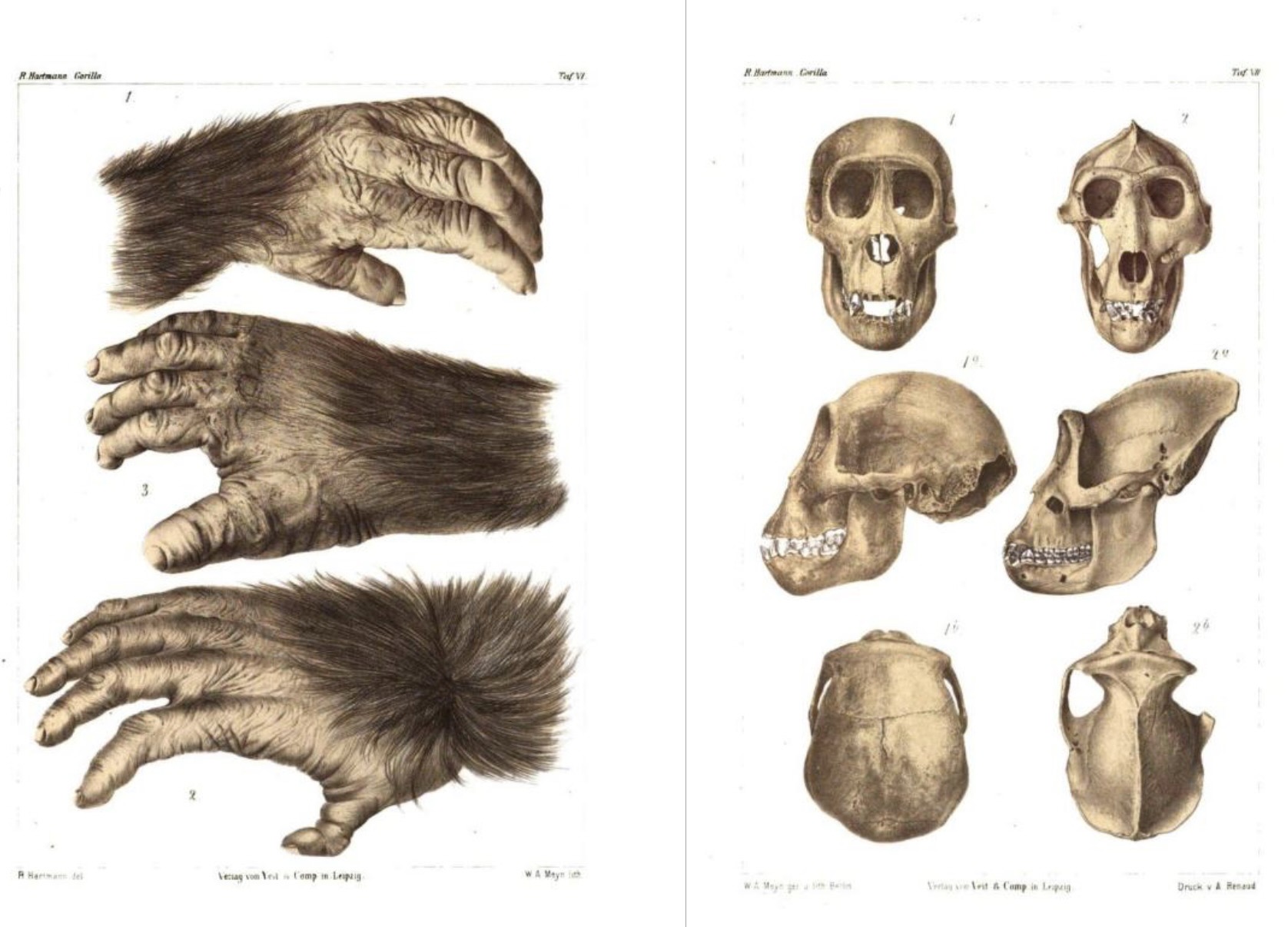
The illustrations in Hartmann’s book were engraved from his anatomical studies of gorilla ears, hands, feet, skulls, heads and skeletons. In the description, he says that they were “drawn from life by A. W. Meyn using a photographic camera.” One plate of gorilla feet and three plates of gorilla hands were engraved from watercolours by the author. 16 plates were of skulls with each plate showing six skulls. Hartmann’s purpose was to compare gorilla skulls with those of other anthropoid apes and human skulls, providing empirical evidence and thus engaging in the current scientific debate over primate evolution and the morphological shifts that had occurred. Hartmann’s text describing skulls and anthropoid characteristics was determined by empirical morphometrics, comparative osteology and taxonomy. Yet his conclusion on anthropomorphism revealed the uneasiness of the age when he stated: “civilized men are revolted by the proverbial ugliness of apes, and therefore reject with abhorrence any admission of actual relationship with them.”
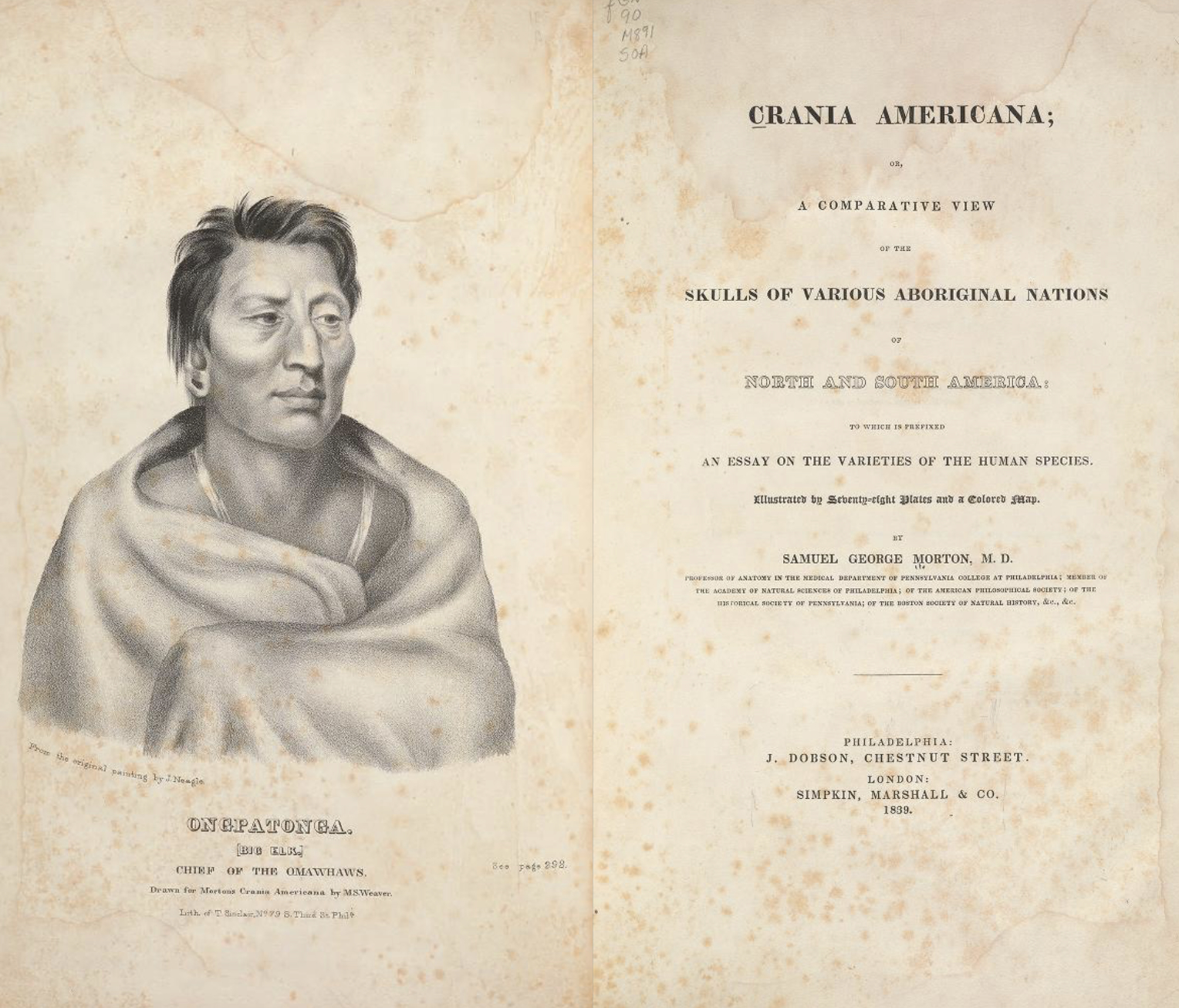
The practice of skull collecting and measuring (craniometry) began long before Hartmann, along with the scientific controversy over human origins and the attempt to categorize human diversity. The world’s leading skull collector was Samuel George Morton (1799 – 1851), an anatomist and naturalist who served as the president of the Academy of Natural Sciences of Philadelphia. He used his collection of about 1,000 skulls from around the world to prove a hierarchy of human races based on cranial capacity. Morton’s Crania Americana (1839) was a landmark study illustrated with 78 lithographs drawn by the artist John Collins who drew the skulls from specimens (“from nature”) and by drawing the skulls directly onto limestone blocks. The anatomical accuracy and precise scale of the illustrations earned international acclaim. The frontispiece was a lithograph done after an 1821 painting by the artist John Neagle (1796 – 1865) which depicts the warrior and orator Ongpatonga (Big Elk). Morton describes his characteristic traits: “as seen in the retreating forehead, the low brow, the dull and seemingly unobservant eye, the large, aquiline nose, the high cheek bones, full mouth and chin, and angular face.”
Morton’s interest in crania was inspired by the German anatomist Johann Friedrich Blumenbach (1752 – 1840), whose 1830 lecture, “The Different Forms of the Skull as Exhibited in the Five Races of Men,” and craniometric research stimulated a widespread scientific interest in skull collecting. Widely regarded as founder of anthropology and zoology as scientific disciplines, Blumenbach assembled one of the earliest and most extensive collections of human skulls at the University of Göttingen. In Crania Americana (1839), Morton repeatedly praised the “illustrious Professor Blumenbach” and even reproduced an illustration of a skull from Blumenbach’s collection. While Blumenbach maintained that all human populations shared a common origin and belonged to a single species, Morton became a leading advocate of polygenism, the theory that human races were separately created and constituted distinct biological groups.
During the 19th century, the collection and measurement of both human and primate skulls became central to debates about human origins and the relationship between humans and other animals. Polygenist ideas profoundly influenced research on human origins and contributed to the intense demand for gorilla specimens, which became critical evidence in the controversy. Comparisons of cranial capacity and skeletal morphology were used to construct racial hierarchies that purported to rank populations and provided a pseudoscientific justification for racial prejudice. Today, Morton’s craniometric research is widely rejected as scientific racism, and his crania collection is being critically reviewed for its historical relevance and ethical implications.
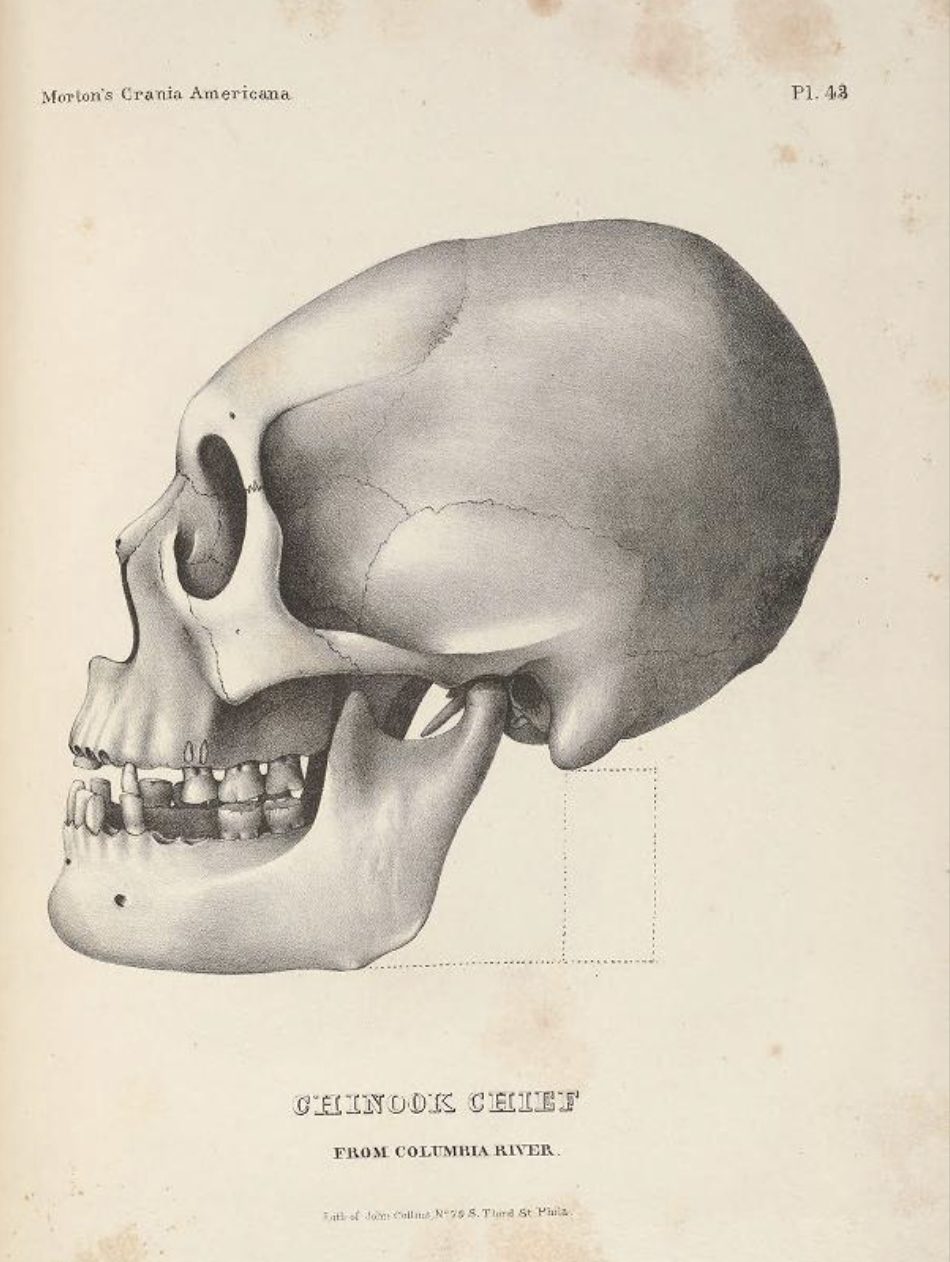
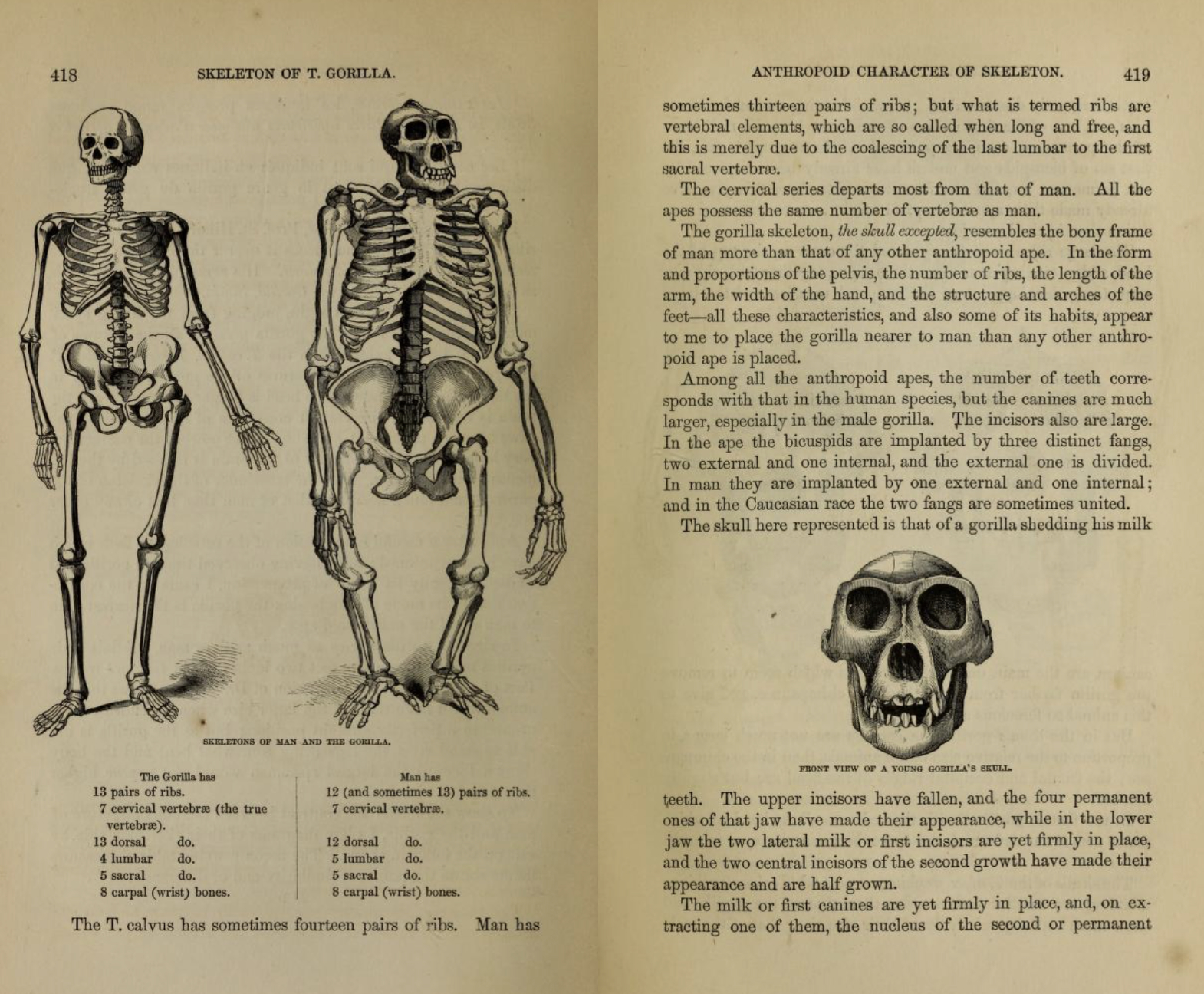
Morton died in 1851 but his successor, James Aitkins Meigs, was a craniographer and proponent of polygenism who expanded the collection, publishing a catalogue in 1857 (the Academy of Natural Sciences continued to add to the collection through the 1920s). While Morton had obtained his primate skulls through a network of merchants, naval officers, and missionaries, Meigs engaged the services of Paul Belloni du Chaillu (1835 – 1903), a French born American explorer. Sponsored by the Academy, du Chaillu travelled to Gabon in 1855 where he spent four years as a natural history collector and returned with the first complete gorilla specimens to be brought to America. A narrative describing his adventures titled Explorations & Adventures in Equatorial Africa (1861) included “accounts of the manners and customs of the people, and of the chase of the gorilla, crocodile, leopard, elephant, hippopotamus and other animals.” A section on gorilla skeletons and skulls was illustrated with wood cuts. He concluded: “The gorilla skeleton, the skull excepted, resembles the bony frame of man more than that of any other anthropoid ape.”
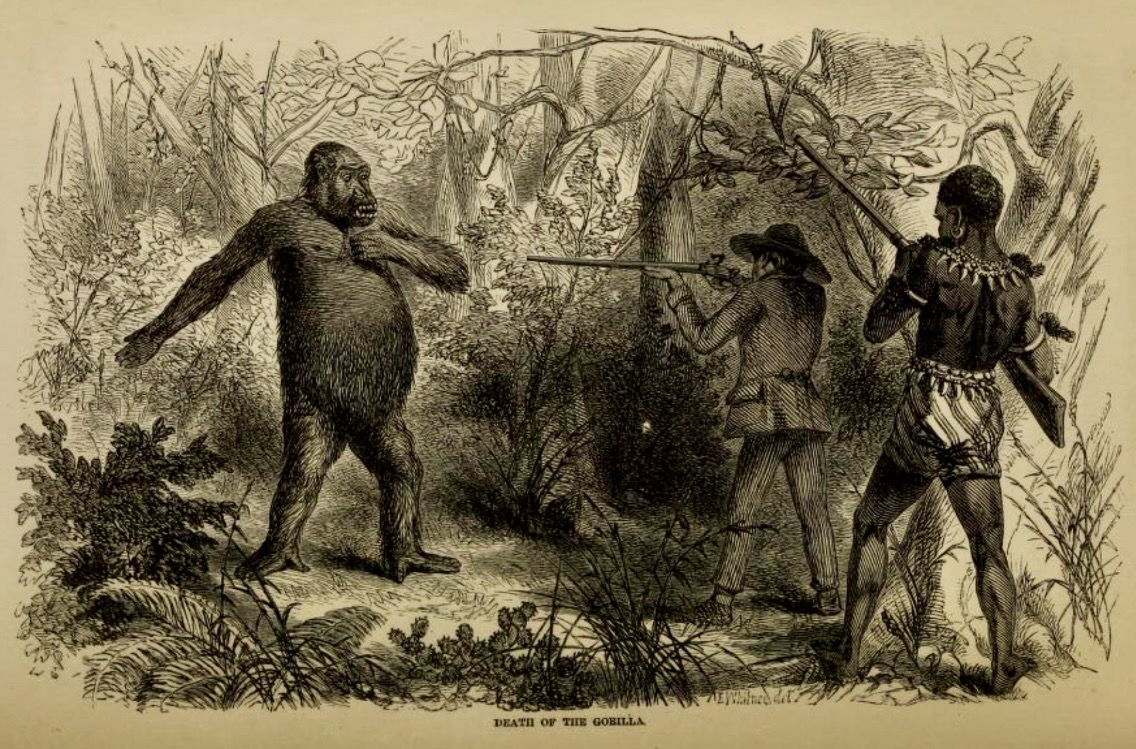
Du Chaillu’s narrative included a folding map and 73 engravings (27 full page plates and 46 in the text). Many depicted sensational scenes such as the “Death of the Gorilla,” which shows a gigantic beast beating his breast and roaring as a warning to the brave hunter (du Chaillu), who is about to shoot him at a close up distance. The author recounted the encounter: “no description can exceed the horror of its appearance, the ferocity of its attack or the malignity of its nature.”
Du Chaillu described his gorilla trophy: “It proved to be a male, full grown, but young. His huge canine tusks, his claw like hands, the immense development of muscle on his arms and breast, his whole appearance, in fact, proclaimed a giant strength. There is enough likeness to humanity in this beast to make a dead one an awful sight.”
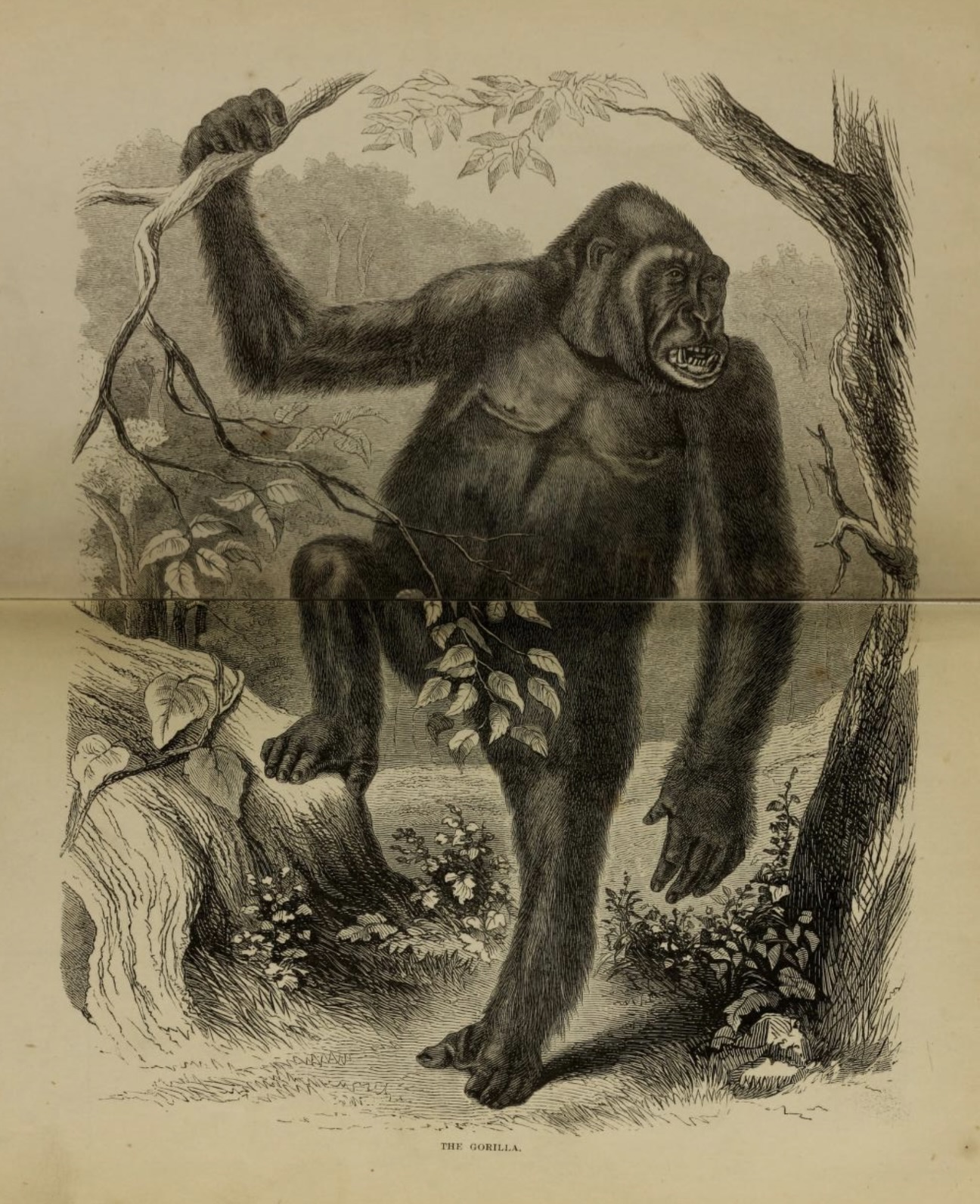
The frontispiece to Explorations & Adventures in Equatorial Africa was a full lithographic plate titled “The Gorilla.” None of the illustrations in du Chaillu’s narrative were credited, including the plagiarized frontispiece. This was a scientific illustration of a zoological specimen posed in a conventional posture yet the face of the gorilla expresses a fearful beast with a menacing open mouth and sharp canine incisors ready to attack. Du Chaillu’s version includes foliage that hides the genitals of the gorilla, probably a change instigated by the publisher.
On his return to Philadelphia in 1859, du Chaillu toured with his stuffed gorillas and skulls, giving popular lectures to an enthralled public. In 1861, he traveled to London, sponsored by the Royal Geographical Society and by the leading British anatomist Richard Owen (1804 – 1892), who worked at the British Museum. At a high sum, du Chaillu sold a number of his 20 gorilla skins and complete skeletons to the museum. Others were sold to various museums and scientific societies. These were widely illustrated and discussed and du Chaillu became infamous as the first European to confirm the existence of gorillas, seen in their natural habitat in the wild, thus igniting the scientific controversy over the role of apes in human origins. As the most prominent opponent to the theory of evolution, Owen used du Chaillu’s specimens (skulls, skeletons and stuffed skins) to differentiate humans from apes, claiming that gorillas lacked specific brain structures and describing their “frightful and formidable” behaviour, thereby legitimizing the increased hunting of the ape by collectors and sportsmen as scientific trophies.
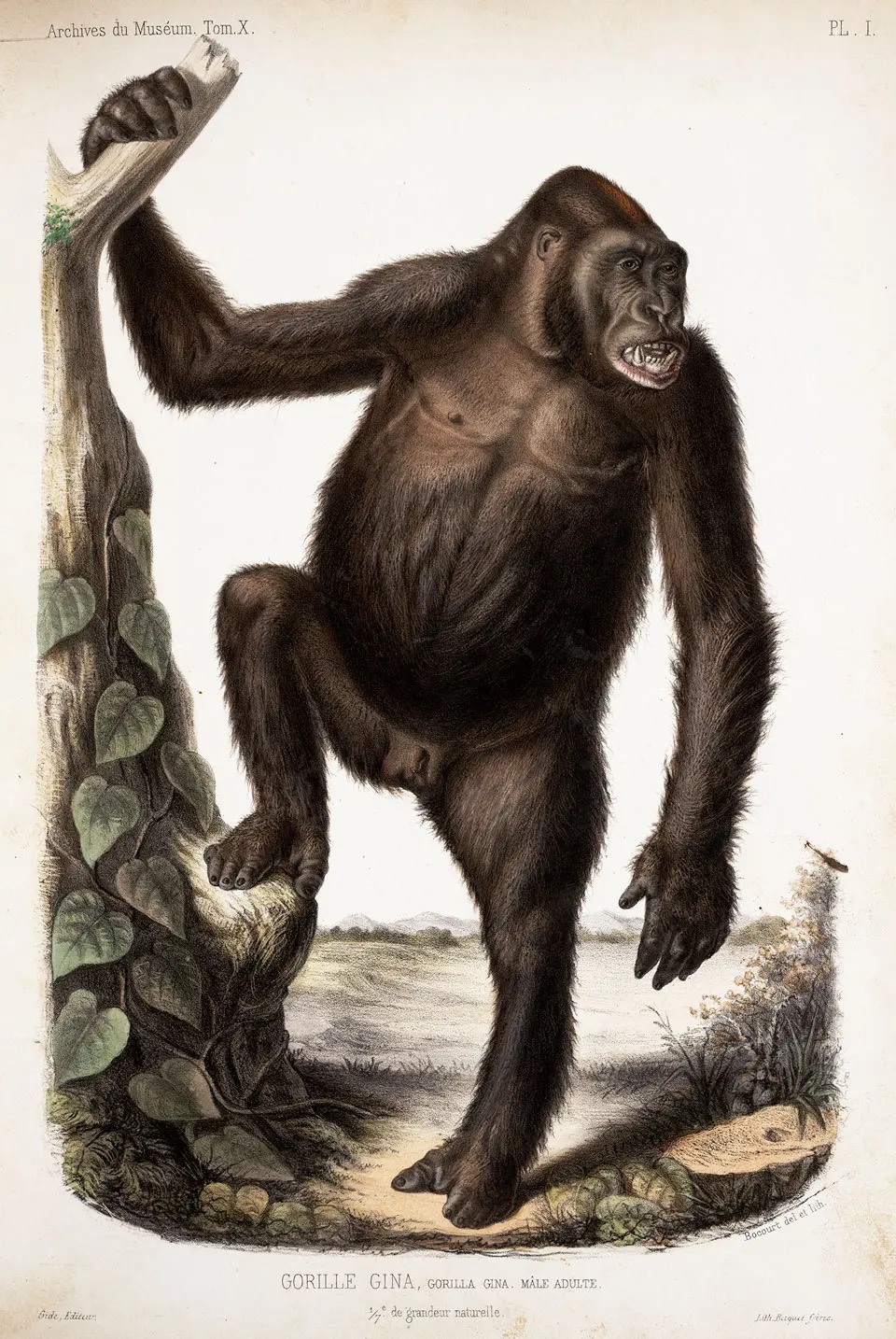
The first ground breaking anatomical memoir and comprehensive treatise on the gorilla was published by the French zoologist Isidore Geoffroy Saint Hilaire (1805 – 1861) in the Archives du Muséum d’Histoire Naturelle (1858). It includes a lithographed frontispiece (plagiarized by du Chaillu) by Marie Firmin Bocourt (1819 – 1904), an naturalist – artist who began working at the Muséum national d’Histoire naturelle in Paris as a preparateur (taxidermist and specimen preparer). The model was a gorilla specimen that had been acquired in Gabon by a naval surgeon who had preserved it in a barrel of rum and brought it back to Paris in 1851 where it was mounted by the museum taxidermist. Based on this first complete adult male gorilla to be seen by scientists, Saint Hilaire established the genus “Gorilla” in 1852, providing the species its first scientific name and solidifying its place in comparative anatomy and evolutionary history.
He chose the specific epithet “gina” as an adaptation of “N’gina,” the indigenous name for the animal in Gabon, which was later deemed a synonym of Gorilla gorilla (when scientists determined it was not a separate species). In addition to the anthropomorphic expression given to Gina’s face, several anatomical features were inaccurate in their human like form: the highly stylized ear structure, the bridge of the nose, the raised facial profile, the facial wrinkling and so on. Also the pose of the gorilla is not naturalistic but rather predetermined by the scientific convention for the upright display of mounted apes so as to make more visible its physiognomy, especially its hands and feet. The stretched right arm grasping a branch, the raised right leg, and the turned head showing the facial profile of the animal are part of the iconography that persisted for some time. The setting in Bocourt’s illustration is a stylized and generic European landscape and does not represent the natural habitat of the gorilla in the wild. Despite its empirical weakness, this illustration became an enduring icon of pictorial scientific knowledge about the enthralling new species.
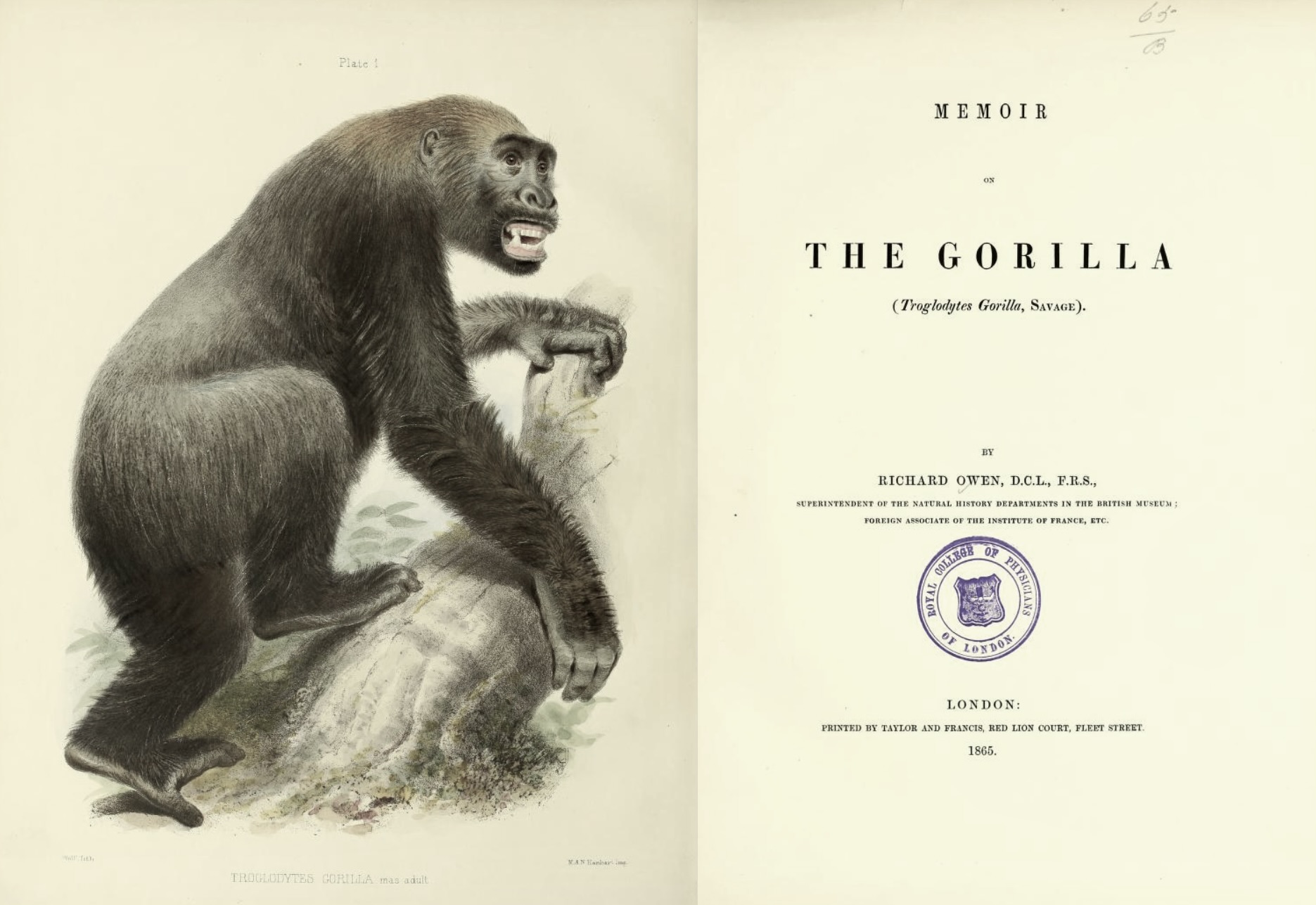
Owen’s Memoir on the Gorilla (1865) was a landmark work of 19th century comparative anatomy with 13 lithographic plates. The frontispiece, Plate II and Plate IV were illustrated by the renowned zoological artist Joseph Wolf (1820 – 1899). Owen noted that Wolf had drawn the illustrations in 1861 from specimens “in Mr. du Chaillu’s collection, purchased by the Trustees of the British Museum.” At a time when the gorilla was attracting intense public interest, Wolf’s images were widely reproduced, prompting Owen to complain that the frontispiece had been plagiarized without his consent or that of the artist. The image depicts the gorilla in what Owen described as “the ordinary quadrupedal mode of progression.” By representing the animal moving on all fours rather than in the conventional upright pose with one arm outstretched, Wolf’s illustration marked a significant departure from earlier gorilla iconography and reflects Owen’s anatomical research on the structure and function of the forelimbs.
Plate II in Owen’s monograph, subtitled Troglodytes Gorilla, Savage is a lithograph by Joseph Wolf that represents a family group of gorillas. Like the frontispiece, this illustration was unusual in that it does not feature a sole dominant male in an upright frontal position. Instead a maternal scene of a seated female gorilla caring for her baby is featured along with elements of the gorilla’s habitat such the durian plant.
Owen, and other scientists of his time, competed to identify and name the gorilla species as a way to confirm their own self importance. The gorilla genus was first described 1847, by the American naturalist Jeffries Wyman based on the skull and bones obtained in Gabon by the missionary Thomas Savage (preserved as the type specimens at the Harvard Museum of Comparative Zoology). Incorrectly assuming it was a chimpanzee, Wyman named it Troglodytes gorilla. Owen used this name (and added Savage to it) in his gorilla Memoir, disputing in his introduction the genus Gorilla established by the French naturalist Saint Hilaire in 1852.
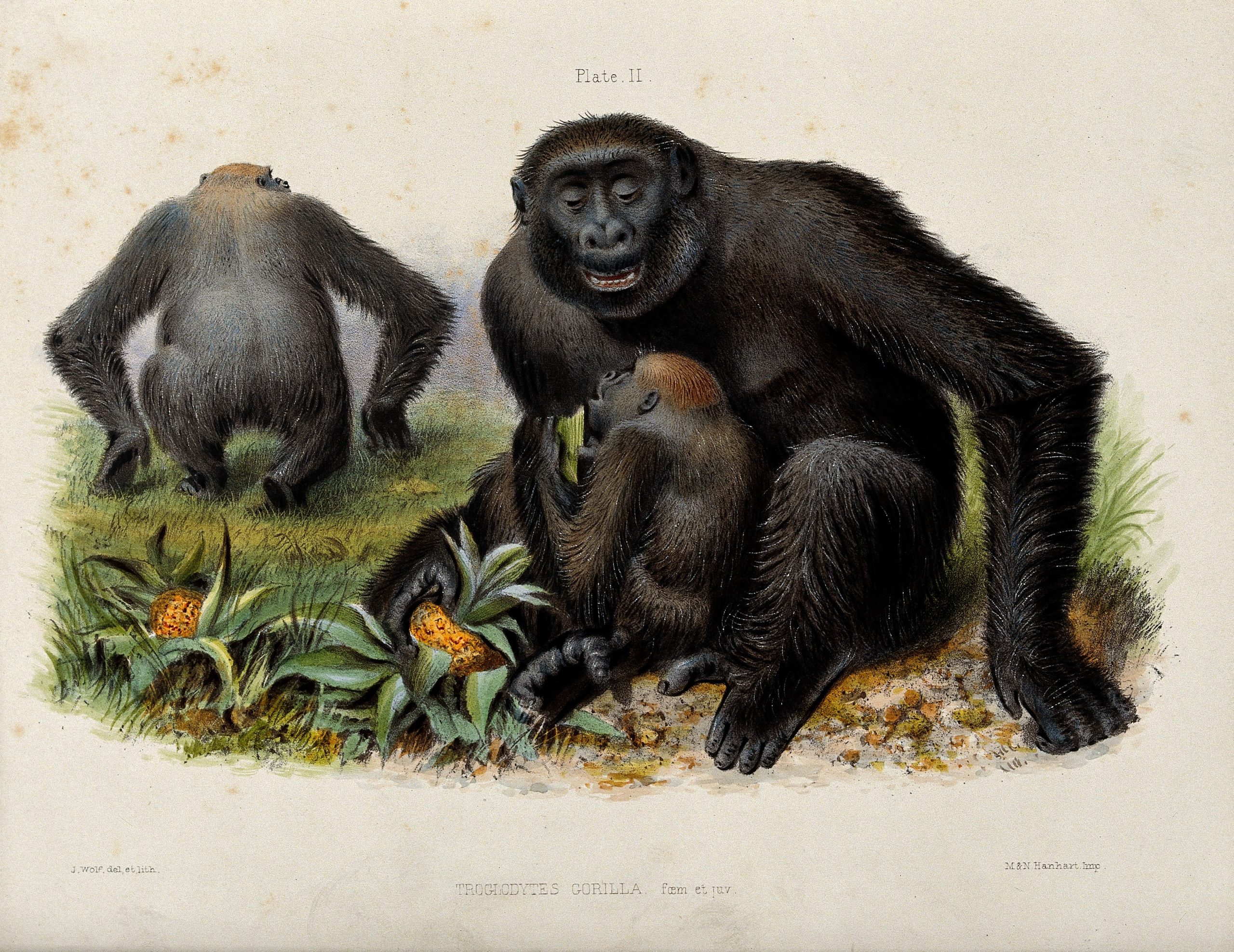
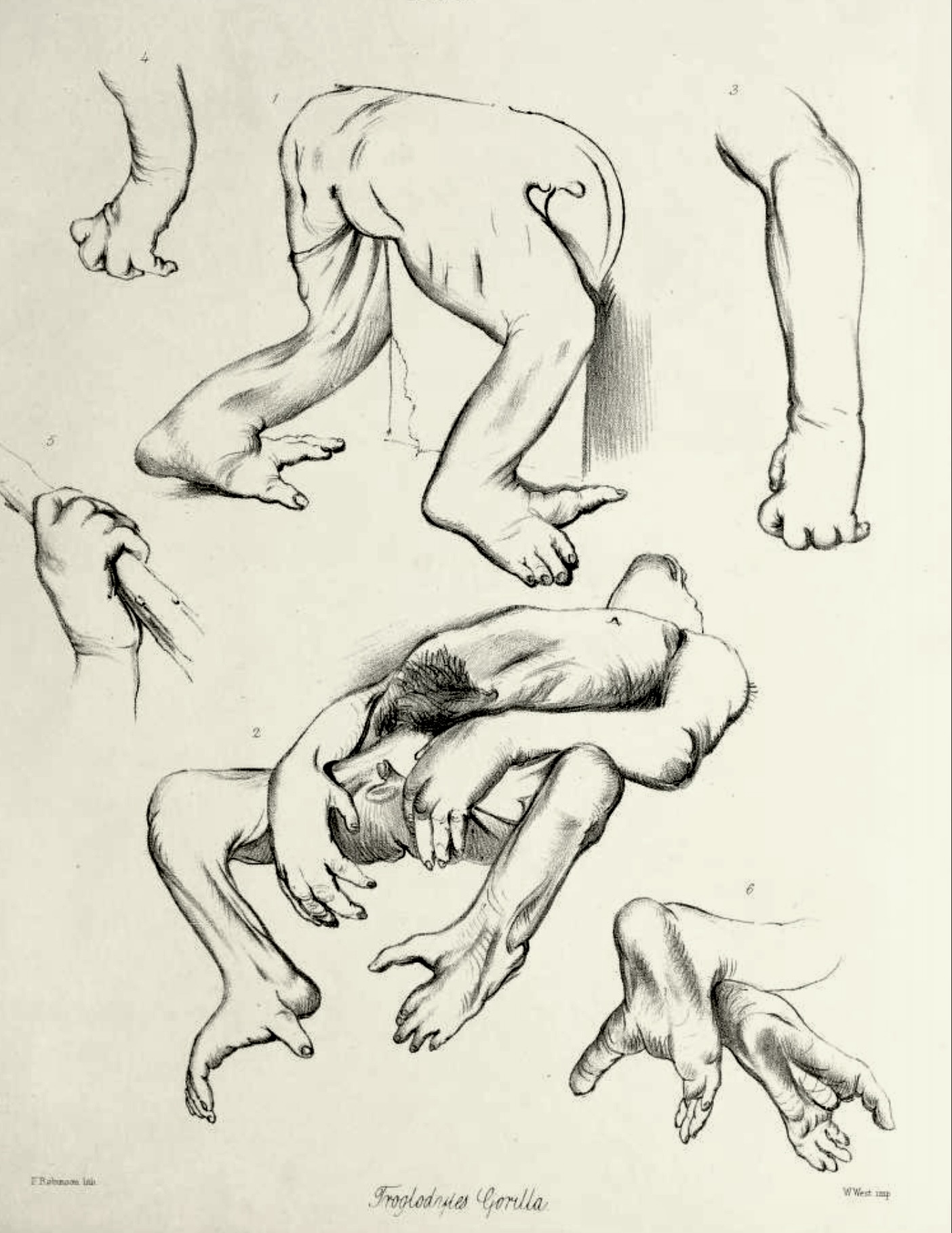
In the introduction to his Memoir of the great anthropoid “Ape of Africa,” Owen describes his difficulty in obtaining gorilla specimens at the British Museum. In 1858 he obtained a young male gorilla that had been preserved in alcohol but had arrived in a much deteriorated condition. By contrast, Owen refers to the well preserved specimens “killed in Gaboon by the intrepid explorer” du Chaillu, some of which had already been mounted and exhibited. Plates I and II were drawn by Wolf from these specimens. The deteriorated and macabre specimen was the subject of Plates III and V, both composites of illustrations that had been engraved from photographs. Owen explained that as the gorilla had been stripped of its skin, “it offered an instructive comparison with the naked body of Man.” Owen praised the artistic skill of Wolf’s drawings in Plate IV, executed according to his descriptions to show characteristic gorilla body parts and postures. The other nine plates in Owen’s Memoir are photographs and diagrams of comparative homanoid crania, brains and skeletons.
Scientists like Owen relied on visual representations to support their research although photographs and engravings are never entirely objective. Also Owen extensively cites du Chaillu for both his natural history observations but repeats some of the exaggerations and anthropomorphic stereotypes. Underlying du Chaillu’s lurid descriptions of the hunt is the view of the gorilla as a trophy. Last of all, Owen’s brilliant anatomical abilities did not prevent him from pursing racist generalizations. Some of the same underlying assumptions and iconography of gorilla representation carried through to the emergence of the habitat diorama.
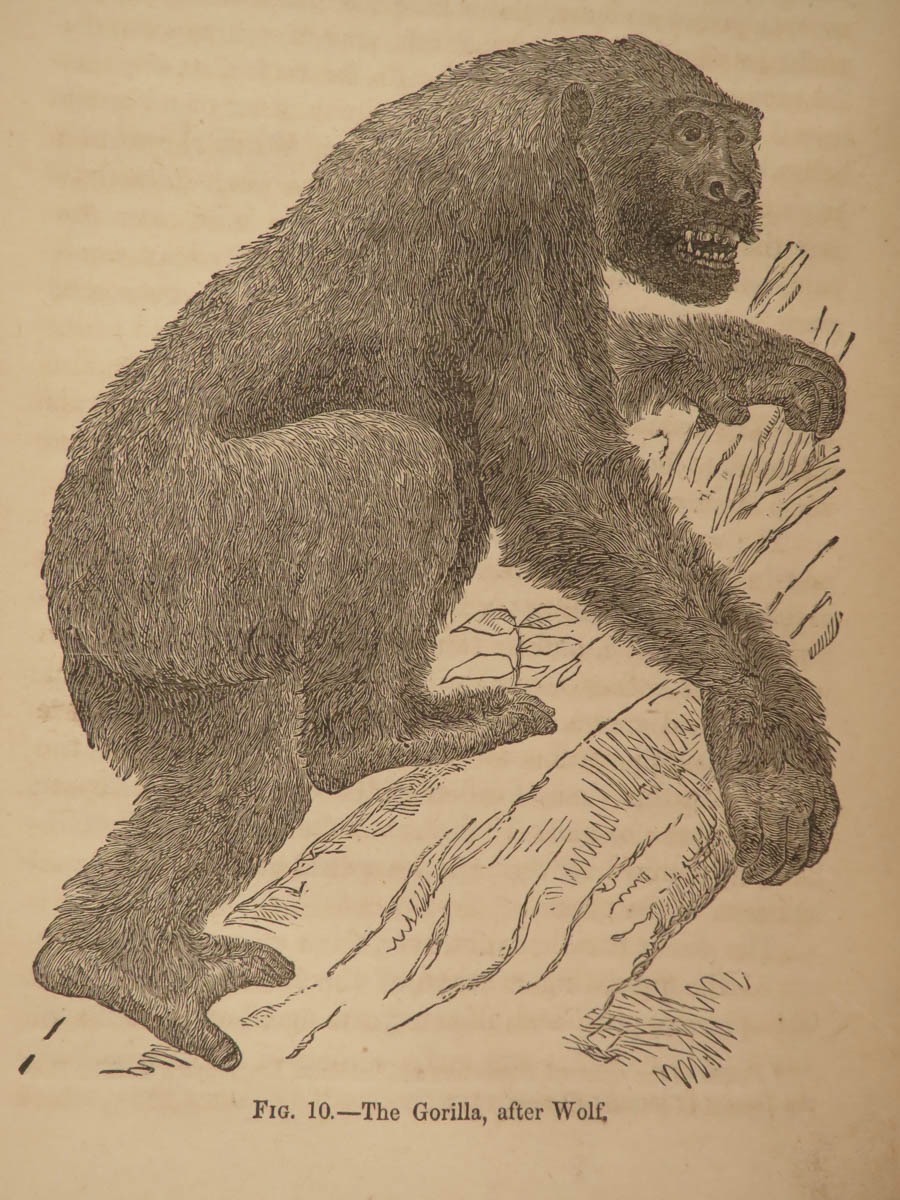
Two of Wolf’s gorilla illustrations, commissioned by Owen in 1861, were “borrowed” by Thomas Henry Huxley (1825 – 1895) for his book Evidence as to Man’s Place in Nature (1863). As the first book dedicated to human evolution, this was a watershed moment in the history of science and had a huge impact by placing humans on the same evolutionary tree as apes. An anatomist like Owen, Huxley too was intrigued by the newly discovered gorilla. Huxley used the Figure 10 woodcut engraving to demonstrate the “knuckle walking” posture and muscular build of the gorilla. Huxley’s work investigated evolution theories focusing on the natural history of the man like apes, relations of man to the lower animals, fossil remains of man. The book’s famous frontispiece lined up skeletons of a gibbon, orangutan, chimpanzee, gorilla, and human in a sequential walking progression. This parade of primates made the idea of a shared evolutionary gradient more acceptable, shifting the perception of the gorilla from a barbaric monster to a close biological relative of humans.
Unlike Owen, Huxley supported Darwin’s theory of evolution by natural selection and speculated that humans had evolved from more primitive ancestors. To disprove Owen’s claim that apes did not possess true foot, for example, Huxley conducted his own public dissections and proved through bone and muscle dissections that the gorilla’s hind limb possessed the exact same structural bones and muscles as a human foot, rendering it a true foot rather than a hand. Huxley pointed out that the difference in cranial capacity between the skulls of a “European” and an “Australian Aborigine” was larger than the difference between the latter and the skull of a gorilla, a comparison used to rank human races alongside primates.
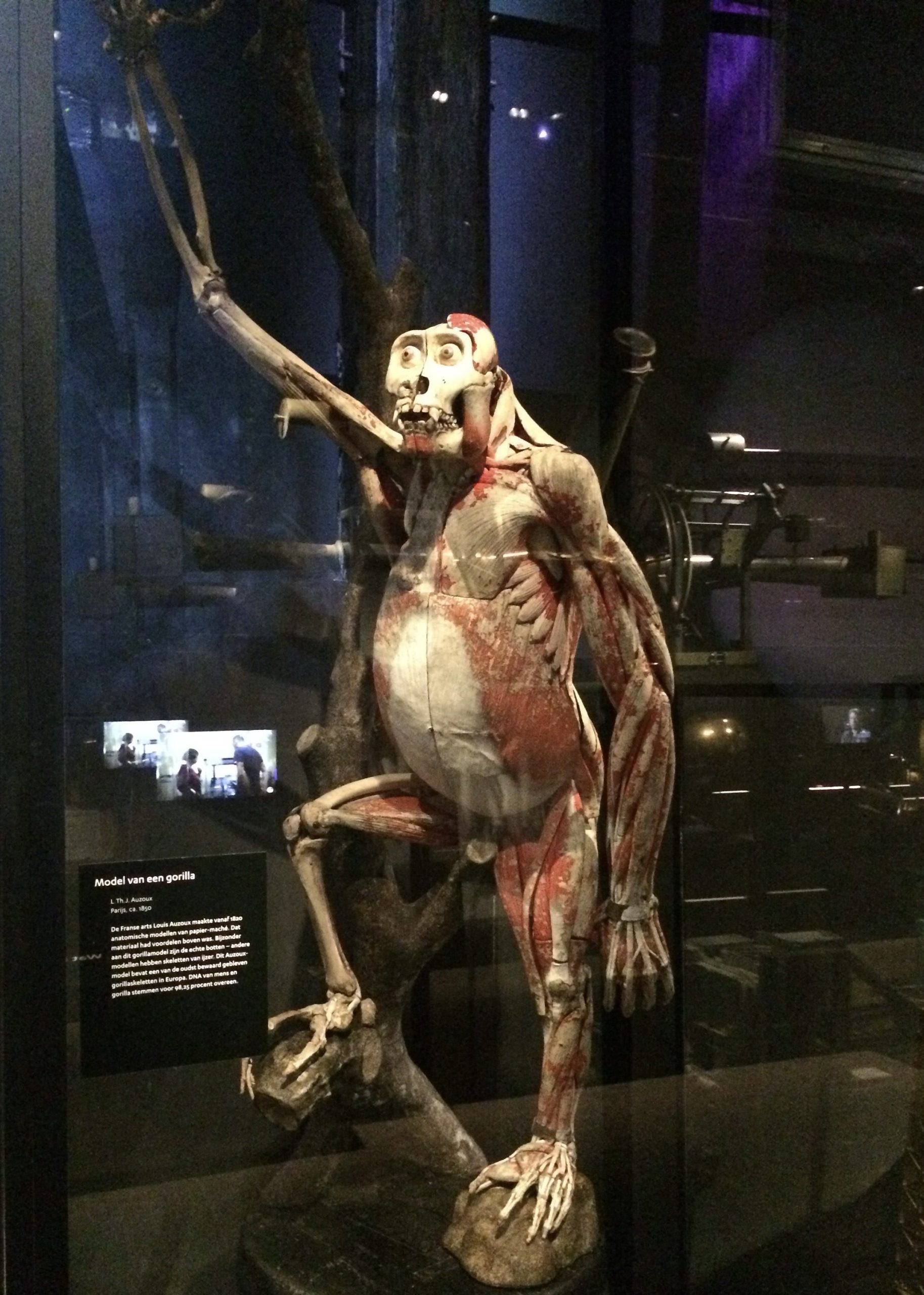
In 1863, the same year that Huxley’s book was published, the French anatomist Louis Thomas Jérôme Auzoux (1797 – 1880) , dissected a gorilla corpse. Emperor Napoleon III had arranged a specimen preserved in alcohol to be sent to Paris from Gabon. As a theatrical act of scientific teaching, Auzoux publicly dissected the gorilla to demonstrate its anatomy. Following this, he created a life sized model of a gorilla that could be dismantled into over a thousand parts, allowing students to study its muscles, organs and internal skeleton. The skull and bones belonged to a female western lowland gorilla and the rest was constructed using paper mache. The model was posed in the familiar attitude given to taxidermic models of the time, with one outreached arm and one raised leg. The models by Auzoux were sold to universities and museums worldwide, making scientific knowledge of the gorilla’s anatomy available without the need for real animals to be killed. One restored gorilla model by Auzoux is today displayed at the Rijksmuseum Boerhaave in Leiden.
Despite the availability of Auzoux’s exact anatomical research on the gorilla, scientists continue to perpetuate misconceptions about the animal well into the 20th century. Even the foremost comparative anatomists of the time, Richard Owen and Thomas Huxley, did not entirely overcome the powerful mythology evoked by the most man like of the non human primate species. While Huxley successfully challenged Owen’s contention that human races were unified and distinct from anthropoids, many scientists embraced Huxley’s racialized hierarchies based on morphological features (like skull shape and jaw size). Consequently, skull collections became part of physical anthropology and craniometry and were measured to map out the “higher” and “lower” evolutionary tiers of humanity.
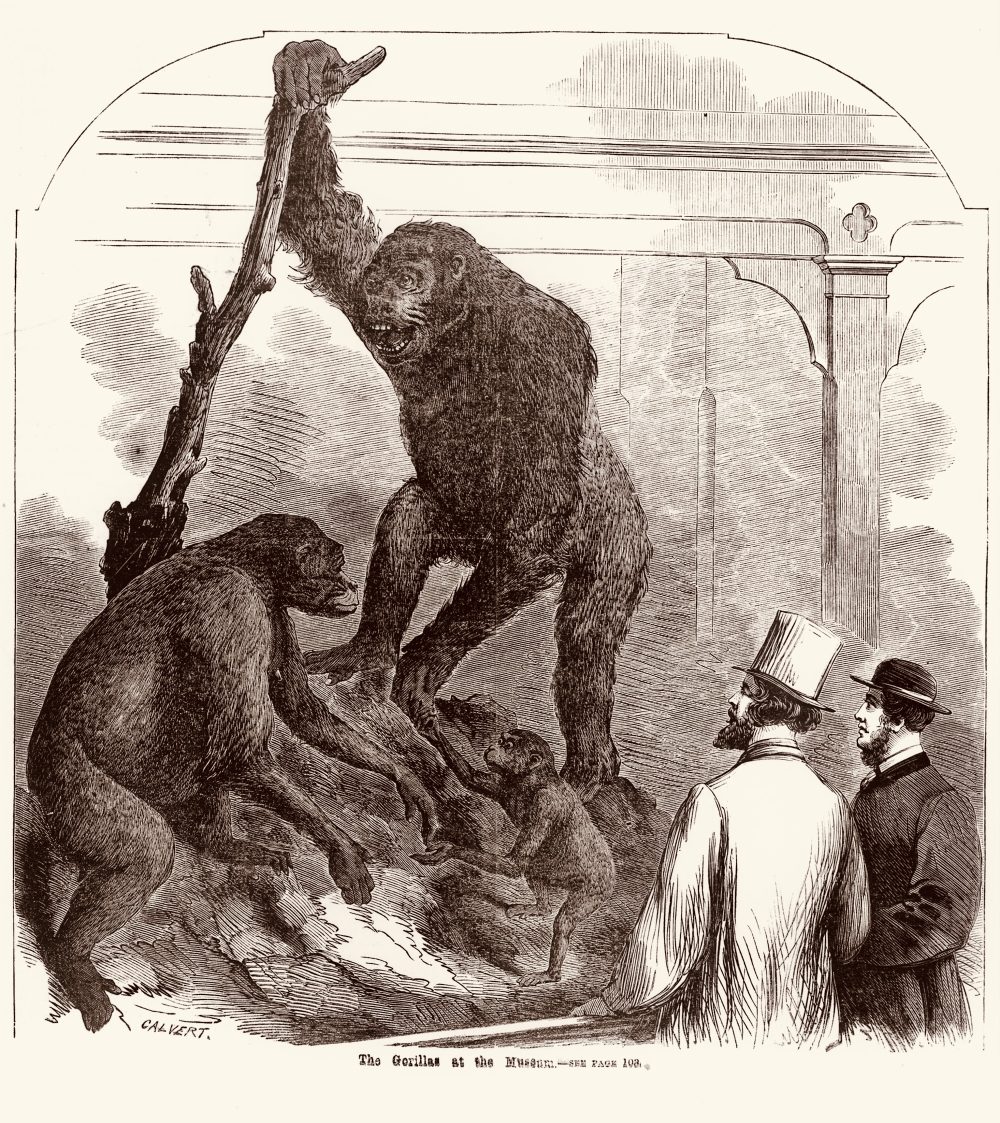
Three of the Western Lowland Gorilla (Gorilla gorilla gorilla) specimens that du Chaillu had brought to London were sent to the National Museum of Victoria in Melbourne, Australia (previously the National Museum of Natural History) where they were mounted and put on public display in 1865. Its director, the palaeontologist Frederick McCoy, was a Christian creationist who rejected evolution and natural selection, arguing that the sudden appearance and disappearance of species was part of a divine plan. He intended the gorilla group to provide evidence that the there was no resemblance between humans and the monstrous creatures on display. A wood engraving published in 1865 depicts a family group consisting of a ferocious upright male, a crouched over female and a baby who is reaching out to its mother. This provocative display, which is still in the museum collection, caused a sensation and ignited a public debate over human origins.
The male gorilla was mounted in the conventional scientific pose typical of apes in natural history museums. Standing upright but leaning on a pole for balance, the gorilla was seen as a quadruped (knuckle walker) who could not naturally stand or walk like a human. The posture suggests that the anatomy of the gorilla was dependent on the forest floor, far removed from human bipedalism. However the same pose could be interpreted as that of a savage and primitive “wild man” with a physiognomy terrifyingly human like.
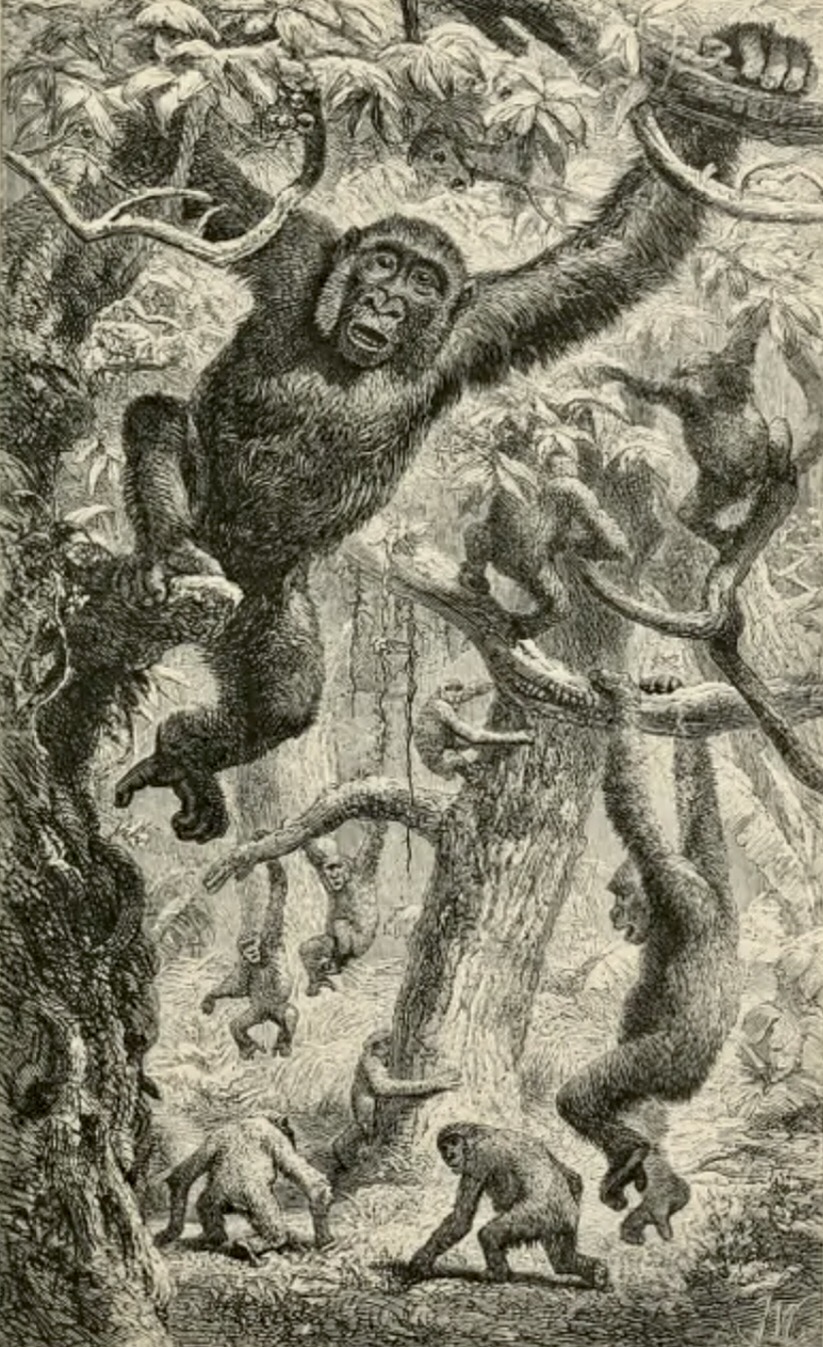
Explorations & Adventures in Equatorial Africa (1861) by du Chaillu was translated into French, and excerpted and reprinted multiple times in America and Britain. While some contemporary scientists challenged his claims and disputed his natural history observations and sensational stories, for the next sixty years most of the men who hunted and collected gorillas took his narrative as their starting point, giving them field references to be confirmed, modified, or refuted. In 1863, du Chaillu returned to the same region of Africa to prove the accuracy of some of his disputed observations, especially concerning the gorilla, which he called “the greatest of all the wonders of Western Equatorial Africa.” On his return, he published: A Journey to Ashango Land and Further Penetration into Equatorial Africa (1867), explaining that he did not intend “to slaughter unnecessarily these animals, as the principal museums in civilized countries were already well supplied with skins and skeletons, but I devoted myself, when in the district inhabited by the gorilla, to the further study of its habits.” This goal is apparent in the book’s illustration titled “Gorillas Surprised in the Forest,” a naturalistic portrayal of a band of gorillas as seen by du Chaillu in their dense forest habitat, drawn by Johann Baptist Zwecker (1814 – 1876), a German illustrator who had set up a studio in London in 1860 with the noted scientific animal painter Joseph Wolf.
Du Chaillu intended his expedition to supply scientific, geographic and ethnological data and to conduct field research, he brought with him astronomical, surveying, aneroid and photographic instruments. Just as his first expedition had brought to the world’s attention for the first time the existence of the gorilla, his second expedition documented for the first time the existence of indigenous people whom he called “pygmies.” The esteemed Professor Richard Owen was a loyal supporter of du Chaillu and warmly cited his contribution to science in the Appendix essay he wrote for A Journey to Ashango, in which he analyzed three of the indigenous skulls provided by the intrepid collector. In total, du Chaillu collected one hundred such human skulls, most of which were secured by Owen for the British Museum.
In his first book, Explorations (1861), du Chaillu wrote a passage that perpetuated the image of the gorilla as a fearsome forest giant: “Before us stood an immense male gorilla. . . Nearly six feet high, with immense body, huge chest, and great muscular arms, with fiercely glaring large deep gray eyes, and a hellish expression of face, which seemed to me like some nightmare vision: thus stood before us the king of the African forests. . . His eyes began to flash fiercer fire as we stood motionless on the defensive. . . now truly he reminded me of nothing but some hellish dream creature – a being of that hideous order, half man half beast. . . Here, as he began another of his roars and beating his breast in rage, we fired, and killed him.”
The German big game hunter and naturalist collector Hugo von Koppenfel was inspired by du Chaillu to undertake his own gorilla hunt in Gabon, described in “Meine Jagden auf Gorillas,” published in the popular journal Die Gartenlaube in 1877. He wrote about the extreme difficulty of tracking the ferocious beast through the dense, swampy rainforest. With his reports and collections of gorilla skins and skeletons sent to Europe, Koppenfels provided important material for emerging evolutionary and zoological research.
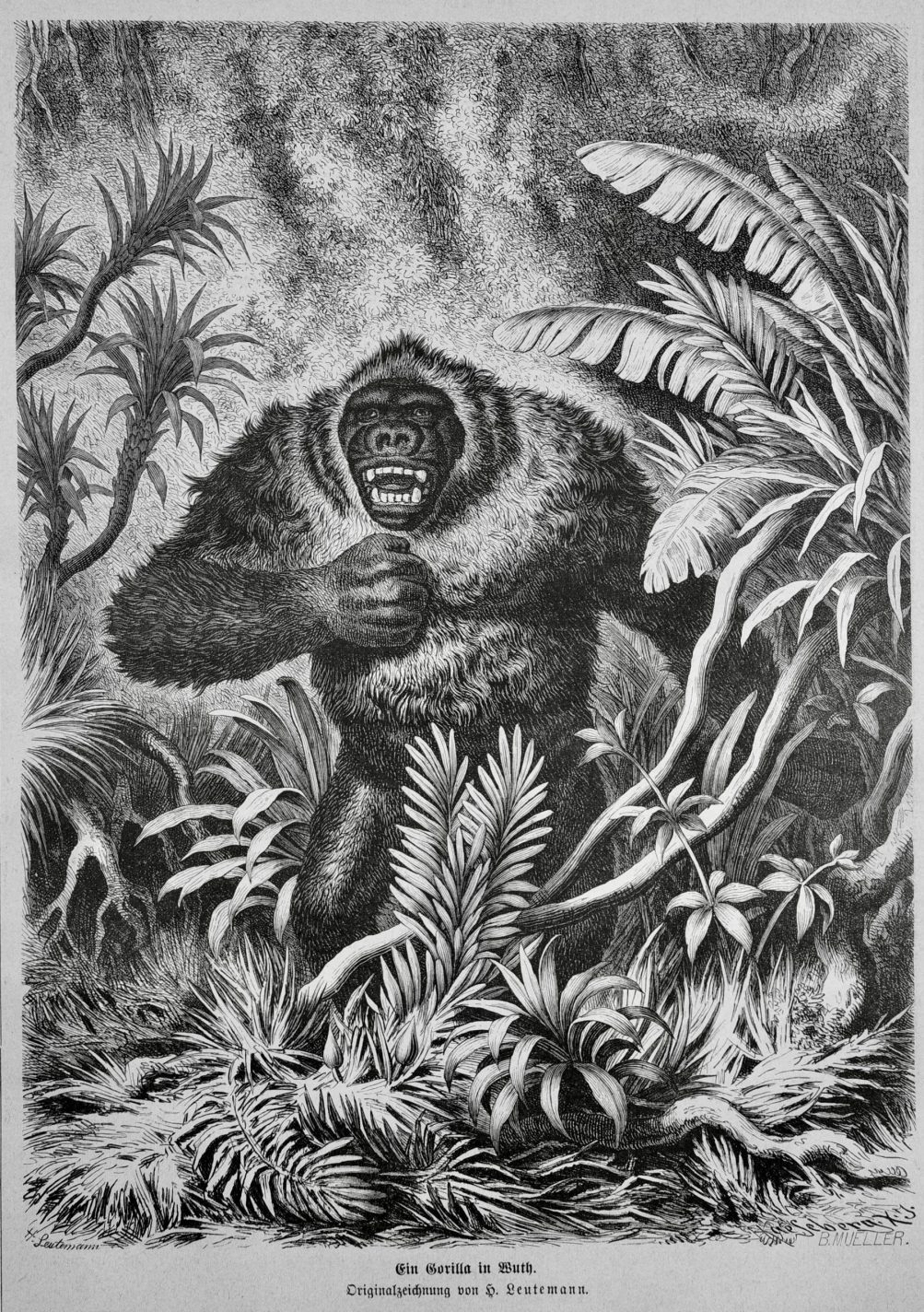
The article was illustrated by a dramatic, full page woodcut titled “A Gorilla in Rage,” drawn by the Leipzig artist Heinrich Leutemann (1824 – 1905), known for his illustrations of German fairy tales. Although the artist had never seen a live gorilla or travelled to Africa, his image was one of the first to include a detailed botanical rendering of the gorilla’s habitat. In 1876, a young live gorilla named M’Pungu was on display in Berlin, causing an intense interest in the species. Despite the empathy evoked by M’Pungu, it was the menacing chest beating portrayal of Leuteman’s gorilla that shaped the dominant perception of the ape.
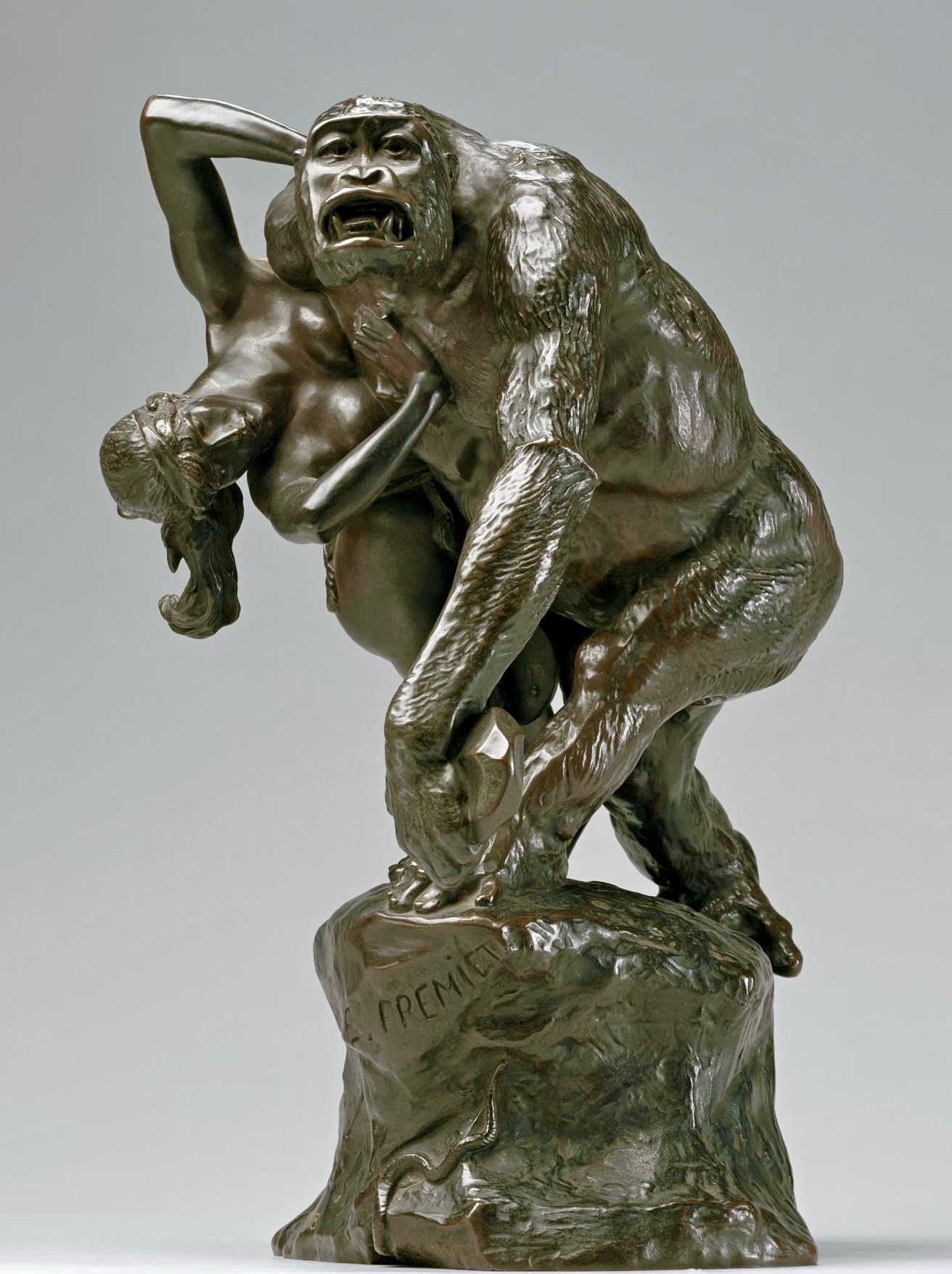
The ferocious gorilla iconography perpetuated by du Chaillu not only characterized scientific descriptions and hunting narratives but also works of fine art as in the example of Emmanuel Frémiet (1824 – 1910), a renowned French animalier (animal sculptor) whose lifelike gorilla sculptures shocked the public and ignited controversy. Frémiet spent years studying live animals and assisting with dissections at the Musée national d’Histoire naturelle in Paris, where he was later appointed professor of animal modeling and drawing.
In 1851 the museum was sent one of the first preserved gorilla specimen to arrive in Europe as a complete carcass. The large male was promptly dissected, then mounted by Théodore Poortmann (1804 – 1863), a ‘modeleur naturaliste’ at the museum distinguished for his lifelike taxidermy techniques. The same taxidermic sculpture, known as ‘Gorilla Gina,’ (Troglodytes gorilla) was exhibited at the 1855 Paris Exposition Universelle, after which it returned to the hall of anatomy at the museum. One scientist described it as preserving the “frightful physiognomy’of the monster” so well that it was a shock to see an animal “so hideously resembling man, in which physical force is joined with such a violent nature.”
Frémiet’s 1859 plaster sculpture “Gorilla Carrying Off a Woman” (Gorille enlevant une femme) had the same dramatic effect as the taxidermic sculpture and was destroyed due to the scandal it caused. In 1887, Frémiet created another life size sculpture depicting a male gorilla with a spear wound in his shoulder, clutching a helpless, struggling woman. This version won the Medal of Honour at the 1887 Paris Salon and was recast in bronze for various museums.
From the time of its discovery by scientists, the gorilla was given the attributes of a big game trophy even though it did not conform to the European hunting traditions that had been defined over many centuries which were focussed on horns, antlers, tusks and hides. The “gold standard” for such trophies, Rowland Ward’s Records of Big Game, (1898) explicitly did not include primates. But with the “scramble for Africa” that resulted after the 1884 Berlin Conference opened up the continent to the imperial aspirations of European countries, gorillas increasingly became a targeted as trophies that symbolized male valour and dominance over the wilderness and its inhabitants.
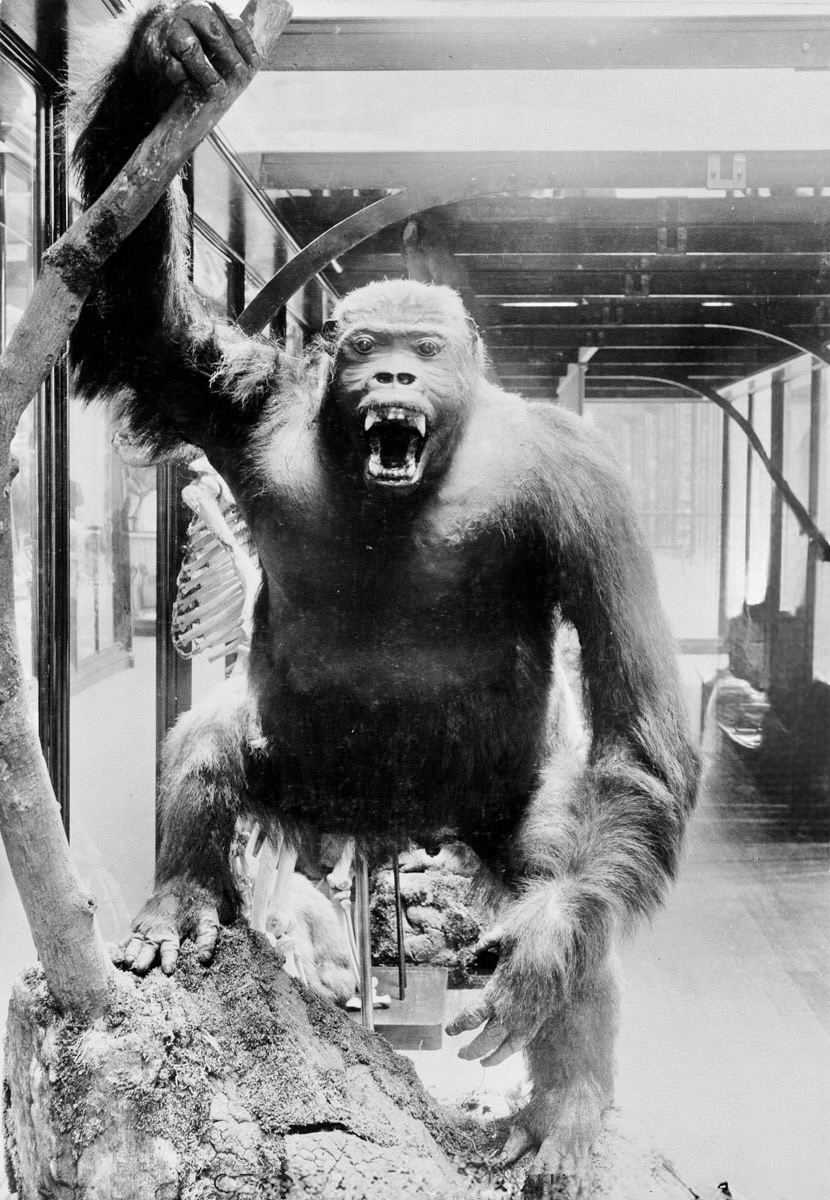
The immense power, ferocity and savage animalistic instinct of the male gorilla made it a worthy foe to be conquered by the colonial hunter. A mounted gorilla male exhibited in the 1887 at the Natural History Museum in London is posed in a conventional format, his upright body is standing on two legs while grasping a tree for support with one hand. But other masculine features are emphasized such as his prominent sagittal crest, the heavy brow or ridge of bone running along the top of his massive skull (evidence of sex, maturity and size). The taxidermist has given the gorilla an open threatening mouth with elongated and sharp predatory canine teeth like tusks. Further identifying him as the “King of the Forest,” is his broad muscular chest, massive forearms and silverback saddle of grey hair on his back and hips (a feature of dominant males). Also the oversized hands and feet of the male gorilla, which were viewed as monstrous and hideous in comparison to that of the human, are given special attention by the taxidermist. It was difficult to procure whole carcasses of gorillas due to the dense and remote habitat of the species and the speed of decay caused by the tropical conditions. Therefore often only the gorilla skulls were taken as trophies and as scientific specimens.
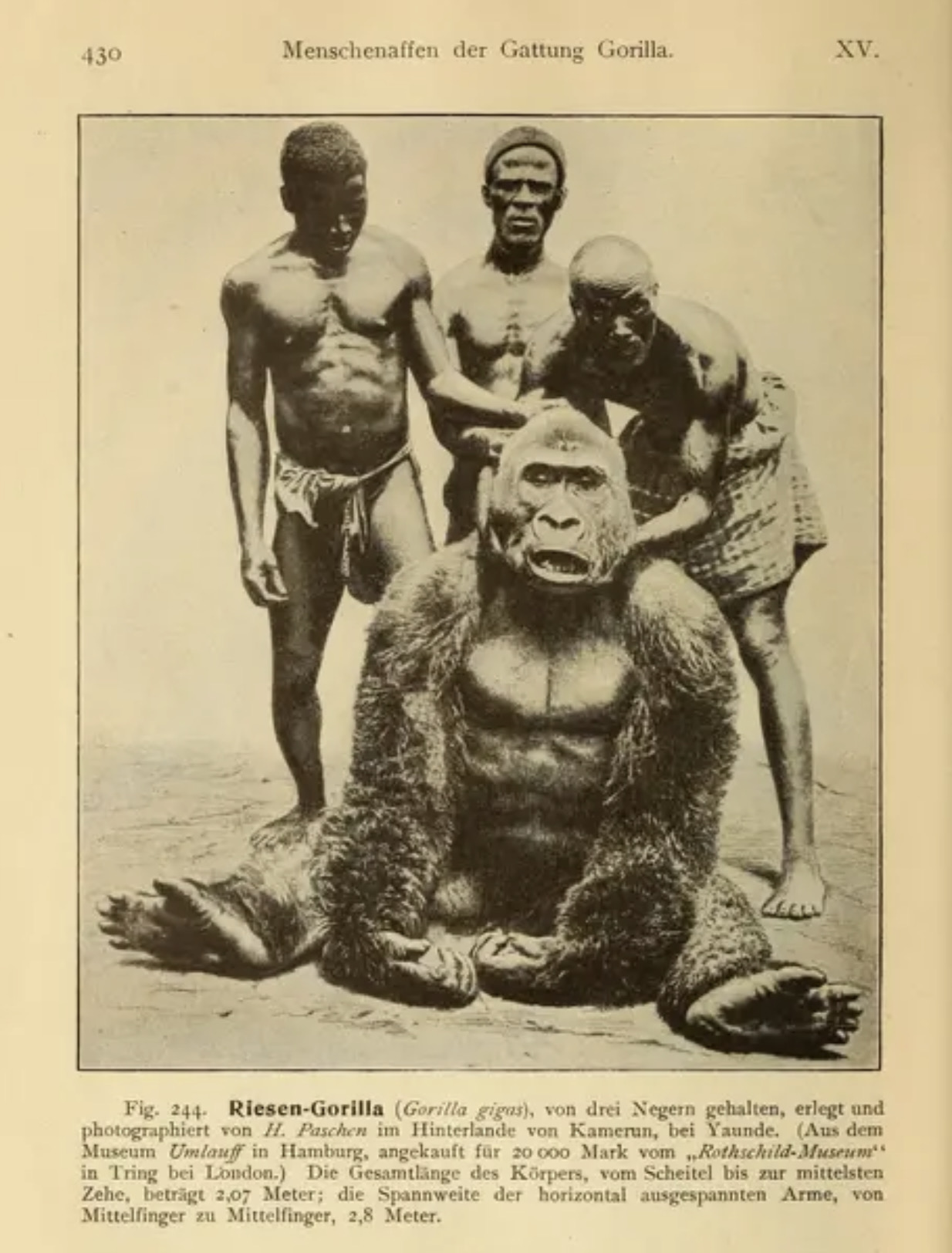
Ernst Haeckel (1834–1919) was a prominent German zoologist, artist and philosopher who popularized Charles Darwin’s theory of evolution throughout Europe. His seminal and controversial Anthropogenie; oder, Entwicklungsgeschichte des Menschen (“The Evolution of Man”) was published in 1874 with many editions and reprints. The richly illustrated 1903 edition included a woodcut engraving titled “Male Giant Gorilla (Gorilla gigas) from Yaoundé, in the Hinterland of Cameroon. Killed by H. Paschen, stuffed by Umlauf.” The image appears in the section titled “Menschenaffen der Gattung Gorilla” that analyzes the evolutionary link between humans and the great ape. According to Haeckel, the unusual size and curious skull formation of the “Giant Gorilla” distinguished it from the normal species. He noted that “its powerful chest is twice as broad as that of a strong man” and gave this “new” species the scientific name “Gorilla gigas.”
Hans Paschen, the killer of the “Giant Gorilla,” was a German officer, settler and trader in Cameroon during the time when colonial governments sponsored settlers to map territories, assert sovereignty, and collect specimens for national institutions. After shooting the exceptionally large male gorilla, Paschen skinned and skeletonized the carcass and sent it to Hamburg, Germany where it was acquired by the commercial dealer J. F. G. Umlauff. Founded in 1869, the trading firm operated a museum and profited from the collecting and sales of ethnographic objects and natural history specimens. Using the sculptural technique of dermoplastic modelling, the gorilla skin was transformed into a powerful and savage upright beast, a sensational taxidermic display taken on tour. Shown in Berlin in 1901, during the Fifth International Congress of Zoologists, the “Giant Gorilla” was seen by the aristocratic English zoologist Walter Rothschild who bought it for his UK museum at Tring, said to be the largest natural history collection in the world. Another “Giant Gorilla” was produced by the Umlauff company and displayed to great acclaim at the German Colonial Hunting Exhibition in 1903 along with four gorilla skulls.
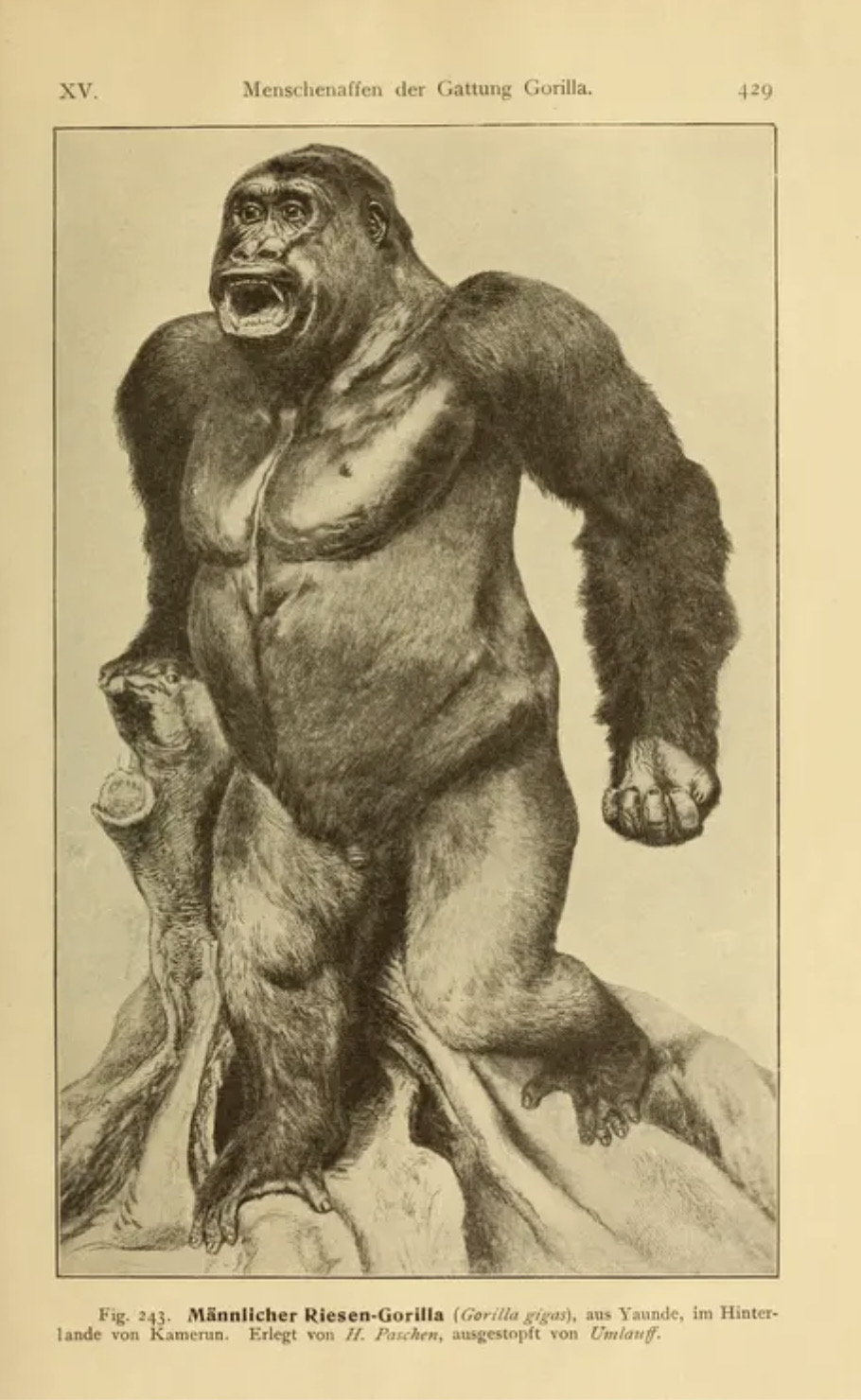
The illustration of the “Giant Gorilla” trophy in Haeckel’s book (Fig. 243) was followed by a photograph (Fig. 244) with the following description: “Giant gorilla (Gorilla gigas), held by three Black men, killed and photographed by H. Paschen in the hinterland of Cameroon, near Yaande. (From the Umlauff Museum in Hamburg, purchased for 20,000 marks from the ‘Rothschild Museum’ in Tring near London.) The total body length, from the crown of the head to the middle toe, is 2.07 meters; the wingspan of the horizontally outstretched arms, from middle finger to middle finger, is 2.8 meters.” These two images were taken (with permission) from an illustrated promotional brochure on the “Giant Gorilla” published by the Umlauff company in 1901.
A third Umlauff image was used in the English 1910 6th edition, a photograph comparing the skeleton of the “Giant Gorilla” to that of a human. The Umlauff illustrations were utilized to demonstrate Haeckel’s thesis of “mankind in the making.” As Haeckel wrote: “The whole structure of this huge anthropoid ape is not merely very similar to that of man, but it is substantially the same. The same 200 bones, arranged in the same way, form our internal skeleton; the same 300 muscles effect our movements; the same hair covers our skin. . . .” Yet the illustrations also reveal some of underlying prejudices typical of science at the time. Identifying with the huge male gorilla that portrayed the most manly of features was gender bias embedded in the presentation of big game trophies. Picturing the dead great ape trophy beside three Africans served not only to reinforce Haeckel’s belief that their race was closest to the gorilla but also made clear their subjugation to the brutal colonial takeover of their land and resources; Paschen, for example, supervised a German rubber plantation.
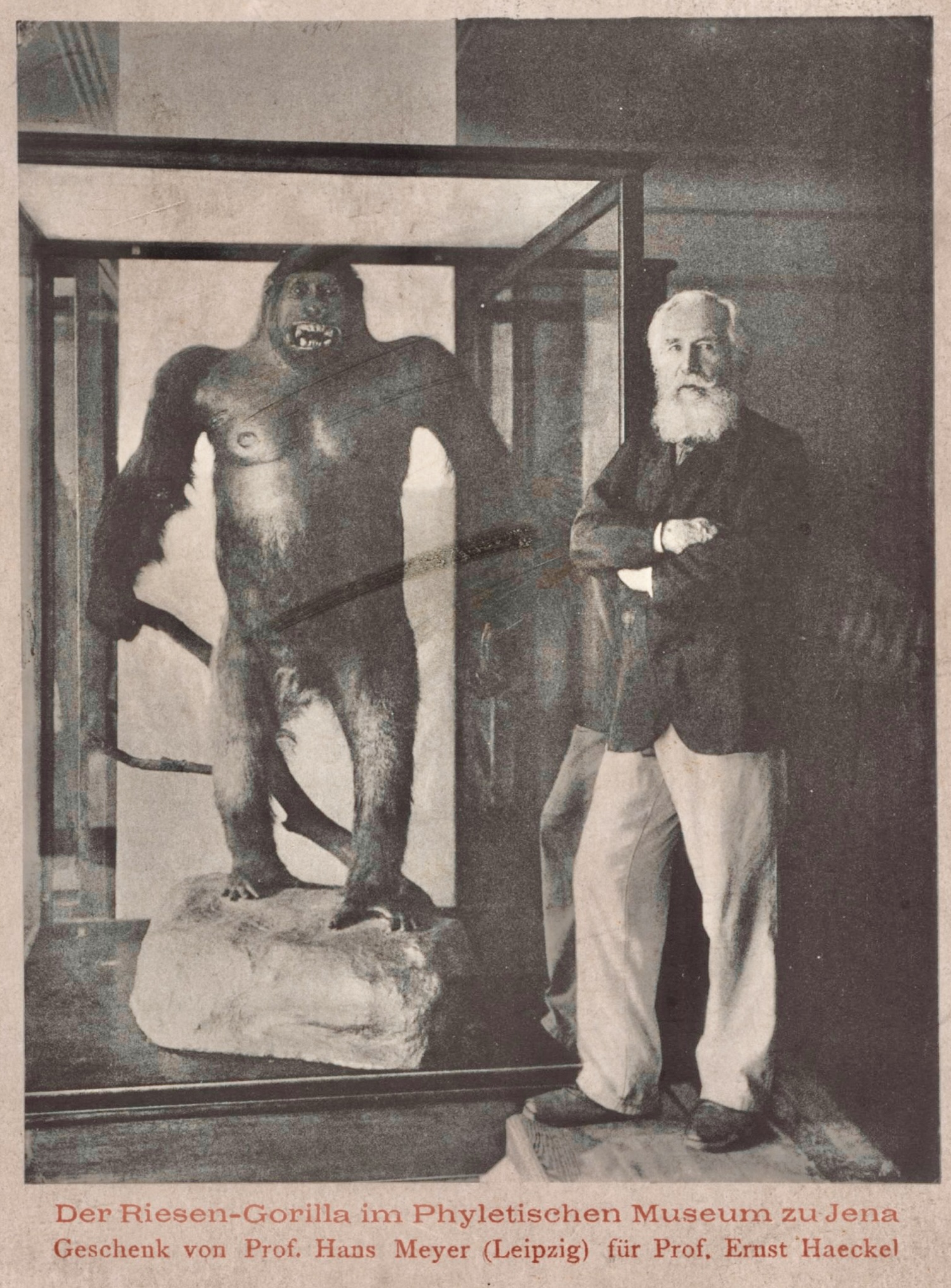
In 1907, Haeckel founded the Phyletic Museum (Phyletisches Museum) in Jena, Germany, a natural history museum dedicated to evolutionary biology and the history of life (phylogeny). He was keen to include in the collection a copy of the original 1901 “Giant Gorilla” mounted by Umlauff and accepted an offer from the eminent and wealthy geographer Hans Meyer of Leipzig, who was married to his daughter, to purchase one. Meyer donated this taxidermic display to the museum in 1909 as a gift for Haeckel’s 75th birthday. To celebrate the acquisition, a souvenir postcard was published with a photograph of Haeckel standing beside the “Giant Gorilla.” Haeckel noted that the gorilla was a full grown male killed in Cameroon in 1908; “the biggest known example.” Apparently he used the gorilla postcard as personal stationary and sent it to scientific colleagues.
Haeckel’s preoccupation with the largest male specimen of a species that he had earlier classified as a completely new and monumental one (Gorilla gigas) was to establish it as the definitive “ancestral model” for the ape human link. The dermoplastic model emphasized the attributes of patriarchal dominance, physical power, massive muscularity and a dominant chest size. It was an impressive zoological trophy that served to frame Haeckel’s narrative of human evolution. Yet Haeckel must have known that already in 1904 the “Giant Gorilla” had been reclassified and relegated to a lesser synonym as its own subspecies in a published zoological paper by Rothschild, who called it Gorilla gorilla matschiei (after the curator at the Museum für Naturkunde in Berlin. Later both names were proven to be invalid species designations when Haeckel’s specimen was identified to be simply a large Western lowland gorilla (Gorilla gorilla).
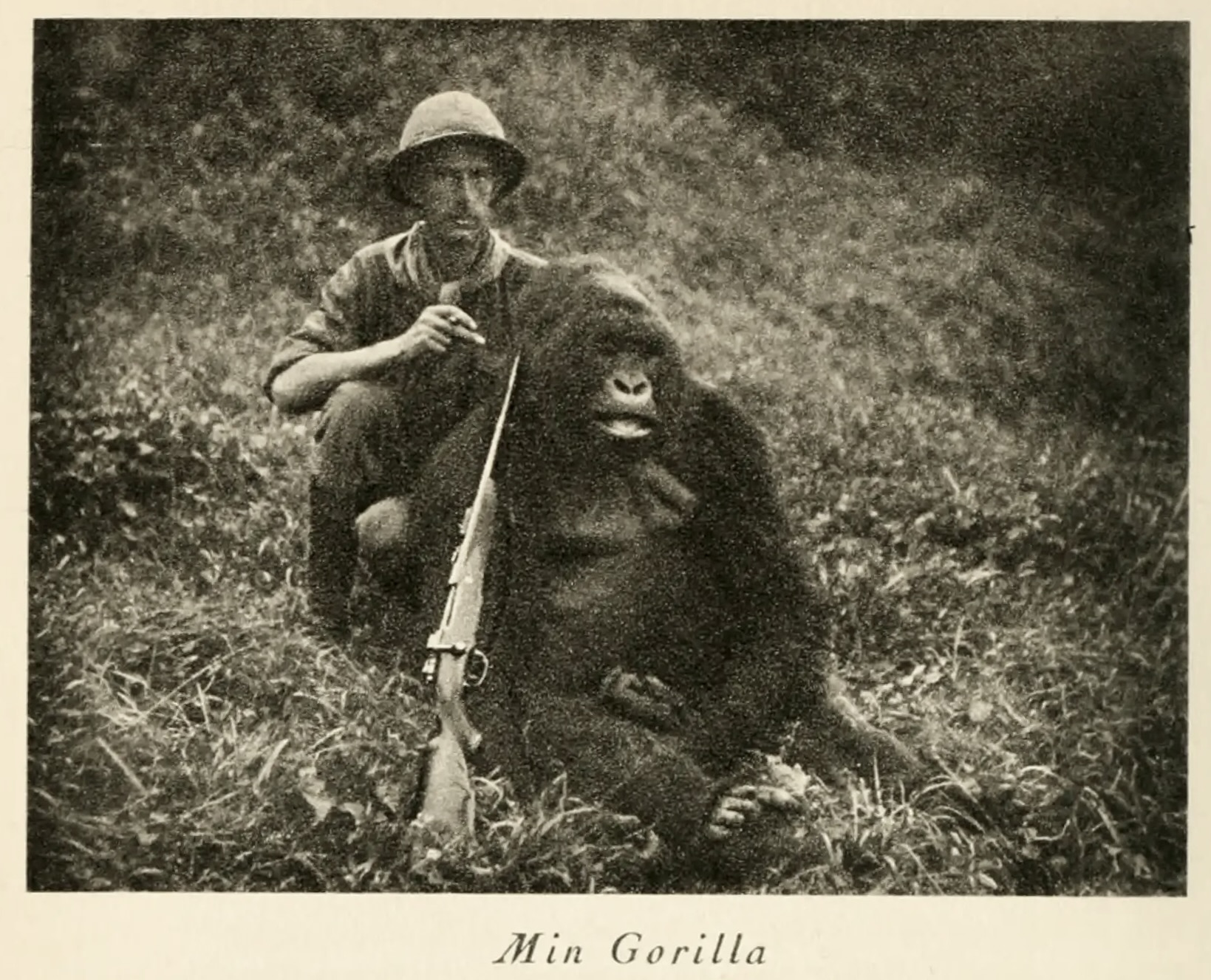
Despite the disruption of the First World War, the scientific legitimacy given to gorilla trophies as perpetuated by Haeckel continued well into the 20th century alongside scientific racism. Early in 1921, Prince Wilhelm of Sweden led the Swedish Zoological Expedition commissioned by the Naturhistoriska riksmuseet (National Museum of Natural History) to the Belgian Congo to hunt and collect African big game in the Virunga region, most notably the newly discovered mountain gorilla (Gorilla gorilla beringei). King Albert I of Belgium granted hunting permits to the expedition despite the species being protected at the time. The prince wrote a popular narrative titled Bland Dvärgar och Gorillor (“among dwarfs and gorillas”) that described the “gorilla slaughtering expedition” (as he called it). Published in 1921, it described the hunting and killing of 14 mountain gorillas, including a notable trophy weighing 400 pounds seen propped up against the prince in a photograph. There were six Europeans on the 3,000 km long expedition including the zoologist Nils Gyldenstolpe, professional hunter Elias Arrhenius and over one hundred African porters.
Prince Wilhelm was a member of the Royal Swedish Academy of Sciences and many of the thousands of specimens collected during his expedition were described in scientific papers. A documentary film of the expedition, called “With Prince Wilhelm on his African Hunting Trails,” was released in 1922. Clips from the film include the prince showing off an infant gorilla with its still attached umbilical cord. In his book, the prince noted that this is the first such specimen to be collected for a museum. He also described his observations of a large family group of gorillas engaged in domestic activities before shooting a mother gorilla and several mature males.
During the early 20th century, when natural history museums competed to collect the most gorilla specimens in the name of science, the Virunga region was a prime destination due to the new species discovered there in 1908. The Riksmuseum, for example, already had several mountain gorillas shot by Arrhenius some years earlier and the prince was proud to point out that with his 14 additions, the national collection was “probably unique in the world” for its scientific significance.
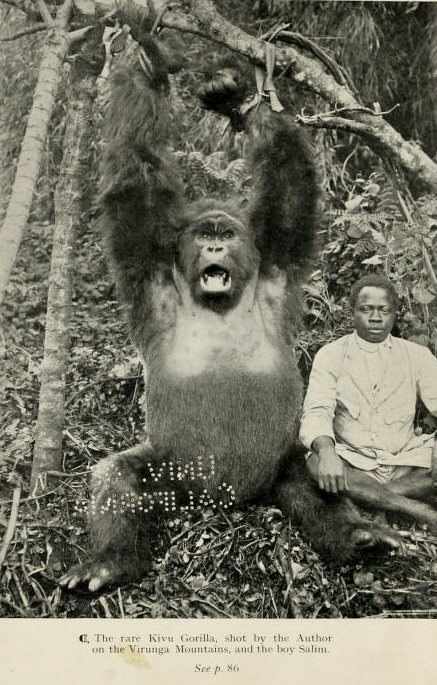
Another expedition to the Virunga region, between 1919 and 1922, was led by T. Alexander Barns, a British colonial agent, big game hunter and ivory trader. In addition to mapping the natural resources, he was a collector for the British Museum (Natural History). His narrative, The Wonderland of the Eastern Congo (1922), includes a frontispiece photo titled: “The rare Kivu Gorilla, shot by the Author on the Virunga Mountains, and the boy Salim.” As with the narrative by the Swedish prince, the focus by Barns is on the “pygmies and the giant gorilla.” The new species (Gorilla gorilla beringei), discovered in 1903 north of Lake Kivu, was the largest known species of gorilla and therefore the most highly sought after. Barns compared his Kivu Gorilla to the type specimen or holotype, which he incorrectly believed to be at the British Museum (instead of the Museum für Naturkunde in Berlin).
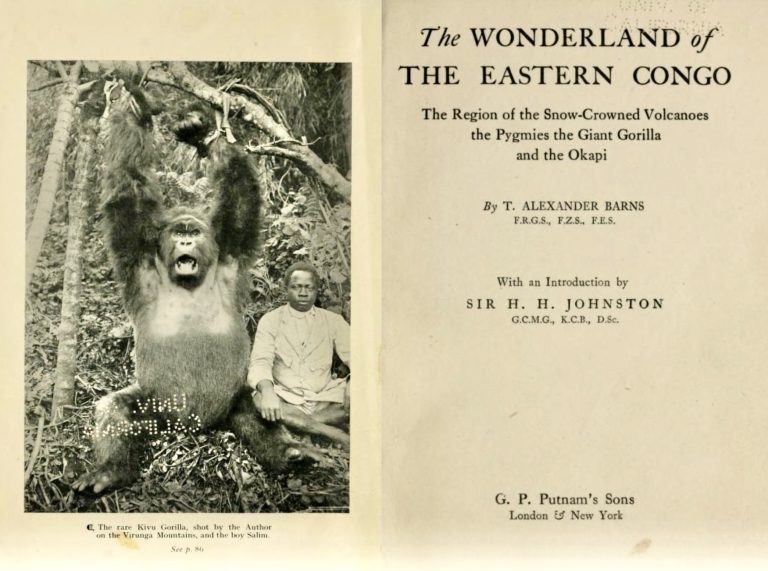
The introduction to the book by Barns was written by H. H. Johnston, a prominent British explorer and one of the key colonial administrators in the “Scramble for Africa” that occurred at the end of the 19th century. Gorilla hunting expeditions derived from colonial, commercial and scientific motivations that ultimately functioned to open up the interior of East and Central African to European economic exploitation and resource extraction. Big game hunting for sport by wealthy and privileged men was promoted, many of whom were donators to museum dioramas that showcased their trophies such as Theodore Roosevelt. The Kivu Gorilla seen in the Barns frontispiece is typical of trophy photos taken in the field; the male gorilla is strung up by his arms to emphasize his formidable size and wide musculature chest, his facial expression, even in death, is one of ferocity and his gapping mouth exposes his powerful jaw and menacing canine teeth. The porter posed next to the trophy serves to show both the scale of the beast and the subjection of the indigenous people to European sport.
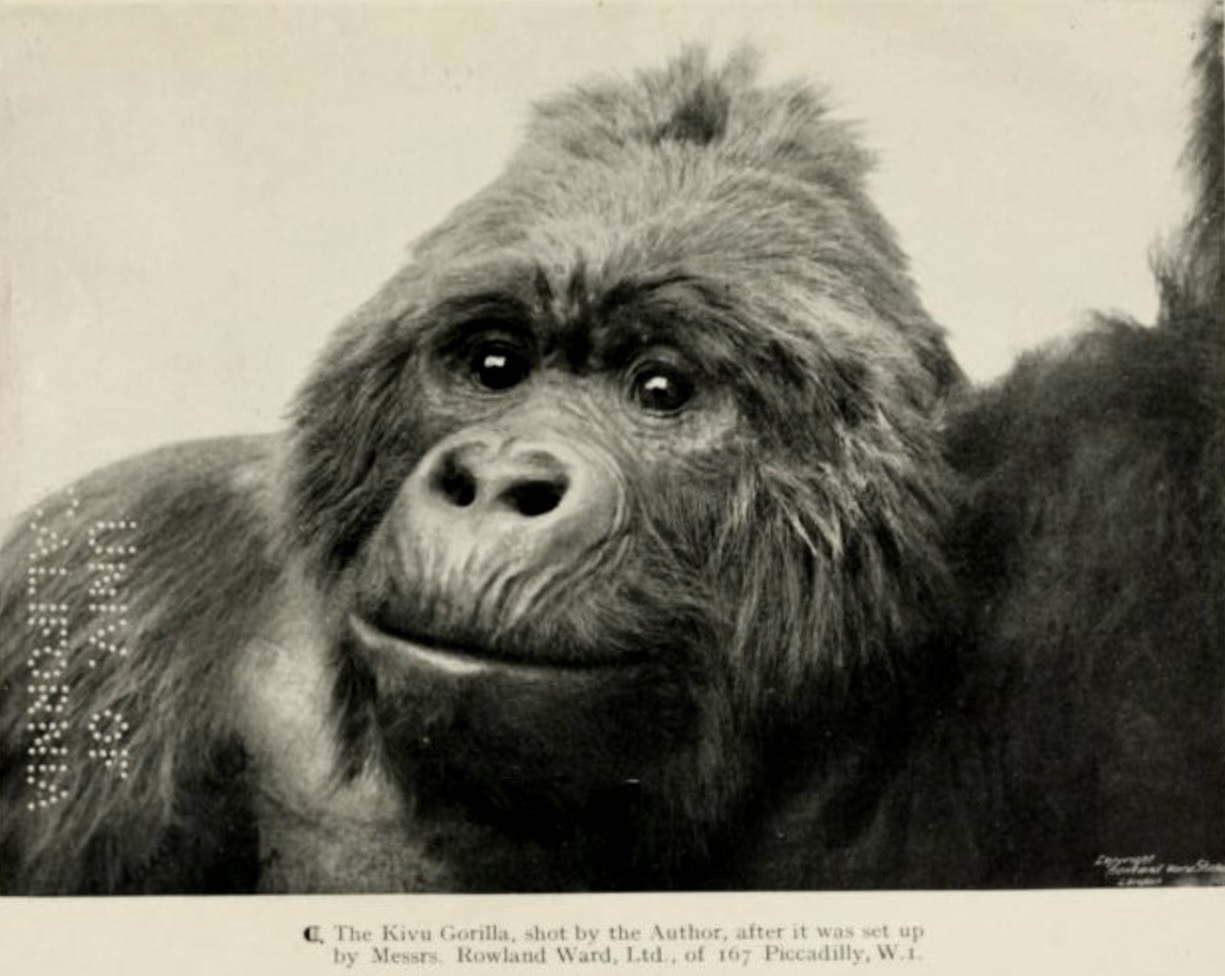
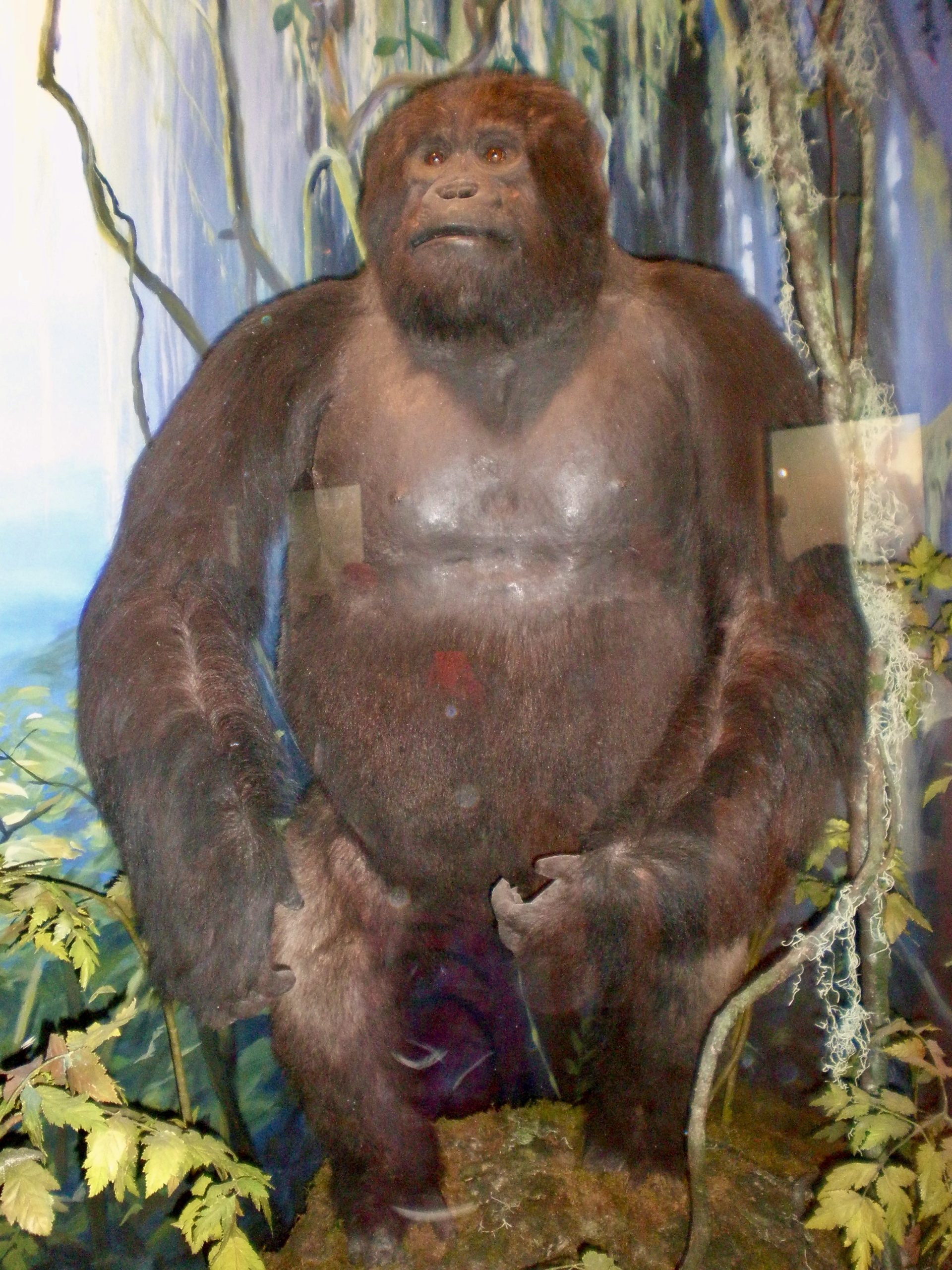
A closeup photographic portrait of the Kivu Gorilla appears in the hunting narrative by Barns. The caption reads that it was shot by the author and that the portrait was done after the gorilla had been “set up” (mounted) by Rowland Ward Ltd. in London. This was the world’s foremost purveyor of big game taxidermy though it did not typically include gorillas as legitimate game species. In contrast to the violent facial expression seen in the photo taken in the field immediately after the killing of the gorilla, the taxidermist has given the animal a quizzical demeanour and naturalistic posture. The mounted specimen was seen in by a visiting American, A. K. Macomber, who so admired it that he purchased it for 1,000 pounds in 1922 to present to the California Academy of Science in San Francisco. Here, the Kivu Gorilla remains on display today, a century old African hunting trophy that once was a status symbol for masculine prowess and colonial domination. At the same time, such trophies were given scientific legitimacy as natural history specimens eagerly sought by museum curators who competed to acquire the most complete collections.
The Kivu Gorilla was a stand alone display at the California Academy of Sciences that existed prior to the 1934 opening of the Simson African Hall of habitat dioramas. The benefactor of this hall (and a similar one at the Los Angeles County Museum of Natural History) was Leslie Simson, a wealthy mining engineer and big game hunter who made a number of collecting trips to Africa between 1920 and 1929. These resulted in one of the world’s largest private collections of African mammals. Simson’s ambition was to shoot the big game of the plains and open bush (lions, antelopes, zebras, and similar species) rather than to track gorillas in their dense tropical forest habitat. For many sportsmen like Simson, the uncanny proximity of the gorilla to humans made it repugnant as a trophy species.
At the same time that the Kivu Gorilla was killed in the Virunga region of the Belgium Congo, the legendary taxidermist and African explorer Carl Akeley (1864 – 1926) was in the area hunting for mountain gorillas for the American Museum of Natural History. Prince Wilhelm had already departed months earlier with his 14 gorillas. Both the prince and Akeley later claimed to have been the first to take film footage of the gorillas in their natural habitat and to lobby Belgium’s King Albert I to preserve the Virunga region as a gorilla sanctuary.
The competition among museum scientists to acquire specimens of mountain gorillas continued even after the establishment of a park to protect the gorillas in 1925. The following year, a large male gorilla was shot by the zoologist Harold Coolidge for the Harvard African Expedition, who posed in a photograph with his trophy. Soon after he published the definitive revision of the genus Gorilla, based on the analysis of some 800 gorilla skulls in world wide museum collections.
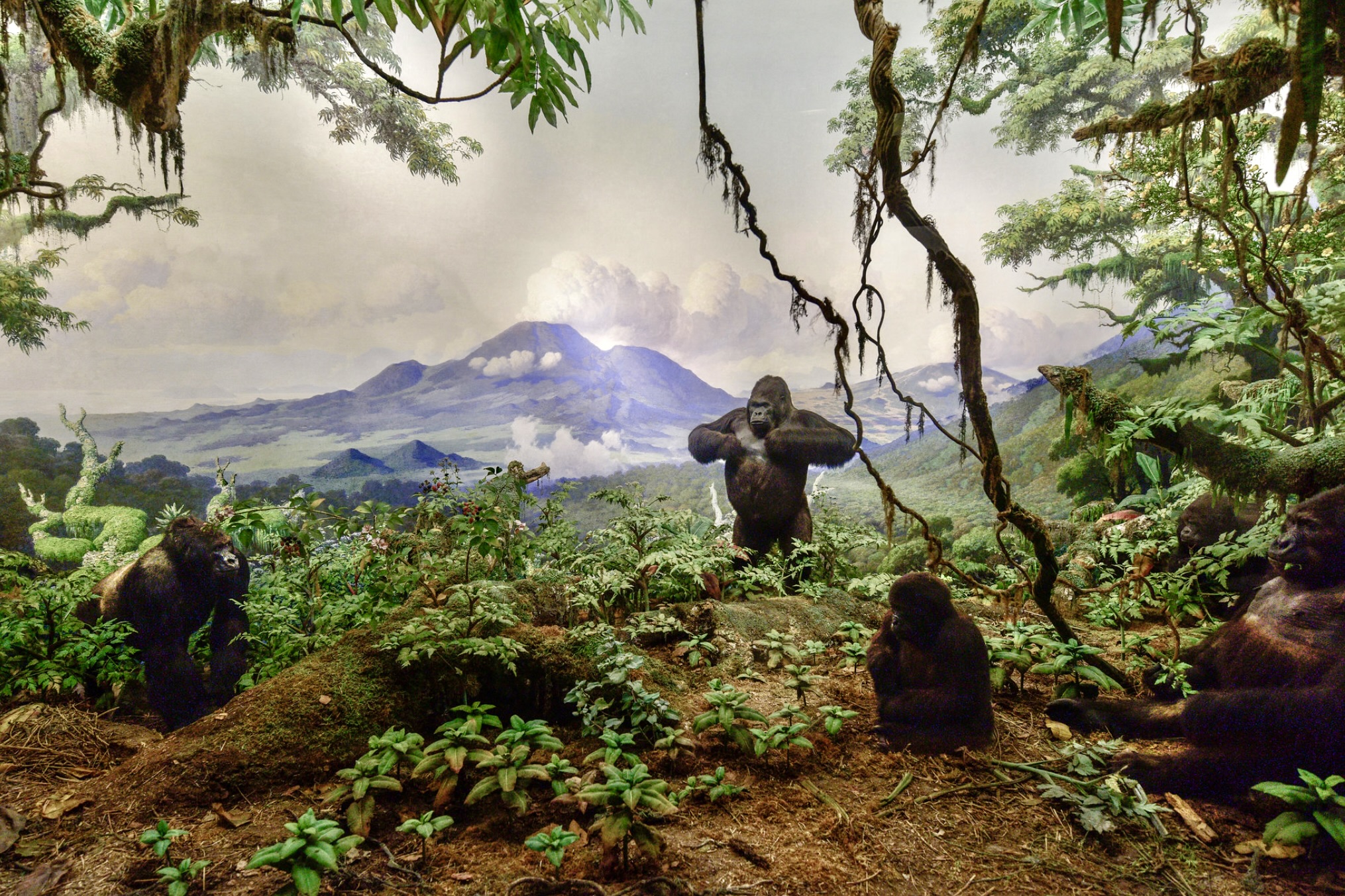
The five gorilla specimens that resulted from Akeley’s 1922 collecting expedition to Virunga are displayed in the “Mountain Gorilla Group” at the American Museum of Natural History. Completed in 1932, this is one of the masterpieces of the art of habitat dioramas. Following the sudden death of Akeley in Africa, the diorama was created as a homage to him by a dedicated professional team of exhibition artists including those in charge of its complex production: taxidermist James L. Clark; background painters William R. Leigh and Fred F. Scherer; and foreground preparator Albert E. Butler.
In his exploration narrative, In Brightest Africa (1923), Akeley writes about gorilla hunting: “To me the gorilla made a much more interesting quarry than lions, elephants, or any of the other African game, for the gorilla is still comparatively little known. Not many people have shot gorillas and almost none have studied them in their native habitat. The gorilla is one of the most remarkable and least known large animals in the world. . . added to that the fact that he is the nearest to man of any other member of the animal kingdom.”
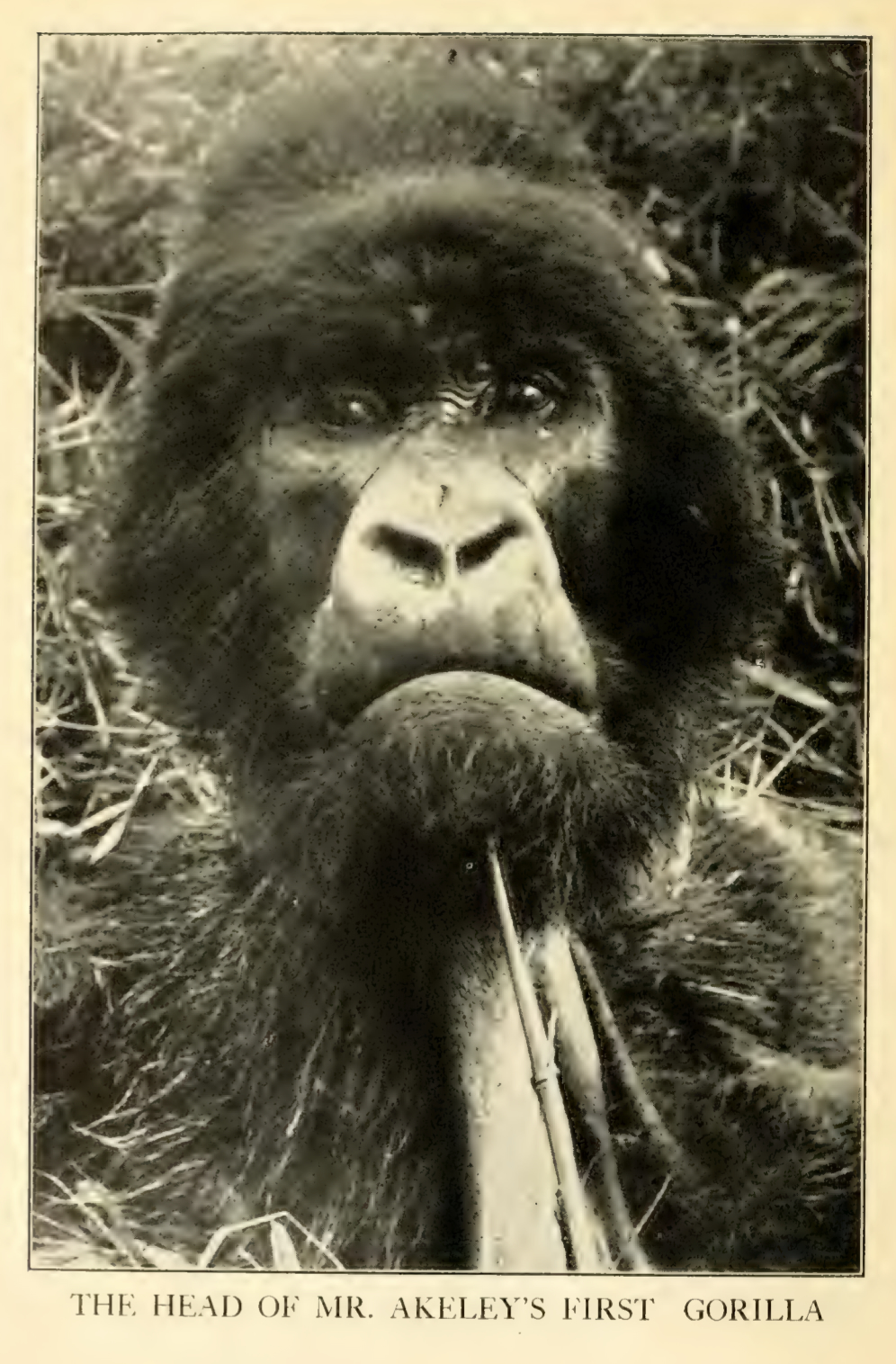
Akeley includes in his book a photograph taken on Mount Mikeno of the head of his first gorilla, the mouth of the dead animal propped closed with a pole. He later memorialized this gorilla as “The Old Man of Mikeno” in a bronze sculptural bust and the taxidermied animal appears in the the diorama on the far left. Also included in Akeley’s book are two full page illustrations from the 1861 gorilla hunting narrative by du Chaillu: one of him shooting his first gorilla, the other the plagiarized engraving published by Saint Hilaire in 1858. Akeley cites the controversial author, thus providing an example of how gorilla mythology was perpetuated by scientists, taxidermists, and artists. In his laudatory introduction to the book, Henry Fairfield Osborn (president of the American Museum of Natural History) calls Akeley the “Sculptor and Biographer of the vanishing wild life of Africa.”
The cofounder of the American Eugenics Society, Henry Fairfield Osborn (1857 – 1935) is today regarded as a controversial figure. A prominent scientist who was president of the American Museum of Natural History for 25 years, he was a an opponent of natural section although he believed in Darwinian evolution. The extent to which Osborn influenced the ideas and designs of the exhibition halls at the museum is under debate.
The scientific race to collect gorillas that began with the description of the species in 1847 was a brutal chapter in natural history that mirrored the political scramble for Africa. One motivating obsession was to name a new species or subspecies. The mountain gorilla was not discovered until one was shot in 1903 by the German military officer Robert von Beringe in the Virunga region and sent the Museum für Naturkunde in Berlin where it was later classified as Gorilla beringei beringei by the taxonomist Paul Matschie. Its holotype skeleton and skin remains there today along with two of the other four gorilla holotypes, the fourth 1847 holotype is preserved at the Harvard Zoological Museum. Some scientists believed that there were other subspecies endemic to Mount Mikeno and the hunt for them continued until the publishing of the definitive study by Coolidge in 1929.
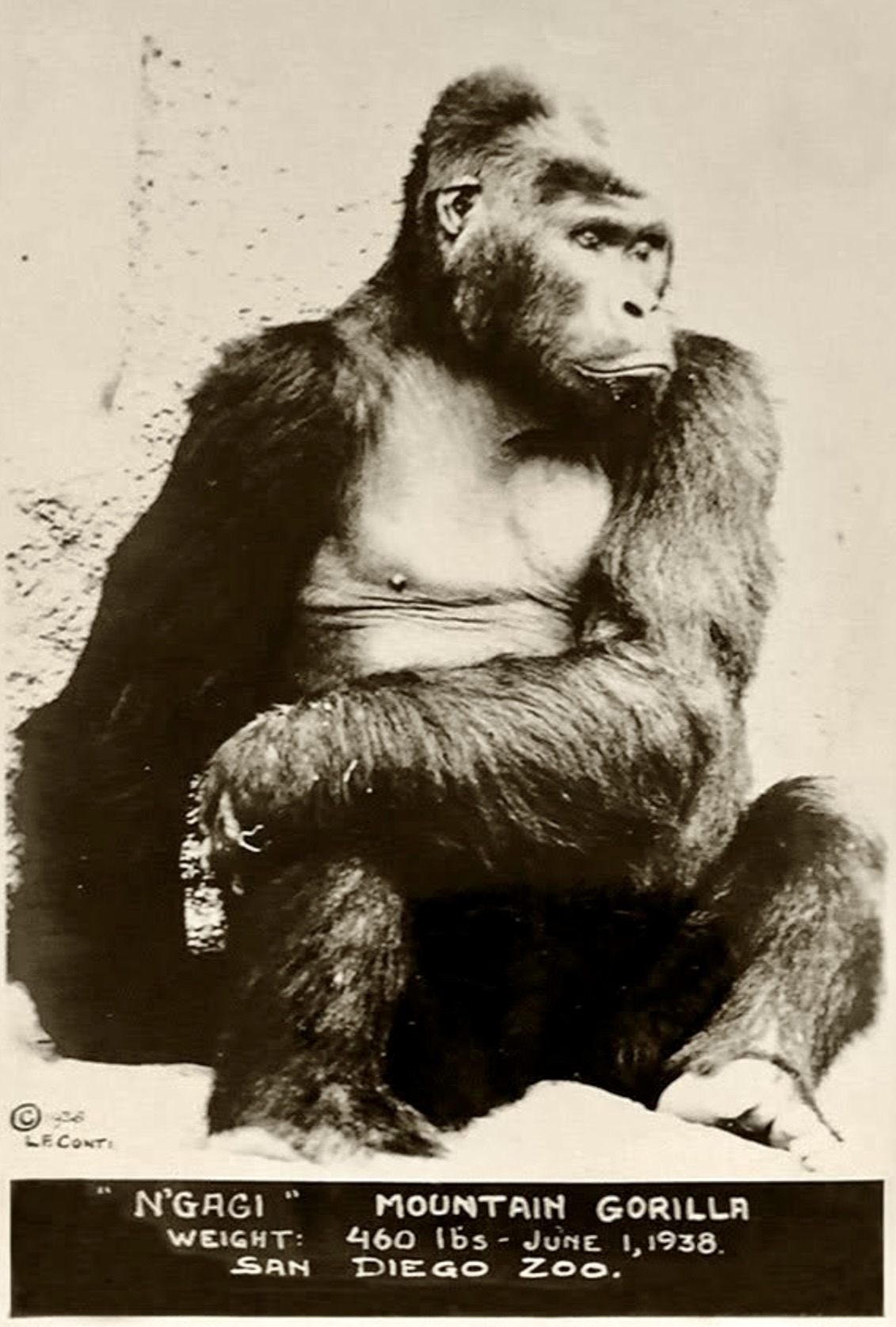
The first baby gorillas to be taken alive and survive transport and captivity in America were N’Gagi and M’bongo, two males who were purchased by the San Diego Zoo in 1931. Following the death and dissection of N’Gagi in 1944, he was discovered to be an eastern lowland gorilla (Gorilla beringei graueri), one of the most rare gorilla species, today the closest to extinction. M’bongo, a mountain gorilla, also died a premature death in 1942. Like Akekey’s Mikeno trophy, both.gorillas were memorialized by bronze portraits. From the 1930s on, the display of living gorillas in zoos transformed both the public perception and the visual representation of the species.