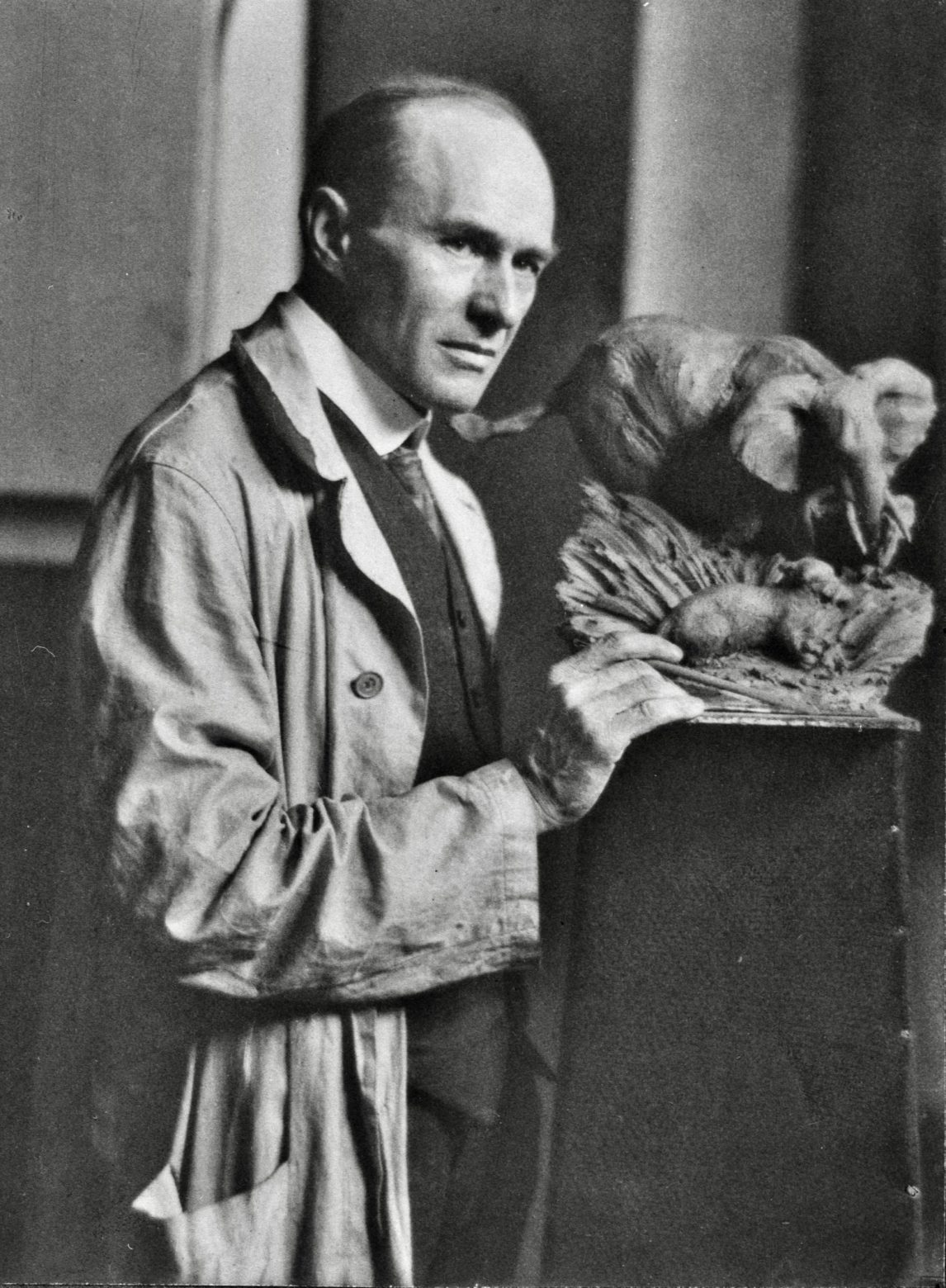
Taxidermy is often described as the art of preparing and preserving the skins and skeletons of animals and mounting them to present their appearance and habits in life. Advances in 19th century taxidermy led to more naturalistic zoological displays and the emergence of the habitat diorama in natural history museums. The most influential taxidermist in the United States was Carl Akeley (1864 – 1926).
After training at Ward’s Natural Science Establishment, Akeley began his career at the Milwaukee Public Museum in 1886. A decade later, he joined the Field Museum of Natural History in Chicago, where he served as chief taxidermist until 1909. Among his early achievements was “Four Seasons of the Deer,” which featured the Virginia Deer (Odocoileus virginianus borealis) and consisted of four dioramas in glass cases, each depicting a family group of deer in its seasonal habitat: Winter, Spring, Summer, and Autumn.
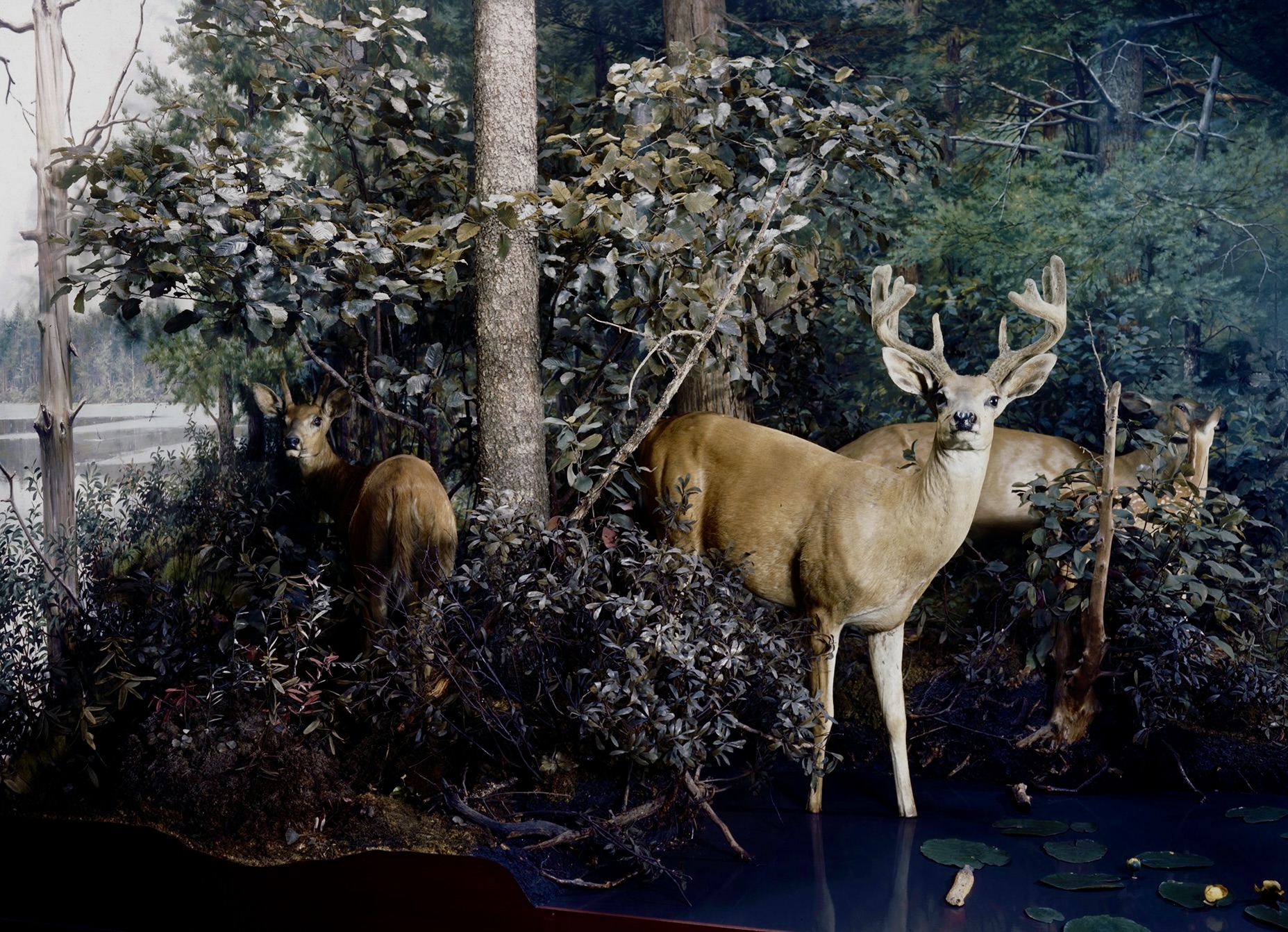
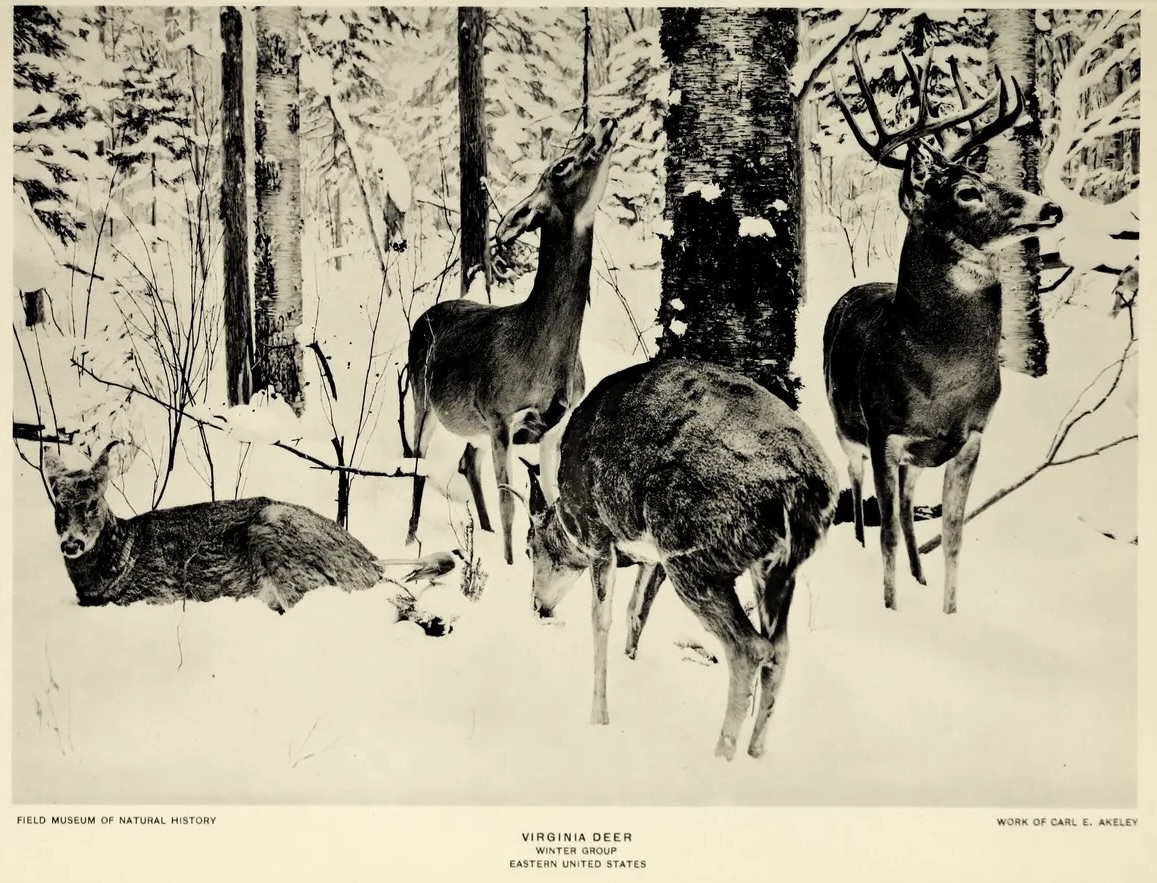
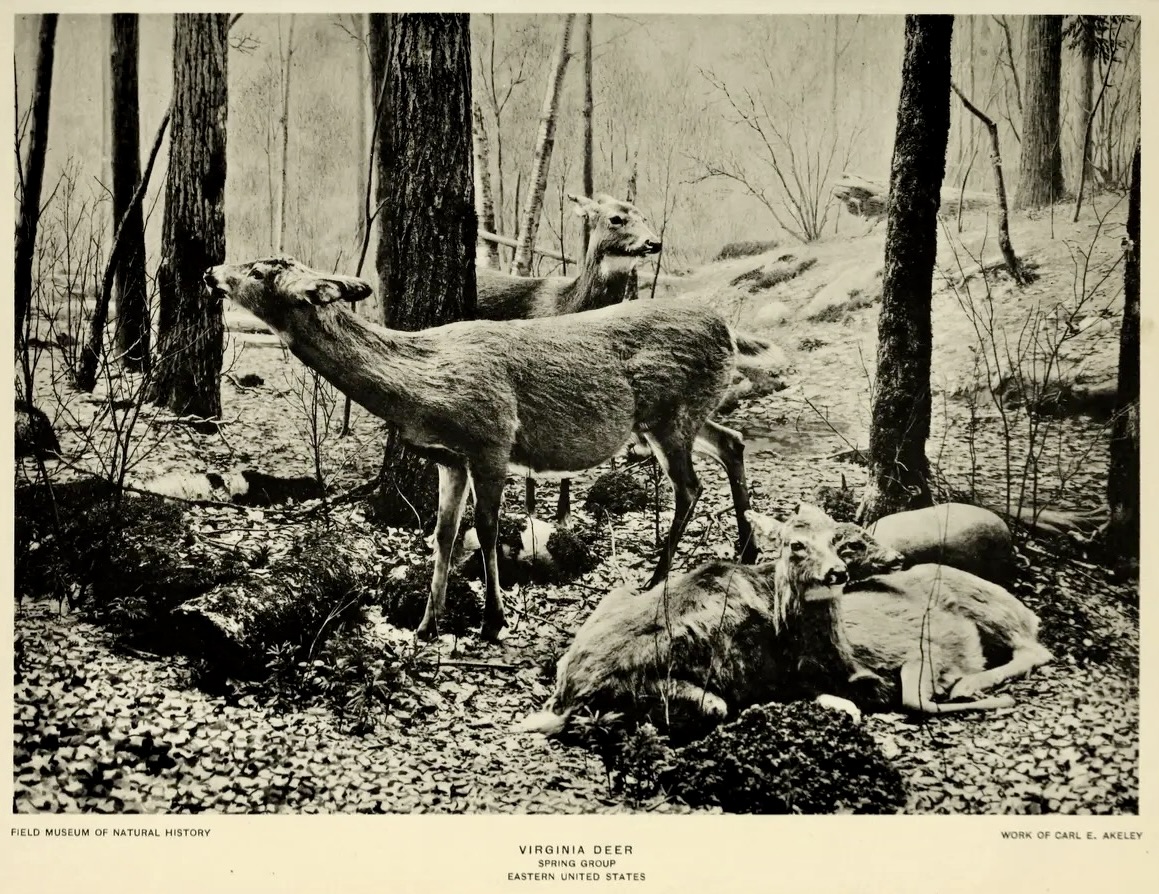
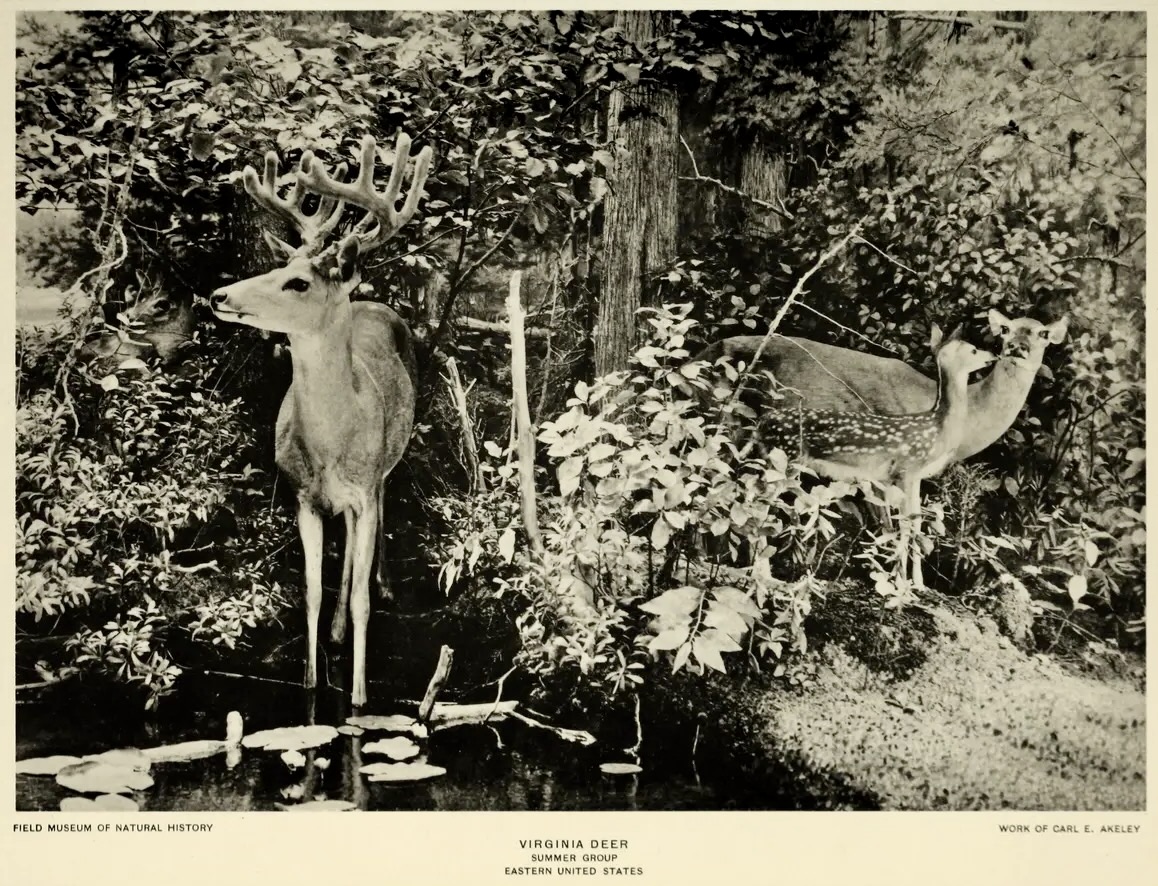
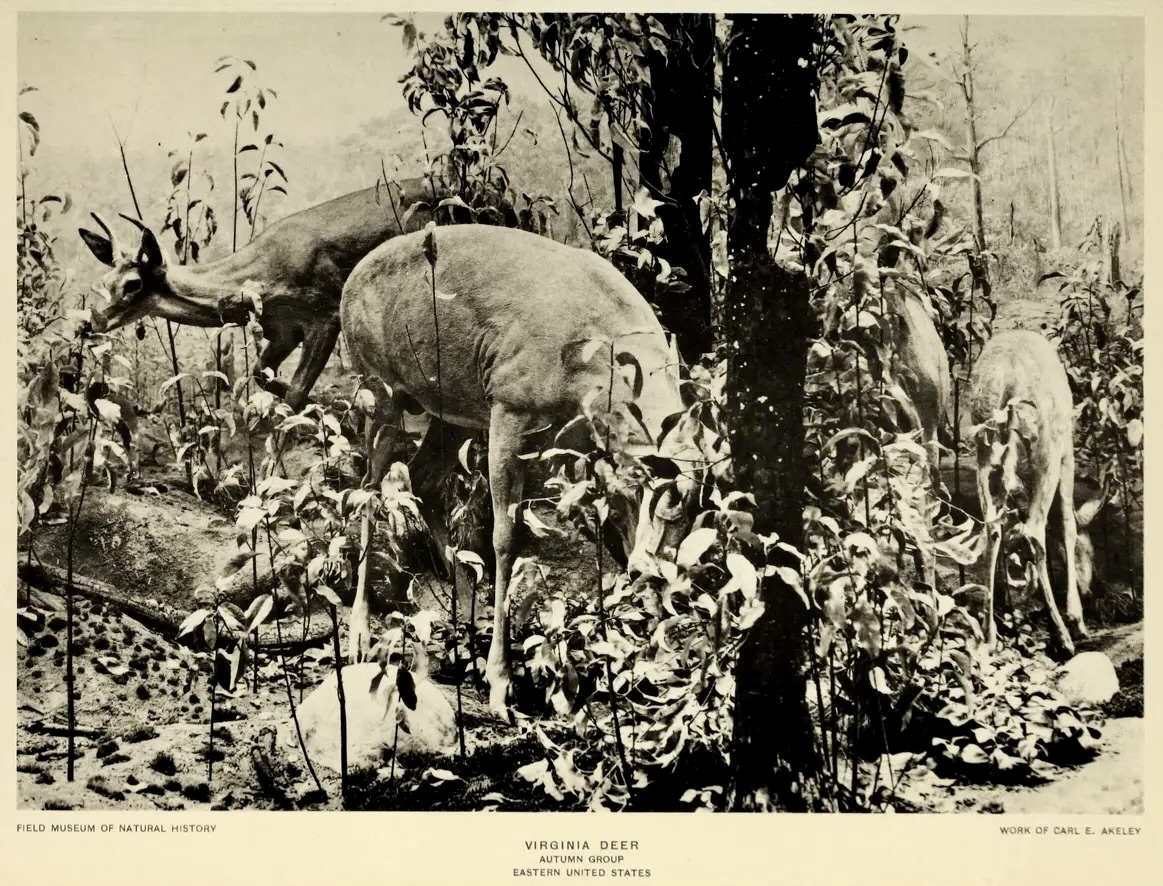
Akeley’s “Four Seasons” series is a landmark in the history of habitat dioramas and has remained on display at the Field Museum since its completion in 1902. During its creation, a process that took four years, Akeley developed an innovative method for mounting large mammals that produced a lightweight sculptural manikin onto which the animal’s skin was fitted. His wife, Delia Akeley, created the elaborate foreground foliage, while the professional artist Charles A. Corwin (1868 – 1949) painted the background landscapes. During his tenure at the Field Museum from 1896 to 1909, Akeley participated in two collecting expeditions to Africa that resulted in more than two dozen taxidermic groups of big game species.
During his later career at the American Museum of Natural History, Akeley was recognized as the master of African mammal taxidermy. The museum’s president, Fairfield Osborn, hailed him as the “sculptor and biographer of the vanishing wild life of Africa.” It was Akeley’s ability to evoke the “beauty of hide, of muscle, of bone, of facial expression” that Osborn believed would become a “truthful, ennobling and permanent record” of the grandeur of African mammals before they were destroyed by civilization. Throughout his career as a museum taxidermist, Akeley regarded himself primarily as a sculptor; in addition to preparing clay study models, he created bronze sculptures depicting both African wildlife and Indigenous peoples. Many of these he envisaged being displayed alongside his taxidermic work.
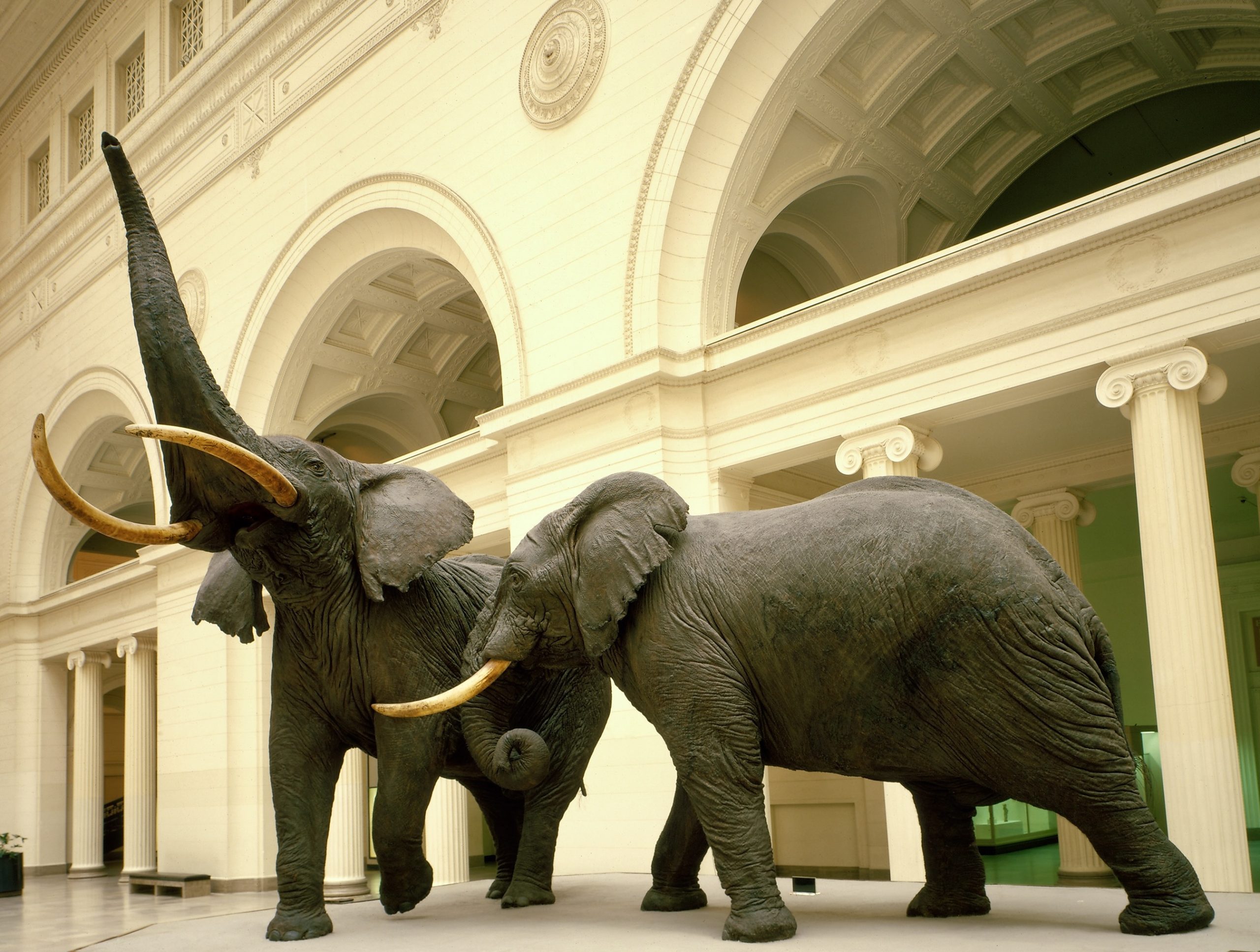
In 1905, Akeley and his wife Delia accompanied the Field Museum’s British East African Expedition to Kenya, where they killed two bull African Bush Elephants (Loxodonta africana), the world’s largest living land mammal. Delia’s trophy was recorded as the larger of the two. Both were mounted by Akeley for a group completed in 1909 entitled “Fighting African Elephants.” Strangely, one elephant is missing a tusk. When the museum relocated in 1921, the group was installed in the grand entrance rotunda, Stanley Field Hall, where it has remained ever since, becoming one of the museum’s most enduring icons.
Posed in a dramatic confrontation, Akeley’s elephant group was regarded as “high art” for its fidelity to nature and as the first powerful expression of his innovative taxidermic techniques. Yet it more faithfully embodies the identity of the sportsman in pursuit of a trophy affirming his manhood than the elephant’s true nature as a highly intelligent herbivore living in complex matriarchal societies.
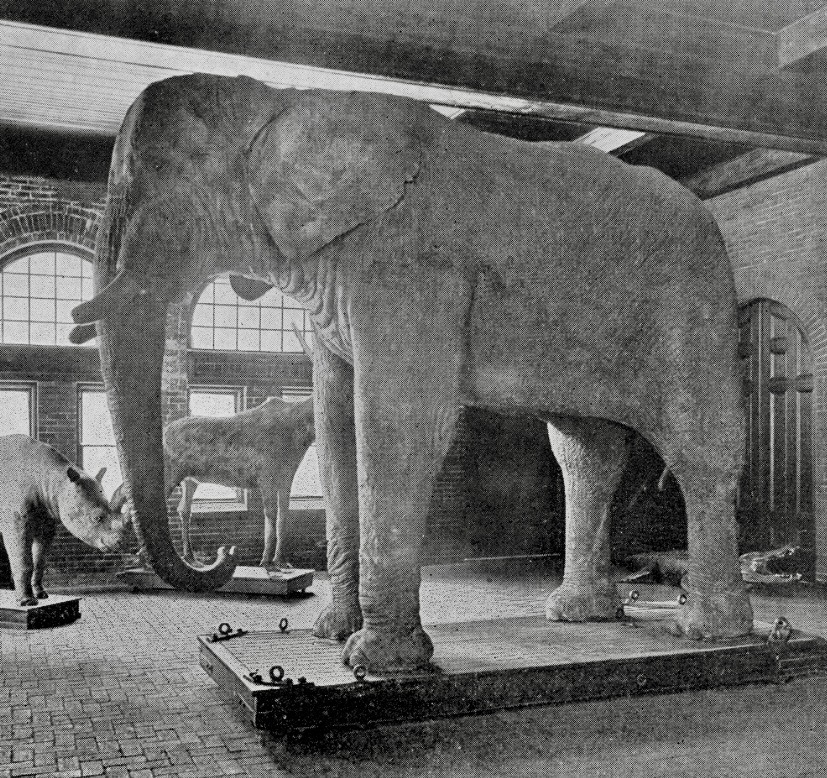
The first African Bush Elephant mounted by Akeley was Jumbo in 1886, while he was an apprentice taxidermist at Ward’s Natural Science Establishment. The untanned skin was fitted over a steel and wooden frame with little attempt at anatomical modelling. Despite having been the world’s most famous elephant in life, in death he appeared stiff and unnatural. His short life was one of suffering. After his parents were killed by ivory hunters in East Africa, Jumbo was sold as a young calf to animal dealers, who exported him to the Jardin des Plantes in Paris in 1862, where he became one of the first African elephants exhibited alive in Europe. In 1865, Jumbo was transferred to the Zoological Gardens in London, where he remained immensely popular until his erratic behaviour and increasing size became unmanageable. In 1882, he was sold to P. T. Barnum and transported to the United States, where he became the star attraction of Barnum’s circus as the “Biggest Animal on Earth.” Jumbo was killed in 1885 after being struck by a train while on tour. His remains were sent to Ward’s to be mounted, and Barnum subsequently toured the specimen throughout the country. Eventually, Jumbo became the ridiculed mascot of Tufts University, where he was destroyed in a fire in 1975. Today, his ashes are preserved in a jar.
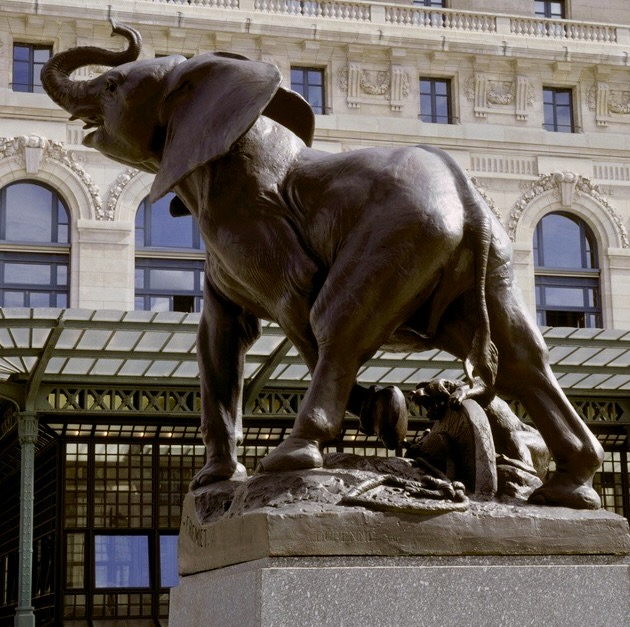
Jumbo’s life of abuse at the hands of humans was not reflected in the taxidermic mount created by Akeley. Indeed, this is one of the principal contemporary criticisms of taxidermy: that it conceals the suffering of the animal. The conventions of animal representation informing taxidermy were highly developed in the 19th century sculptural tradition of the animalier. A notable example is the famous 1878 cast iron sculpture of a young captive African elephant by the French artist Emmanuel Frémiet (1824 – 1910), now displayed outside the Musée d’Orsay in Paris. Renowned for his anatomical accuracy, Frémiet modelled the calf from a living African elephant at the Jardin des Plantes and exhibited the lifesize work at the 1878 Exposition Universelle as a visual critique of European colonialism in Africa. Although it is uncertain whether Akeley knew this specific sculpture, he was likely familiar with Frémiet’s controversial bronze “Gorilla Carrying Off a Woman,” which was displayed at the American Museum of Natural History until 1930. Akeley adopted the lost wax casting technique associated with the animalier sculptural tradition and employed it in his own bronzes. He further adapted these modelling methods to taxidermy by building a structural form of the animal and creating a lightweight manikin over which the skin was fitted.
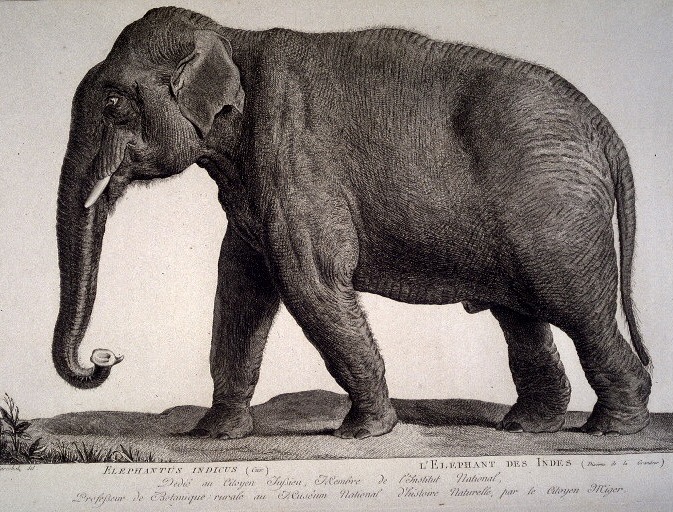
The first elephant to be preserved and mounted was an Asian Elephant (Elephas maximus) named Hans. Together with a female calf, Hans was captured in Sri Lanka and transported to the royal menagerie in the Netherlands. Following the French invasion of 1795, the young elephants were confiscated and moved to the Jardin des Plantes, where they became famous. Hans was depicted in an engraving by Nicolas Maréchal that was widely reproduced. Following his death in 1803, Hans was dissected, preserved, and mounted by Louis Dufresne (1752 – 1832), a naturalist at the Muséum national d’Histoire naturelle. Dufresne published one of the first articles on taxidermy, in which he revealed the secret recipe for the arsenical soap developed by Jean Baptiste Bécoeur and introduced the term “taxidermy.” His subsequent 1820 treatise, Taxidermie, ou l’art de préparer et de conserver la dépouille de tous les animaux, set the standard for the preservation of natural history specimens.
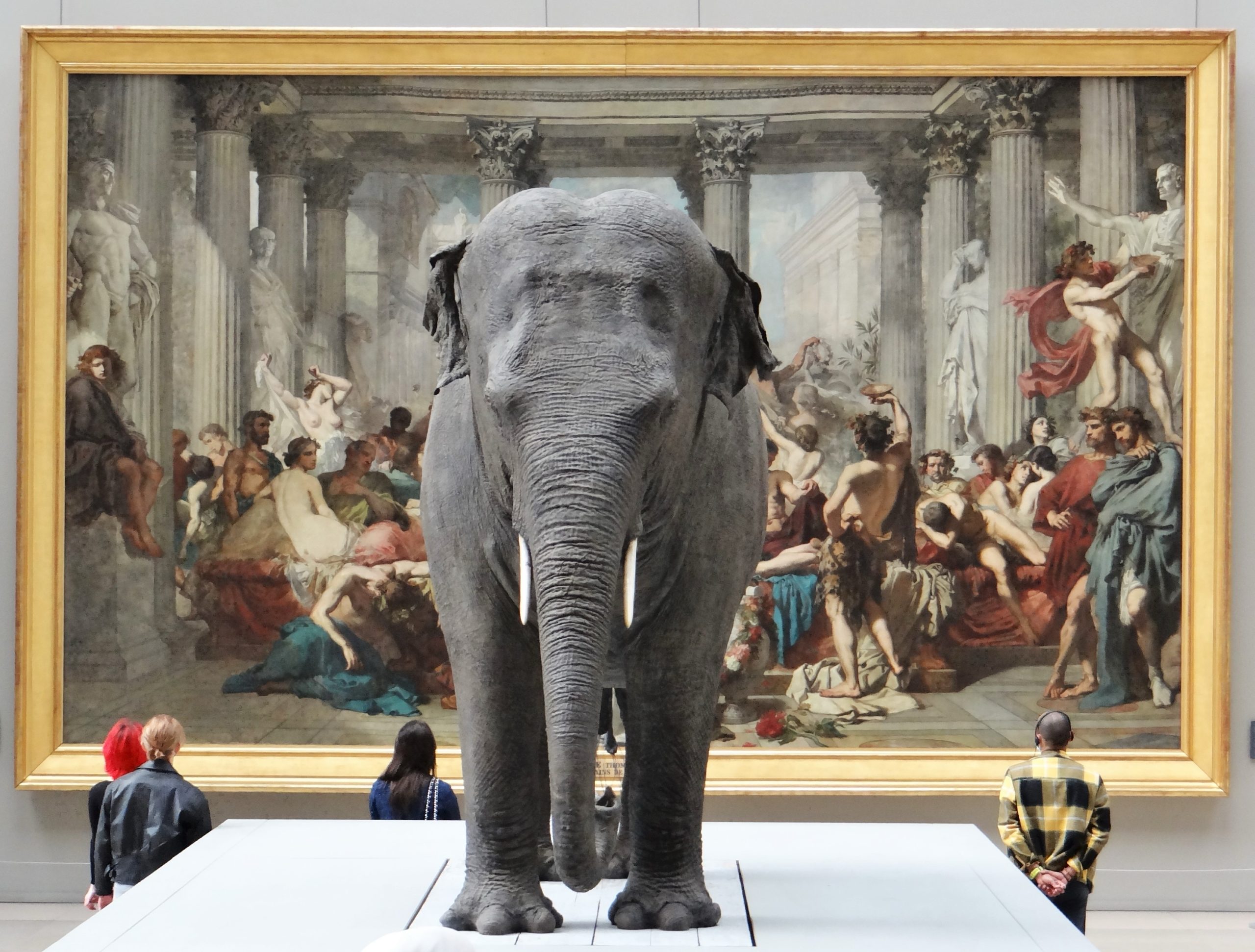
Marguerite, nicknamed Parkie, was the young female elephant captured with Hans in Sri Lanka. After her death in Paris in 1816, she was dissected by the prominent French zoologist Georges Cuvier. Today, she remains on display as a preserved taxidermy specimen at the Muséum national d’Histoire naturelle. Parkie was loaned to the Musée d’Orsay in 2021 for the exhibition “The Origins of the World: The Invention of Nature in the 19th Century,” which explored how scientific discoveries influenced the ways humans relate to the natural world. Parkie’s spectacular display in the museum’s nave alongside works of art was intended to highlight the intersection of science, nature, and artistic creation. Yet there was no mention of her tragic history or the suffering she endured at the hands of humans. Conveniently, taxidermy does not reveal the mass slaughter of wild elephants for ivory, the brutal capture of young calves, the cruel training to tame them, the harsh conditions of transport and confinement, or their greatly shortened lifespans in captivity.
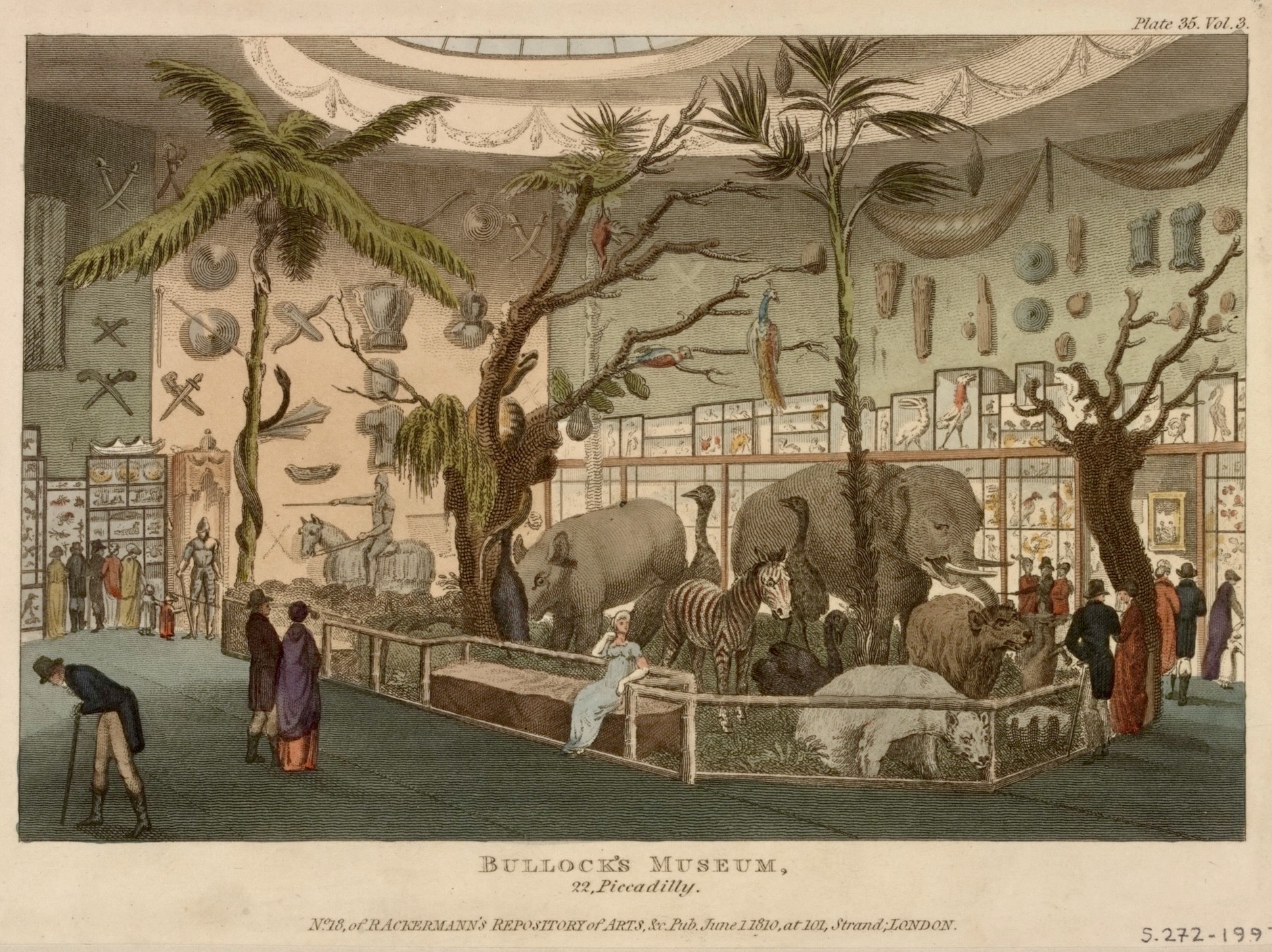
In England, the first treatise on taxidermy was written by the natural history collector and showman William Bullock (1773 – 1849). In 1817, he published A Concise and Easy Method of Preserving Subjects of Natural History, giving instructions on the use of arsenical soap so that travellers, sportsmen, and amateurs could preserve animals and plants in the field. Bullock used his skill as a taxidermist to create a grand naturalistic display of exotic animals in his celebrated museum located at 22 Picadilly in London. The display is seen in a coloured aquatint by Thomas H. Shepherd, titled “Bullock’s Museum, published in 1810. According to the museum’s guidebook, “the lofty Giraffa [sic], the Lion, the Elephant, the Rhinoceros, & c. are exhibited as ranging in their native wild[s] and forests. The whole being assisted with a panoramic effect of distance and appropriate scenery.” Bullock stated that his illusionistic exhibition would transport the viewer “to the depth of an Indian forest” (although he incongruously included African animals).
The first use of the word taxidermy in an English language instruction manual was by a woman: Sarah Bowdich Lee (1791 – 1856). Although her Taxidermy; or, the Art of Collecting, Preparing, and Mounting Objects of Natural History was published in 1820, the absence of her name from the first edition’s title page led to its misattribution to her husband. Subsequent accusations of plagiarism were likewise misplaced, since unauthorized translations and adaptations were common at the time. While portions of Bowdich’s book translated Dufresne’s “Taxidermie” article, she revised other sections and added her own “Instructions for Travellers,” together with extensive field notes. Furthermore, Sarah Bowdich was an accomplished scientific illustrator whose drawings were engraved for the book’s five plates.
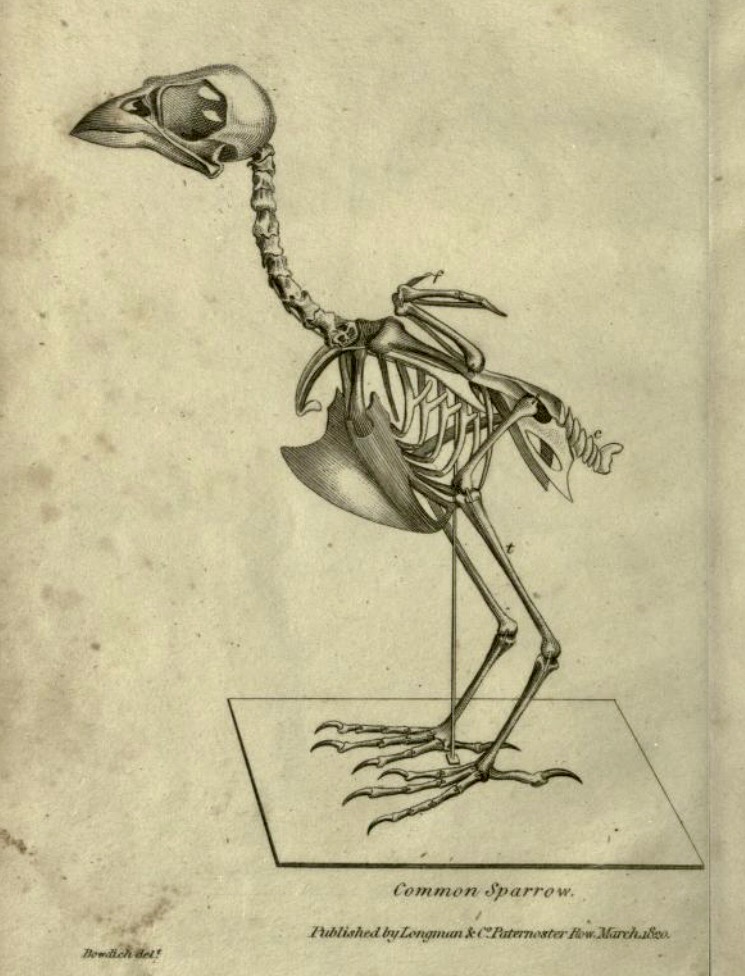
Plate II features a detailed skeletal engraving entitled “Bone Structure of the Common Sparrow.” Rather than depicting a rare or exotic bird, Bowdich chose an easily accessible specimen on which readers could practise. In the text, she emphasizes the importance of osteology, and her articulated profile of the sparrow skeleton demonstrates the proportions of the cervical vertebrae, the angle of the scapula, and the depth of the sternum. The illustration also serves as a guide to constructing the support armature, showing it passing through the skull, along the spinal column, and exiting through the metatarsal bones to anchor the bird naturally to its perch. At a time when women were effectively barred from publishing scientific research, Bowdich’s use of Dufresne’s text as the basis for a substantially revised English manual may have been a strategic means of introducing taxidermy to the Anglophone world.
Another important English translation of Dufresne’s work, also published in 1820, was The Taxidermist’s Manual; or, the Art of Collecting, Preparing and Preserving Objects of Natural History by Captain Thomas Brown. Significantly, Brown added an appendix, “List of Books for Attitudes of Quadrupeds and Birds,” indicating the close relationship between natural history artists and taxidermists.
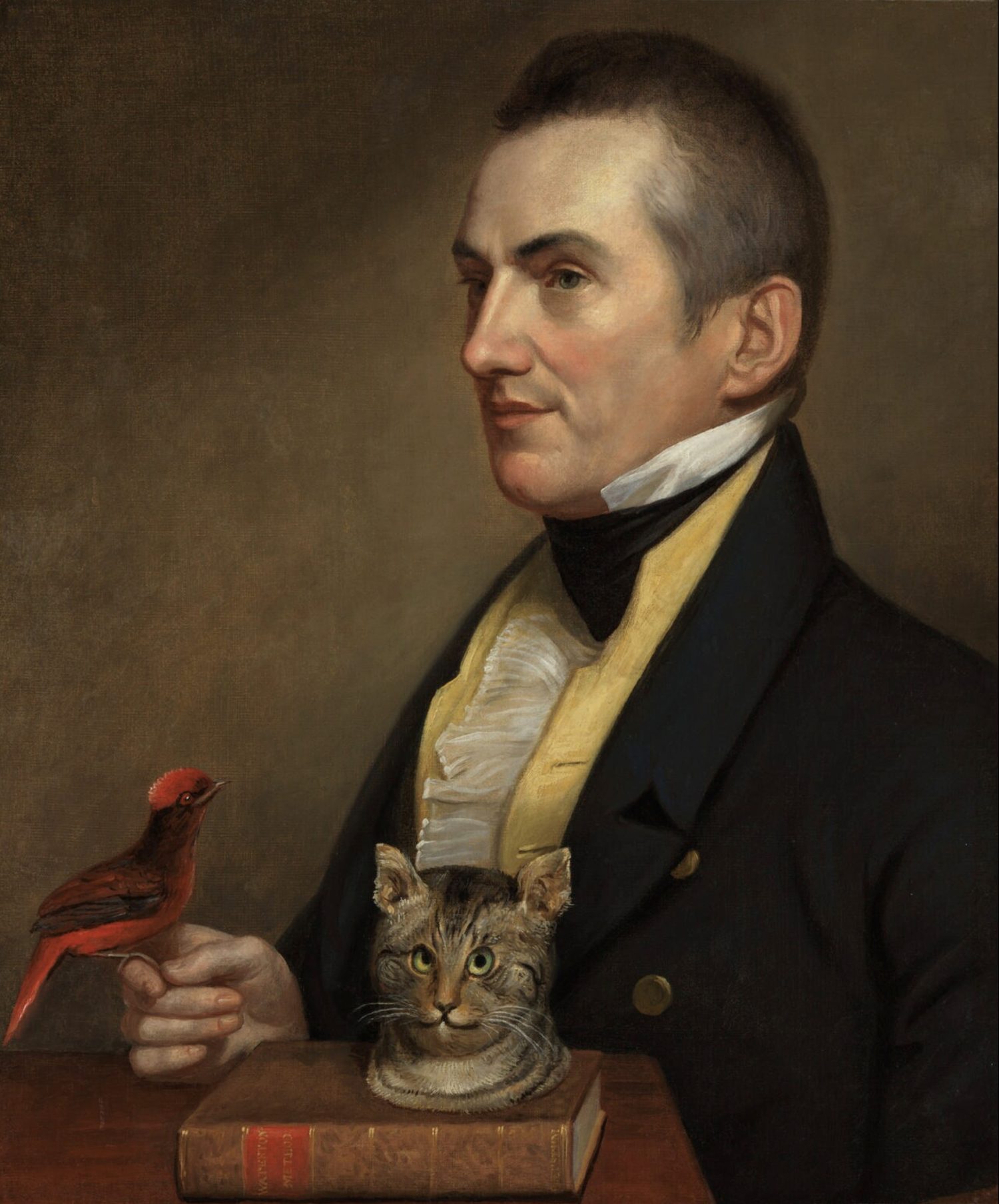
In the United States, the Philadelphia polymath and museum innovator Charles Willson Peale was already before 1800 using arsenical preserving soap in his bird taxidermy and early forerunners of habitat dioramas. In 1824, Peale painted a portrait of the visiting English naturalist Charles Waterton (1782 – 1865) that includes a book entitled Waterton’s Method. This refers to the taxidermic technique that Waterton had taught Peale’s son, in which the specimen was left hollow rather than stuffed. The Guianan Red Cotinga specimen depicted in the portrait, as well as the cat, had been prepared using this method. Waterton described the technique in an appendix to his popular travel book, Wanderings in South America (1825). There he wrote: “Were you to pay as much attention to birds as the sculptor does to the human frame, you would immediately see, on entering a museum, that the specimens are not well done. This remark will not be thought severe when you reflect that that which once was a bird has probably been stretched, stuffed, stiffened and wired by the hand of a common clown.”
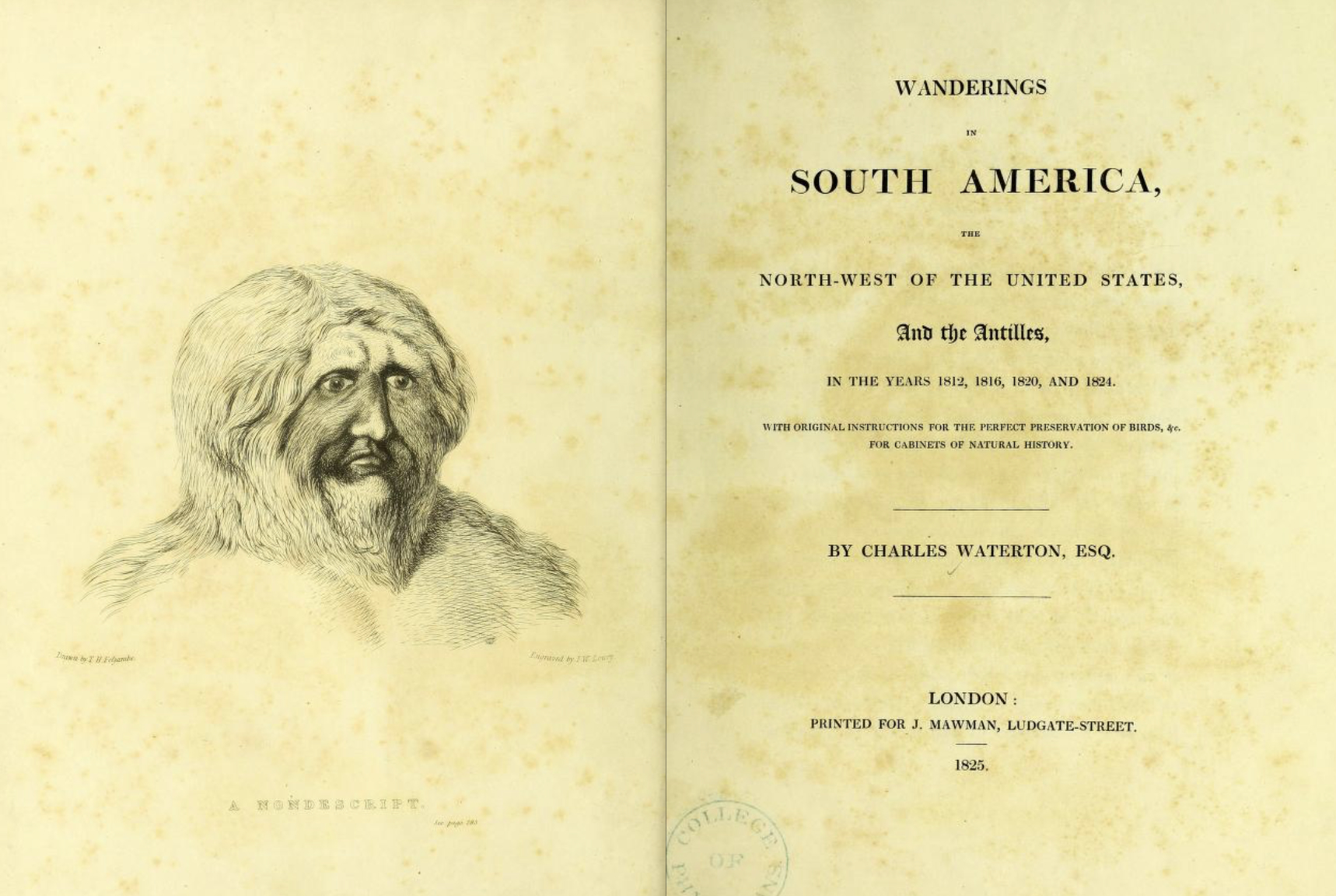
Waterton made four expeditions to South America between 1812 and 1824 to collect natural history specimens. His influential travel book on South America inspired Darwin and Wallace to undertake similar journeys. The book’s frontispiece depicts a satirical taxidermic prank. A contemporary described it as follows: “The Nondescript was the skin of a Red Howler monkey from British Guiana, manipulated with such skill by Squire Waterton that it appeared to be the stuffed specimen of a Georgian gentleman.” Waterton used the hoax to demonstrate his taxidermic skill while satirizing the politics of his age. Despite its humorous intent, his taxidermy was admired by the eminent scientist Richard Owen. Waterton was also among Britain’s earliest conservationists, transforming his estate into a nature reserve in opposition to the industrial destruction of native wildlife habitats, including those of the peregrine falcon, kite, and heron.
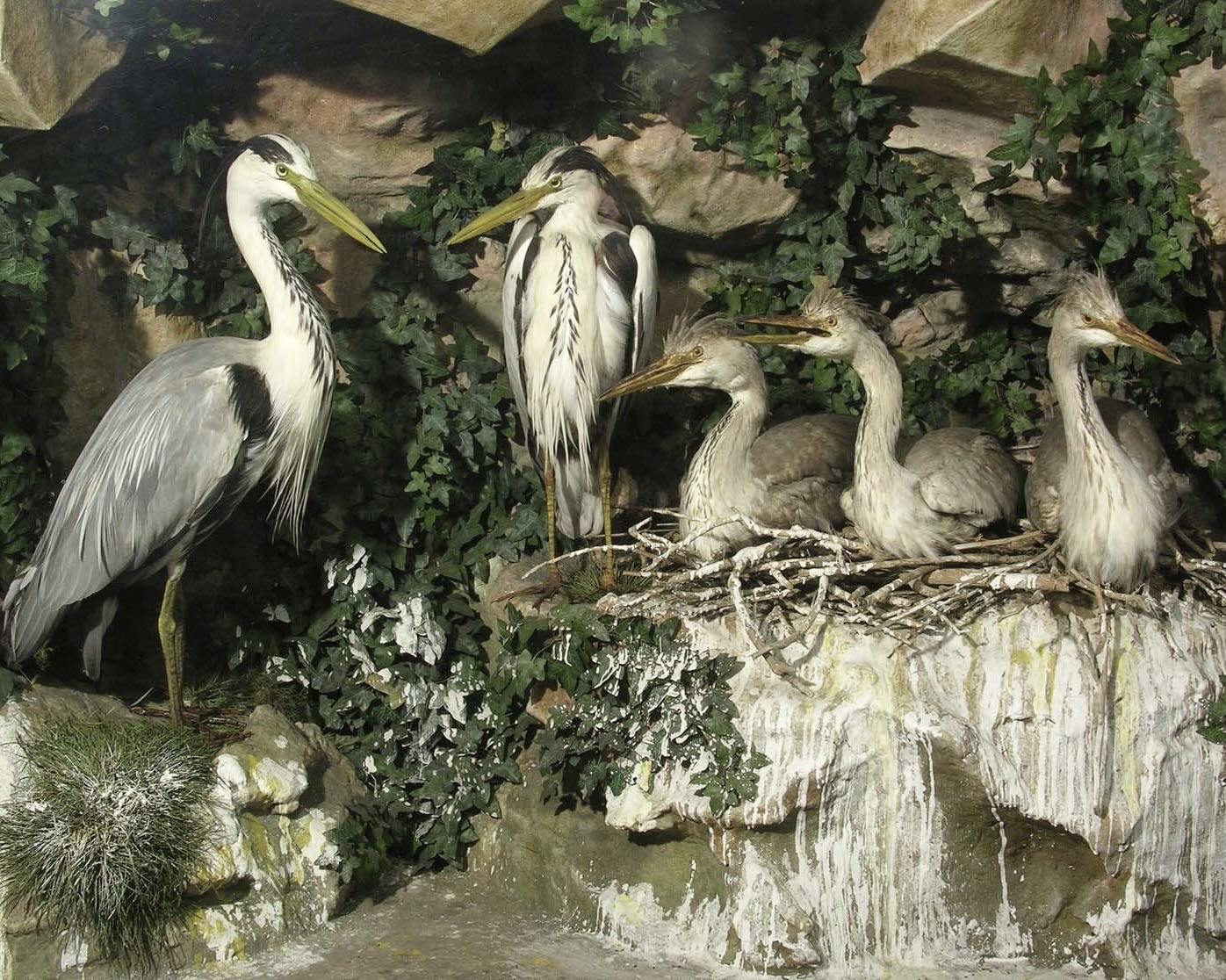
The first museum in Britain to deliberately integrate art and taxidermy was the remarkable Booth Museum in Brighton. Founded by the ornithologist Edward Thomas Booth (1840 – 1890), the museum contained more than 300 habitat groups when it opened in 1874. R. Bowdler Sharpe, Curator of Zoology at the Natural History Museum, South Kensington, described its displays as unsurpassed in the world: “Here may actually be seen our native birds in their haunts, every species being represented as in a wild state, with corresponding natural accessories, reproducing as nearly as possible the surroundings as they were when the birds were alive, and representing the scenes sketched by the collector at the time of capture.” Sharpe regarded Booth’s “system of artistic taxidermy” as the future of museum display and advocated its adoption at the Natural History Museum during the late 1880s. The series of habitat groups of British birds that subsequently emerged there provided the model and inspiration for a new approach to exhibition design at the American Museum of Natural History.
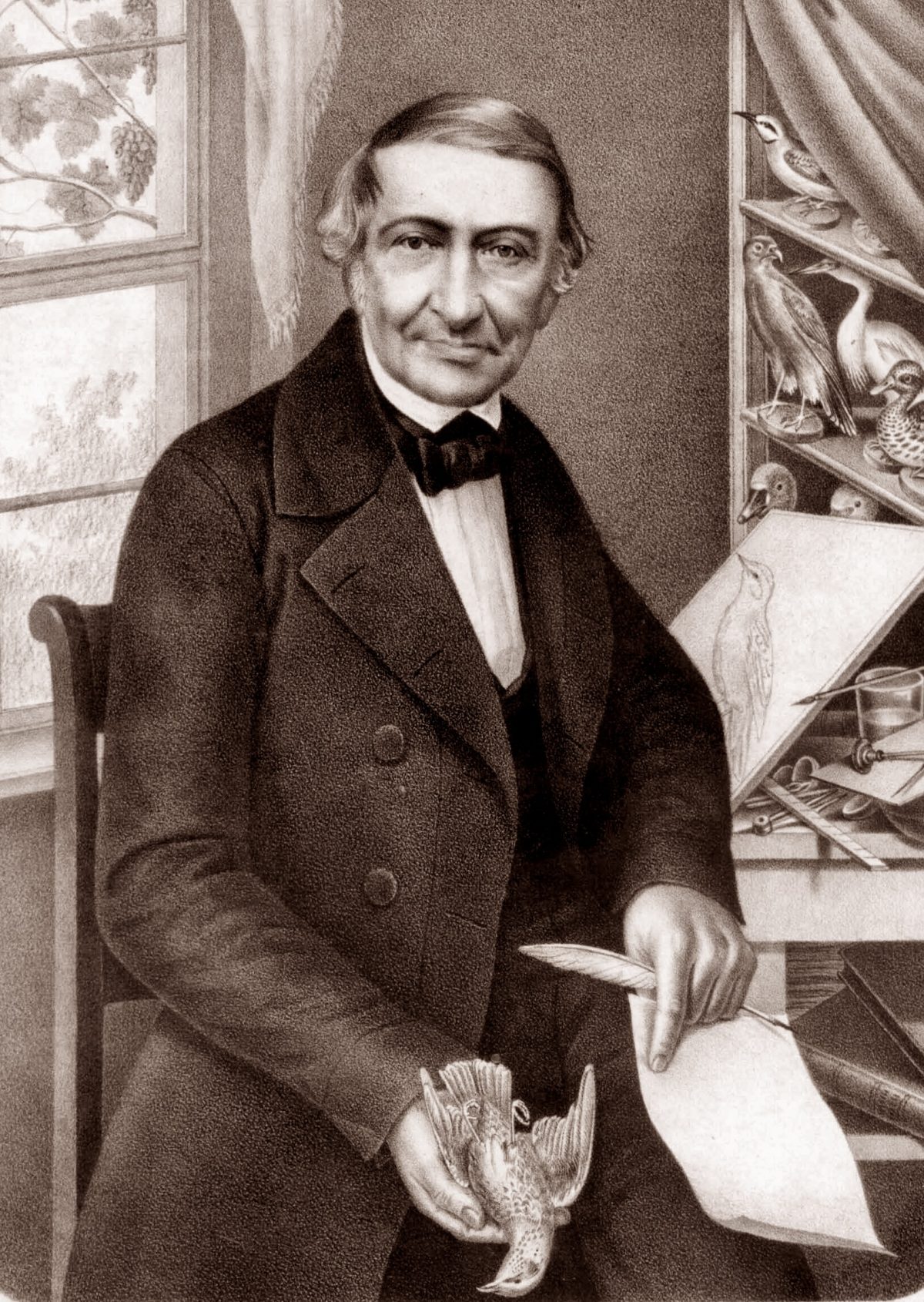
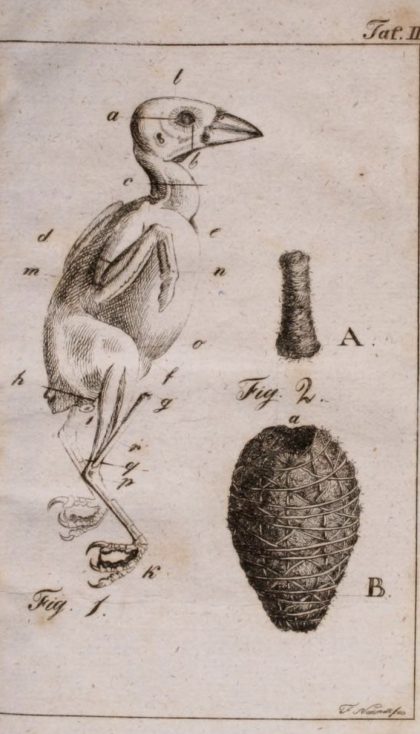
The distinguished ornithologist Johann Friedrich Naumann (1780 – 1857) was among the first German scholars to formally adopt and popularize the term taxidermy in a published work. His seminal 1815 manual, Taxidermie oder die Lehre, Thiere aller Klassen am einfachsten und zweckmäßigsten für Kabinette auszustopfen und aufzubewahren (Taxidermy, or the Art of Stuffing and Preserving Animals of All Classes in the Simplest and Most Appropriate Manner for Cabinets), became an influential reference for generations of museum curators and collectors. An accomplished artist, Naumann engraved the plates for his own publications; Plate II of his treatise, for example, illustrates the precise anatomical measurements required in preparing a bird skin and outlines his method for constructing tow wrapped artificial bodies (“Wickelkörper”) that served as internal supports. Naumann’s legacy is captured in an 1856 lithograph by Albert Waldow, which depicts the naturalist studying specimens in his studio.
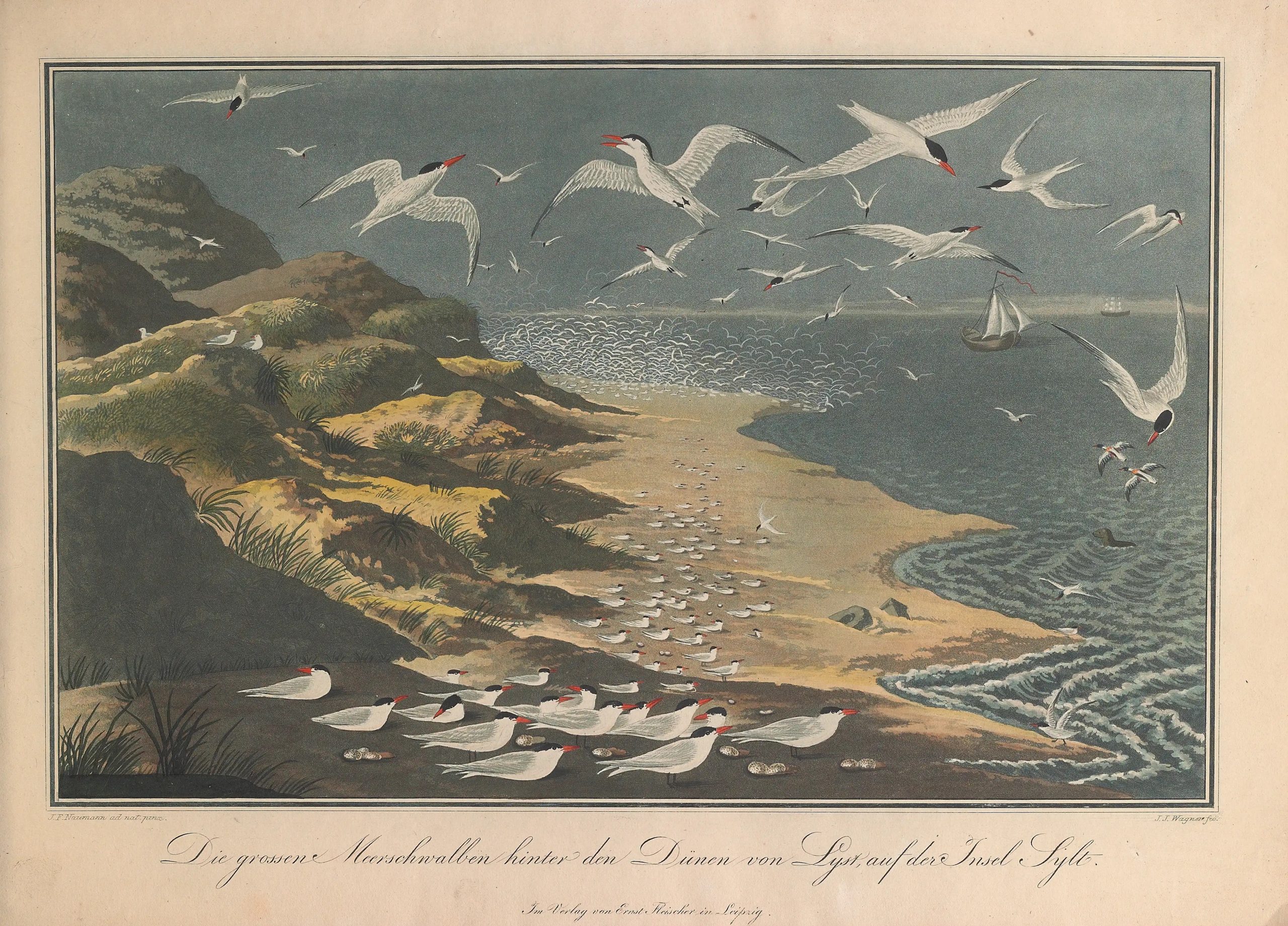
Widely regarded as the founder of scientific ornithology in Germany, Johann Friedrich Naumann was equally committed to field observation and research. Reflecting on his motivations, he wrote: “I wanted particularly to seek out the seabirds, which I knew mostly only from cabinets, to observe them at their nests, learn their behavior and way of life, and hunt them with my own hand.” Following his expedition to the North Frisian Islands in 1819, he published Ueber den Haushalt der nordischen Seevögel Europa’s (On the Ecology of the Nordic Seabirds of Europe (1824). The work contains two hand colored copperplate engravings based on landscapes Naumann painted in situ. One plate depicts a breeding colony of “Silbermöwen” (Herring Gulls) and “Raubseeschwalben” (Caspian Terns) at the northernmost tip of the island of Sylt, providing an early example of environmental representation that bridged field observation and museum display.
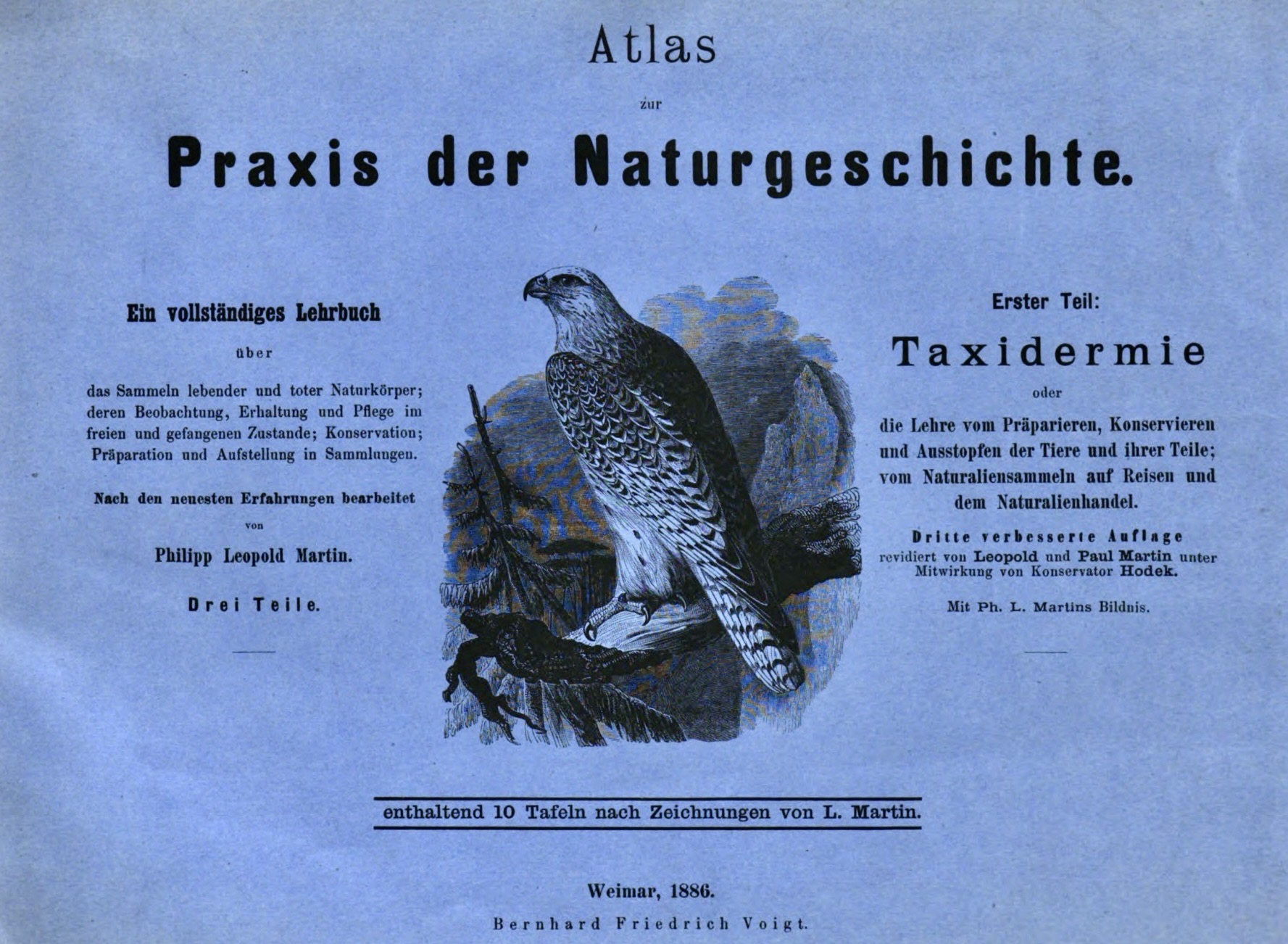
The German naturalist Philipp Leopold Martin (1815 – 1885) was an influential taxidermist, conservationist, and museum innovator. His landmark multivolume treatise, Die Praxis der Naturgeschichte (The Practice of Natural History), was published in Weimar between 1869 and 1898 and included three atlas volumes. The first volume, devoted to taxidermy, went through four editions, while subsequent volumes and posthumous editions were edited by his sons. Martin coined the term “Dermoplastik,” derived from the Greek derma (skin) and plassein (to mold), to describe his Dermoplastik method. In contrast to traditional stuffed specimens, this artistic technique involved sculpting anatomically precise manikins from clay or wood before fitting the preserved skin over the modeled form. Martin’s career began in 1852 as a taxidermist at the Museum für Naturkunde in Berlin. In 1859, he joined the Königliches Naturalienkabinett (Royal Cabinet of Natural History) in Stuttgart, where he remained until 1874, when he established his own natural history institution, the Museum der Urwelt (Prehistoric World).
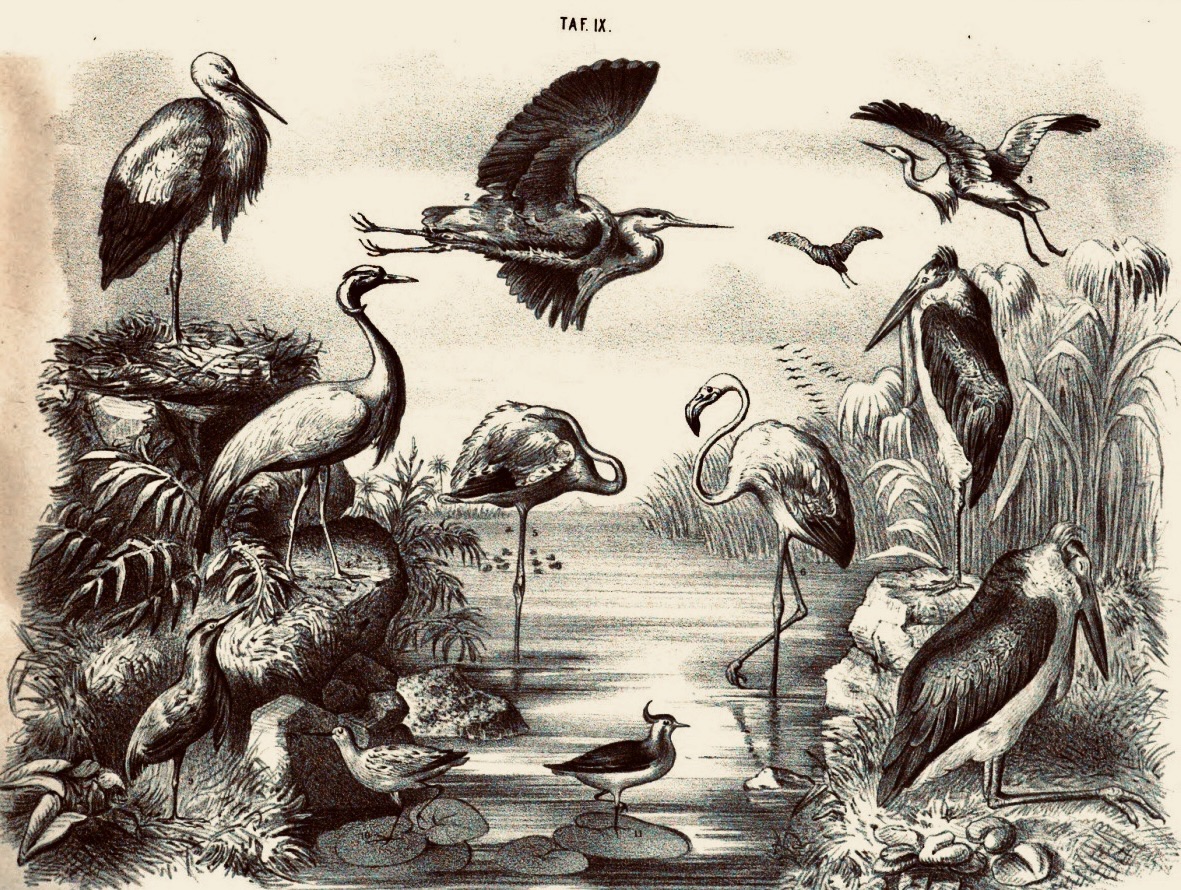
In 1876, Philipp Leopold Martin published Taxidermie, oder, Die Lehre vom Beobachten, Konserviren, Präpariren und Naturalien sammeln auf Reisen, Ausstopfen und Aufstellen der Thiere etc. (Taxidermy, or, the Art of Observing, Preserving, Preparing, and Collecting Natural History Specimens while Traveling, Stuffing and Displaying Animals, etc.). The work included an atlas with ten lithographic plates created from Martin’s own drawings. Six of these plates depict groups of related birds in their native habitats. Plate IX features a group of wading birds adapted to shallow waters, mudflats, and marshes. Each species is numbered and described: a Common Stork at rest; a Grey Heron in flight, highlighting the distinctive angular bend of its neck; a Purple Heron taking flight among papyrus plants; a Demoiselle Crane; and Flamingos both awake and at rest. Martin’s emphasis on ornithological habitat was central to his concept of ecological museum displays.
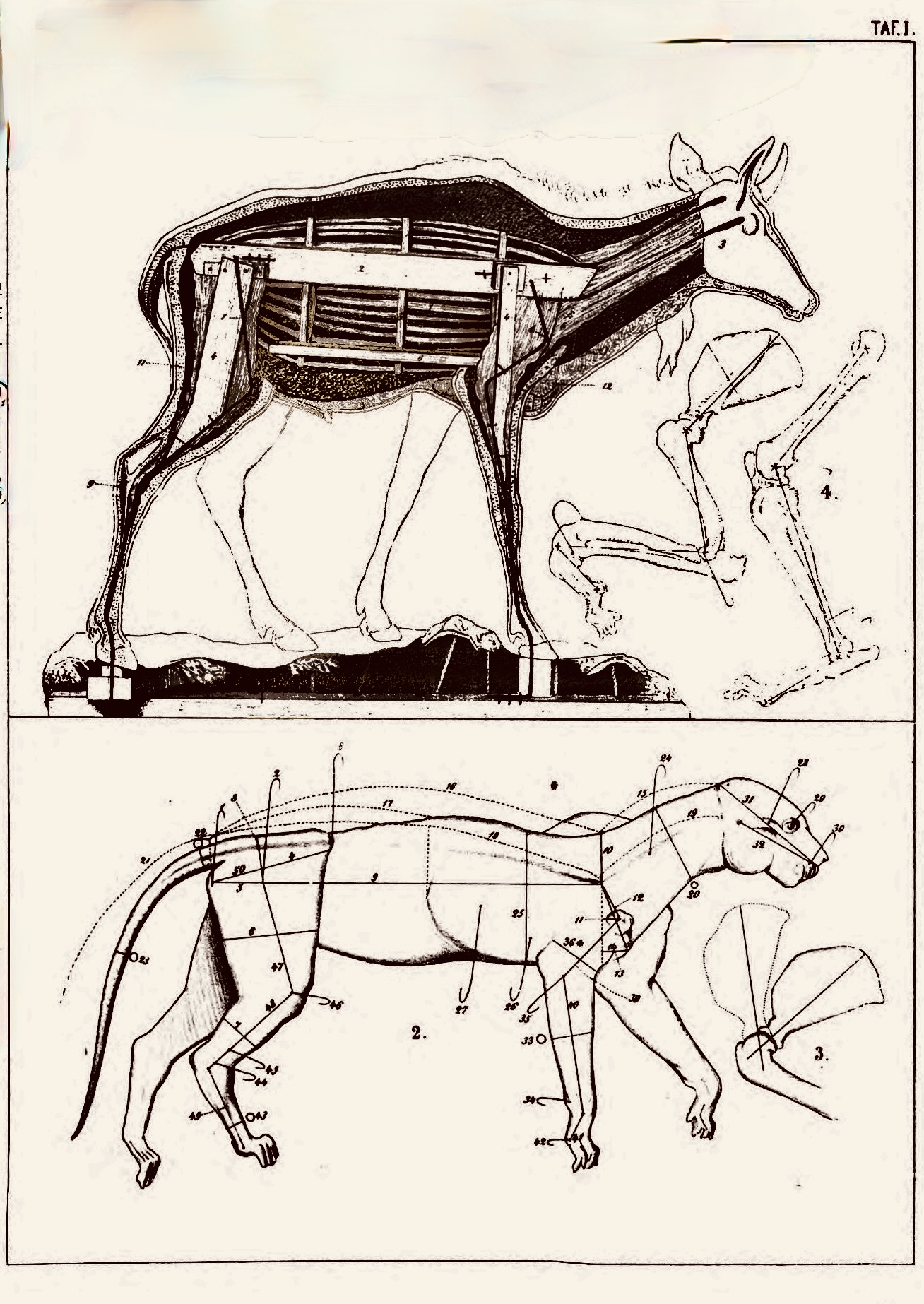
The second volume of Martin’s work on the practice of natural history was Dermoplastik und Museologie oder das Modelliren der Thiere und das Aufstellen und Erhalten von Naturaliensammlungen. Published in 1870, it was accompanied by a folio of lithographic plates depicting a wide range of animals, including lions, camels, elephants, wild boar, horses, and tigers, by the distinguished zoological illustrators Paul Meyerheim and Friedrich Specht. Martin intended these illustrations to demonstrate the artists’ ability to render anatomical structure and facial expression, qualities he regarded as essential to the practice of artistic, or dermoplastic, taxidermy.
Plate I, drawn by Martin himself, illustrates the construction of sculptural body forms. One figure shows the armature of a deer built from a wooden and metal framework, accompanied by sketches of the animal’s leg bones; another demonstrates how precise anatomical measurements and proportions of a lion were recorded before the armature was constructed. Rather than simply “stuffing” a preserved skin, Martin argued that the taxidermist must first reconstruct the animal’s body through anatomical modeling informed by comparative osteology and the observation of living animals. Dermoplastic taxidermy sought to recreate the appearance and vitality of the living animal rather than merely preserve its remains.
Martin is generally credited with one of the earliest uses of the term “Museologie,” reflecting his ambition to promote natural history museums as institutions of public education. He was also an early advocate of nature conservation, introducing the modern German term “Naturschutz” in the title of the final section of Die Praxis der Naturgeschichte. For Martin, natural history encompassed the interconnected goals of understanding, educating, and conserving nature, a holistic vision within which taxidermy occupied an essential role.
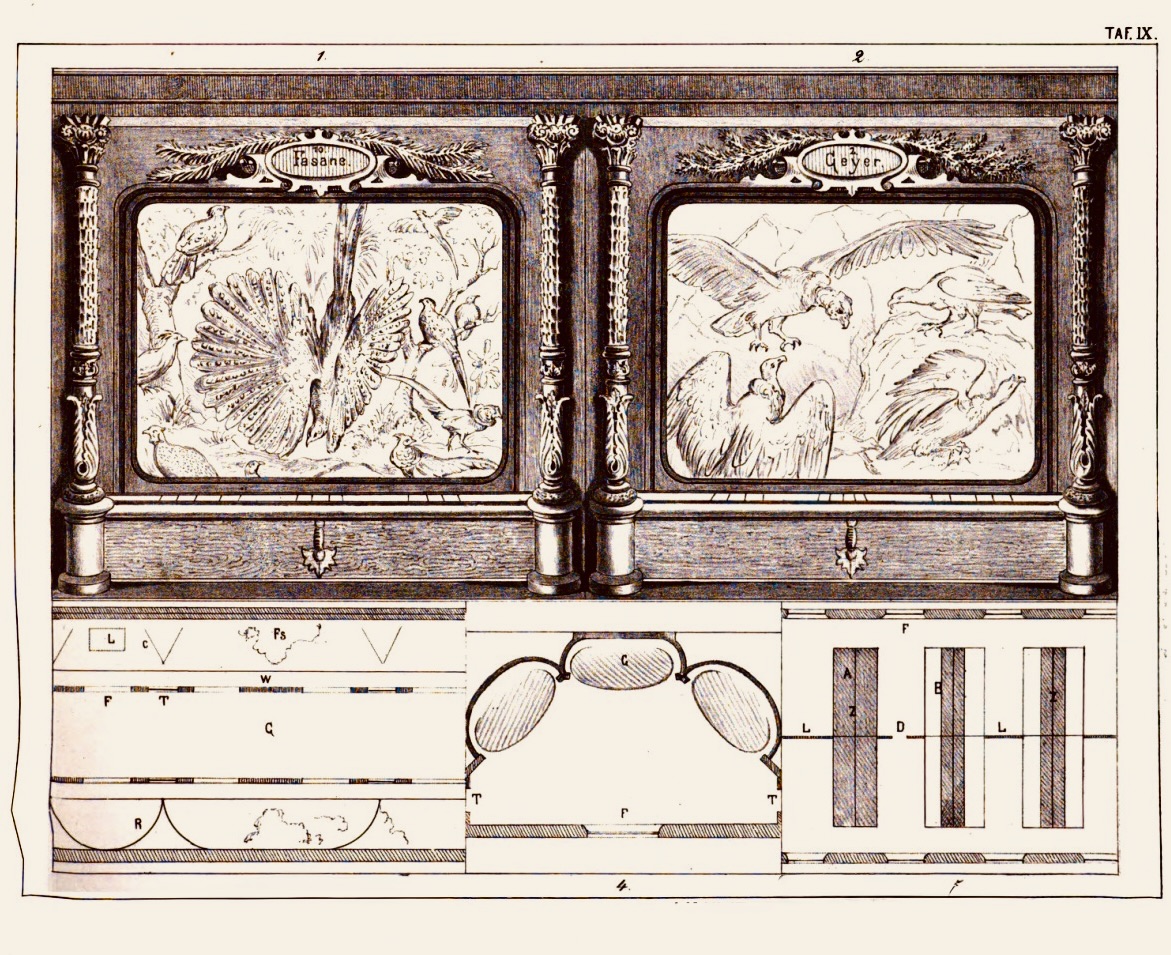
Martin’s Dermoplastik und Museologie examines both the practice of artistic taxidermy and the design of natural history museum displays. Plate IX in the atlas presents his concept for displaying natural history specimens. The architectural design shown in the lower half of the plate depicts rounded cabinets and a cross section. Above are the cabinet windows, through which viewers can observe naturalistic scenes featuring birds. One group, labeled “Fasanen” (pheasants), depicts woodland birds in their native habitat, including a male engaged in courtship display. The other, labeled “Geier” (vultures), presents birds of prey within a mountainous landscape, shown engaged in various behaviors. The two groups are framed by elaborate decorative elements intended to function as “windows onto nature,” embodying the same illusionistic principle that later became central to the habitat diorama. For Martin, natural history museums were to function as carefully composed aesthetic environments that encouraged observation and understanding, rather than merely as systematic repositories of specimens.
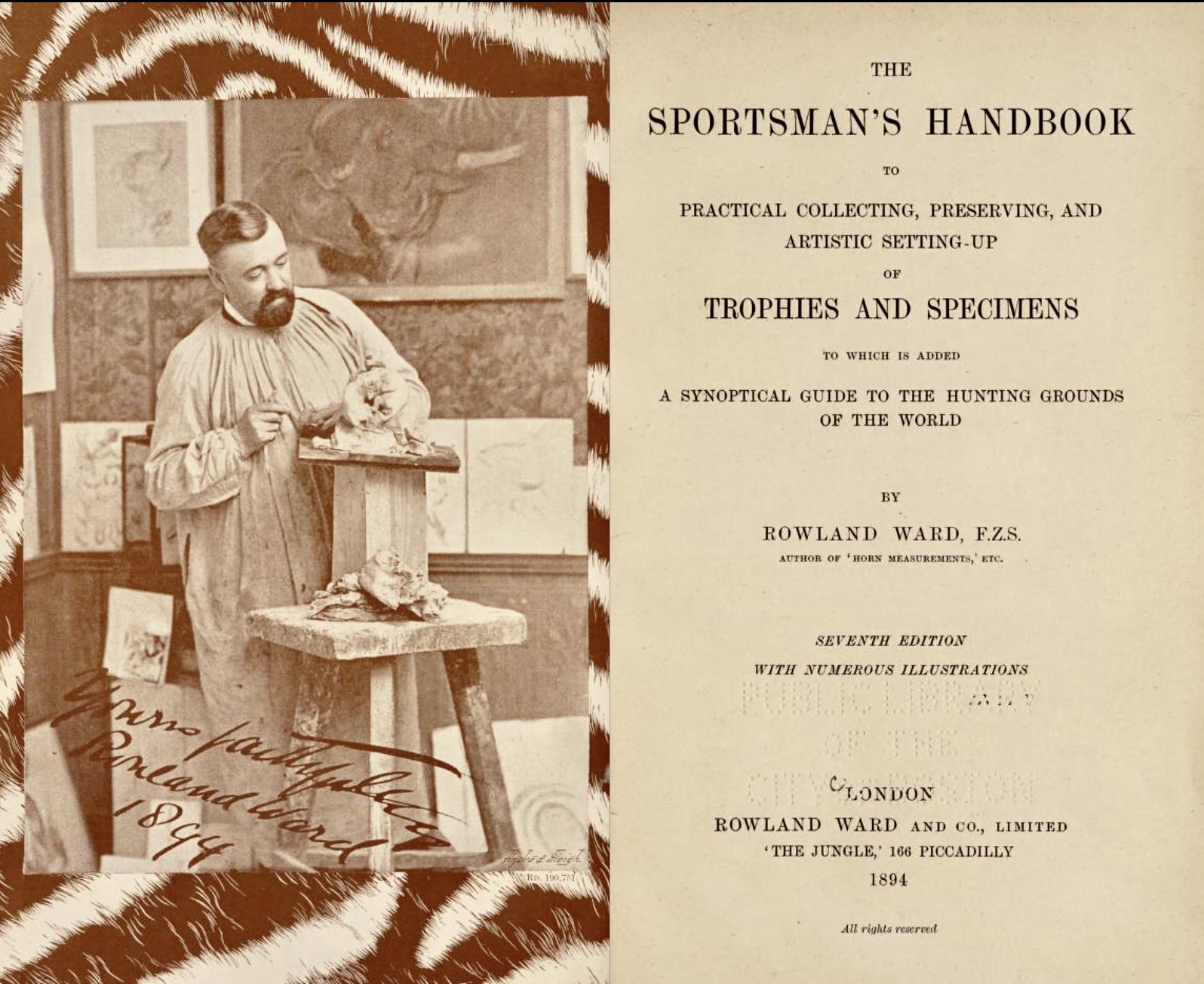
Taxidermy took a different direction in Britain, where, during the height of the Empire, big game trophies became potent symbols of imperial power and dominance. At the center of this new fascination with the preservation, mounting, and display of wild animals was the taxidermist James Rowland Ward (1848 – 1912), whose controversial legacy was intertwined with the culture of elite sport hunting and the pursuit of the largest, rarest, and most numerous trophies from hunting expeditions around the world. In 1870, to serve his wealthy and aristocratic clientele, Ward established his taxidermy business, Rowland Ward Ltd., in Piccadilly, London. Ten years later, in 1880, he published his influential manual The Sportsman’s Handbook to Practical Collecting, Preserving, and Artistic Setting Up of Trophies and Specimens, which went through sixteen editions and remained the leading work of its kind for much of the following century. The frontispiece of the 1894 edition depicts Ward in his studio, surrounded by examples of his art work and wearing an artist’s smock as he models an animal head in clay on a pedestal, almost certainly a preparatory study for a big game trophy.
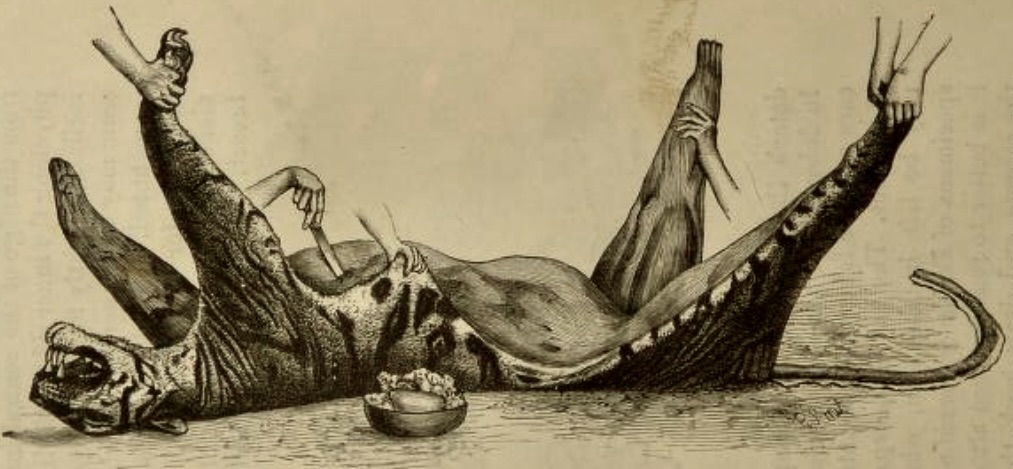
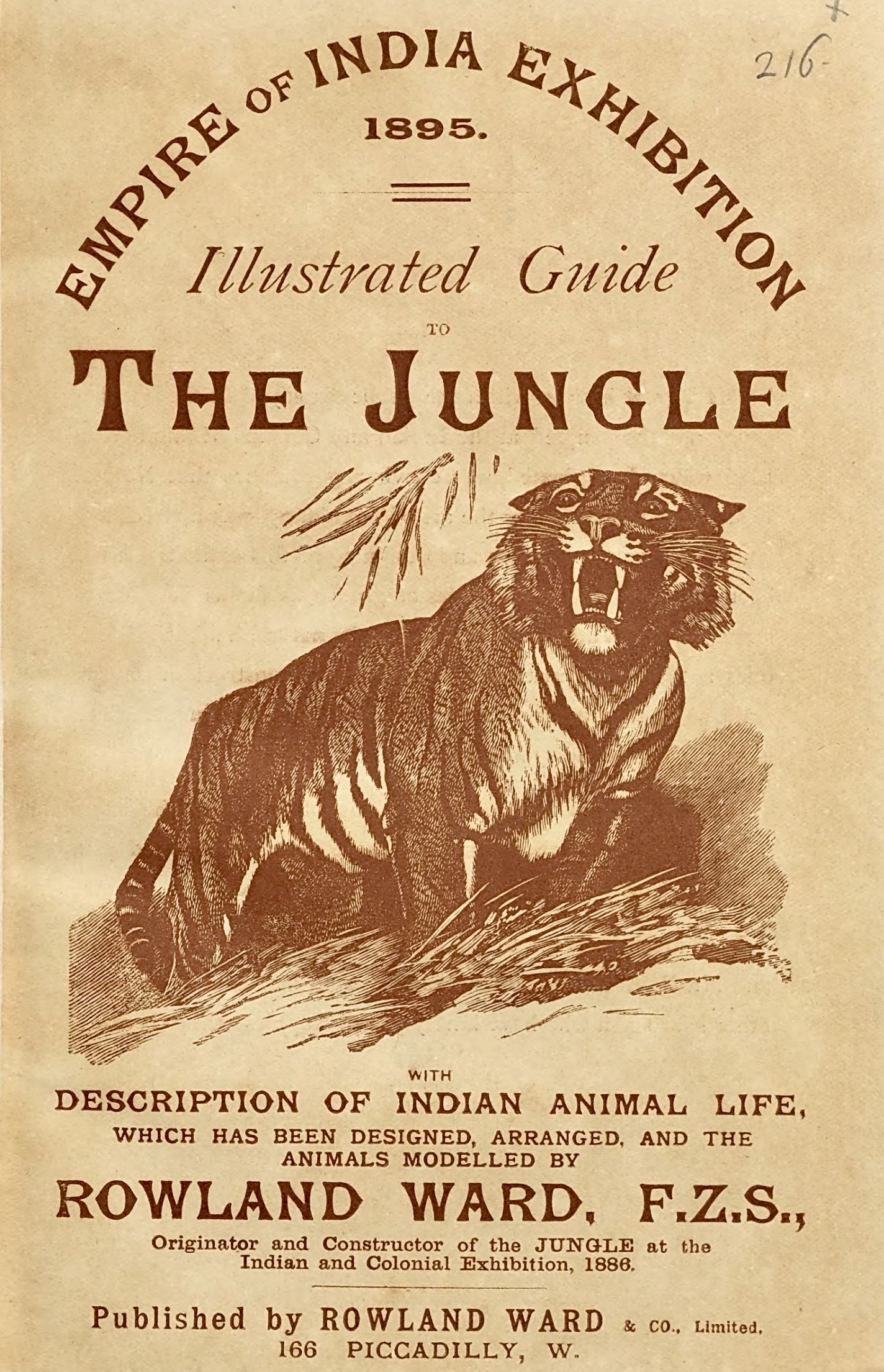
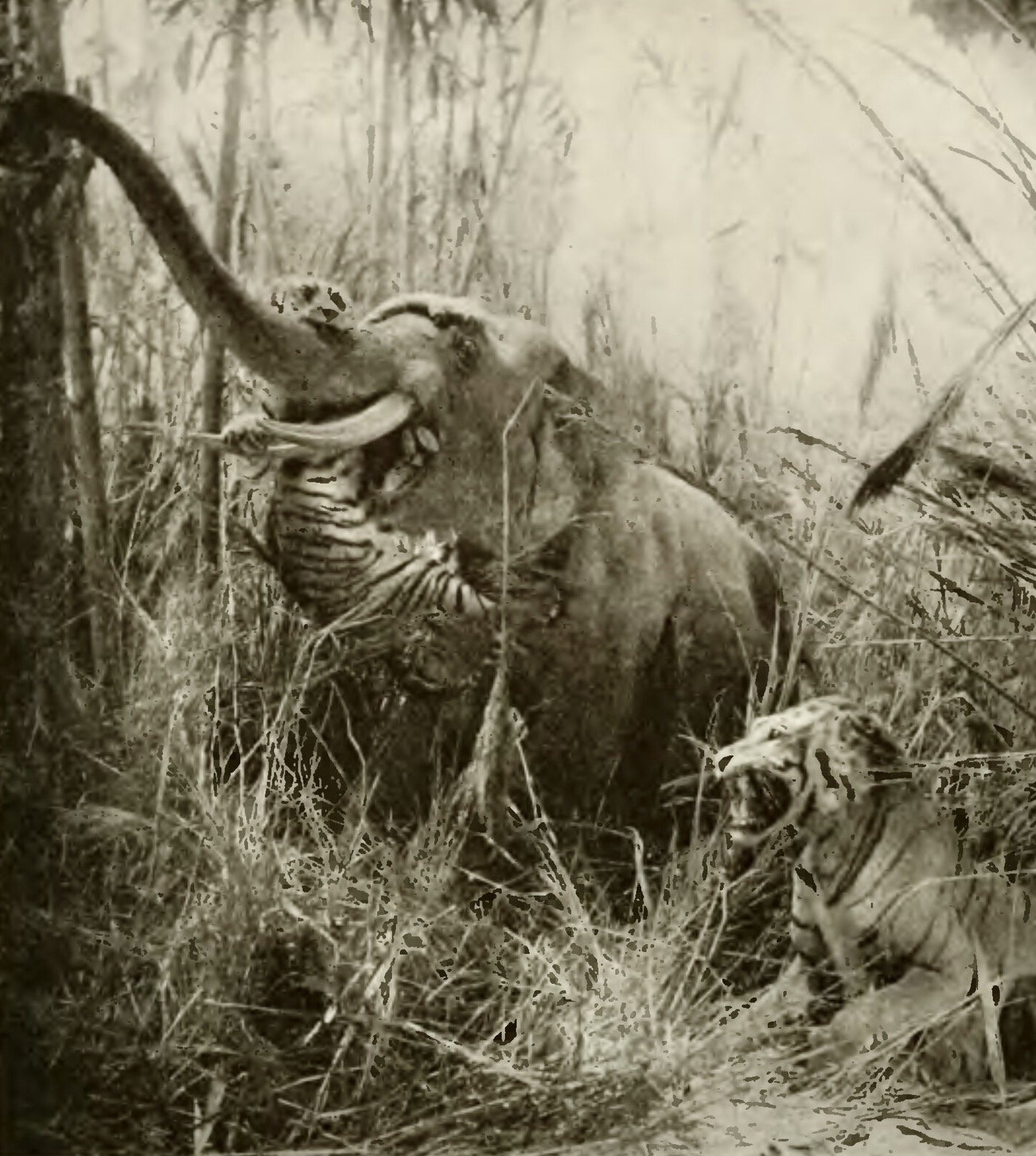
In his taxidermy manual, Rowland Ward expressed his admiration for the male tiger, praising its “various and picturesque habits, its magnificent proportions, and great beauty.” He therefore selected the tiger as a “typical animal” to illustrate the procedures involved in preparing a specimen for mounting, including the removal and preparation of its skin. Male tigers were especially valued as trophies because they were larger than females and possessed a more imposing physical presence. Ward mounted a Bengal Tiger (Panthera tigris tigris) trophy shot by the Maharaja of Cooch Behar and incorporated it into an elaborate display entitled “The Jungle,” which he created for the 1886 Colonial and Indian Exhibition in London. A similar group was shown by Ward at the 1895 Empire of India Exhibition. A guidebook he produced for this group featured an engraving of the imposing Cooch Behar tiger trophy on its cover. Ward presented the display as an accurate reconstruction, pompously describing it as the “Reproduction of an ideal scene in an Indian Jungle, with characteristic animals. . . the most extensive and varied work in Artistic Taxidermy ever produced.”
A photograph of the 1886 hunting scene created by Rowland Ward for the Maharaja of Cooch Behar depicts an elephant under attack by two tigers amid dense grass. Because Ward lacked an Indian elephant hide for the mount, he obtained an African elephant skin from his German associate, Carl Hagenbeck, the renown animal dealer in Hamburg. Ward reported that Hagenbeck had himself publicly choked the young, aggressive animal to death with a chain after deciding that it was unsuitable for zoo display.
Ward regarded himself foremost as a sculptor and naturalist, with specialized knowledge of animal anatomy, behavior, and their haunts in nature. In his memoir, A Naturalist’s Life Study in the Art of Taxidermy (1913), Ward described the challenges involved in rendering the snarling expression of the Cooch Behar tiger. To achieve anatomical and behavioral accuracy, he spent hours observing a living tiger at the London Zoo, deliberately provoking it to display an aggressive posture by rattling its cage. In his subsequent and larger “Jungle Life” display, Ward attempted to represent the flora and fauna of India as an integrated ecological whole, assembling hundreds of trophies, many on loan, and arranging diverse species within a picturesque scene intended to illustrate animal behavior in nature. The resulting composite tableau represented an early form of habitat display, although Ward himself did not use that terminology.
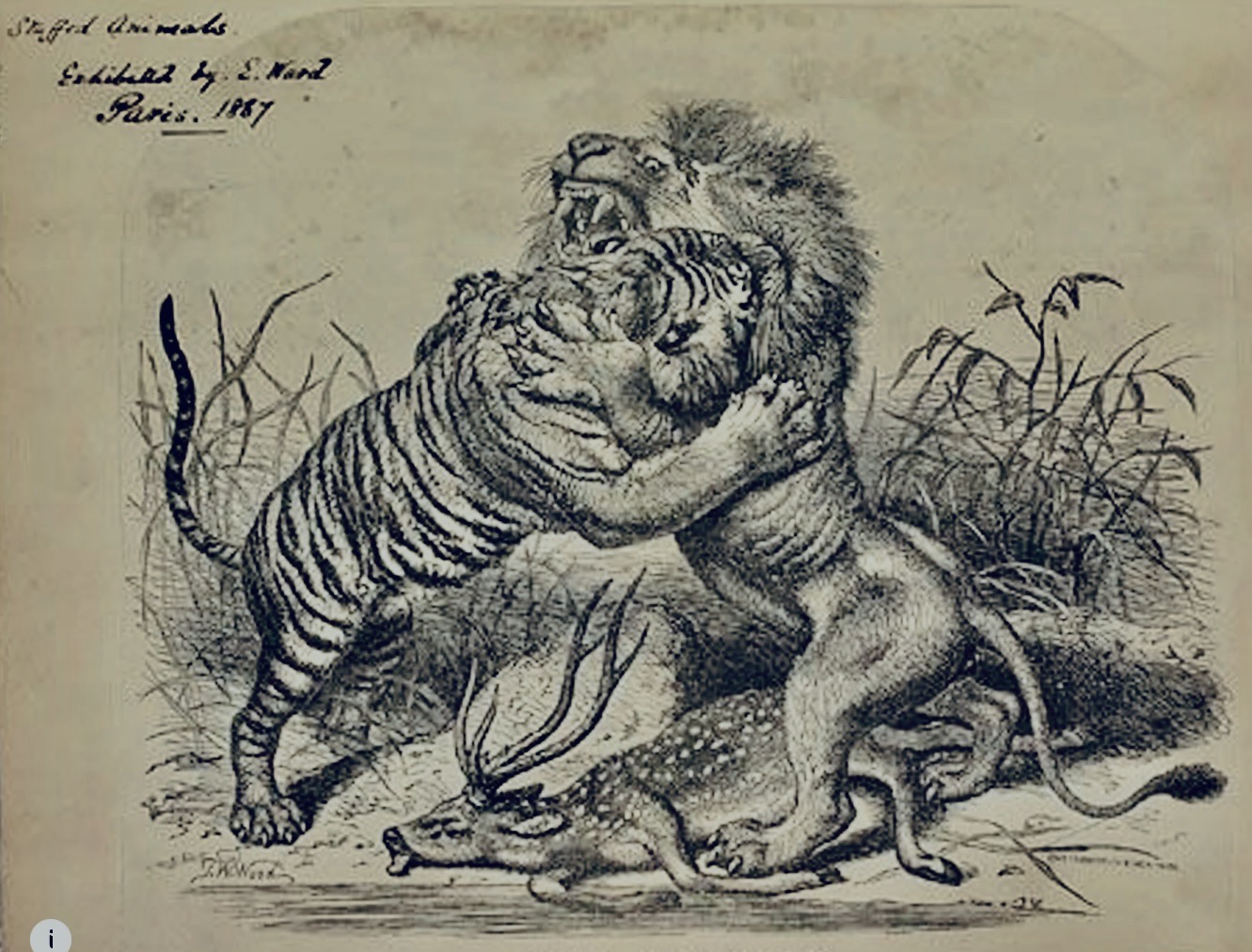
Like his brother Rowland, Edwin Ward was a prominent London taxidermist. At the 1867 Exposition Universelle in Paris, he exhibited the celebrated group “Lion and Tiger Struggle.” Illustrated by the well known zoological artist Thomas W. Wood (1833 – 1882), the display featured a dramatic confrontation between a lion and a tiger competing over the carcass of a deer. Edwin Ward credited his brother’s work with advancing the international reputation of British taxidermy, writing that it “carried the English to the foremost ranks of zoological artists.” He went on to articulate what was, in effect, a foundational principle of the later habitat diorama: “Now that we embellish our taxidermic studies with natural grasses, ferns, etc., and with representations of scenery and rock work, in the endeavour to carry the eye and mind to the actual localities in which the various species of animals are found, an advance in art not dreamed of fifty years ago, and also to correctly model the heads and limbs of animals, we still hold our own, and are as far advanced in taxidermy as any other nation.”
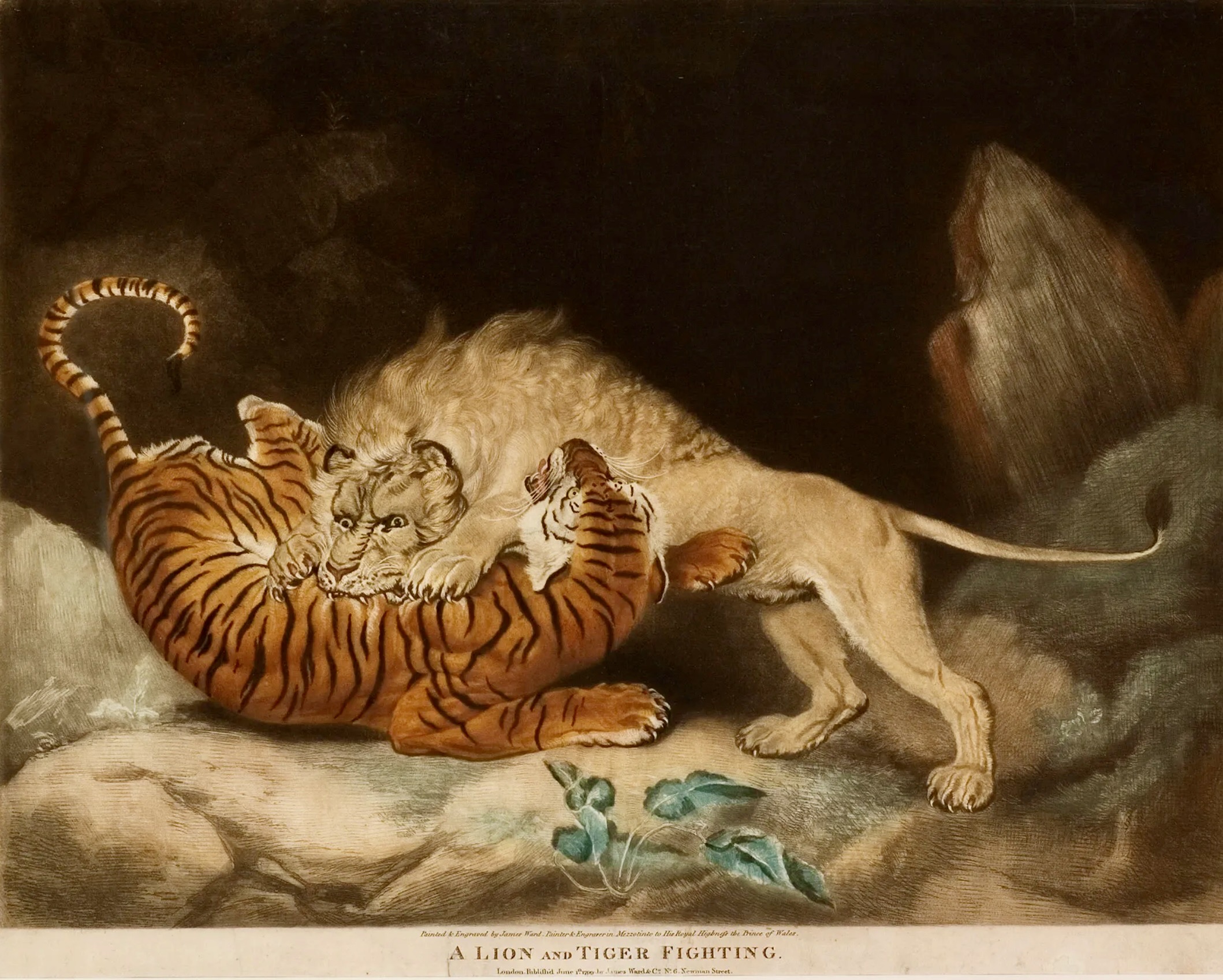
Dramatic scenes of wild animals engaged in combat were a popular theme in Romantic art. An example is “A Lion and Tiger Fighting” (1797) by James Ward (1769 – 1859), which depicts a violent struggle between two exotic predators while demonstrating the artist’s commitment to anatomical accuracy. An engraved reproduction of the painting circulated widely. In his memoir, Rowland Ward paid tribute to several artists who specialized in animal subjects, including Heywood Hardy (1843 – 1933), with whom he sketched lions at the London Zoo. Despite Ward’s commitment to verisimilitude in artistic taxidermy, the allegorical associations attached to particular animals continued to shape the visual conventions of his tableaux. The noble and majestic lion, for example, had long served as a symbol of imperial power, while the tiger became associated with the perceived ferocity and exoticism of colonial India. By the late 19th century, excessive hunting had brought the Asiatic lion to the brink of extinction, and staged encounters between lions and tigers were largely a theatrical invention that reinforced narratives of imperial conquest and colonial domination.
To better serve his sportsmen clients, in 1892 Rowland Ward published Records of Big Game: with Their Distribution, Characteristics, Dimensions, Weights, and Horn & Tusk Measurements. The work went through numerous revisions and editions, becoming the standard reference for hunters seeking to authenticate and compare the dimensions of their animal trophies collected from hunting grounds around the world.
The frontispiece of the 1910 edition depicts Ward using calipers to measure the skull of a specimen with exceptionally large canines. As a Fellow of the Zoological Society, Ward took his scientific role seriously, not merely as a taxidermist but as an authority on zoological classification and measurement. For many sportsmen and collectors, the drive to discover a new species or subspecies, was rewarded by having it named after oneself.
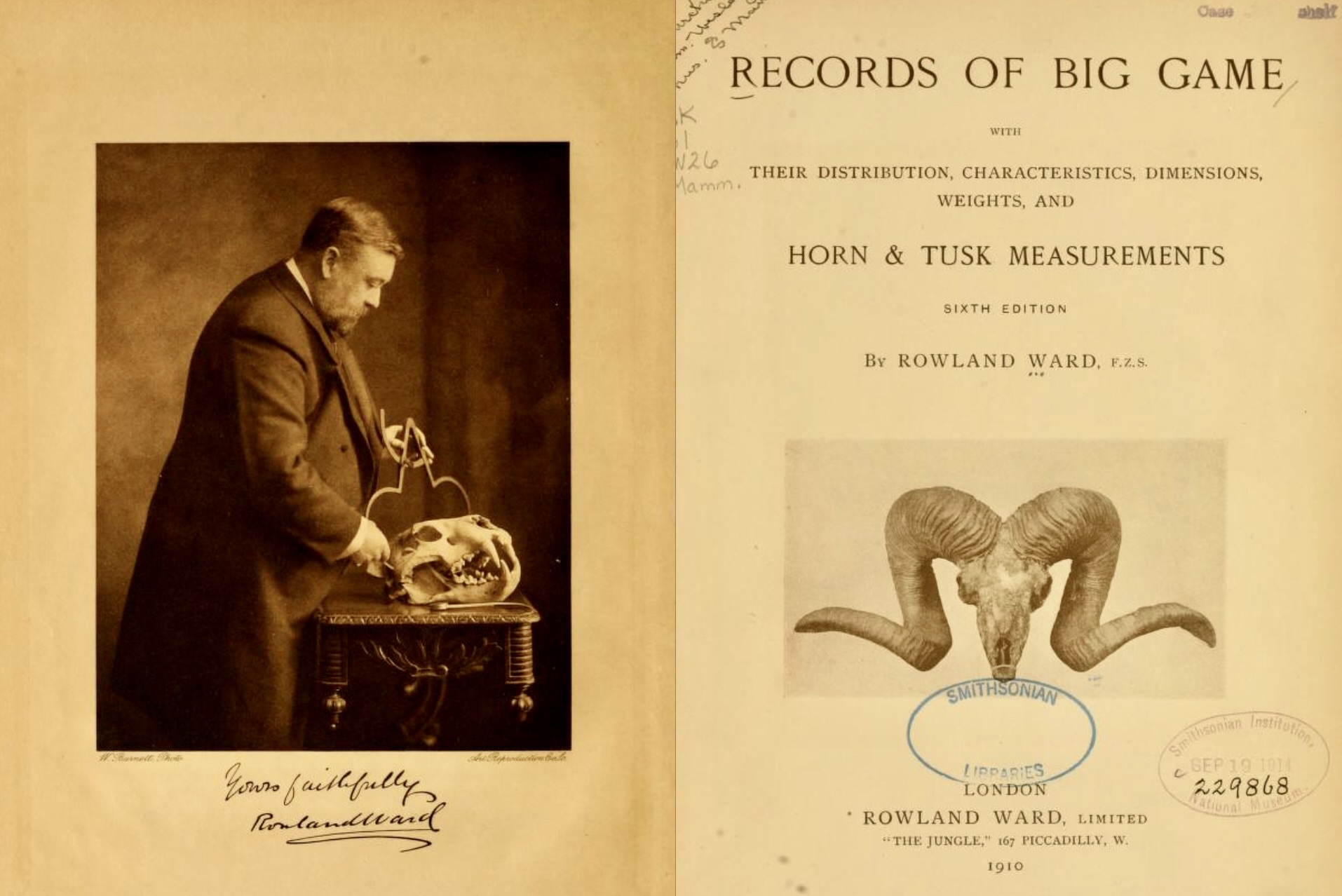
Ward himself was commemorated in three zoological names: the Asiatic Ibex (Capra sibirica wardi), the Bohor Reedbuck (Redunca redunca wardi), and the Malayan Bear (Ursus malayanus wardi). A photograph of the skull and horns of a Siberian Argali (Ovis ammon typica) appears on the title page of the 1910 edition of Ward’s Records of Big Game. The trophy was shot by St George Littledale, an English sportsman born into a wealthy cotton broker family and widely regarded as one of the greatest big game hunters of his era. Hundreds of his highly ranked trophy heads eventually entered the collections of the Natural History Museum in London, one of the principal institutional purchasers of specimens from Rowland Ward Ltd. and an active participant in the expansion of trophy collections.
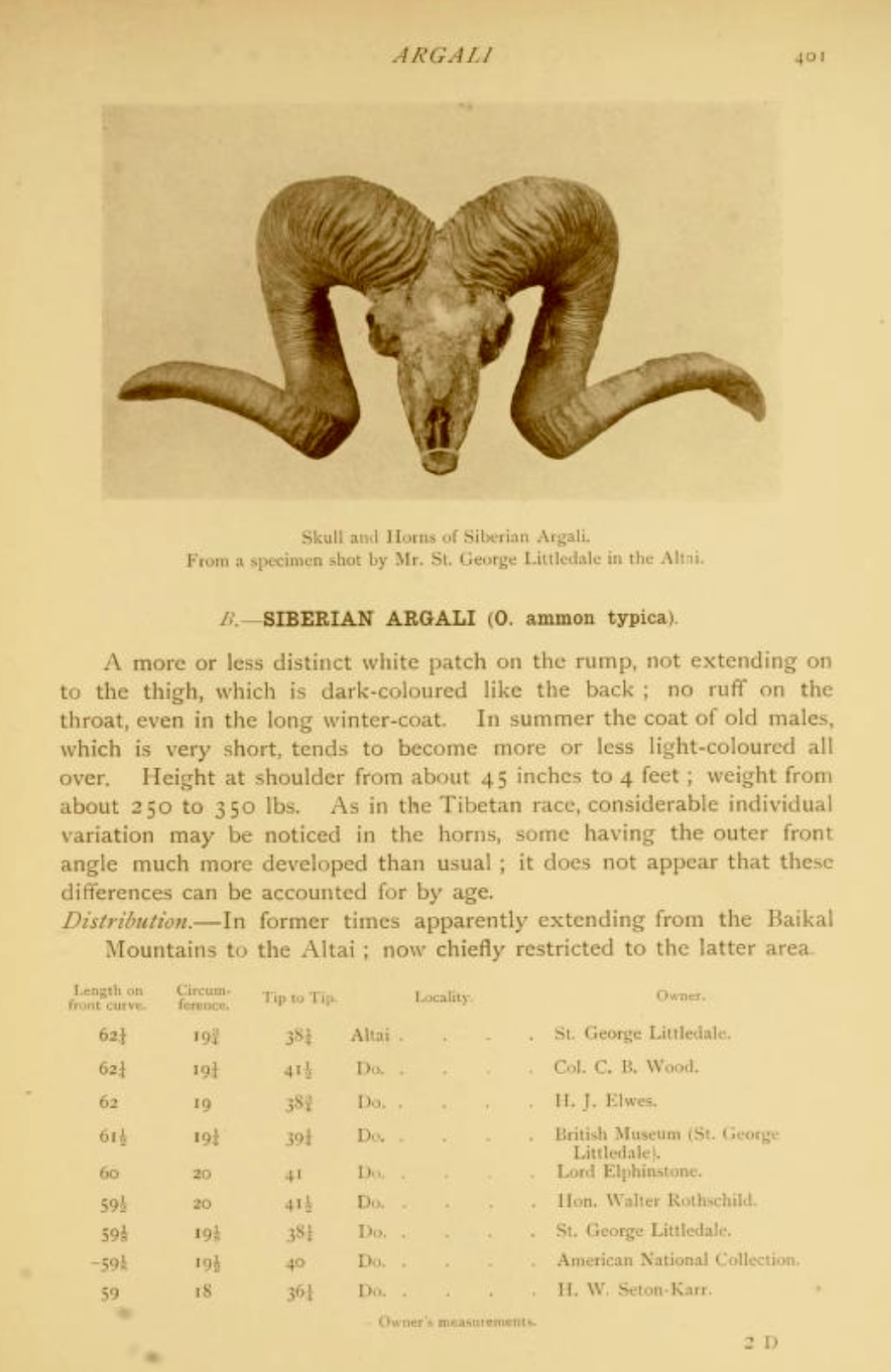
In his Records of Big Game, Ward ranked each trophy, or “specimen,” as he termed it, according to standardized measurements. Entries recorded the dimensions of the trophy, the locality where the animal was killed, and the name of its “owner,” that is, the hunter who shot it. Ward also included summaries of each species and its subspecies, together with notes on geographical variation and distribution.
Sportsmen whose trophies appeared in the prestigious volume included Kings Edward VII and George V, Prince Bernhard of the Netherlands, Prince Abdorreza of Iran, successive Princes of Wales, the Maharaja of Cooch Behar, Sir Winston Churchill, President Theodore Roosevelt, Lord Curzon, and numerous members of the European royal families, aristocracy, and political elite, followed increasingly after the turn of the 20th century by wealthy British and American industrialists.
Whereas the earliest editions of Records of Big Game were devoted primarily to horn and tusk trophies, by 1896 the work had expanded to include many of the large carnivores associated with the British Empire, including lions, tigers, leopards, cheetahs, and bears. These trophies were ranked according to two principal measurements: skull dimensions, recorded with calipers, and skin length, measured from nose to tail. Later editions also incorporated gorillas and other primates, whose skulls were similarly measured and ranked. These practices reflected the broader 19th century emphasis on craniometric measurement, a methodology that was subsequently appropriated by proponents of the now discredited pseudoscience of scientific racism.
The wealthiest and most privileged big game hunters were able to finance elaborate displays of their trophies. Among them was Prince Philippe, Duke of Orléans, who assembled one of the largest private trophy collections in Europe, including specimens representing several taxa that were new to science. Exiled from France as the crown prince of the ousted ruling dynasty, the Duke spent decades leading hunting expeditions across India, Africa, the Arctic, Siberia, and North America. During this collecting period, Rowland Ward Ltd. prepared more than 2,000 of the Duke’s trophies, ranging from polar bears to giraffes.
The first big game animal that Ward preserved and mounted for the Duke was a Bengal Tiger, staged in a dramatic tableau with an Asian Elephant from Ceylon. Archival photos show the display installed in a large glass case in the private museum the Duke established in 1907 at his English estate, at Wood Norton. In 1912, he relocated his museum to his castle, the Manoir d”Anjou in Belgium, where it survived WWI. Following the Duke’s death in 1926, the collection was bequeathed to France and a purpose built annex at the Muséum national d’Histoire naturelle in Paris was constructed to house it.
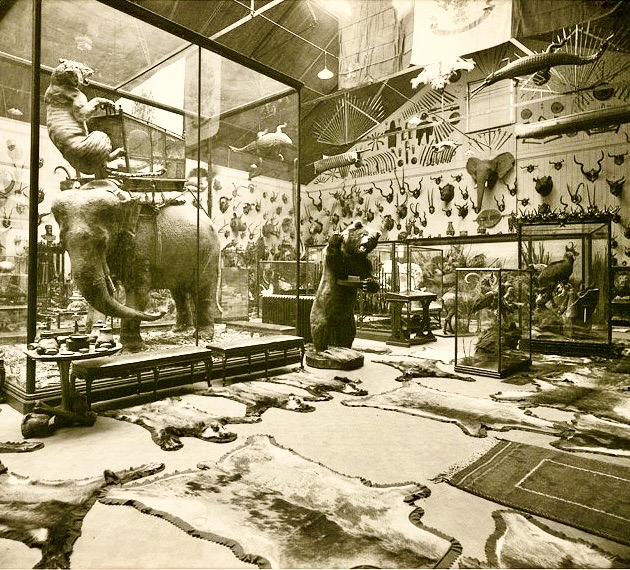
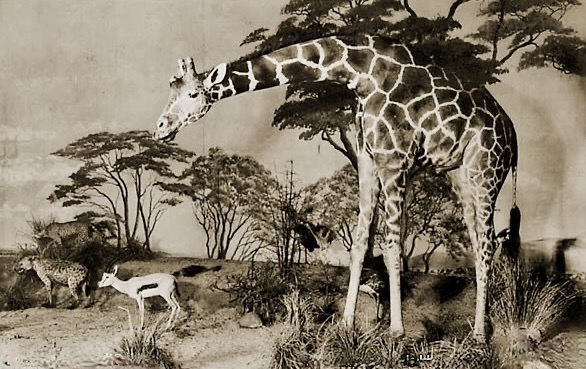
From its inception, the Musée du Duc d’Orléans was conceived as an illusionistic spectacle of the animal world, unrivaled in Europe or the United States. Designed and executed by Rowland Ward Ltd., the museum comprised four spacious halls: a grand entrance gallery displaying traditional head and horn trophies, together with three immersive walk through panoramas representing the Arctic, East Africa (Sudan), and Central Africa (Kenya and Uganda). Each panorama combined mounted animal specimens with foregrounds simulating their native habitats and panoramic background paintings depicting composite views of exotic landscapes. Inaugurated in 1928, the museum survived for little more than three decades before falling into disrepair and being dismantled in the late 1950s. Its demise reflected not only changing museum priorities but also the declining cultural prestige of the imperial trophy hunting tradition.
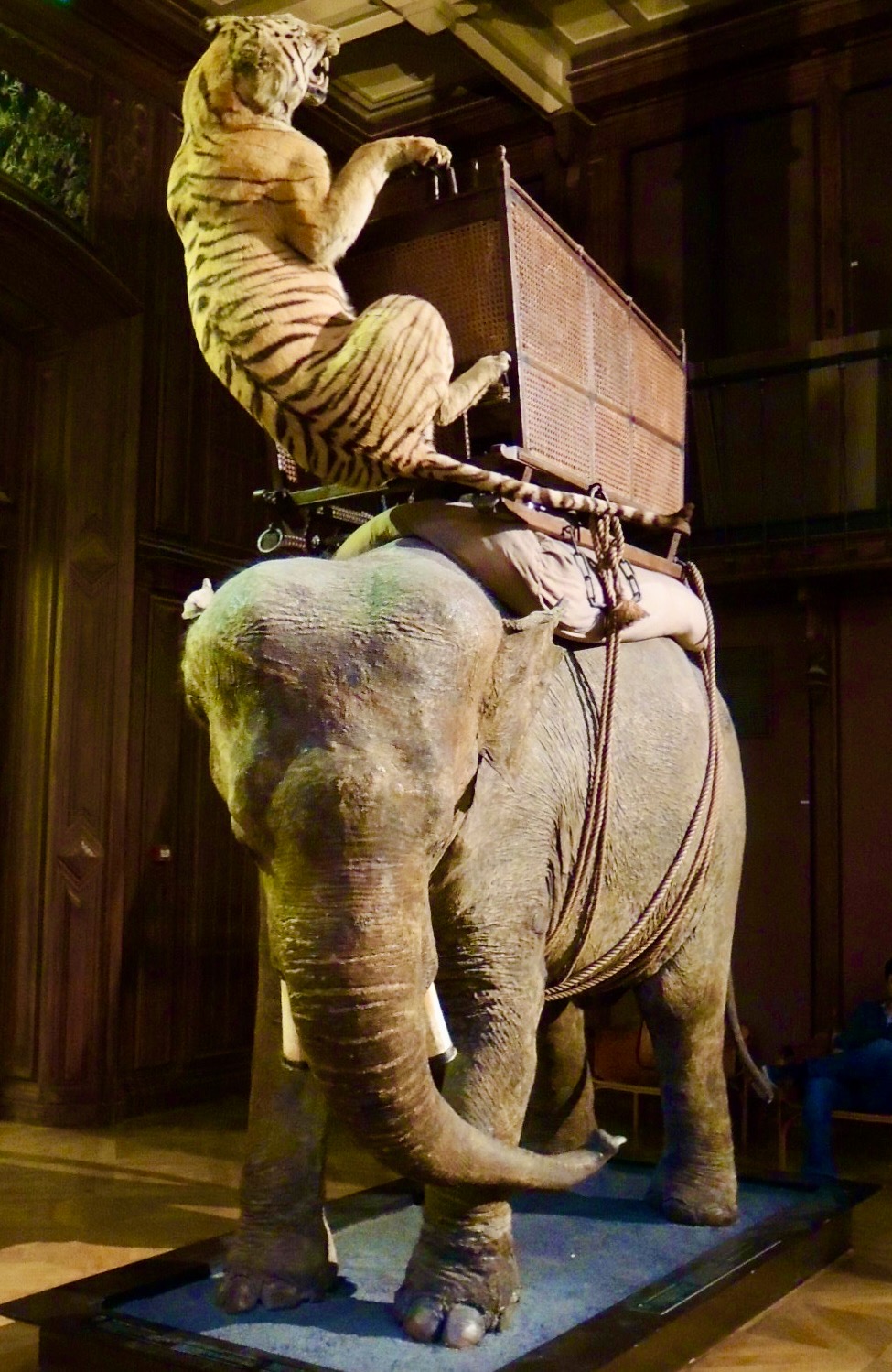
One of the few surviving trophies mounted by Rowland Ward for the Duke of Orléans is the “Bengal Tiger and Elephant Group,” now displayed in an upper gallery of the Muséum national d’Histoire naturelle in Paris. In 1889, Ward was commissioned by the Duke to commemorate an incident that had occurred during an imperial tiger hunt in India the previous year. Such hunts were highly orchestrated spectacles, employing hundreds of local beaters to drive animals from the vegetation and dozens of trained elephants, some fitted with mounted shooting platforms, or howdahs, from which hunters could fire in relative safety. According to the Duke’s account, an enraged tigress, wounded after her cubs had been killed by the hunting party, suddenly charged his howdah. She crashed into the platform and shattered the stock of his rifle before he could shoot, forcing him to abandon the hunt for the day. The following morning, the Duke returned and cornered the tigress, claiming he had the “good luck to bring her down just as she was crossing the river.”
Ward modeled the tigress in a dynamic and threatening pose and first exhibited the mounted group at the 1889 Paris Exposition Universelle. He later combined the tigress with a howdah mounted on a Sri Lankan Elephant (Elephas maximus maximus) shot by the Duke in Ceylon, despite the fact that it belonged to a different subspecies than the Indian Elephant (Elephas maximus indicus). Although Ward encouraged taxidermists to study living animals in their natural habitats, he often sacrificed zoological accuracy in pursuit of a more dramatic artistic effect. Moreover, despite expressing admiration for the Bengal Tiger, he never questioned its transformation into a trophy symbolizing imperial authority and masculine prowess. His commercial practice catered to an elite clientele whose hunting safaris contributed to the drastic decline of tiger populations across British India. Nor did Ward publicly express concern for the suffering inflicted on wild animals through intensive trophy hunting and the large scale collecting of specimens for museums.
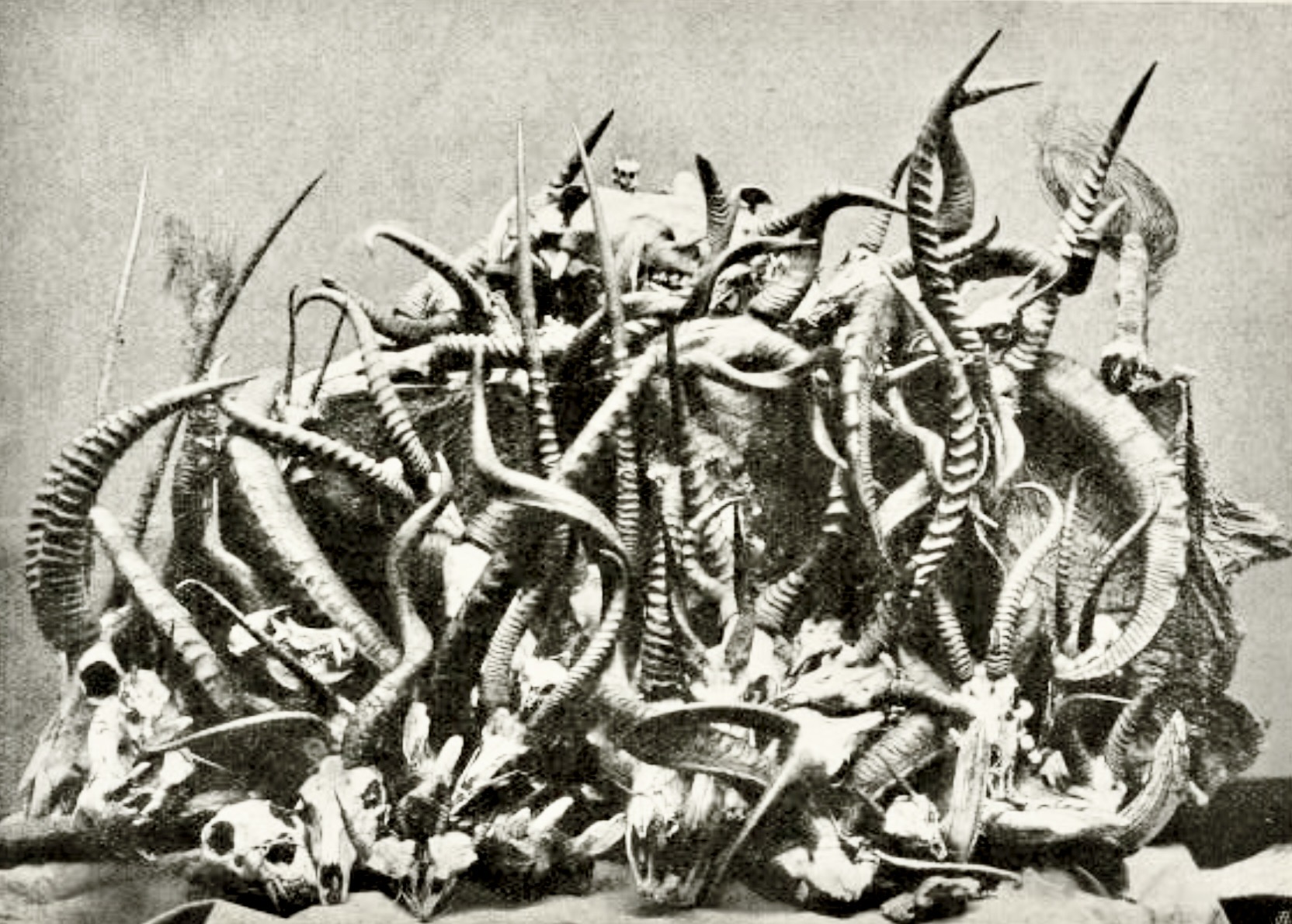
Another major client of Rowland Ward Ltd. was Major Percy Powell Cotton, an English explorer, natural history collector, and big game hunter. Supported by inherited family wealth derived from connections to the East India Company, Powell Cotton financed 28 expeditions to Africa and Asia between 1887 and 1939. Like the Duke of Orléans, he was reputed to have assembled the largest collection of big game trophies ever shot by a single individual. In 1896, to accommodate his expanding collection, he built a museum on the grounds of his estate at Quex Park in Kent. Many of the zoological specimens were prepared and mounted for display by Rowland Ward Ltd., including one of the largest elephant “tuskers” ever killed by a sportsman. In his 1902 hunting narrative, A Sporting Trip Through Abyssinia, Powell Cotton described the abundant game of East Africa. One photograph, titled “Trophies of the Trip,” depicts a huge pile of antelope horns, celebrating the glut of trophies that later became the foundation of his museum.
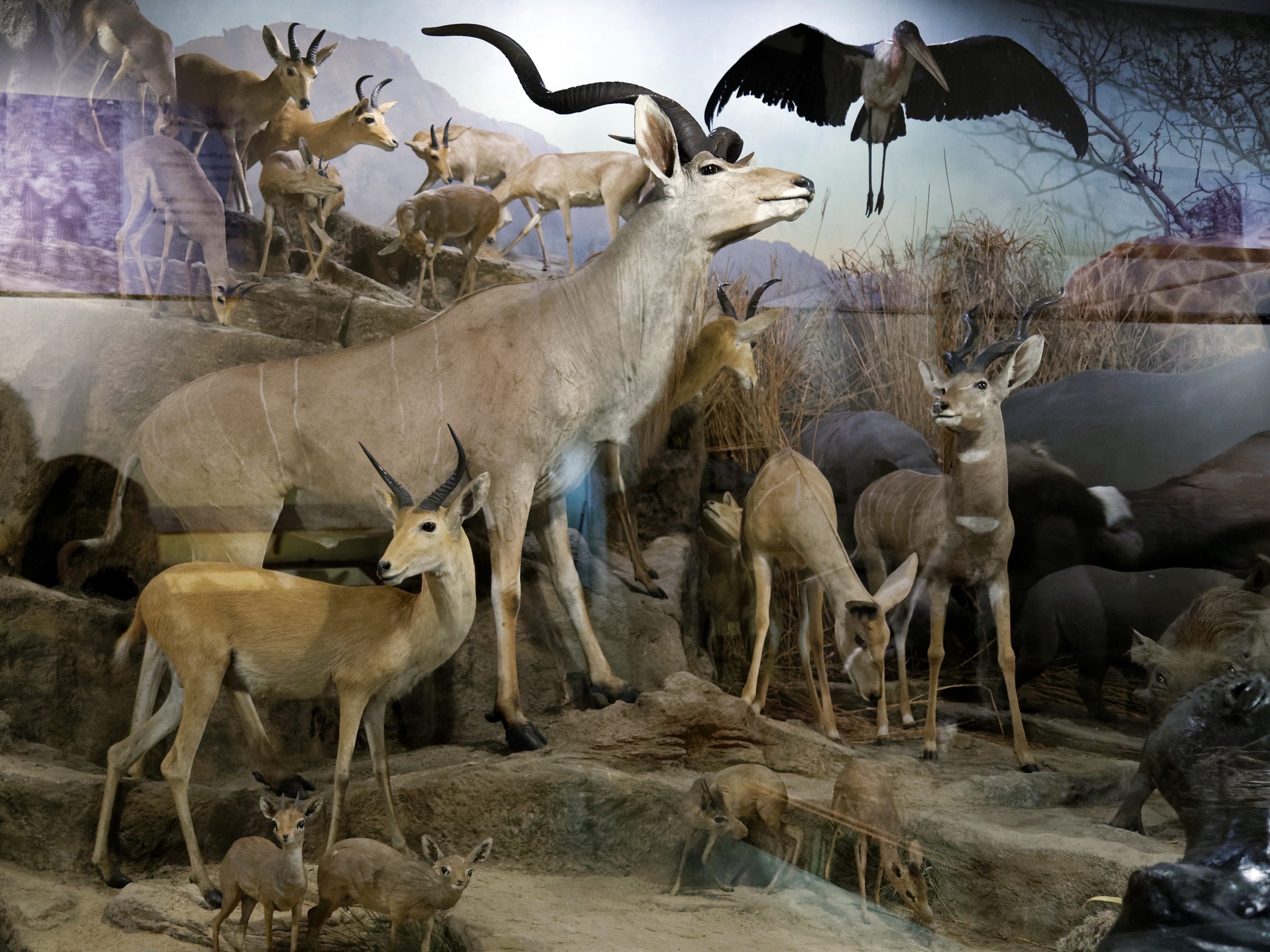
Some of the trophies collected by Powell Cotton were mounted as full taxidermic sculptures and displayed in habitat dioramas created for his museum at Quex Park. An example features the Greater Kudu (Tragelaphus strepsiceros) and the Bohor Reedbuck (Redunca redunca cottoni). The latter was first collected by Powell Cotton in the Kordofan region of Sudan and named in his honour by Sir Walter Rothschild, another wealthy sportsman naturalist and founder of a private museum, who described the new taxon in an appendix to Powell Cotton’s book. Rowland Ward was also honoured with the naming of the subspecies: Bohor Reedbuck (Redunca redunca wardi). As the colonization of Africa opened it up to increasing numbers of scientific and sporting expeditions, Ward’s Records of Big Game publicized newly accessible hunting grounds and documented the growing accumulation of specimens “bagged” by sportsmen and museum collectors, many eager to achieve a measure of scientific immortality through the attachment of their names to zoological nomenclature.
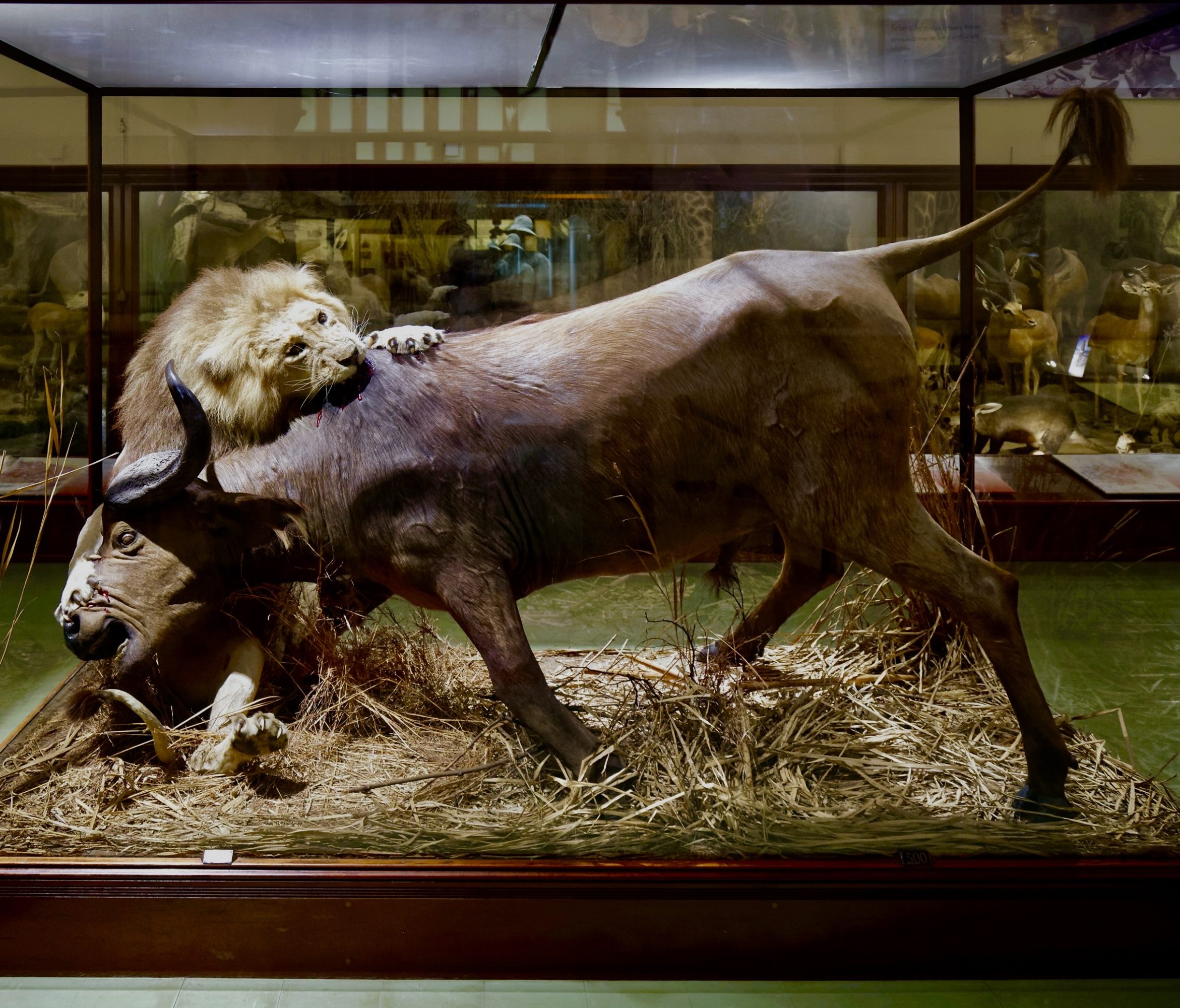
In his memoir, taxidermist Rowland Ward recorded that he had mounted numerous “groups and single animals for the Quex Park Museum, including elephants in their natural surroundings, giraffes, hippopotami, white rhinoceroses, buffaloes, and other African game; yak and wild sheep, as well as other varieties of Asiatic big game.” Among these commissions was a dramatic hunting tableau depicting the African Lion (Panthera leo) that attacked and nearly killed Powell Cotton in 1906. The lion’s victim is a Semliki African Buffalo (Syncerus caffer cottoni), the type specimen of the subspecies later named in Powell Cotton’s honour. Ward described the scene: “The buffalo, with lowered head, is struggling to shake off its aggressor, which has sprung upon its withers, and has plunged its tusks into the back of the neck.” Powell Cotton’s further hunting ambitions were described in his 1904 narrative, In Unknown Africa, in which he recounted his efforts to obtain specimens of old bull giraffes with five horns, with the aim of providing material for the Natural History Museum in London to determine and classify what he believed to be a new subspecies.
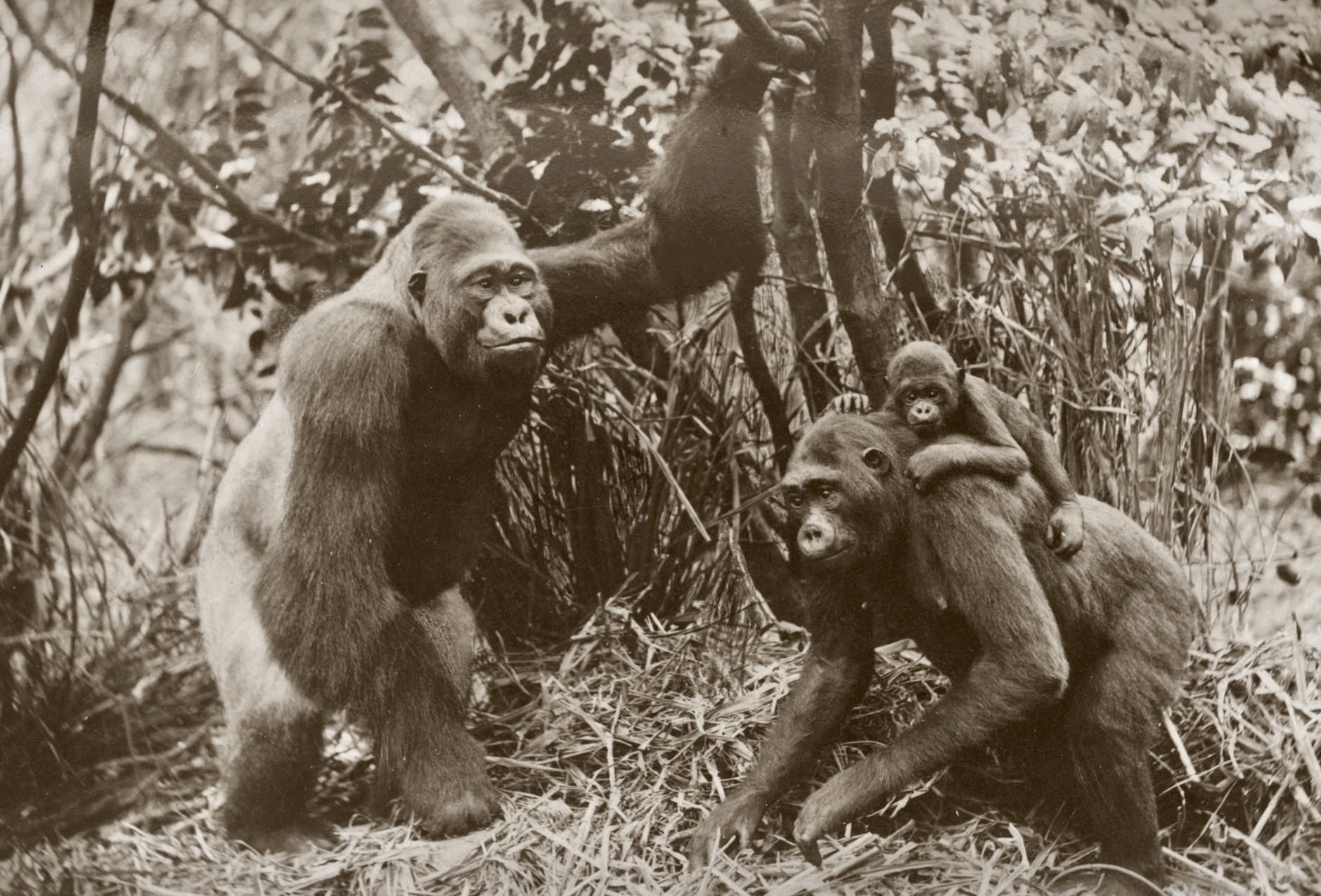
The “Family of Gorillas” diorama at the Powell Cotton Museum presents the apes as a peaceful social group, featuring a silverback male accompanied by a female carrying an infant on her back. This iconography contrasts sharply with the sensationalized representations that followed Paul Du Chaillu’s influential 1861 exploration and hunting narrative. For several decades thereafter, visual conventions in sculpture, zoological illustration, and taxidermy often portrayed the gorilla as a ferocious and existential threat to humans. By the late 19th century, advances in halftone printing enabled hunting narratives to circulate trophy photographs of sportsmen posing beside the limp bodies of slain apes.
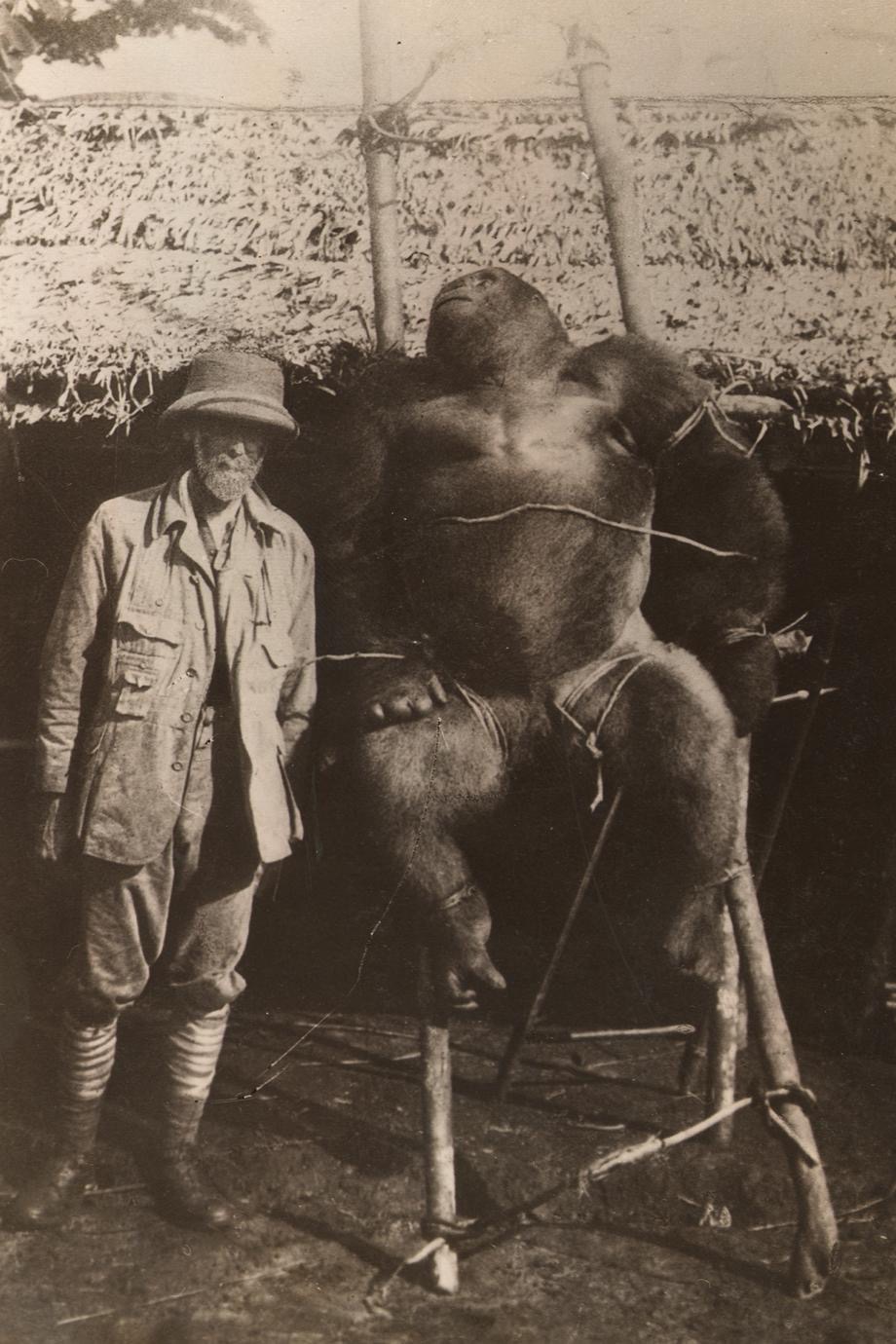
Gorillas were absent from Ward’s Records of Big Game, which defined legitimate field sport through the measurement of horns, antlers, tusks, and the skulls and skins of carnivorous mammals. Instead, gorilla hunting was framed primarily as scientific specimen collecting. Major Powell Cotton travelled to Cameroon to obtain specimens for his museum during the interwar period, by which time gorillas were increasingly recognized as vulnerable to extinction. Yet the photograph of him standing beside the carcass of a male gorilla, suspended from a wooden frame to emphasize its size, demonstrates that the animal continued to function as a powerful symbol of imperial conquest and human dominance over nature.
Between April 1927 and June 1935, Major Powell Cotton undertook several expeditions to Central Cameroon, where he personally shot and collected specimens of the Western Lowland Gorilla (Gorilla gorilla gorilla) and Chimpanzee (Pan troglodytes troglodytes) for his museum at Quex Park. Three of the gorillas were mounted as a family group within a habitat diorama, known only through an archival photograph.
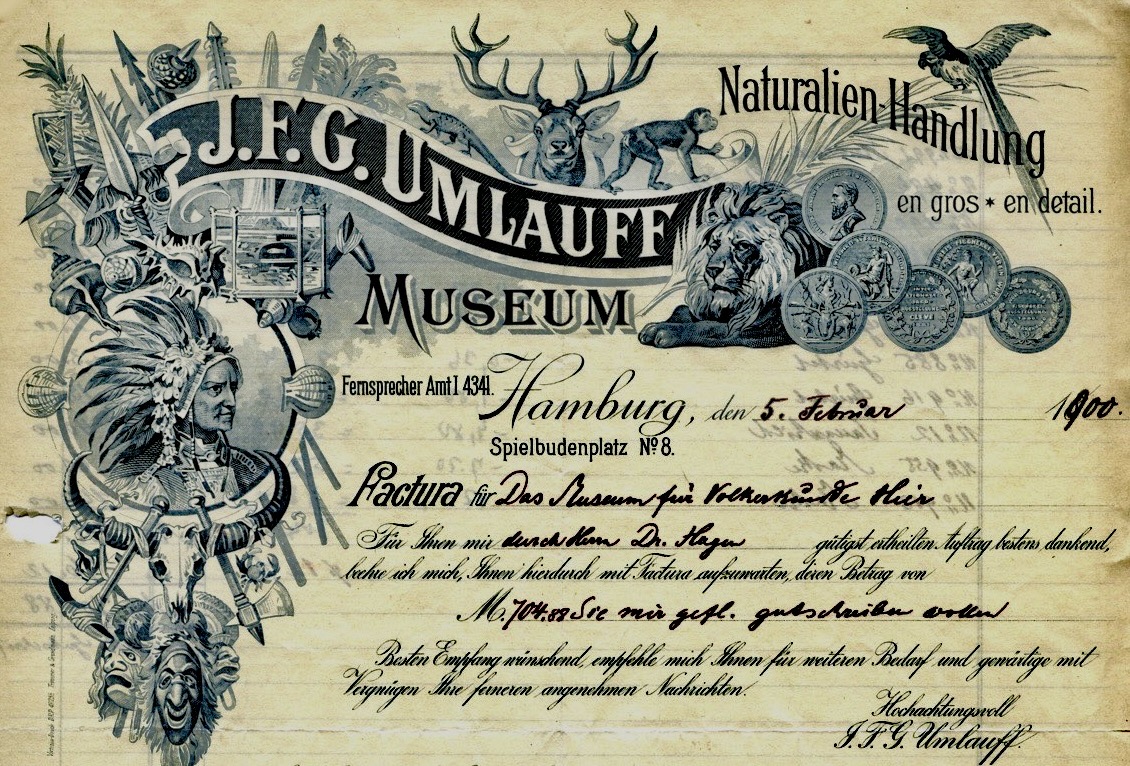
In Germany, one of the most prominent natural history dealers was J. F. G. Umlauff, a family operated company founded in Hamburg in 1868 by Johann Friedrich Umlauff. The firm developed an extensive global network of trading partners that included museums, universities, zoos, and professional suppliers. It relied heavily on German colonial infrastructures in Africa for the collection, exchange, and transport of living and preserved animals, as well as ethnological artifacts and natural history specimens. The wide range of commercial objects offered by the Umlauff company was vividly represented on its engraved letterhead, which featured a deer trophy head, a mounted lion head, an ape, a tropical bird, an Indian headdress, and various other ethnological objects. The company prospered sufficiently that, by 1884, Umlauff had expanded the premises to include a salesroom that he named “Umlauff’s Weltmuseum” (“Museum of the World”).
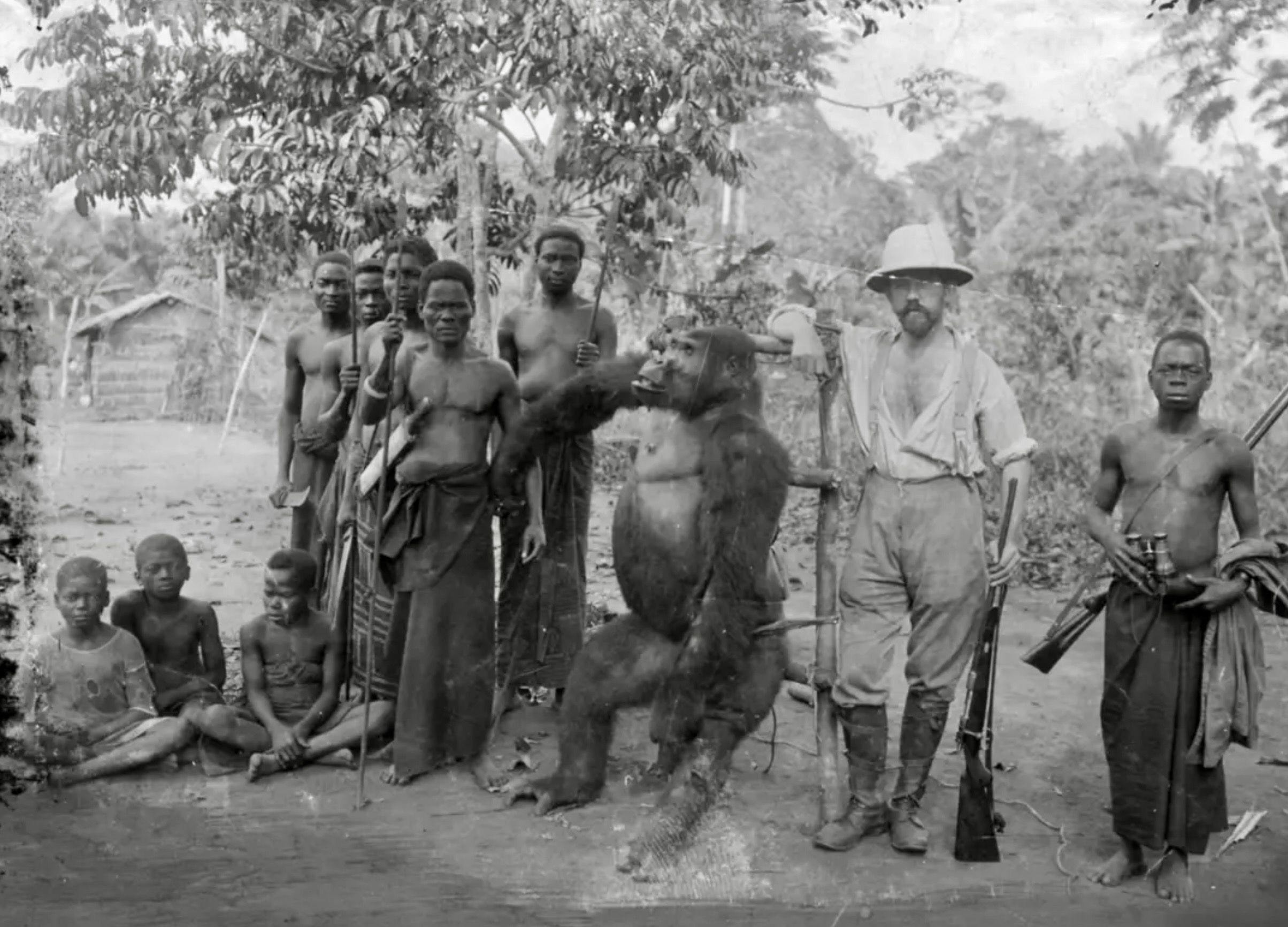
In 1912, the three sons of the firm’s founder divided the Umlauff company into separate branches specializing in malacology (shells), ethnology, and zoology, the latter encompassing taxidermy. The zoological division was managed by Johannes Umlauff, who had trained as a taxidermist. In 1900, he acquired the skin and skeleton of a trophy sized male gorilla killed in Cameroon by Hans Paschen, a German colonial officer, settler, and trader. Umlauff transformed the skin into an upright, aggressively posed mount that was widely promoted and exhibited as the “Gigantic Gorilla.” It attracted the attention of Walter Rothschild, who purchased it for his museum at Tring in 1901. Competition among museums to acquire gorilla specimens was intense, and Umlauff subsequently travelled to Cameroon to participate personally in gorilla hunting. An undated photograph depicts him in sporting attire, posed with his rifles beside the body of a slain gorilla and surrounded by African porters.
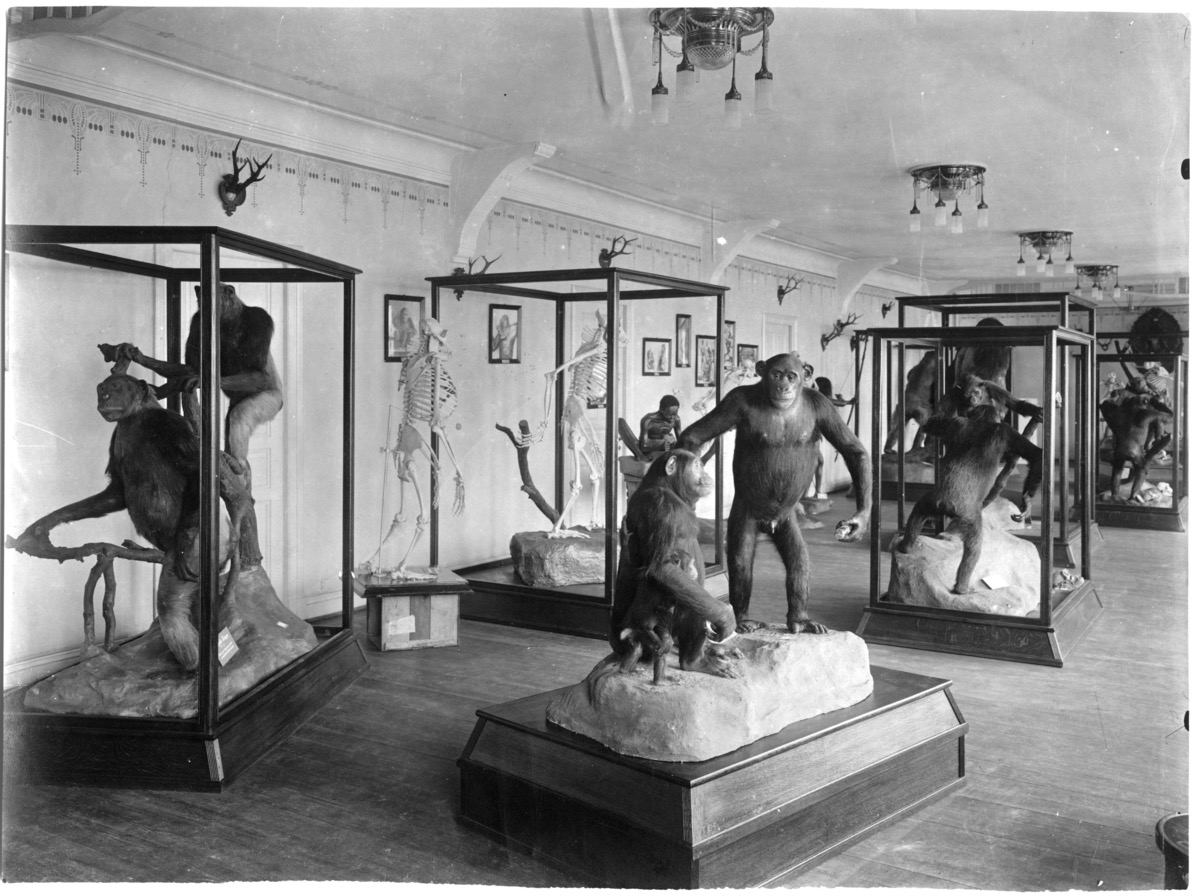
An undated photograph of the Umlauff Museum and salesroom depicts a hall lined with cases containing mounted gorillas and skeletal specimens. In one display, a model of an African man stands alongside gorilla skeletons, reflecting the racial hierarchies that shaped late 19th century science. Such comparative displays drew upon evolutionary theories associated with the German zoologist Ernst Haeckel, who regarded the great apes as humanity’s closest living relatives. Mounted gorillas were highly sought after and expensive; Haeckel himself had ordered an Umlauff gorilla for his own museum. Another recipient of Umlauff’s taxidermy was the Riksmuseet in Stockholm, which acquired a “family” group consisting of an adult female gorilla with her infant from Cameroon and two juvenile specimens collected in the French Congo.
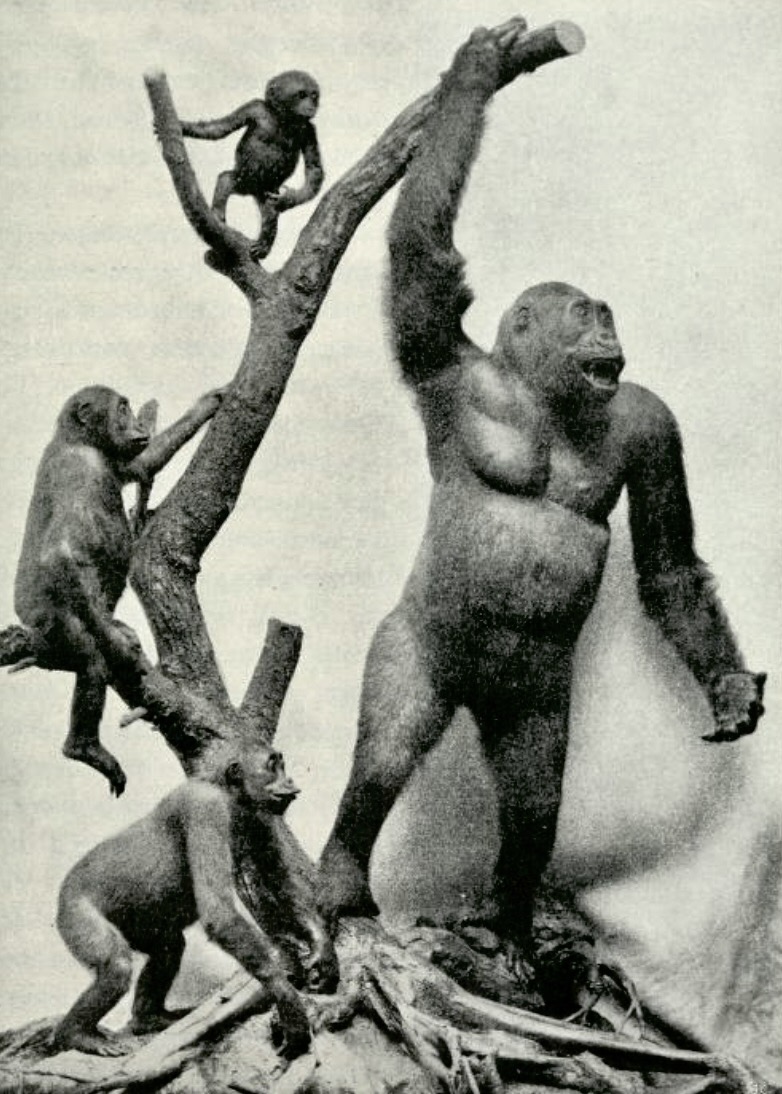
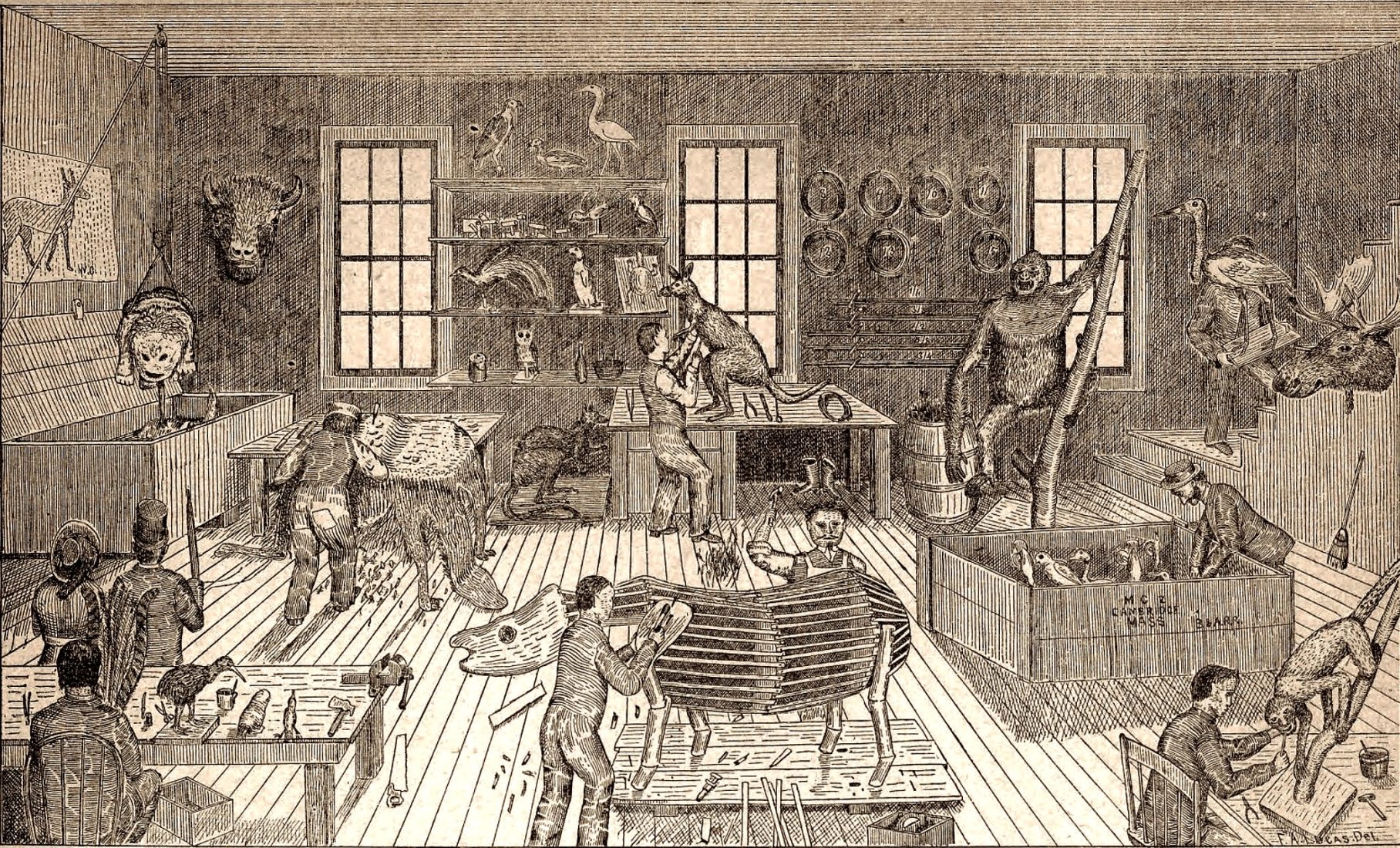
In the United States, Ward’s Natural Science Establishment served as the equivalent natural history dealer to the Umlauff Company in Germany. Founded in 1862 in Rochester, New York, by Henry Augustus Ward (1834 – 1906), the firm was unrelated to Rowland Ward Ltd. in London. A wood engraving by F. A. Lucas titled “Our Taxidermists at Work” depicts the range of projects underway in the studio in 1881, including a mounted gorilla specimen later purchased in 1882 by the Museum of Comparative Zoology at Harvard University. Inspired by the artistic taxidermy produced by Maison Verreaux in Paris, Henry Ward sought to recruit the finest European “preparators” from France, Germany, and Belgium to Rochester in order to establish a new generation of professional taxidermists. His efforts were successful, and many of the taxidermists trained at Ward’s would later become leading figures in the creation of habitat dioramas in museums throughout the United States.
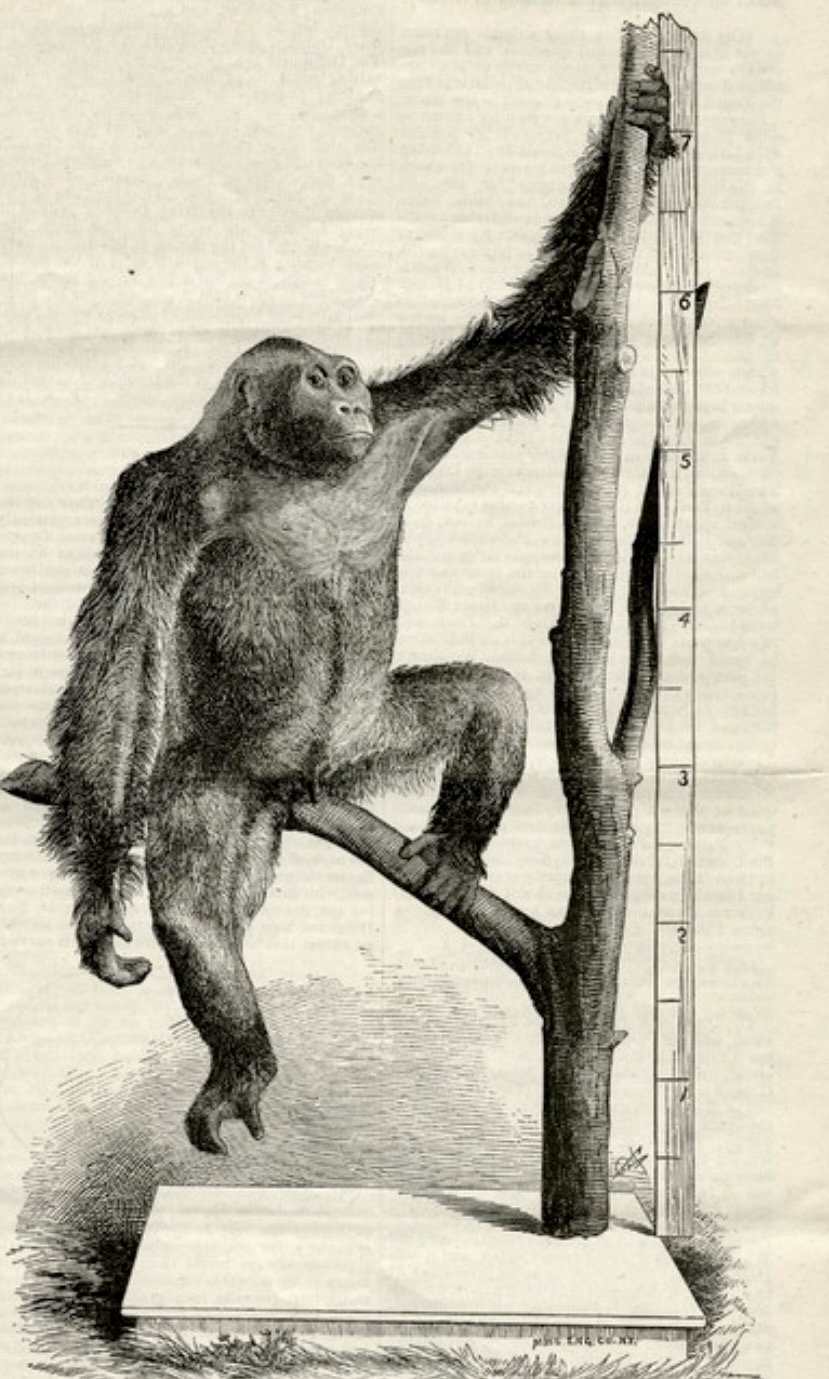
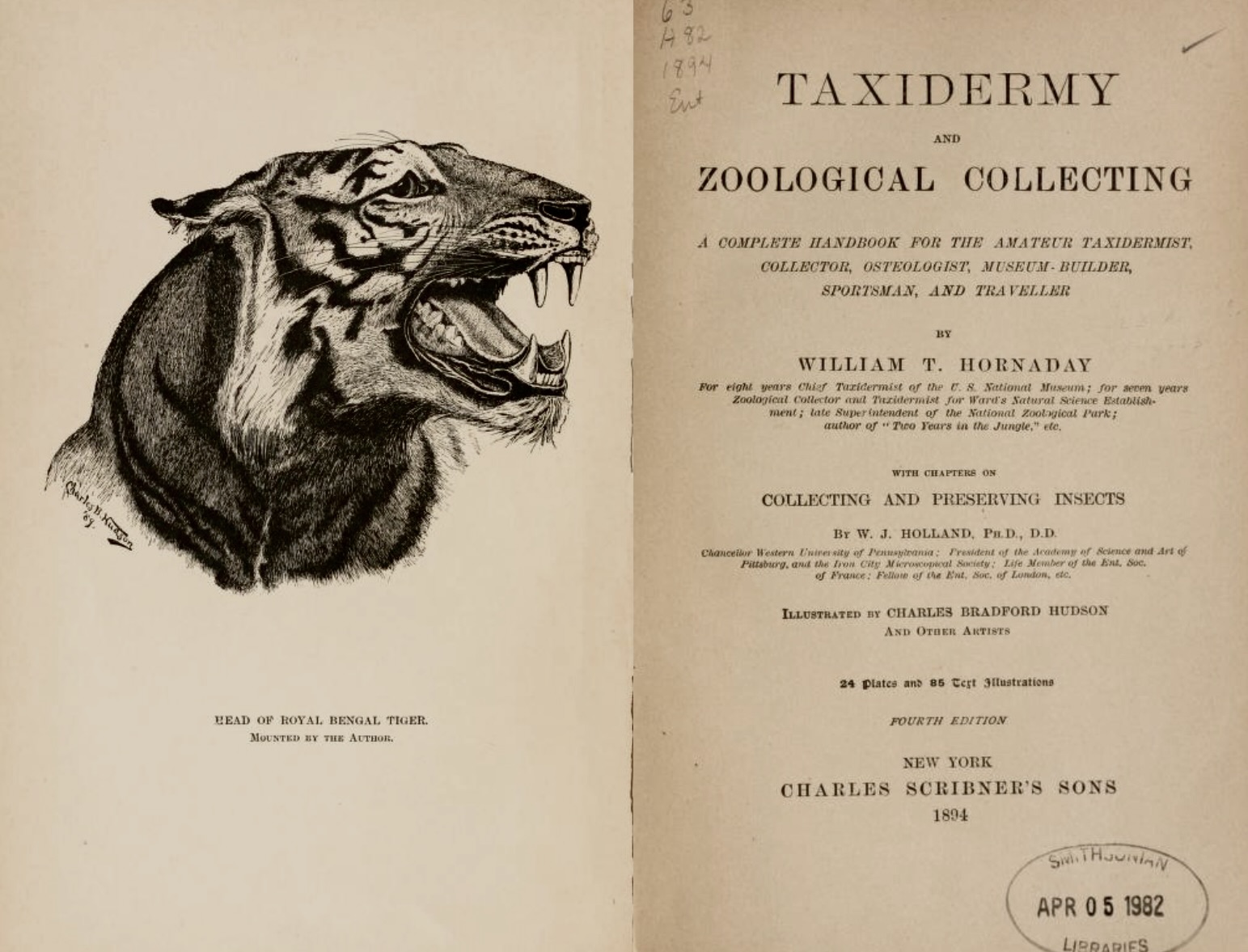
One of the most prominent graduates of Ward’s Natural Science Establishment was William Temple Hornaday (1854 –1 937). His Orangutan Group (1879) at the American Museum of Natural History and his Bison Group (1886) at the National Museum were among the earliest such displays created in the United States. In 1891, Hornaday published Taxidermy and Zoological Collecting: A Complete Handbook for the Amateur Taxidermist, Collector, Osteologist, Museum Builder, Sportsman, and Traveller. The handbook, which went through nine editions by 1910, closely resembled Rowland Ward’s 1880 publication on taxidermy in both content and presentation. Its frontispiece, for example, reproduced an engraving of a trophy head mounted by Hornaday, titled “Head of Royal Bengal Tiger,” while the tiger was also used as the principal example to illustrate the successive stages of constructing a taxidermic manikin. Although Hornaday admired the artistic skill and dramatic effects of the taxidermy practiced by Ward, he regarded such theatrical displays as inappropriate for scientific museum specimens.
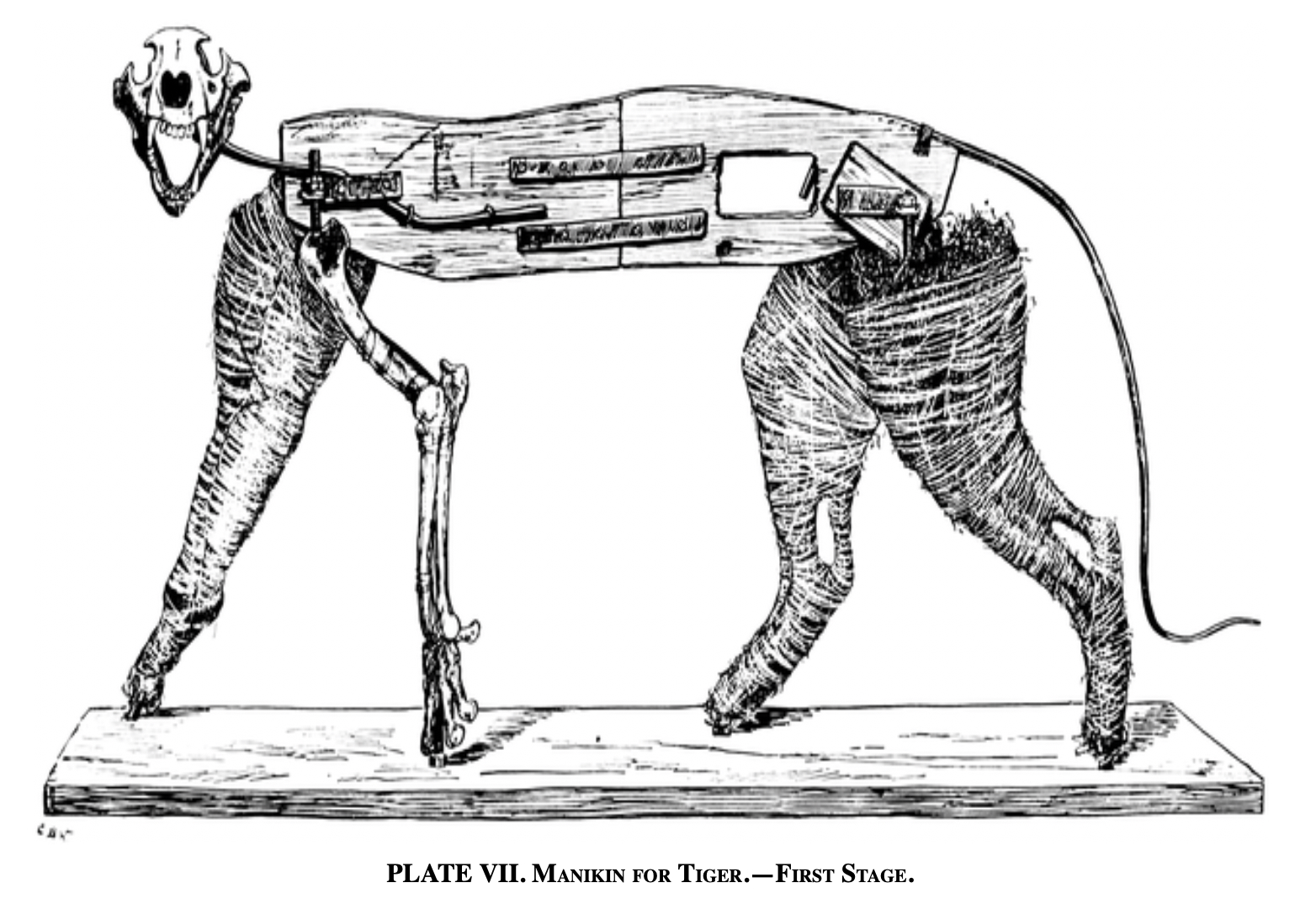
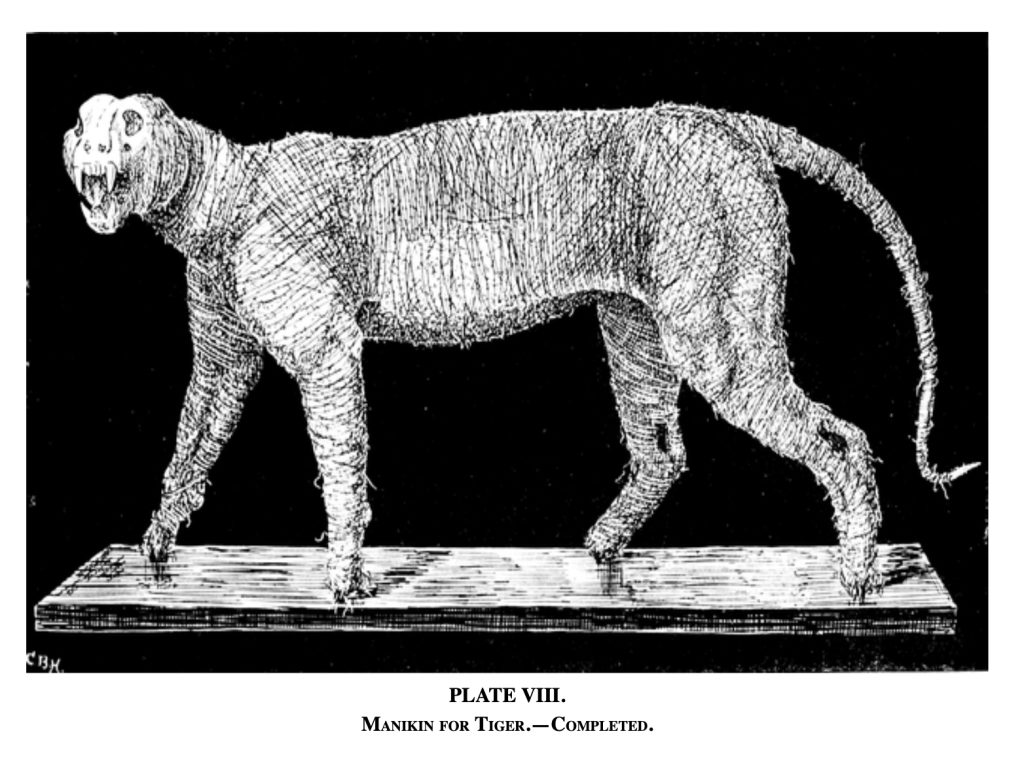
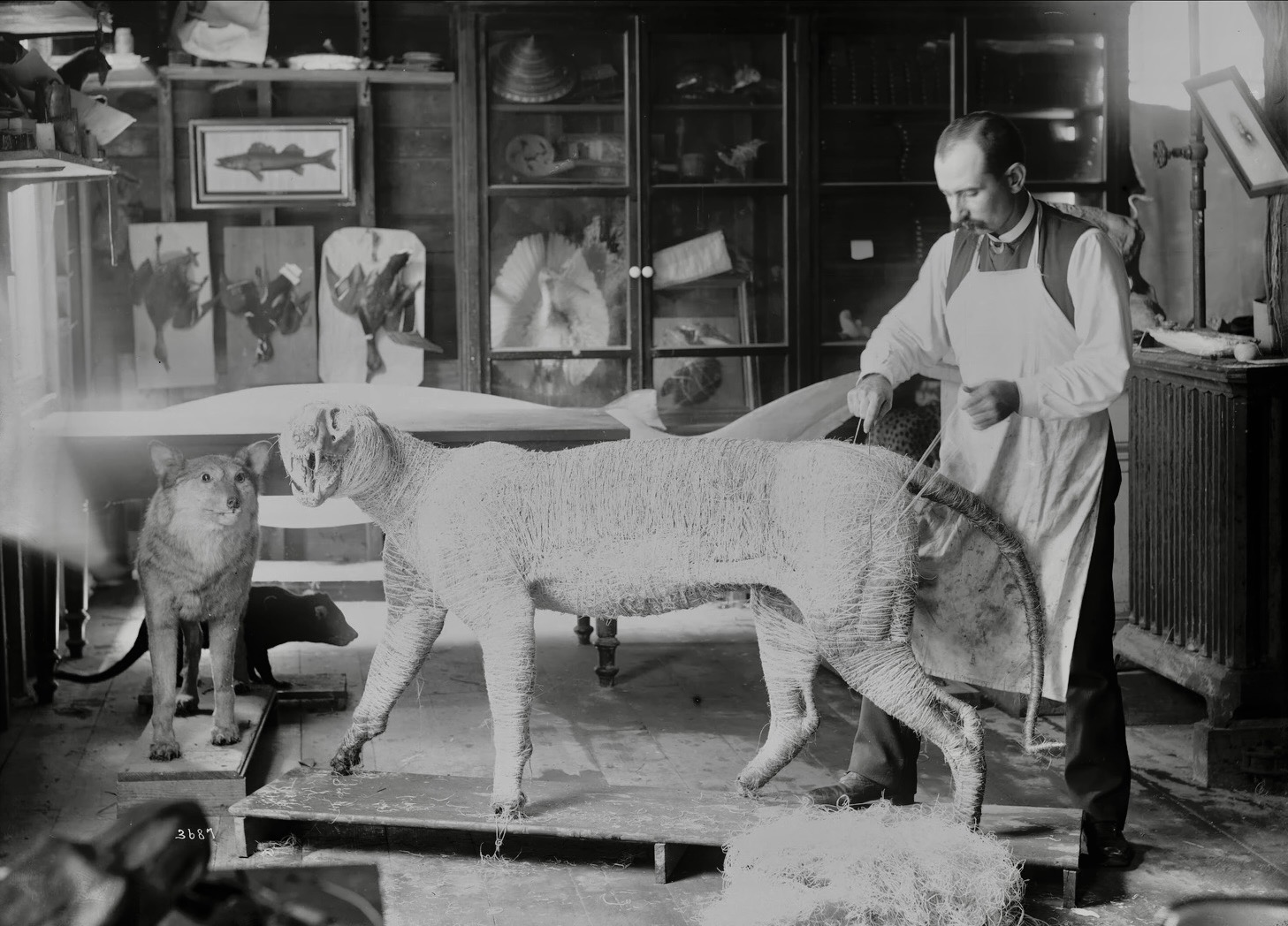
A photograph of Hornaday in his taxidermy studio shows him working on the tiger manikin illustrated in his book. The manikin consists of a wooden and iron armature incorporating the animal’s leg bones and skull. This structure was covered with twine and excelsior fibre, then modelled with clay and papier mâché before the prepared skin was fitted over the form. Following the publication of his handbook, Hornaday retired from the profession of museum taxidermy and became an influential advocate for animal conservation, publishing numerous books on the subject. According to him: “The rapid and alarming destruction of all forms of wild animal life which is now going on furiously throughout the entire world, renders it imperatively necessary for those who would build up great zoological collections to be up and doing before any more of the leading species are exterminated.” Hornaday perceived no contradiction between his conservation advocacy and the shooting of trophies by sportsmen.
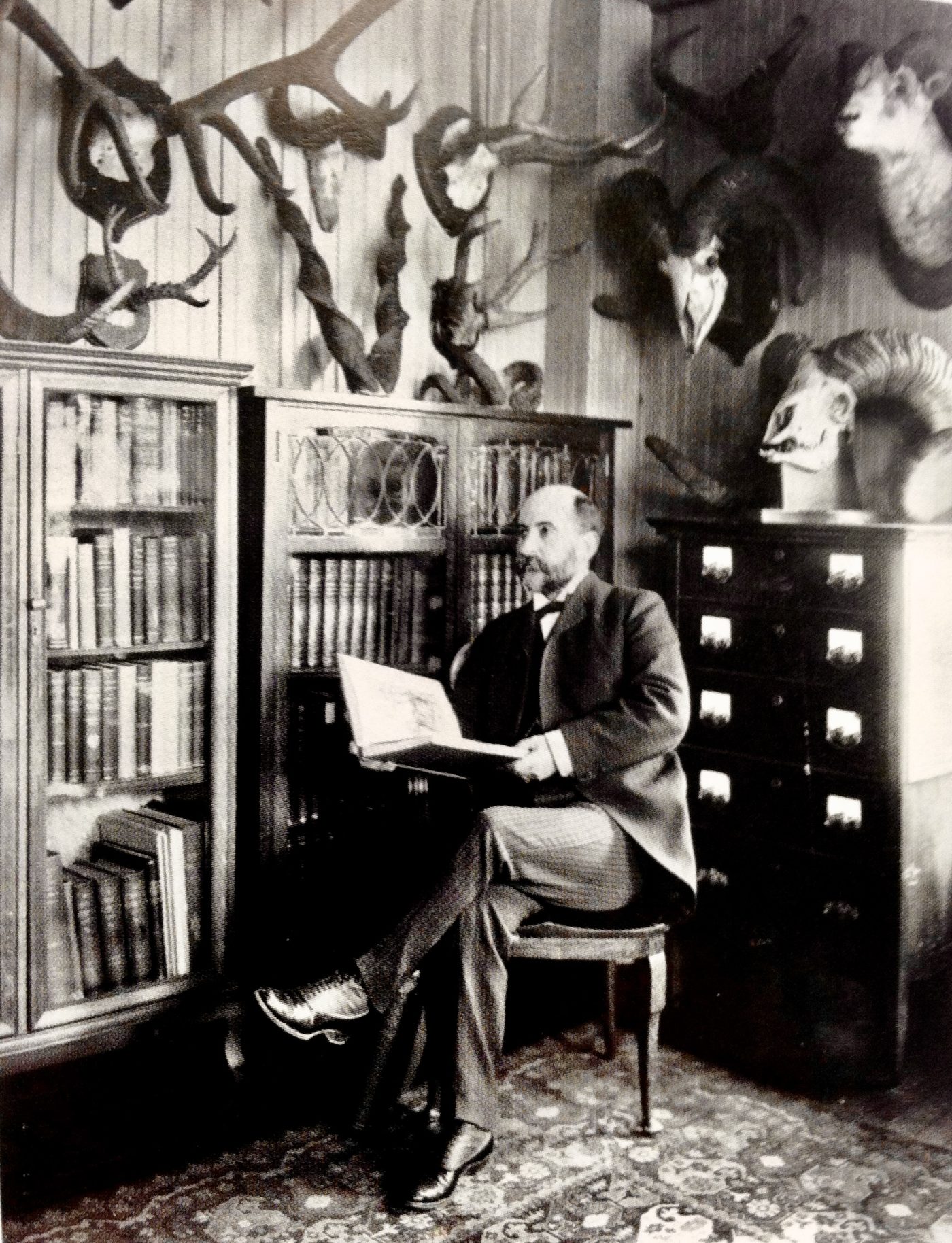
In 1896, Hornaday was appointed by the New York Zoological Society as the first director of the New York Zoological Park, a position he held until 1926. Alongside the display of living animals, he established the National Collection of Heads and Horns in 1906, dedicated “In Memory of the Vanishing Big Game of the World.” Hornaday’s taxidermy book included a chapter on mounting trophy heads; like Rowland Ward, he remained committed throughout his career to the collection and display of such “specimens.” A portrait of Hornaday in his office depicts walls lined with mounted heads and horns.
Hornaday was a founding member of the Boone and Crockett Club, an influential organization of sportsmen that documented members’ trophies according to the length and spread of horns, antlers, and skulls, much like Rowland Ward’s Records of Big Game. During the period of museum expansion in the United States (c. 1880 – 1930), the heads, horns, antlers, and skulls of large mammals were regarded as essential scientific specimens for documenting geographic variation, sexual dimorphism, and ontogenetic development.
Museums required extensive comparative series to establish species boundaries, and wealthy sportsmen frequently financed collecting expeditions to supply these collections. Yet while such specimens were indispensable for scientific study, there was no scientific requirement to mount them in lifelike poses or incorporate them into habitat displays. Although Hornaday envisioned zoological museums with exhibitions that were “as attractive and pleasing as the picture galleries,” he did not question their continued function as hunting trophies that celebrated the death of the animal.
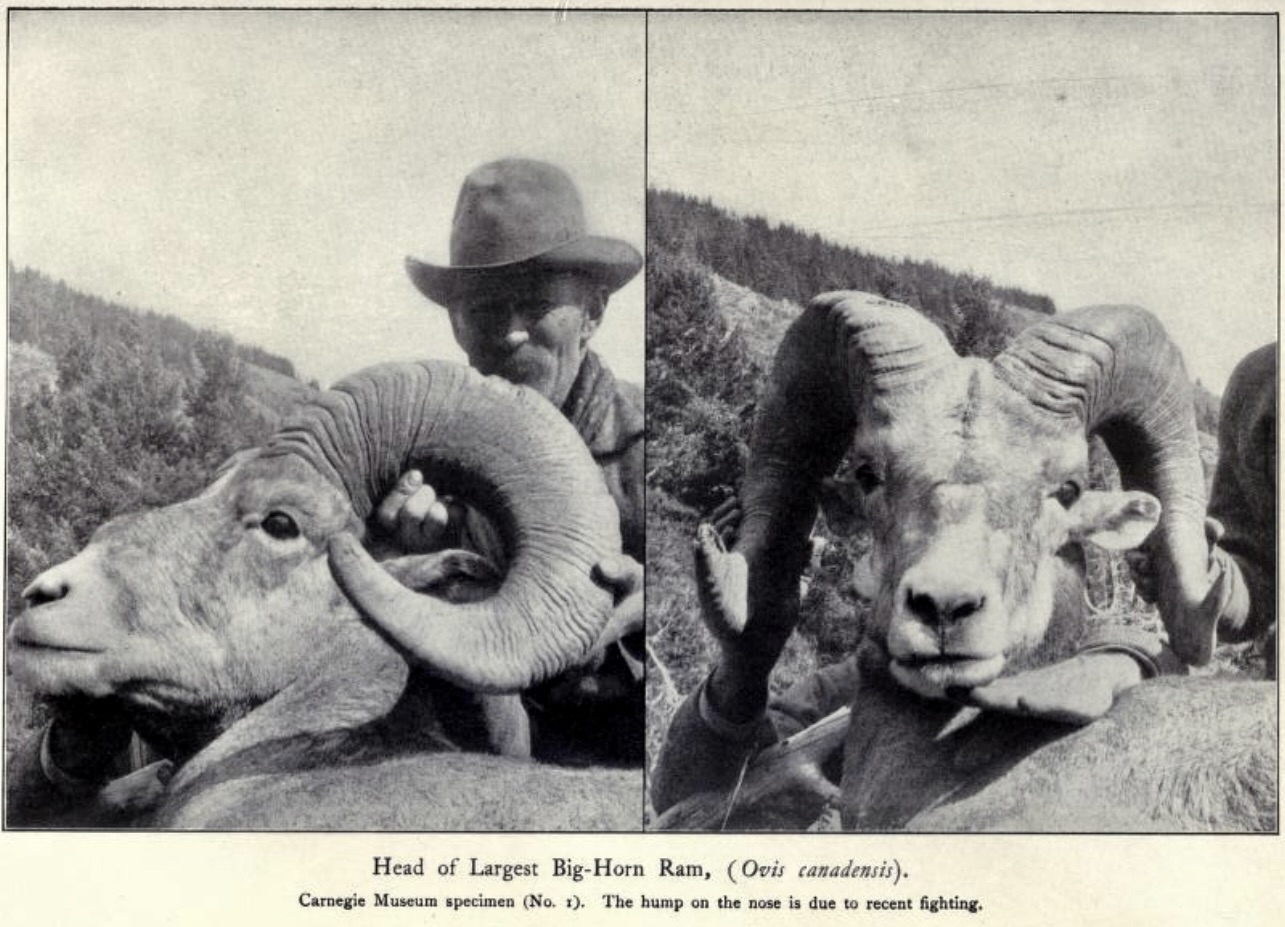
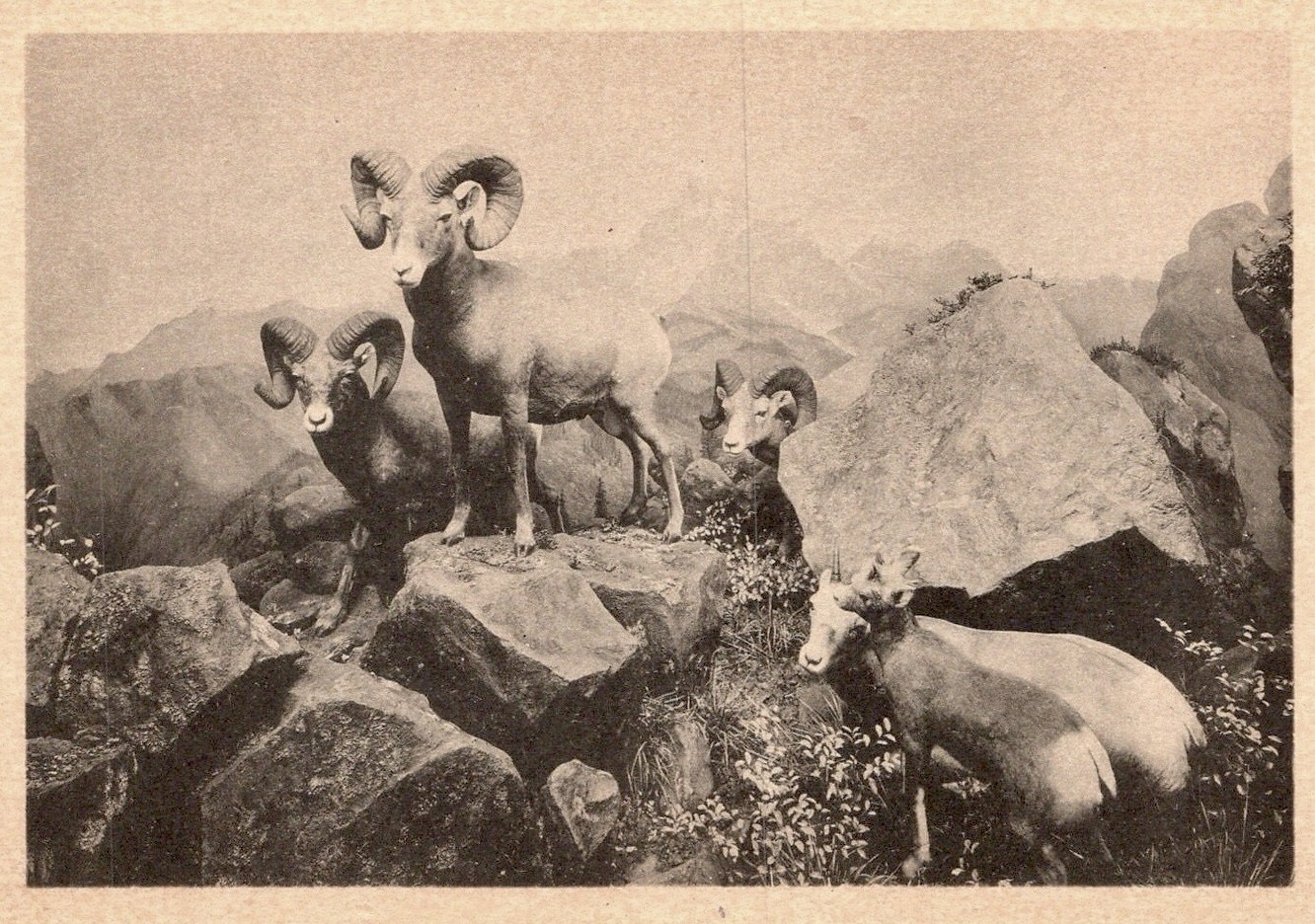
Hornaday noted that the trophy sized “Big Horn Ram” head shot by Phillips, distinguished by its massive, deeply curled horns, became the “Carnegie Museum specimen (No. 1).” Donated by Phillips, a patron of the museum, the record specimen was mounted in a habitat diorama that immortalized the site of the hunt at Goat Mountain Park, an area later established as a wildlife reserve through Phillips’s advocacy. The background landscape depicted Phillips Peak, named in his honour. Like the trophy illustrations reproduced in hunting narratives, dioramas commemorate the hunter’s conquest for posterity.
In 1901, William T. Hornaday and John M. Phillips, a wealthy industrialist and sportsman, undertook a collecting expedition to southeastern British Columbia in pursuit of big game trophies. Hornaday later published an illustrated account of their hunting exploits, Camp Fires in the Canadian Rockies (1906). The volume contains numerous photographs of the hunters posing with their kills, including a double portrait of an exceptional ram entitled “Head of Largest Big Horn Ram (Ovis canadensis).”
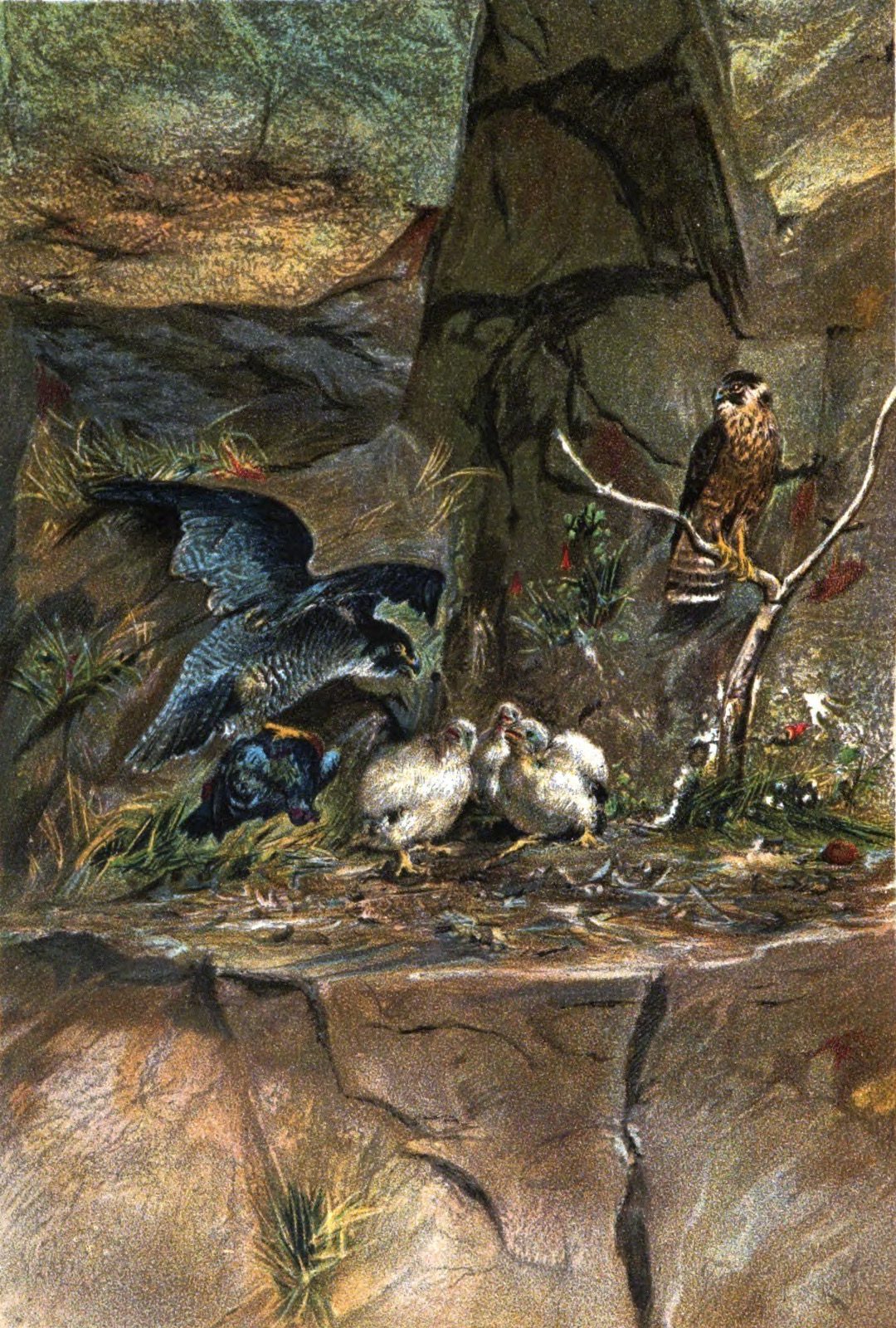
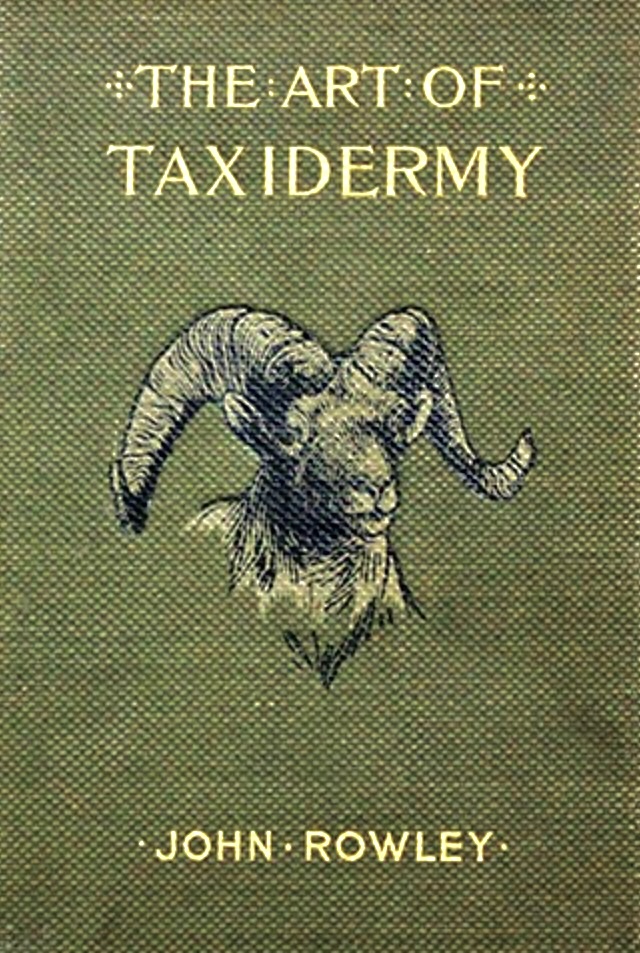
Like William T. Hornaday, the taxidermist John S. Rowley (1866 – 1928) trained as an apprentice at Ward’s Natural Science Establishment. Appointed taxidermist at the American Museum of Natural History in 1893, Rowley published one of the field’s classic manuals, The Art of Taxidermy (1898), in which he argued that taxidermy was a fine art closely allied to sculpture. The book’s cover featured an engraved bighorn sheep trophy head, an icon of the central role that big game trophies played in the practice of taxidermy. In contrast, its frontispiece reproduced a photomechanical engraving entitled “Group of Duck Hawks, Designed to Illustrate the Nesting Habits.” It depicts one of the American Museum of Natural History’s earliest habitat groups, continuing the new display philosophy adopted during the 1880s by Rowley’s predecessor, the taxidermist Jenness Richardson (1857 – 1893).
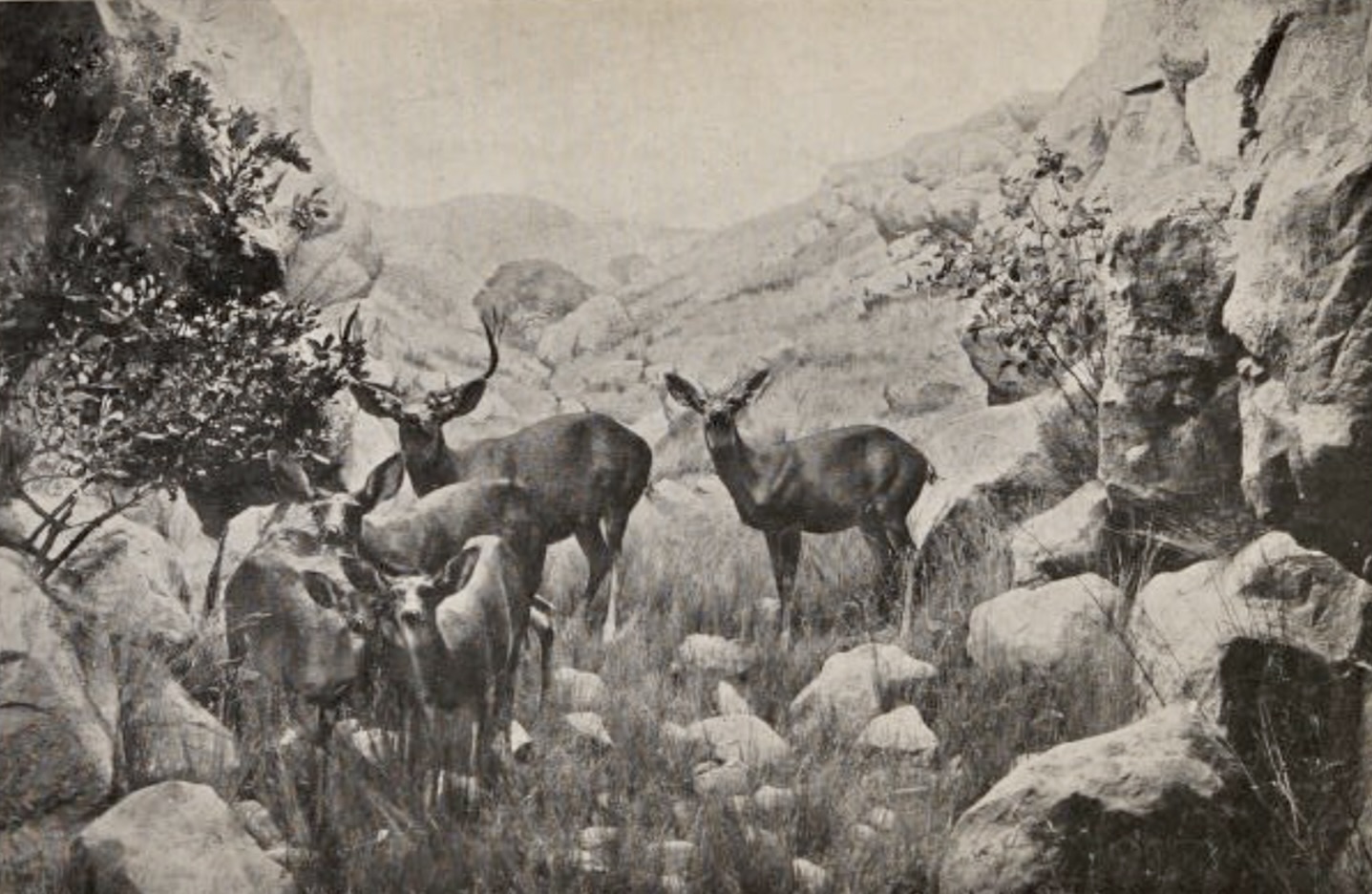
In 1903, Rowley relocated to California, where he further advanced the art of habitat groups, or “environmental groups,” as he termed them, at Stanford University, the California Academy of Sciences, and the Oakland Museum, becoming the latter’s director in 1917. Three years later, he was appointed Chief of Exhibits at the Natural History Museum of Los Angeles County. Rowley’s vision of a new museum ideal, in which entire exhibition halls were conceived specifically for illusionistic habitat dioramas, was realized at both the San Francisco and Los Angeles museums. His second landmark publication, Taxidermy and Museum Exhibition (1925), featured as its frontispiece the Black Tailed Deer (Odocoileus hemionus columbianus) habitat diorama he designed and installed at the Oakland Museum, with a background painting by the artist Maurice G. Logan (1886 – 1977).
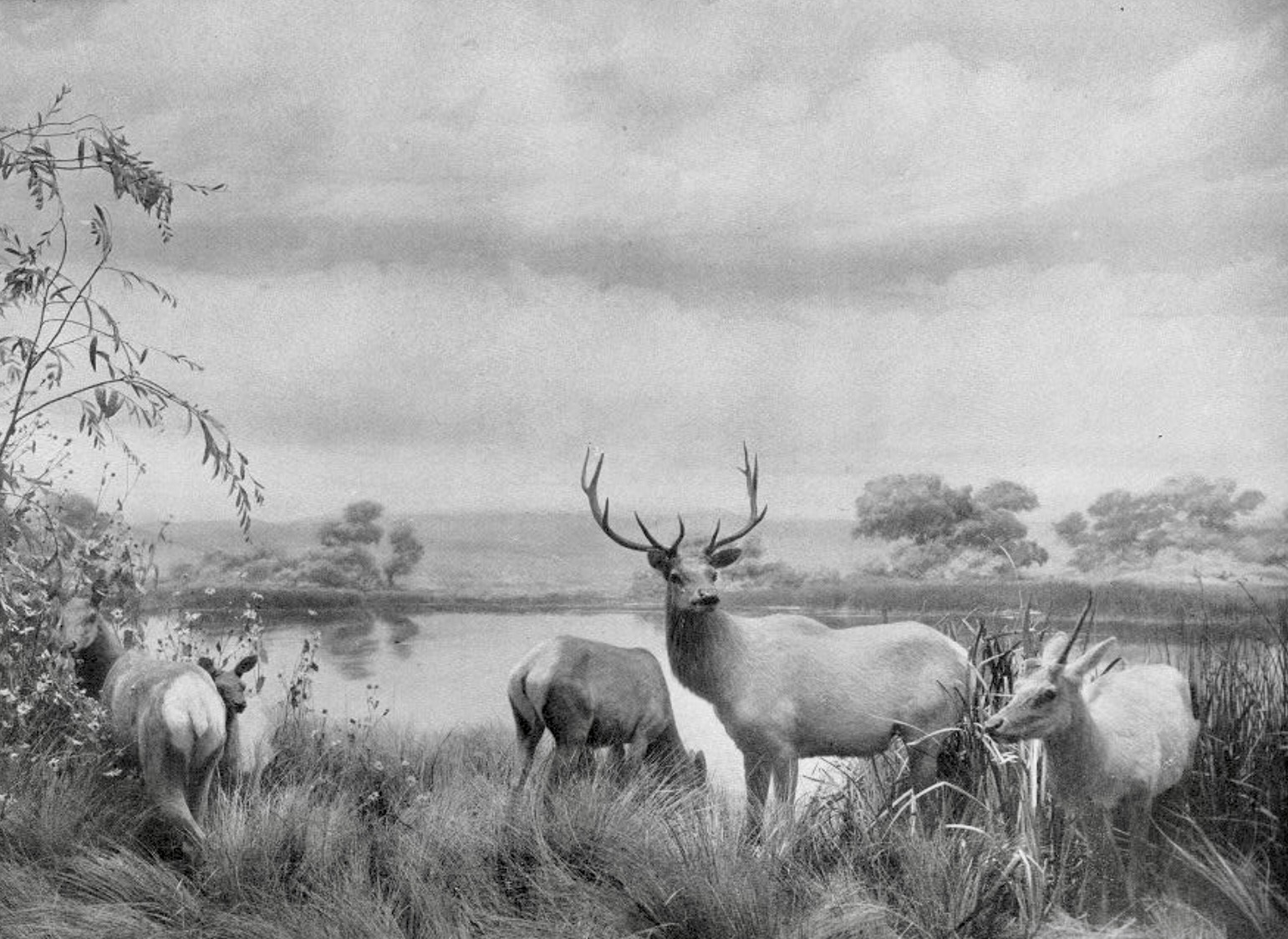
A habitat diorama in the 1916 Hall of North American Mammals at the California Academy of Sciences, designed by John Rowley, was titled “San Joaquin Valley Elk” (Cervus canadensis nannodes), also known as the Tule Elk. The background was painted by Charles Abel Corwin (1857 – 1938), the first professional artist to paint diorama backgrounds. The display featured a family group of elk grazing at a specific location where a remnant population had been protected on a private ranch in 1874, saving the species from extinction due to overhunting and habitat loss. Not formally described until 1905, the Tule Elk is one of six elk subspecies native to North America. Two others had already been driven to extinction through human exploitation: the Eastern Elk (Cervus canadensis canadensis) by 1880 and Merriam’s Elk (Cervus canadensis merriami) by 1906. The diorama hall was destroyed for the construction of a new museum which opened in 2008.
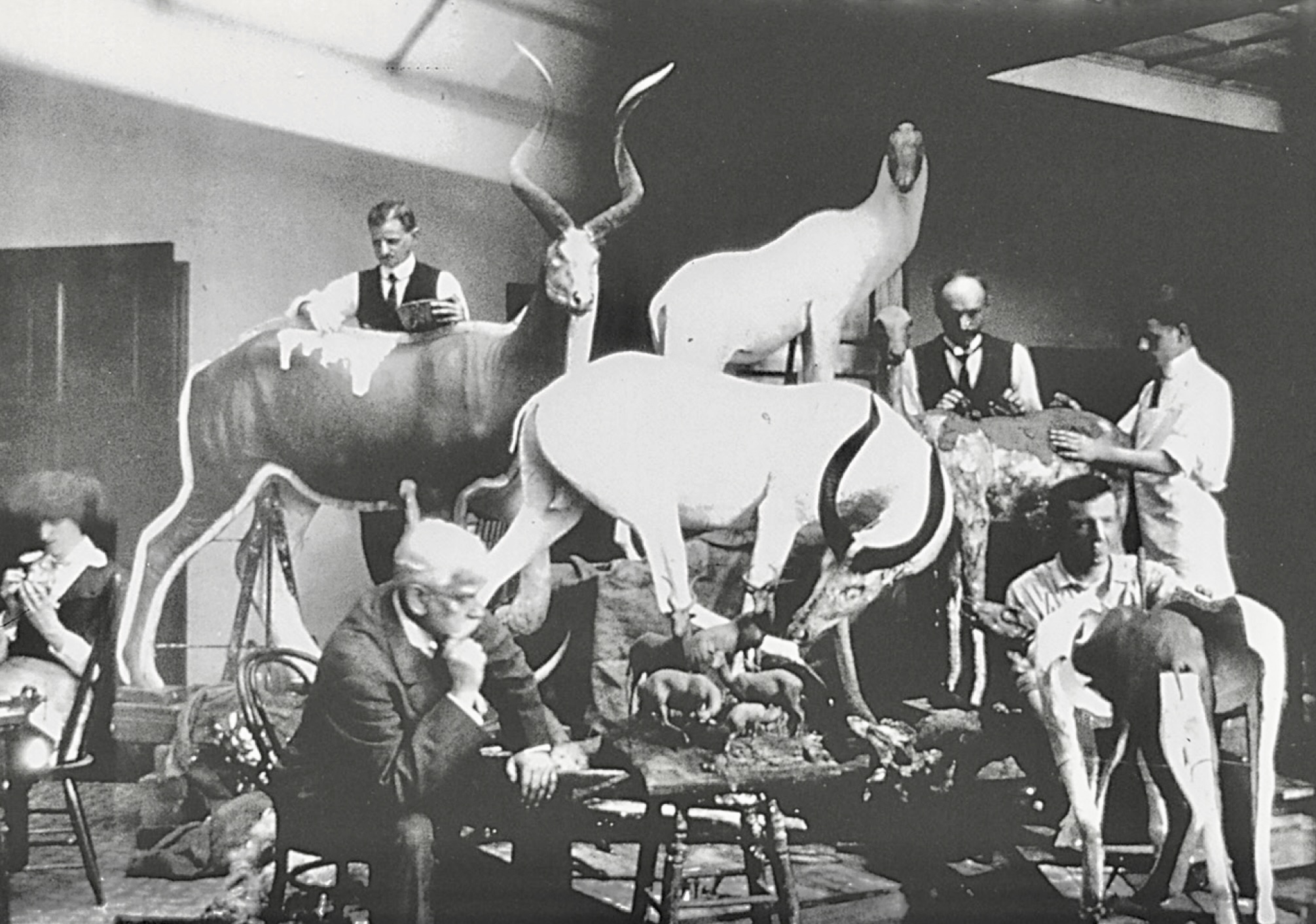
John Rowley and other American taxidermists adopted the new casting technique pioneered by Carl Akeley, first employed in his series of deer habitat dioramas completed in 1902 at the Field Museum. Among them were the Belgian born taxidermists Remi H. Santens (1868 – 1943) and his brother Joseph A. Santens (1873 – 1969), whom Henry Ward had brought to the United States to work at Ward’s Natural Science Establishment in Rochester. At the invitation of director William J. Holland, Remi joined the Carnegie Museum in Pittsburgh in 1906, followed by Joseph in 1907. A photograph taken about 1916 shows Holland seated before a group of Mountain Nyala (Tragelaphus buxtoni) manikins being prepared for exhibition by the Santens brothers, identifiable by their vests, and their assistants. Displayed beside Holland is a clay model of the group. The Santens brothers became renowned for the artistic quality and lifelike realism of their taxidermy, achieved through Akeley’s cast modelling method.
Childs Frick, a sportsman from a wealthy Pittsburgh steel family and a patron of the Carnegie Museum, collected seven Mountain Nyalas during his Abyssinian Expedition of 1911 – 1912. Two years earlier, he had undertaken his first African expedition to British East Africa, coinciding with the celebrated collecting expedition of Theodore Roosevelt for the US National Museum. Frick’s expeditions yielded a substantial collection of African big game specimens, which he subsequently donated to the Carnegie Museum.
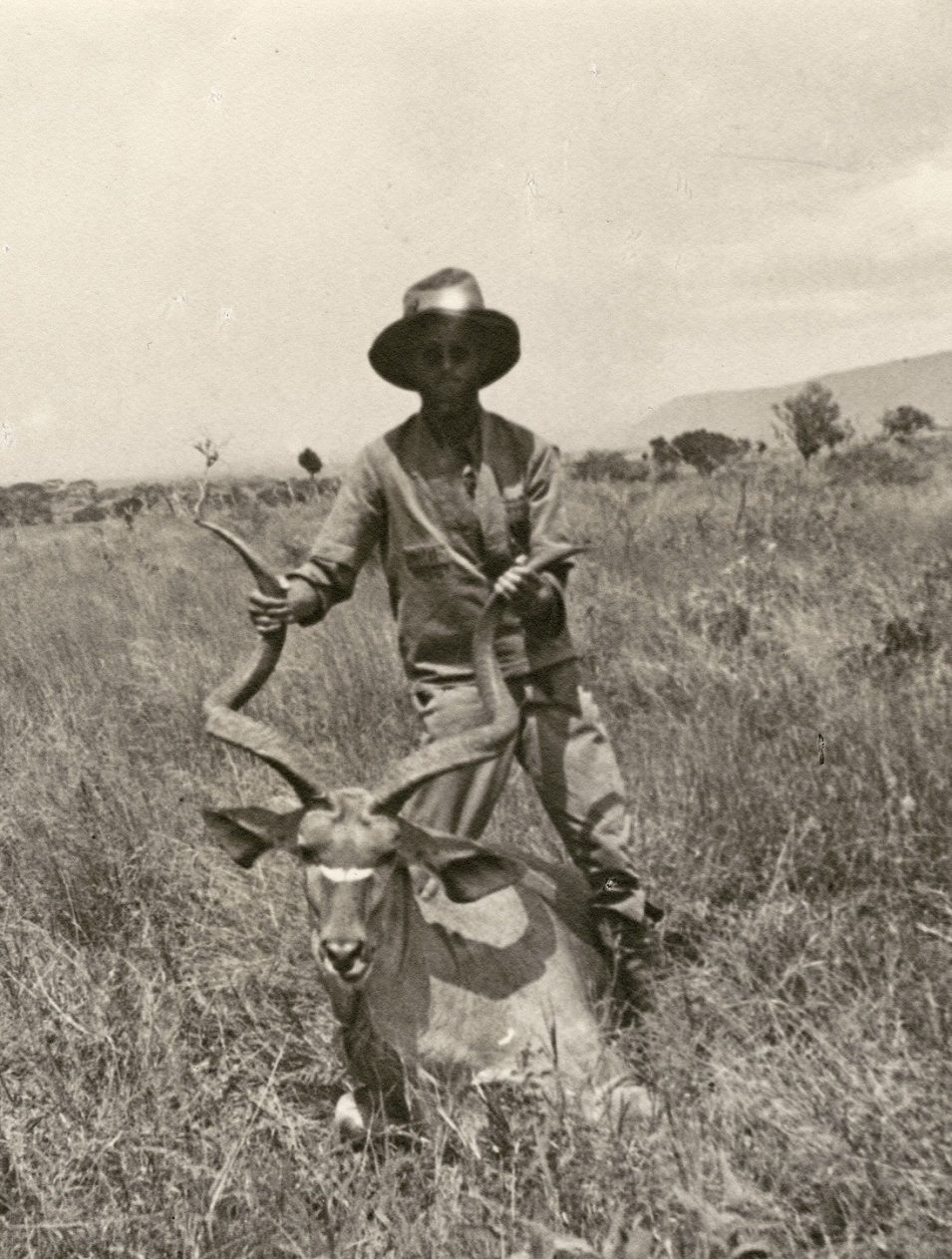
An archival photograph from 1911 shows Frick holding the horns of his Mountain Nyala trophy on the Arussi Plateau, at the southern edge of the Rift Valley in central Ethiopia, where he had shot the animal. Only a few years earlier, the species had been discovered and formally described as the last large antelope and major ungulate species in Africa to be recognized by Western science.
The type specimen had been collected in the same region in 1908 by Major Ivor Buxton, the prominent sportsman for whom the species was originally named. He delivered it to London, to the taxidermist Rowland Ward for identification. Even at the time of its scientific description, concern was expressed that this remarkable species might not survive because of overhunting and habitat destruction. Today, the Mountain Nyala remains at high risk of extinction.
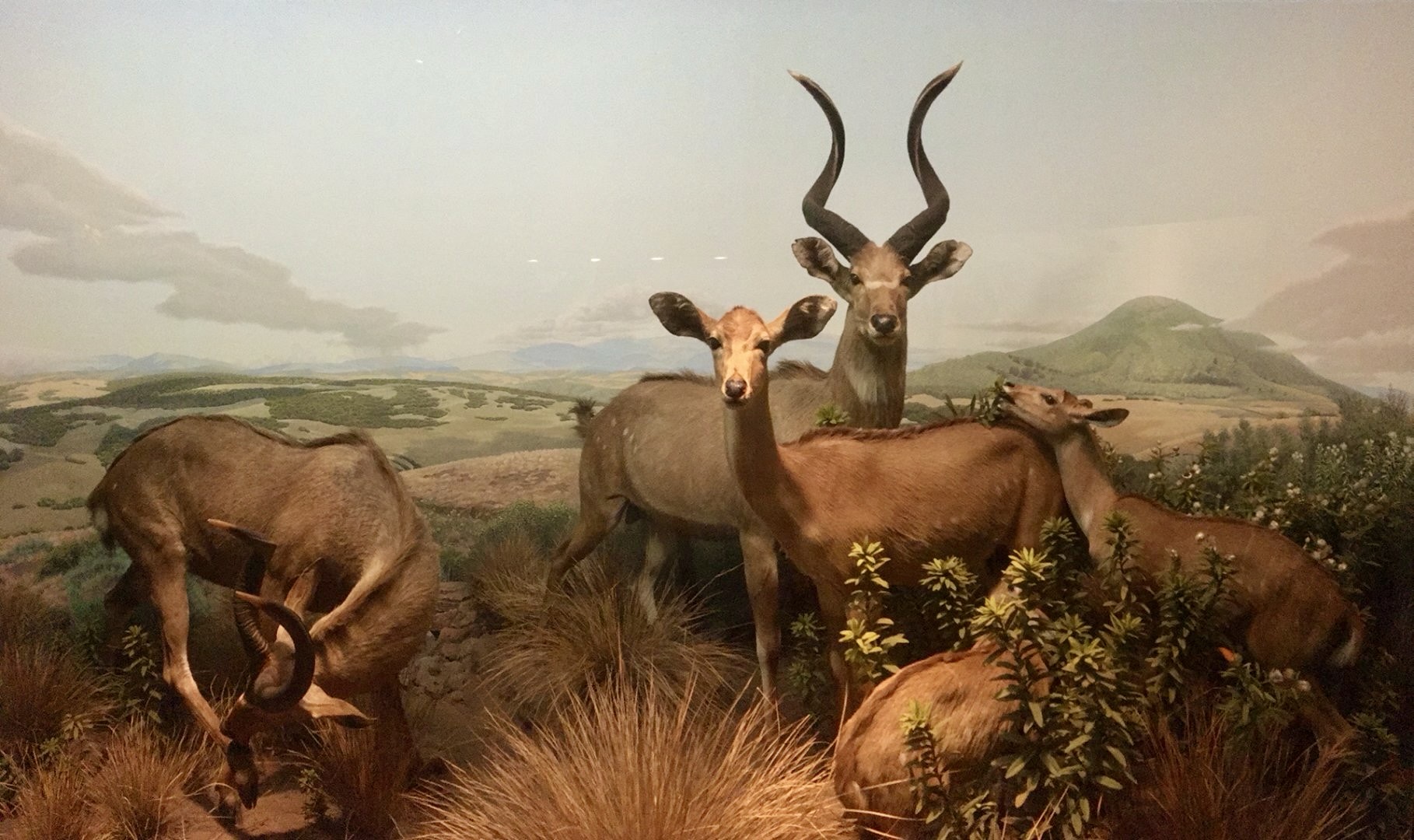
Completed in 1916 for the Hall of Mammals at the Carnegie Museum, the Mountain Nyala group was the first museum display devoted to this recently described and little known Ethiopian antelope.
Several decades later, the group was incorporated into the new Hall of African Wildlife, which opened in 1993 and emphasized the regional ecosystems and habitats represented by the animals on display. The group’s background landscape, painted by the contemporary American artist Jerome Connolly (b. 1931), depicts the open montane grasslands and juniper woodlands of the Arussi Plateau.
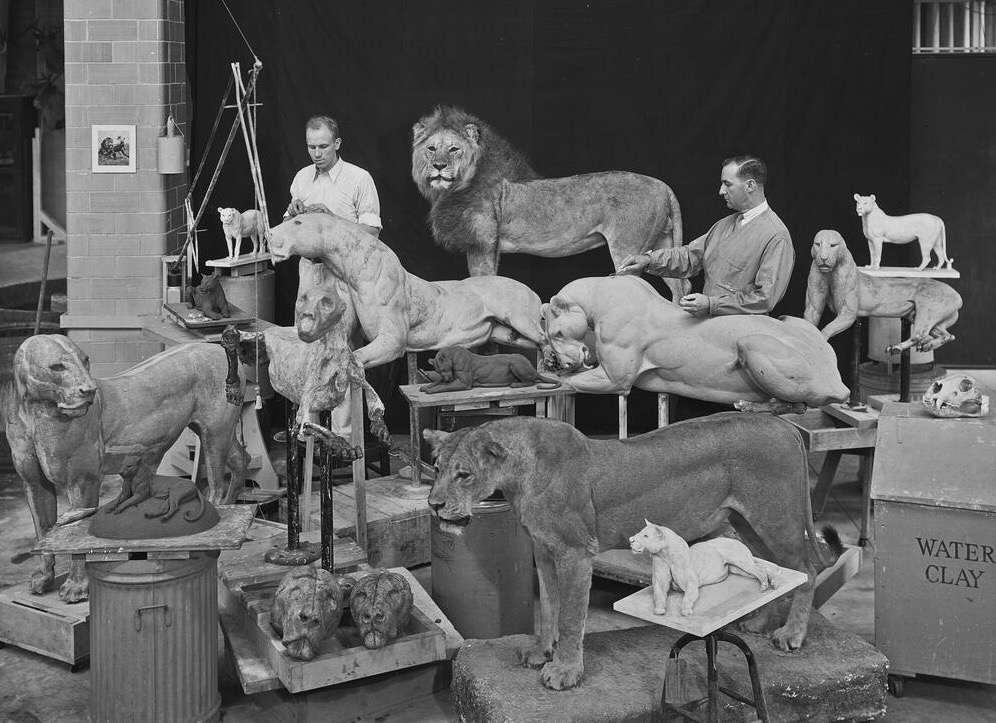
Another taxidermist to use the casting techniques advanced by Carl Akeley was James L. Clark (1883 – 1969). Originally trained as an animal sculptor, Clark was employed at the American Museum of Natural History from 1902 to 1908 and again from 1923 to 1949, serving as director of the preparation department from 1935 until his retirement. An archival photograph shows Clark (right) and his assistant working in the museum’s taxidermy studio in 1934. They are preparing the sculpted manikins for the habitat diorama featuring the African Lion (Panthera leo melanochaita). Several clay models of the animals can be seen in the photograph, along with the completed male lion. The manikins, with their precise anatomical musculature, were produced from plaster casts made from clay sculptures modelled over wire armatures supported by wooden frameworks. The final stage of mounting was to fit the animal’s tanned and preserved skin over the manikin, with additional modelling used to reconstruct the soft tissues.
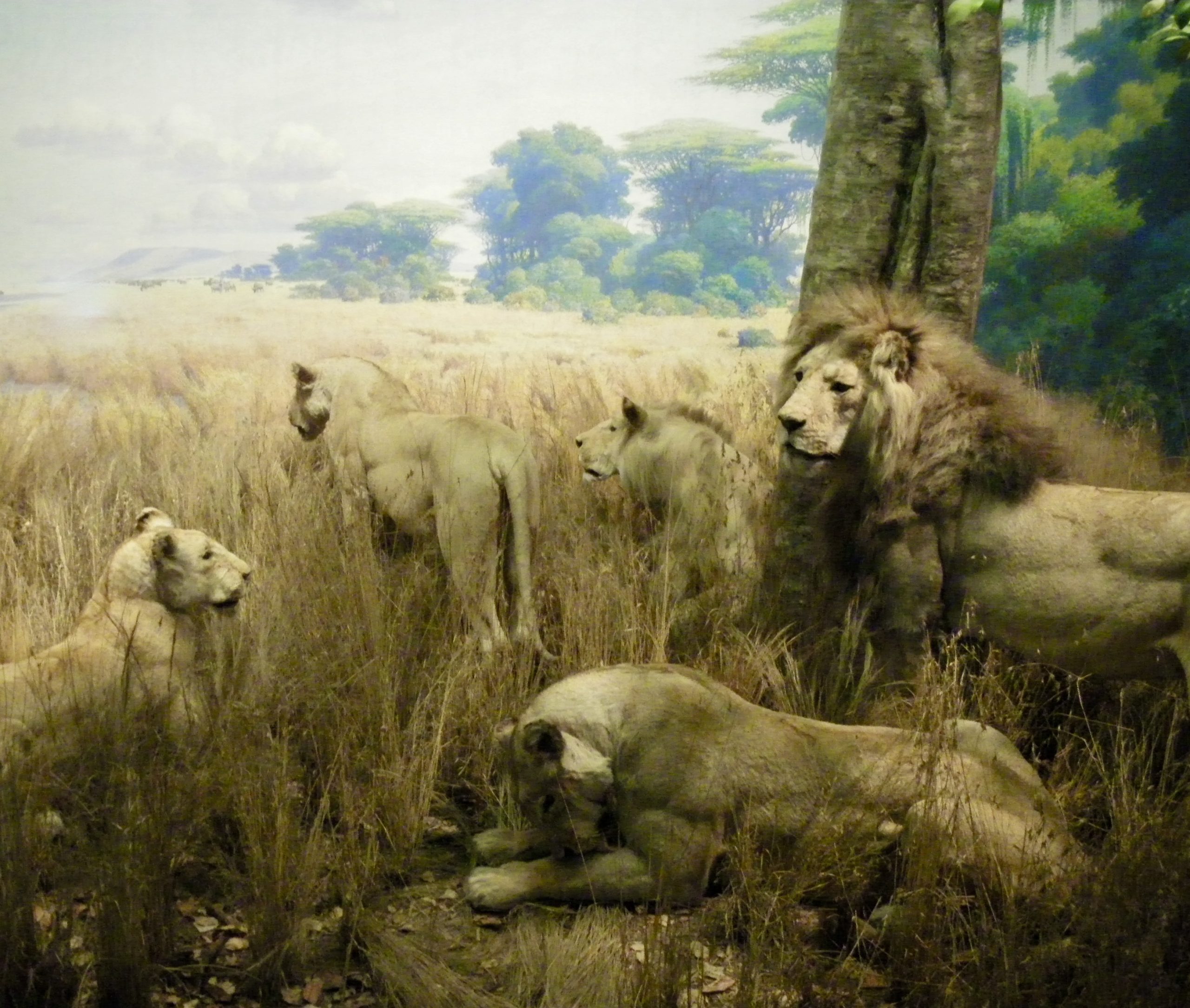
The Lion Group, completed in 1934, was installed in the Akeley Hall of African Mammals at the American Museum of Natural History. The distinguished artist William R. Leigh (1866 – 1955) painted its panoramic background, depicting the expansive savannah landscape of the Serengeti. Leigh accompanied the African expedition that collected the pride of lions, which was financed by the wealthy sportsman and museum patron George L. Carlisle. Taxidermist James L. Clark not only directed the expedition’s scientific collecting activities but also participated in the hunting of the lions.
Known as the “King of Beasts,” lions have long functioned as cultural symbols of strength, courage, royalty, and power. They have also been among the most sought after trophies of big game hunters, particularly mature males with prominent manes. The taxonomy of lions has undergone repeated revision, and although scientific interpretations of the species have continued to evolve, lion populations have been eliminated from much of their historic range through habitat loss, human wildlife conflict, and overhunting.
In Europe, Carl Akeley’s revolutionary casting technique was likewise adopted by museum taxidermists, among them Hermanus H. ter Meer (1871 – 1934). Ter Meer was a highly regarded Dutch preparator whose father and grandfather had worked in the same profession at the Leiden Museum. In 1907, he accepted a position at the Zoological Institute of Leipzig University, where he remained until his death in 1934. An archival photograph from 1928 shows ter Meer in his atelier surrounded by mounted specimens, including a Siberian Ibex (Capra sibirica), a species closely related to the Alpine Ibex (Capra ibex), or Steinbock, among the most highly prized of European big game trophies. Ter Meer was a founding member of the “Deutsche Künstlervereinigung der Museumsdermoplastiker” (German Artists’ Association of Museum Dermoplastics) and was elected its first president at the organization’s inaugural meeting, held in 1933 at the Museum für Naturkunde in Berlin.
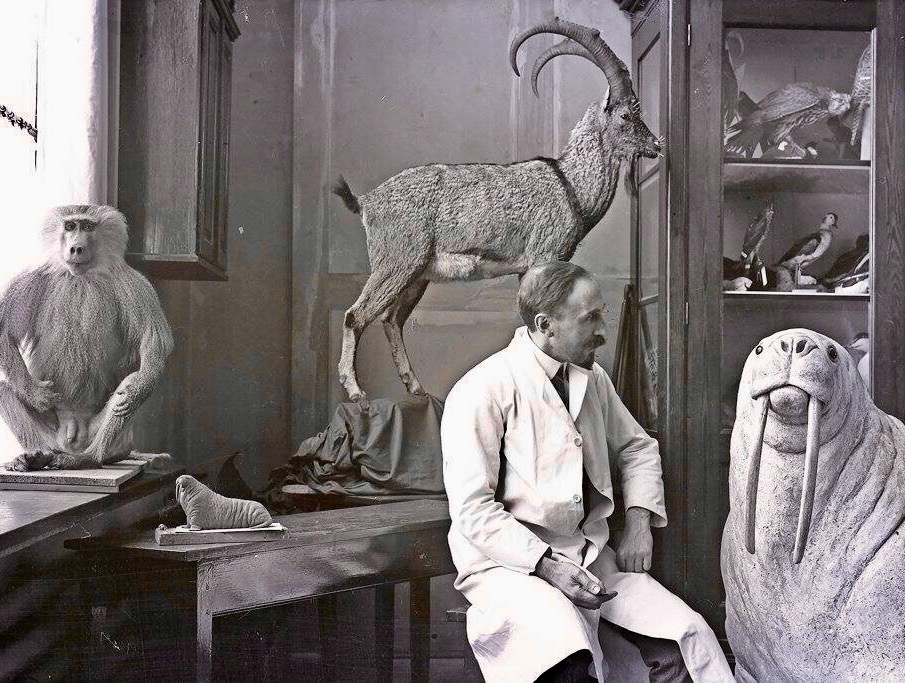
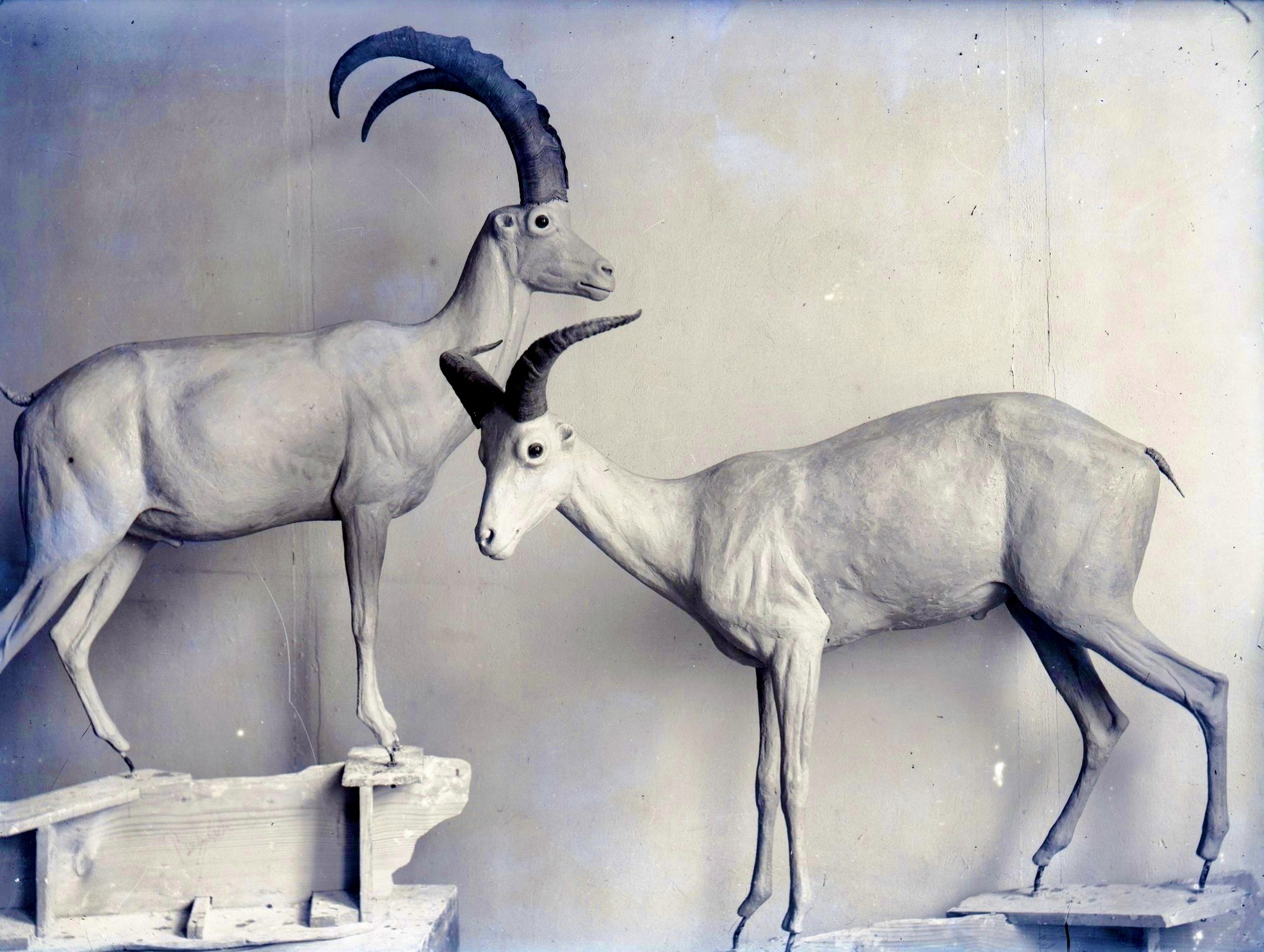
In conjunction with its 1933 meeting, the Association held an exhibition titled “Ancient and Modern Dermoplasty,” showcasing the artistic skills of its members through more than 100 sculptures in bronze, marble, porcelain, and wood. Ter Meer exhibited 17 of his small scale sculptures in bronze and stone and delivered a lecture honouring the German naturalist Philipp Leopold Martin as a precursor of modern taxidermy and the originator of the term “Dermoplastik,” which described a practice requiring both artistic modelling skills and anatomical knowledge. Many European museum preparators attended the meeting, among them Georg Ruprecht of the Natural History Museum in Bern. James L. Clark of the American Museum of Natural History also participated. An archival photograph reveals details of ter Meer’s manikins, or “Nacktmodelle” (naked models). The specimen on the left is a Siberian Ibex (Capra sibirica); on the right is an East Caucasian Ibex (Capra cylindricornis), both shown before their skins were fitted.
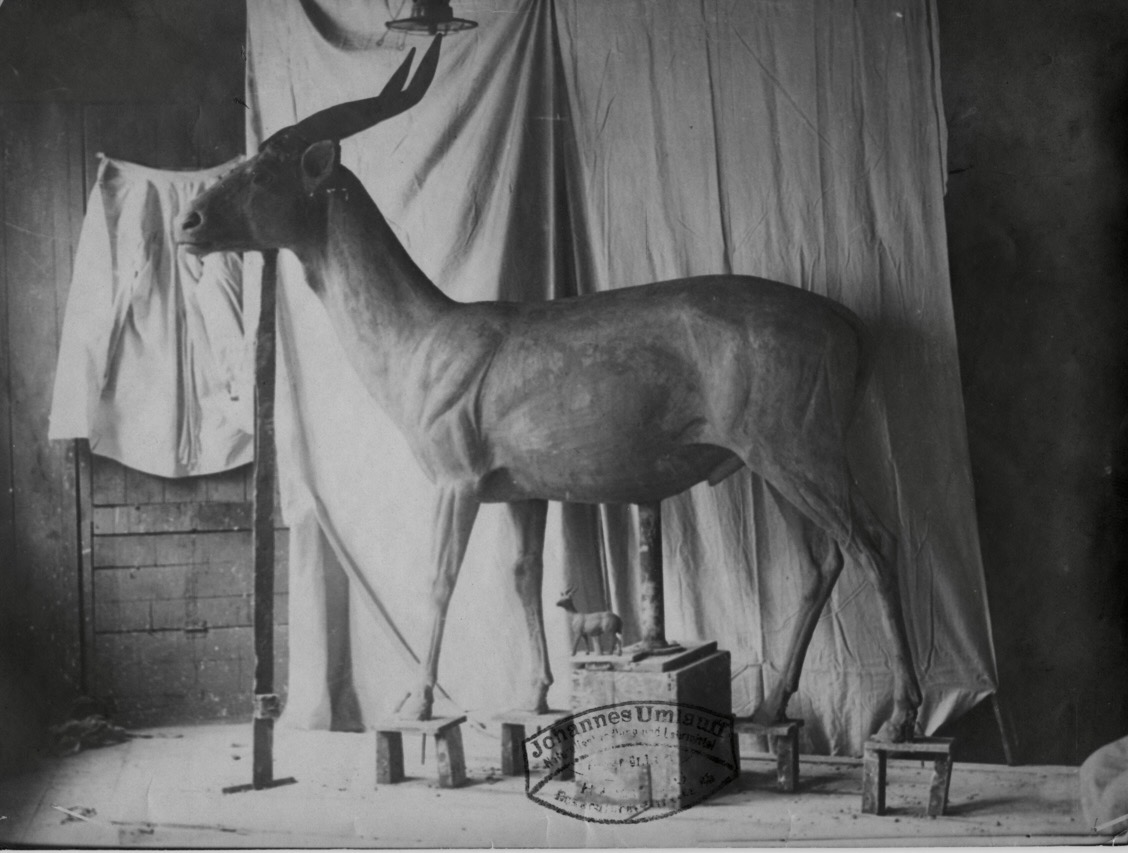
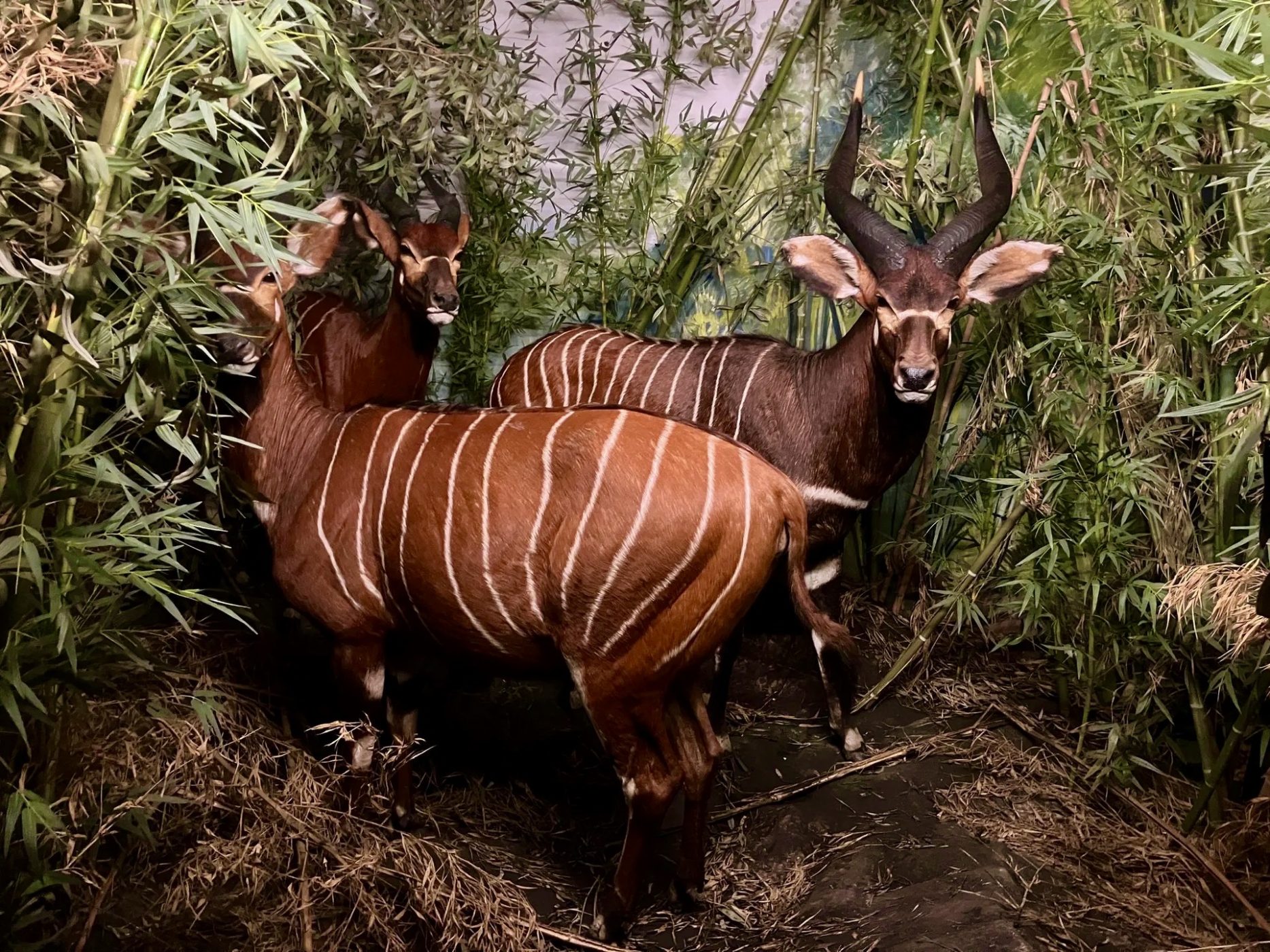
The German taxidermist and dealer in natural history specimens Johannes Umlauff employed the “naked model,” or clay sculpted Dermoplastik technique in the preparation of his mounts. An undated photograph shows Umlauff’s manikin of an African Bongo (Tragelaphus eurycerus) in his atelier and bears the “Johannes Umlauff” business stamp, suggesting that it may have been circulated as part of a commercial catalogue. A small model of the animal is positioned on a box beneath the specimen. An archival note records that the completed taxidermic mount, with the Bongo’s skin fitted, is displayed at the Naturhistoriska Museum in Göteborg, Sweden. The accompanying label states that the specimen was collected in the Aruwimi region of the Belgian Congo by Hugo M. Wallin and purchased by the museum in 1912. Few Bongos are represented in museum collections because of the challenges involved in locating and obtaining specimens of this elusive forest dwelling species in sub Saharan Africa. Among the largest of Africa’s antelopes, Bongos were coveted as hunting trophies for their heavy, uniquely spiralled horns, which twist once, sweep backward, and terminate in white tips.
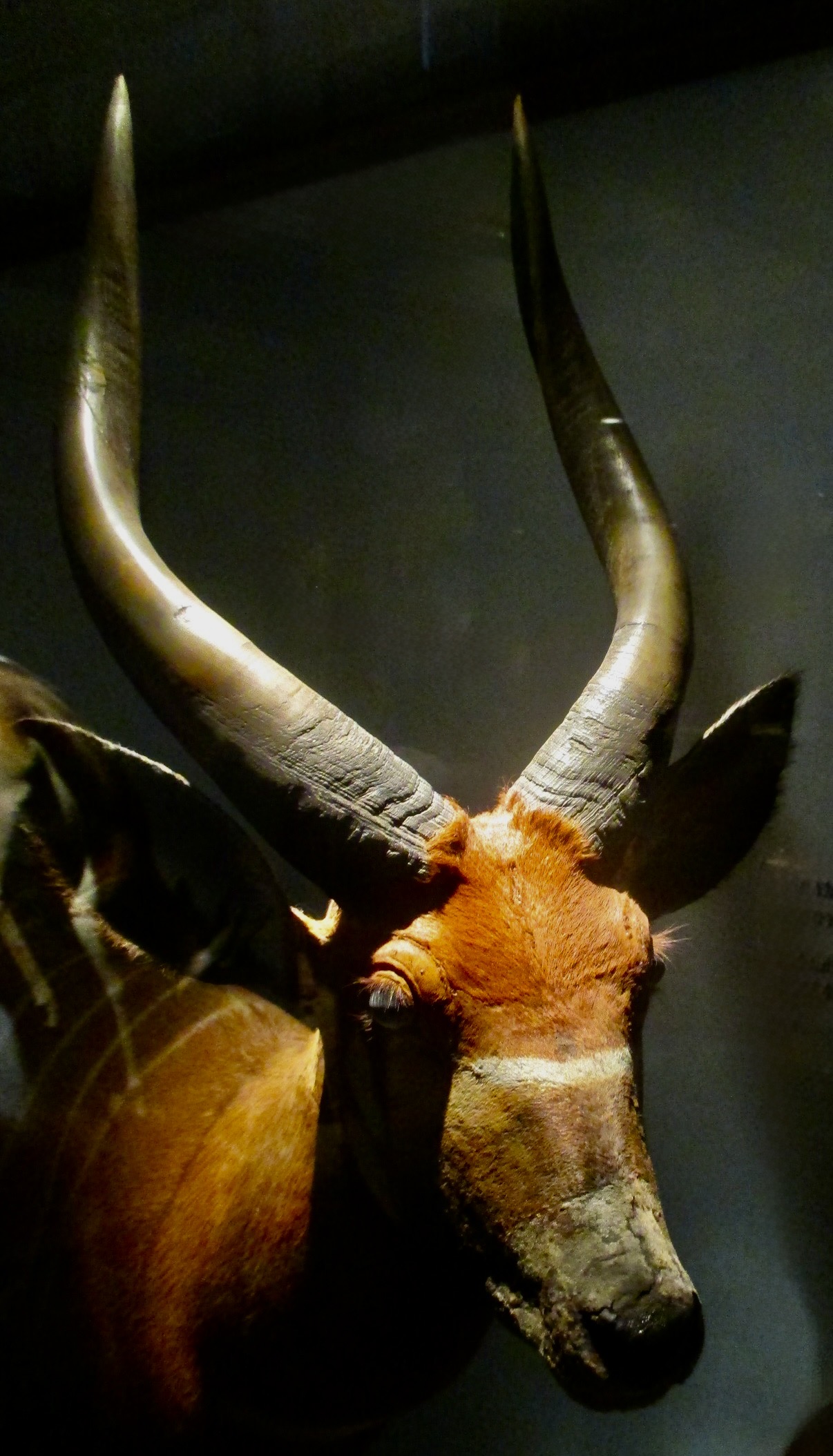
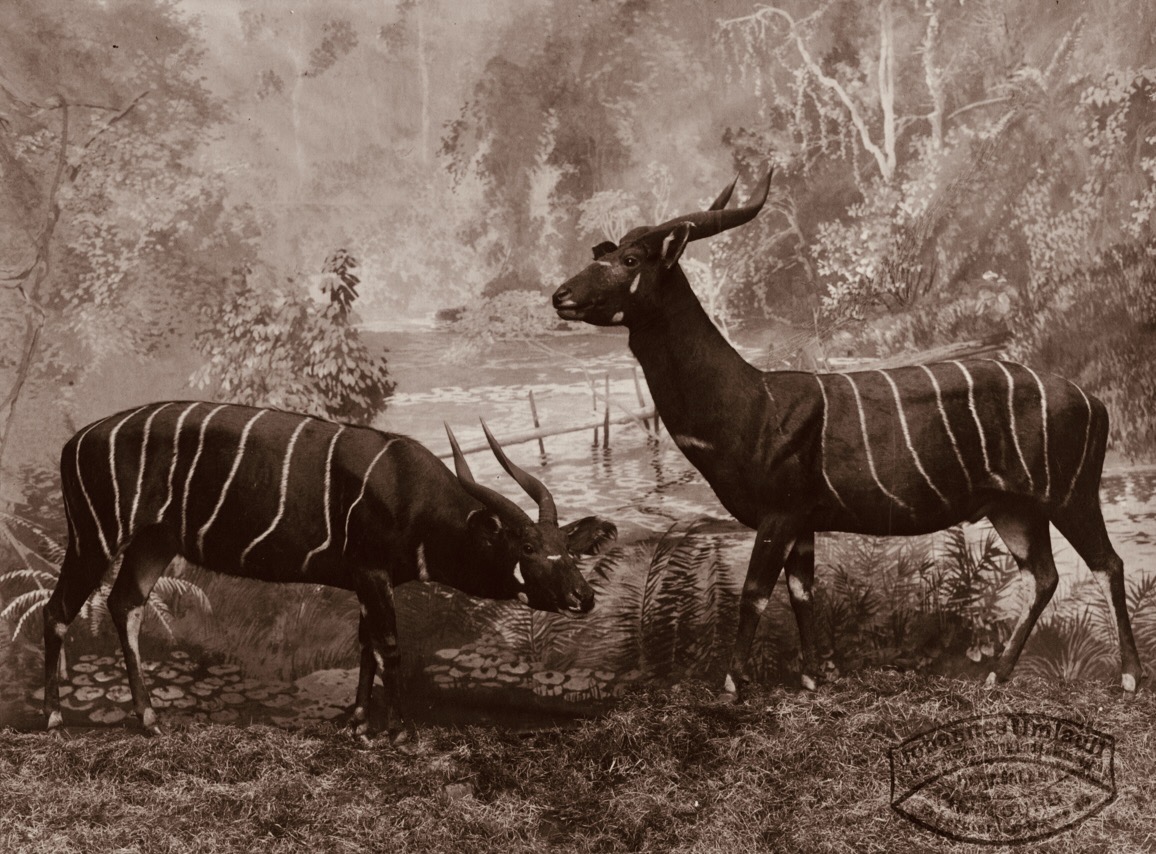
Johannes Umlauff also created a fully realized habitat diorama featuring two male Bongo specimens posed within a picturesque landscape setting. Only an undated photograph of the display survives, bearing the Umlauff business logo. It was likely the earliest habitat diorama produced of this species, although the original display may not have survived World War II. The Bongo comprises two recognized subspecies: the Western, or Lowland, Bongo (Tragelaphus eurycerus eurycerus), and the Eastern, or Mountain, Bongo (Tragelaphus eurycerus isaaci), endemic to Kenya. In addition to their distinctive spiral horns, both subspecies are characterized by striking deep chestnut coloured coats marked with contrasting bright white vertical stripes. Historically, Bongos occurred in three disjunct regions of Africa, but their ranges have been reduced by habitat loss, hunting, and disease. Both subspecies are endangered; the Mountain Bongo has fewer than one hundred individuals surviving in the wild.
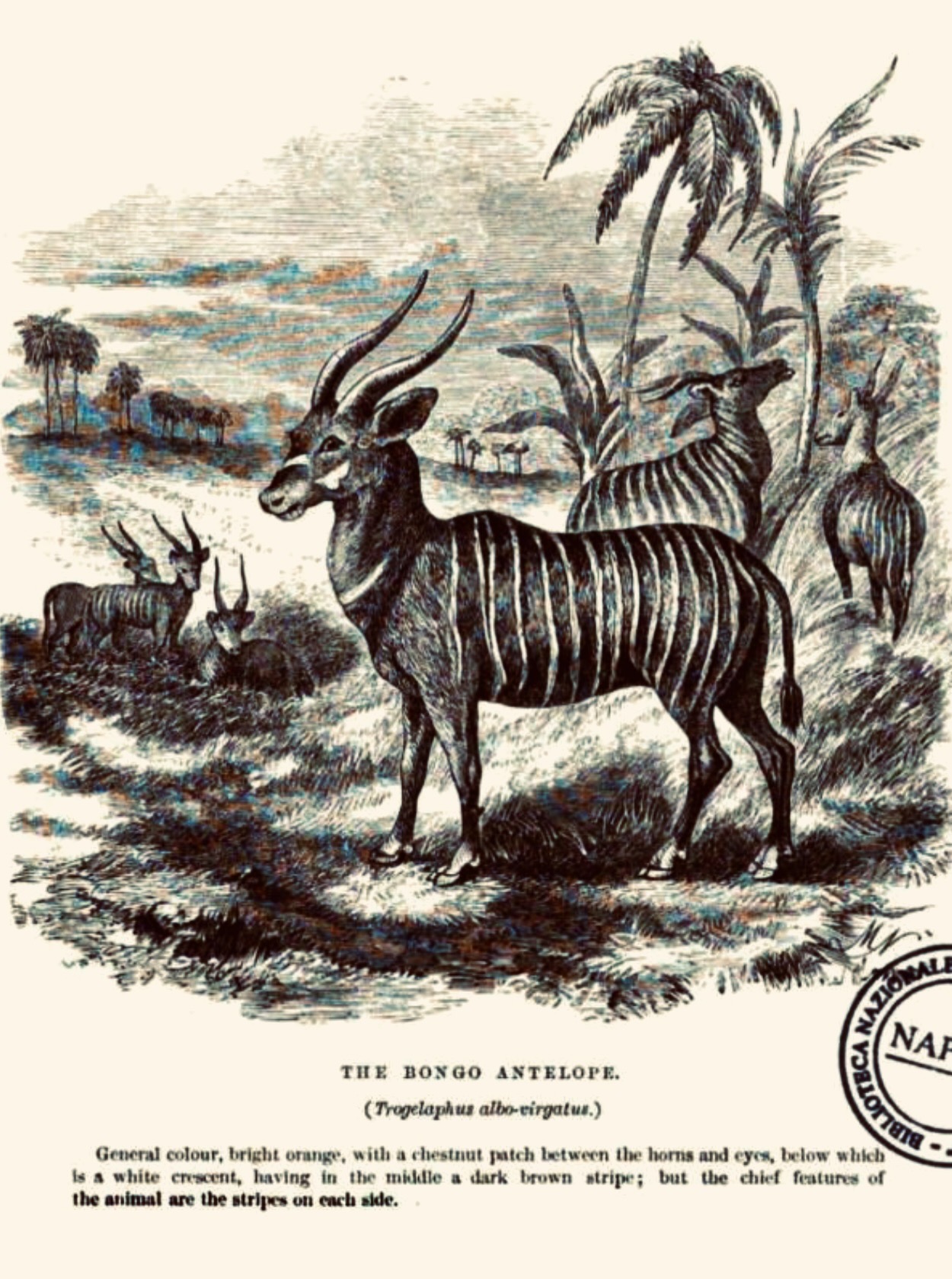
Not scientifically discovered and described until 1901, the Mountain Bongo was known among sportsmen as the “ghost of the forest,” a highly sought after trophy animal because of its elusive nature. The complex taxonomic history of the Bongo encompasses one currently accepted species name (Tragelaphus eurycerus), an obsolete genus or subgenus designation, several historical synonyms, and three previously proposed but now invalid subspecies. The type specimen was described by the Irish naturalist William Ogilby in 1837, based solely on two sets of horns sent to the British Museum. The specific epithet eurycerus, derived from the Greek meaning “broad horns,” reflects the fact that horn morphology alone formed the basis of Ogilby’s original scientific description.
The next Bongo specimen received by the British Museum was presented in 1871 by the American explorer Paul du Chaillu (1831 – 1903), who had shot, preserved and mounted the animal himself. During his explorations of the Gabon region of Africa in the 1850s, du Chaillu encountered this spiral horned forest antelope and adopted the name “Bongo” from its local designation. He returned to Boston with a large collection of natural history specimens which he exhibited publicly, including the Bongo and the Gorilla. Du Chaillu described the Bongo as a new species of antelope in the Proceedings of the Boston Society of Natural History, referring to it as “the handsomest yet discovered.” The first zoological illustration of the Bongo appeared in 1861, in his influential Explorations and Adventures in Equatorial Africa. Du Chaillu regarded it as the most beautiful of all forest mammals because of its brilliant coloration, distinctive markings, and graceful movements.
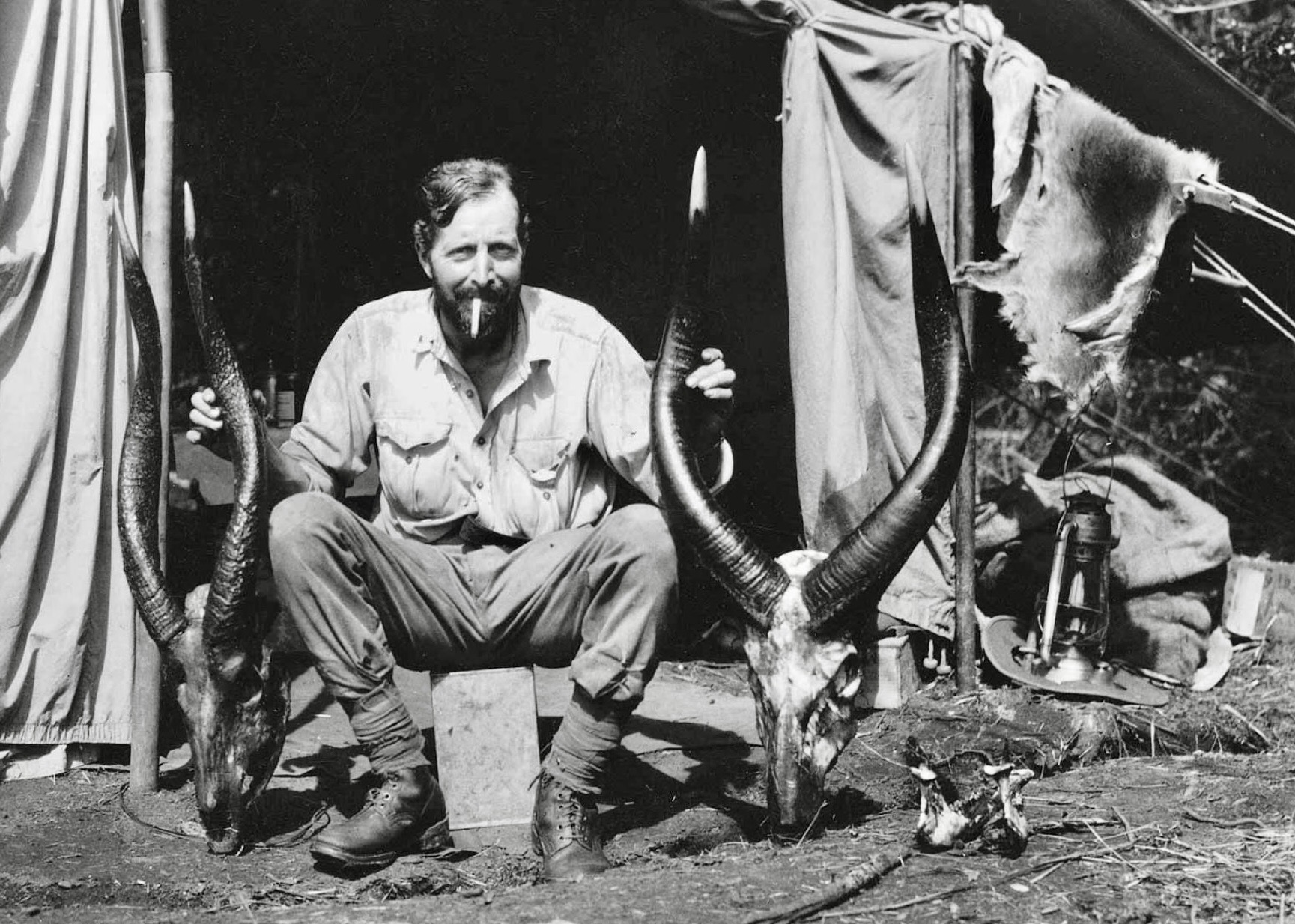
Once the Bongo became known to Western science, it quickly emerged as a highly desirable trophy specimen, particularly the Mountain Bongo, which was larger in size, possessed more substantial horns, and displayed more intense coloration. By 1910, Carl Akeley had collected a Mountain Bongo bull from the high altitude bamboo forests of Kenya for a planned habitat diorama at the American Museum of Natural History. The wealthy Swiss patrician and sportsman Bernard von Wattenwyl undertook two big game collecting expeditions through Kenya, Uganda, and the Belgian Congo in 1914 and 1923, with the aim of obtaining trophy specimens for the Natural History Museum in Bern. A photograph of von Wattenwyl taken outside his field tent shows him beside two Mountain Bongo heads. His collection consisted of 130 skins, skeletons, and skulls representing more than 50 East African big game species. In the 1930s, a new museum was specifically designed and constructed to display this extensive collection of taxidermic specimens within habitat dioramas.
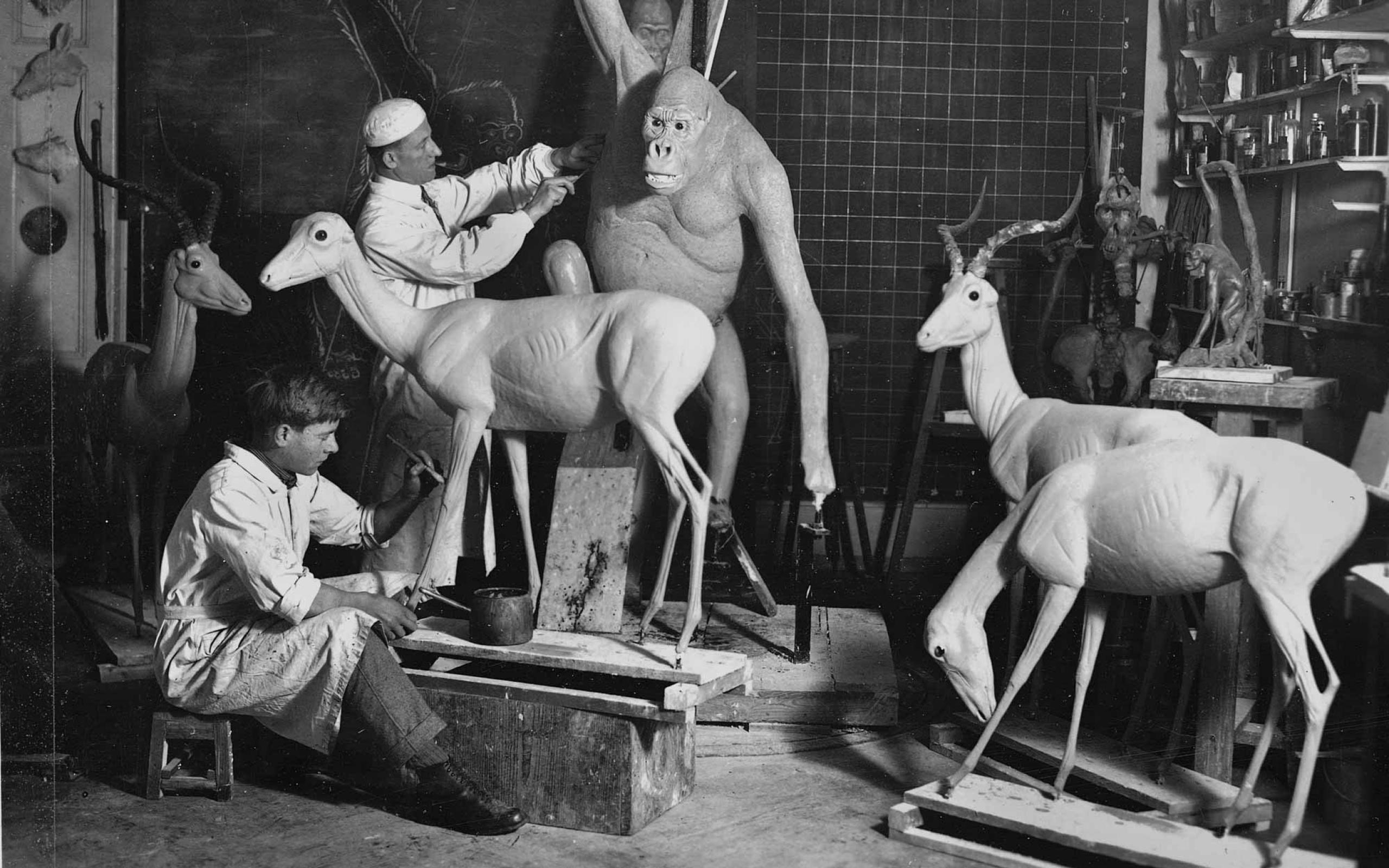
The Swiss preparator Georg Ruprecht (1887 – 1968) was responsible for preserving and mounting much of the von Wattenwyl collection at the Natural History Museum in Bern. A photograph from about 1930 shows him in his atelier (wearing a white cap) alongside his apprentice. The manikins on which they are working are “naked models,” with the animals’ musculature sculpted in clay over armatures that had been anatomically measured, representing the final stage before the skins were fitted. This method enabled museum preparators to achieve accurate proportions of the animal form while creating lifelike surface details. Ruprecht attended the inaugural 1933 meeting of the German Artists’ Association of Museum Dermoplastics and was a proponent of the association’s artistic principles governing the mounting of museum specimens.
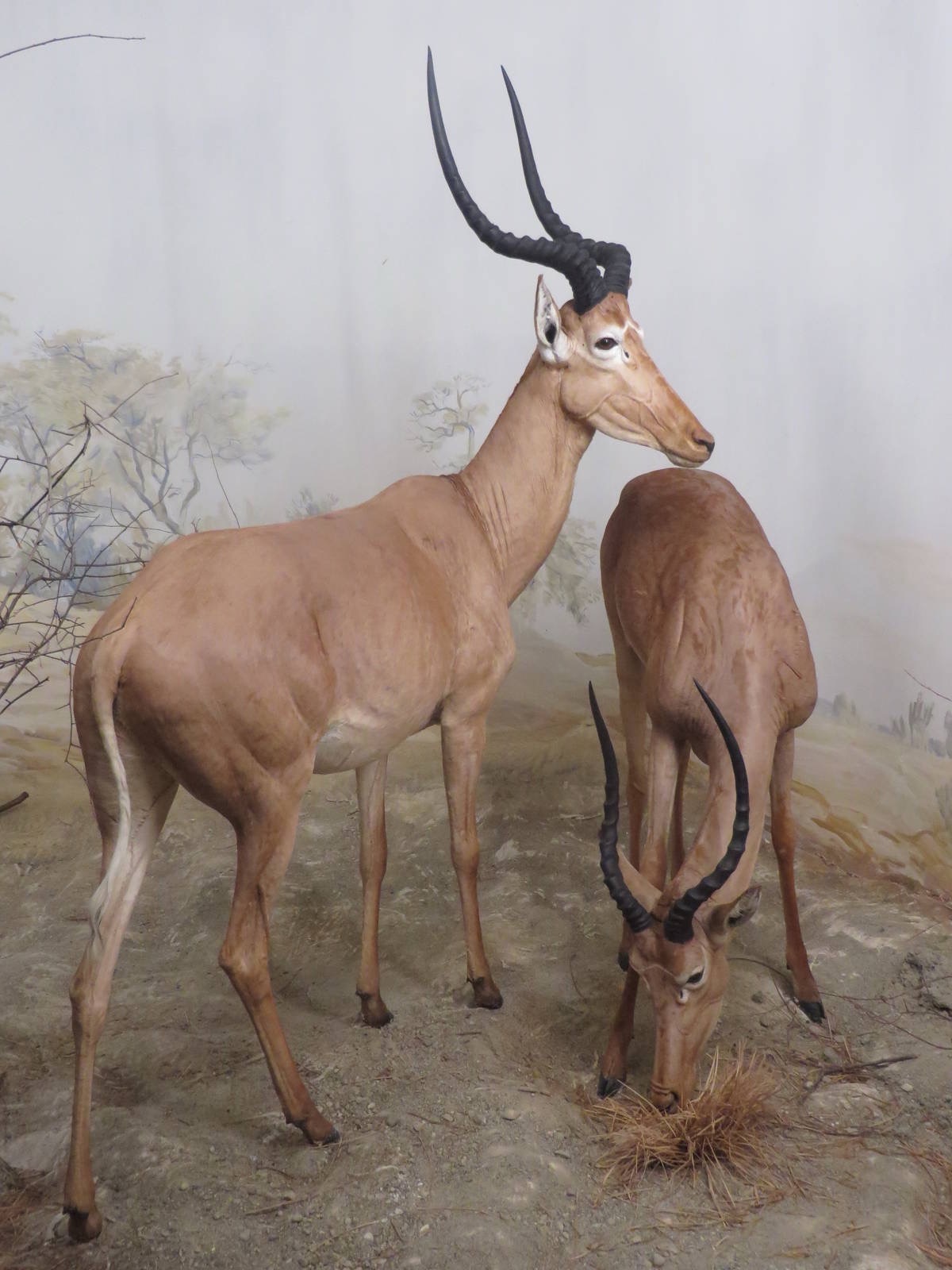
In the photograph, Ruprecht is modelling the manikin of a Western Lowland Gorilla (Gorilla gorilla gorilla), which was later incorporated into a habitat diorama in the Natural History Museum of Bern. The other manikins are models of the Hirola (Beatragus hunteri). Once completed with their fitted skins, the specimens mounted by Ruprecht were installed in a habitat diorama depicting the species’ arid grassland habitat in Kenya. The Hirola was first described in 1888 by the big game hunter H. C. V. Hunter. Both males and females possess sharply ridged, lyre shaped horns that curve backward and upward.
The Hirola is the world’s most endangered antelope and the sole surviving species of its genus (Beatragus). One conservation organization has stated that “the loss of the Hirola would be the first extinction of a mammalian genus on mainland Africa in modern human history.” Although taxidermists have developed techniques capable of preserving the appearance of endangered species, such achievements offer little compensation for the loss of these irreplaceable products of evolutionary history.
For European trained museum preparators such as Ruprecht, “taxidermy” was the general term for the preservation and mounting of vertebrate skins, whereas Dermoplastik referred to the sculptural methodology that emerged in the mid 19th century. The term remains in use in the German speaking world to describe mounted museum specimens. English speaking taxidermists, however, adopted its artistic principles without adopting the German terminology, even after Carl Akeley refined his revolutionary lightweight manikin system based on methods derived from classical sculpture and bronze casting.