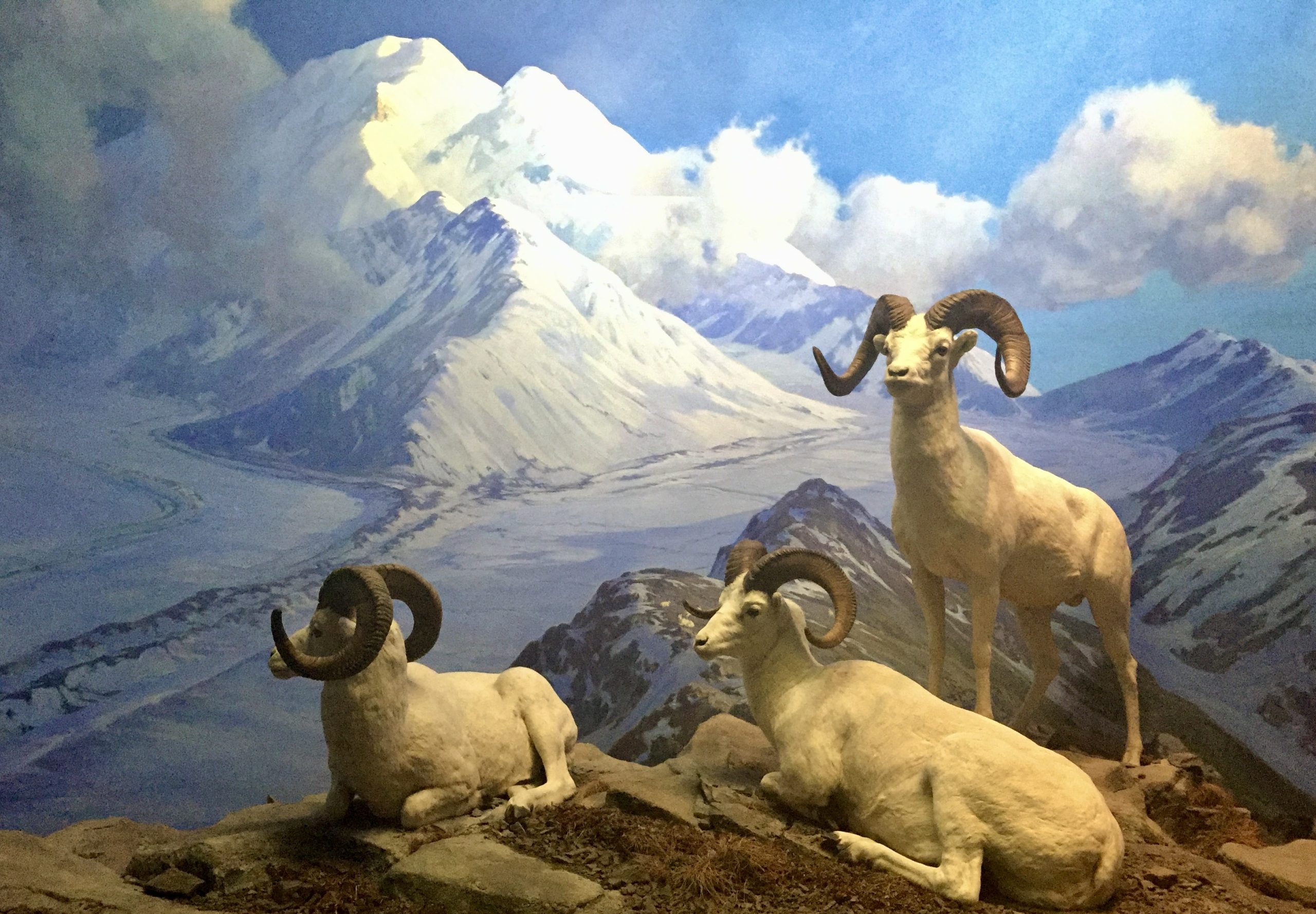
The White Sheep Diorama was one of the first ten dioramas to be completed for the 1942 opening of the Bernard Family Hall of North American Mammals at the American Museum of Natural History. This dramatic tableaux, illuminated by the Midnight Sun, features three majestic Dall Sheep (Ovis dalli) rams positioned on top of barren rocks overlooking a glacial vista of the summit of Mount McKinley (now known as Denali) in Alaska. The region was established as a national park in 1917 as a game reserve to protect the Dall Sheep from over-hunting. One of the earliest proponents of the conservation campaign was Belmore Browne (1880-1954), the background painter of the diorama as well as a mountaineer and explorer. Robert Rockwell was the diorama taxidermist and the foreground artist was George Frederick Mason. Prominent lettering under the diorama commemorates its patrons: “Collected and Presented by Mr. and Mrs. Richard K. Mellon.
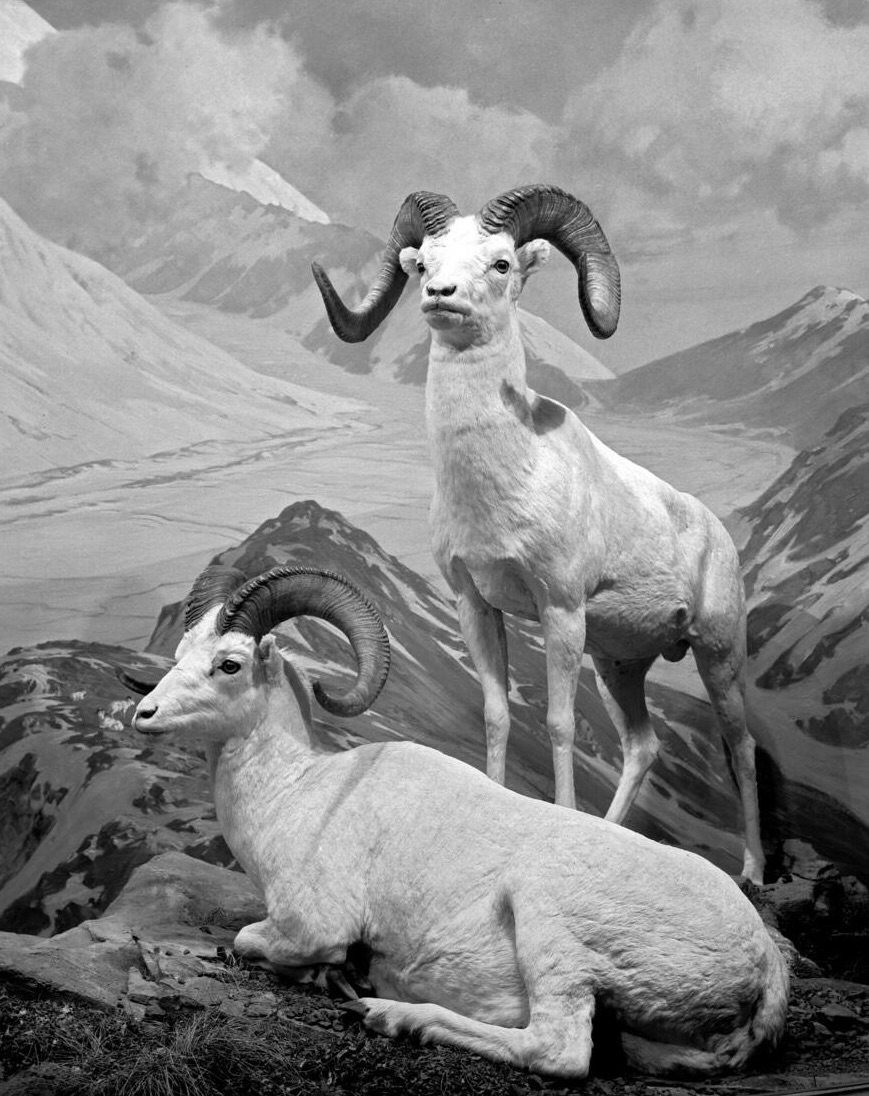
Mellon was a financier, philanthropist and sportsman who led the 1936 museum expedition to Alaska to collect Dall Sheep specimens for the diorama. He was accompanied by Browne, who made field sketches of the high alpine landscape to be replicated in the display, and Rockwell, who prepared the dead animals for transport back to the museum. Denali is the highest mountain peak in North America and the tallest mountain in the world from base to peak. It is a profound symbol of physical grandeur with deep spiritual and political associations tied to national identity and power. Seen as the guardians of this high alpine wilderness, Dall Sheep are icons of strength, agility, dominance and resilience. It is especially the dramatic head butting battles of the rams with their massive horns during the rutting season that has led the species to become one of the most desired big game trophies. By shooting the lead (biggest) ram for the diorama (the single standing animal), Mellon confirmed his social status and contributed to the overall ethos of the Hall of North American Mammals as a showcase for the trophies of elite sportsmen.
At the same time, these dioramas are instrumental in educating the public about conservation issues by evoking awe and wonder while presenting scientific information about the species and their habitats. Thus the distinction between trophies and specimens is a problematic one in museum dioramas that needs to be articulated so as not to unintentionally celebrate the former in our current age of global warming, extinction and habitat destruction.
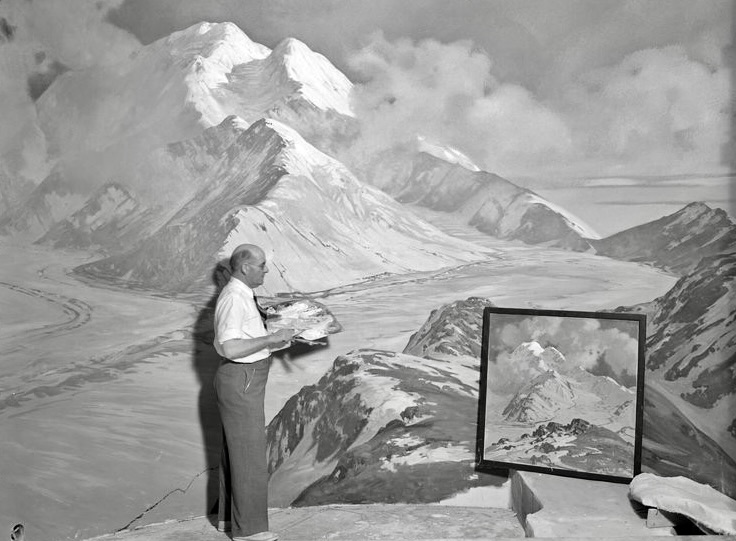
In one archival photo, Browne can be seen painting the White Sheep Diorama background using as a reference a landscape study that he had done on site. Browne was a keen and observant naturalist who worked in the field, sketching from nature, often in the Rockies around Banff where he had a studio. Many of his paintings depict big game animals in picturesque mountain wilderness scenes much like his background for the White Sheep Diorama. Browne was a contemporary of Carl Rungius (1869-1959), the a celebrated big game hunter and painter credited with making the transition from animal art to wildlife art. See Karen Wonders: Big Game Hunting and the Birth of Wildlife Art (2003). Rungius too had painted a diorama background in the Hall of North American Mammals.
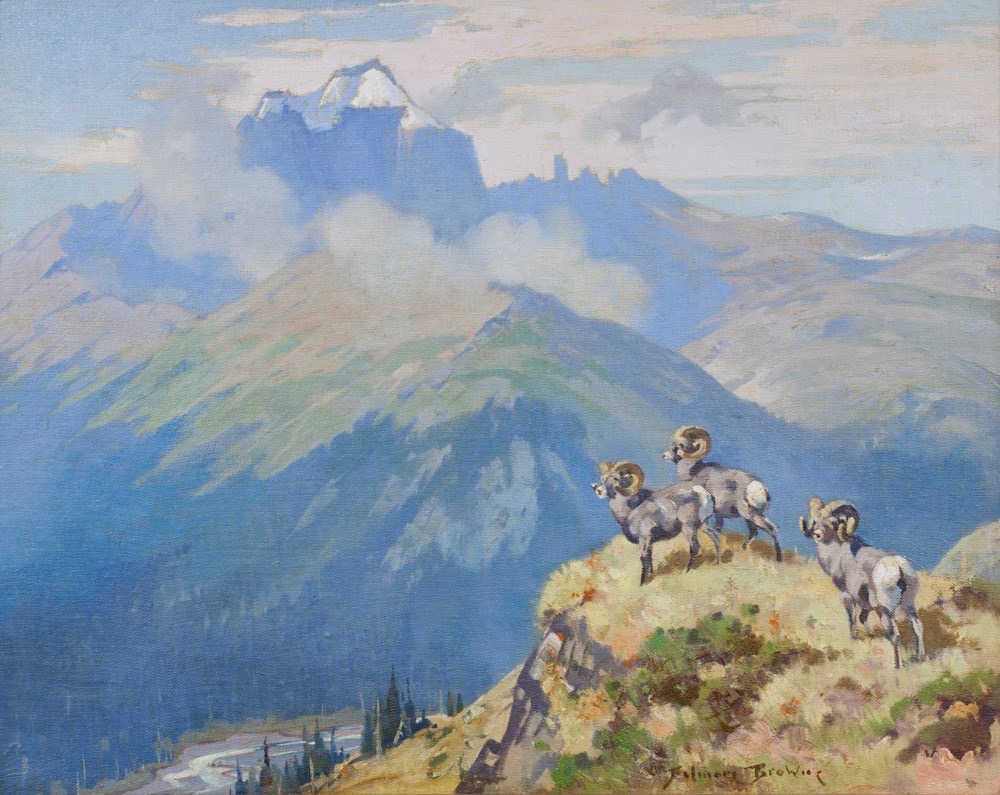
Belmore Browne was already an accomplished wildlife artist when he and his son George were commissioned in the 1930s to paint five diorama backgrounds (Alaska Brown Bear, Mountain Goat, Wapiti, Osborn Caribou and White Sheep) at the American Museum of Natural History. As an explorer, he had previously led his own mountaineering expeditions to Alaska in 1907, 1910 and 1912 and had written about these in his 1913 book The Conquest of Mount McKinley. While Browne did not quite succeed in scaling the peak of Denali despite his repeated attempts, he certainly had an intimate understanding of the highest and most remote places on the mountain and of the elusive Dall Sheep that inhabited them.
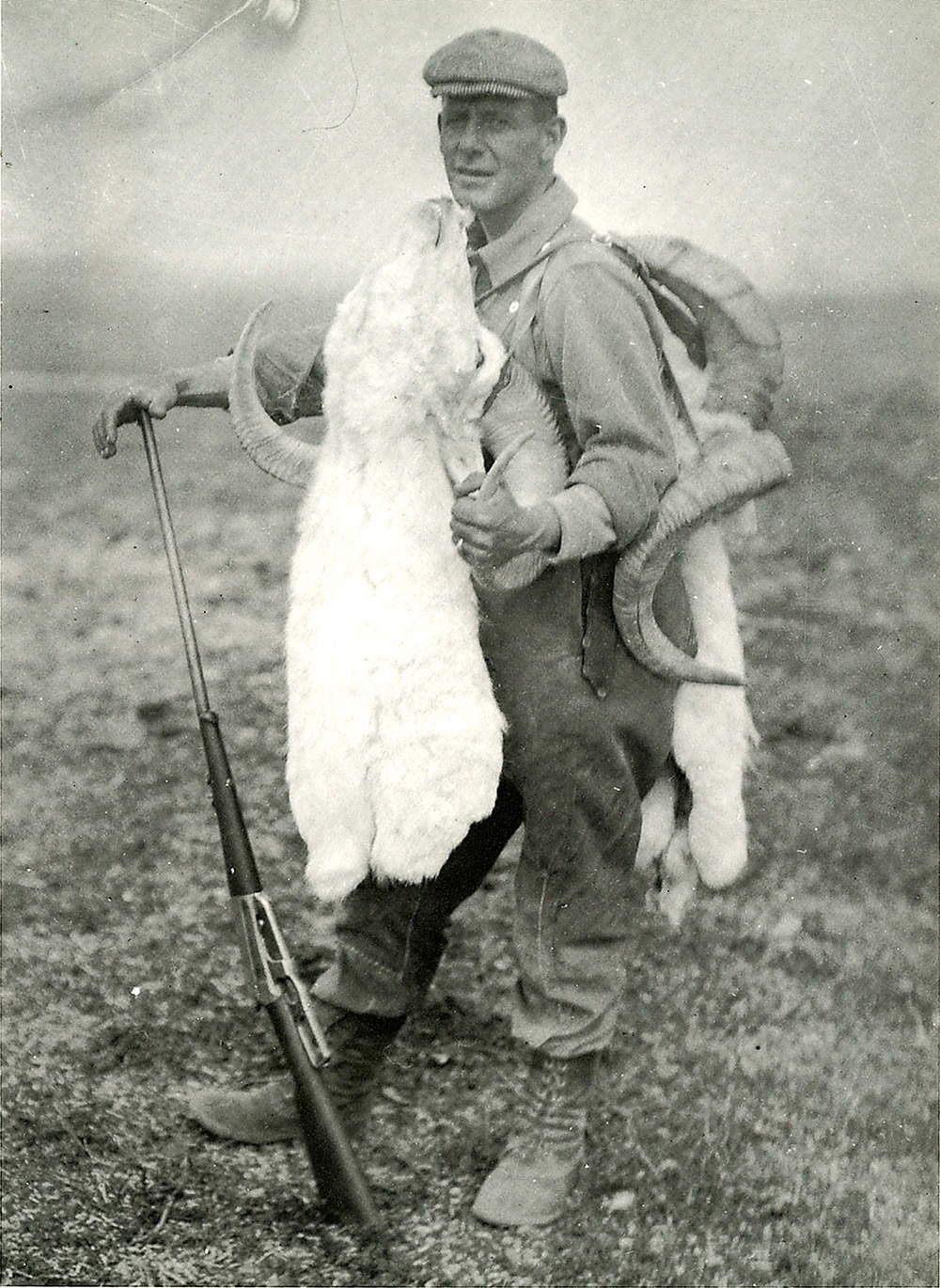
Belmore Browne and Carl Rungius were both members of the Boone and Crockt Club, an influential lobbying group for sportsmen and a major patron of the Hall of North American Mammals. In an undated field photo, Browne can be seen standing with his hunting rifle while packing out the heavy remains of two Dall Sheep rams. Intended as trophies, the taxidermy process required the ram heads to be skinned, the flesh cut from the skulls and cleaned along with the skin of the heads and necks (capes) and preserved with salt before transporting them from the site of the killing.
Also a member of the Boone and Crockett Club was the most famous American big game hunter of his time, Charles Sheldon (1867–1928). His consuming passion was the pursuit of wild sheep and following his 1906 and 1907 hunting expeditions to Denali, his effort to establish a game refuge there led to the founding of the national park. Sheldon’s classic hunting narrative, The Wilderness of the Upper Yukon (1911), was based on his adventures while hunting Dall Sheep between 1904 and 1905. He was joined by the revered English sportsman Frederick C. Selous, the scientific collector of the US Biological Survey, William H. Osgood, and Carl Rungius who documented their hunting expedition with field sketches and photographs and provided four colour illustrations for Sheldon’s book.
For Sheldon, the primeval wilderness was a sublime temple of nature and he viewed his manly hunting exploits to secure museum specimens as a worthy scientific contribution to natural history. “The mountain sheep of America are among the most nobles of our wild animals,” Sheldon wrote, “Their pursuit leads the hunter into the most remote and inaccesible parts of the wilderness and calls into play his greatest skill and highest qualities of endurance.
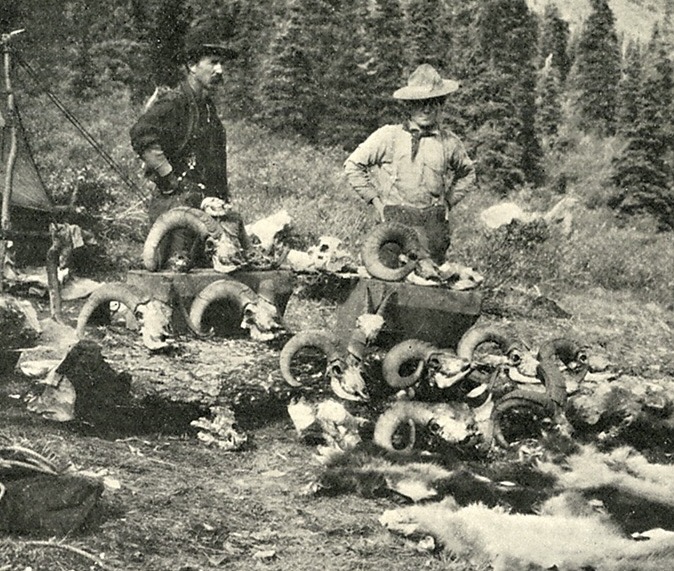
Despite his reverence for wild sheep, Sheldon had no aversion to killing as many rams as he could, especially mature ones with the most massive horns. He called these trophies “specimens,” as seen in a 1906 photo at his campsite which shows ten ram heads that have been preserved in the European trophy style of removing the flesh and leaving only the skull with its attached horns. The illustrations in the wilderness hunting narratives by Sheldon reveal a gendered iconography that reflects a common visual language during a period when the frenzied mania of big game trophies had reached all corners of the world. The representational conventions that developed around these contributed to defining the sportsmen and hunter naturalist in terms of their masculinity. Thus trophies are not explained by reference to their scientific value, but by reference to their subjective conflation value to the hunter. Bighorn ram heads, for example, denoted masculine vigour and prowess in pursuing the agile and astute beasts in their precipitous and perilous alpine mountain homes. See Karen Wonders: Hunting Narratives of the Empire: A Gender Reading of Their Iconography (2005).
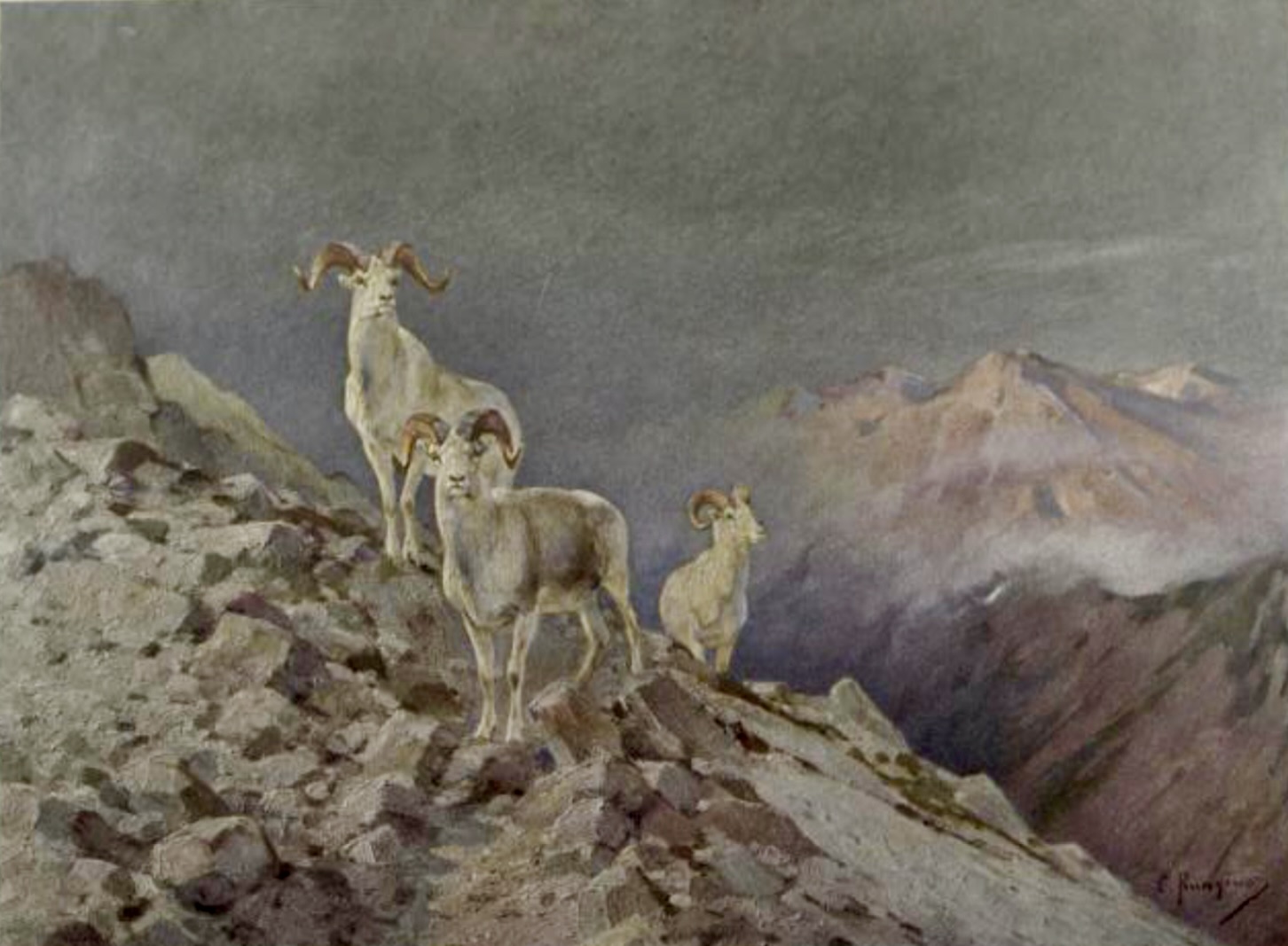
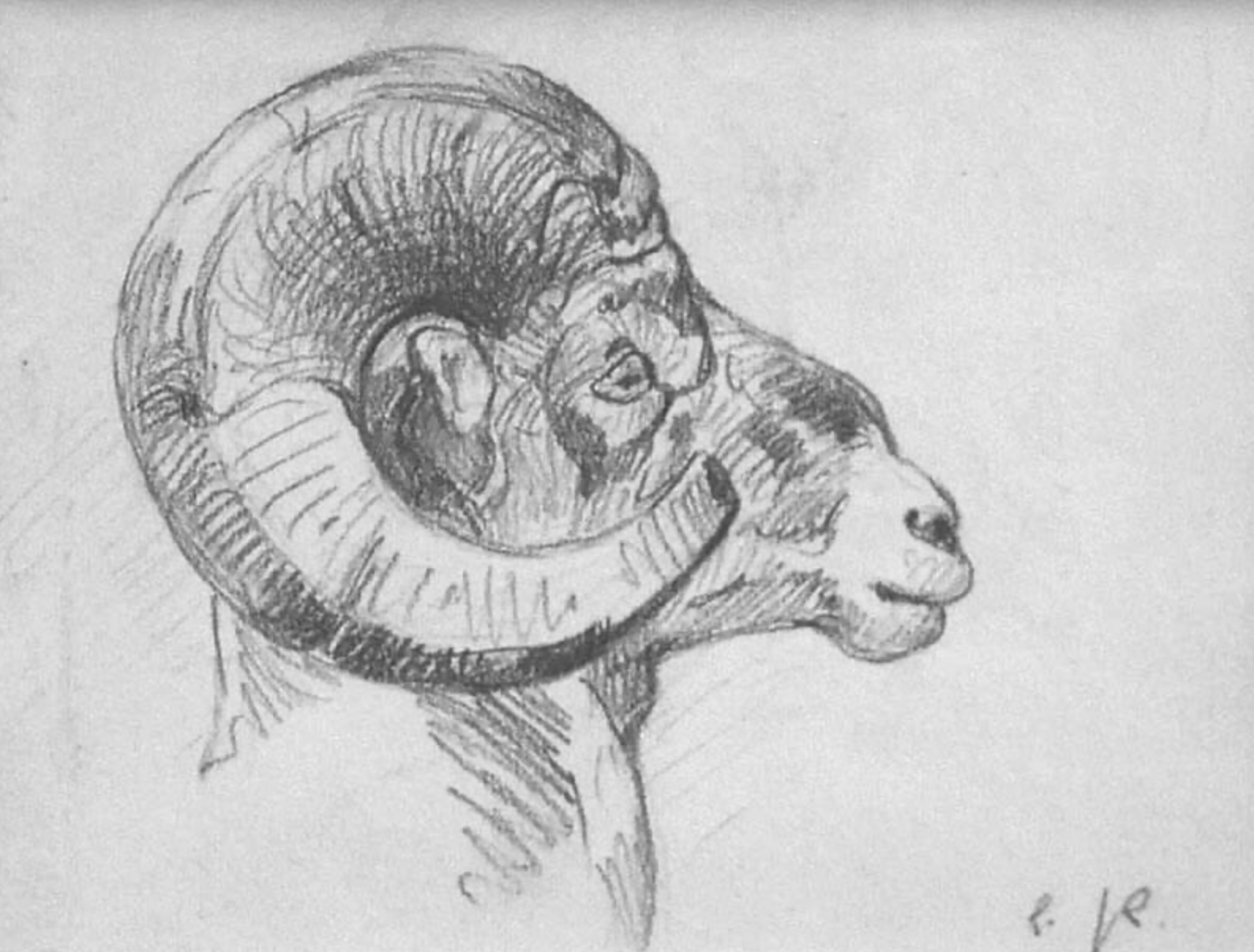
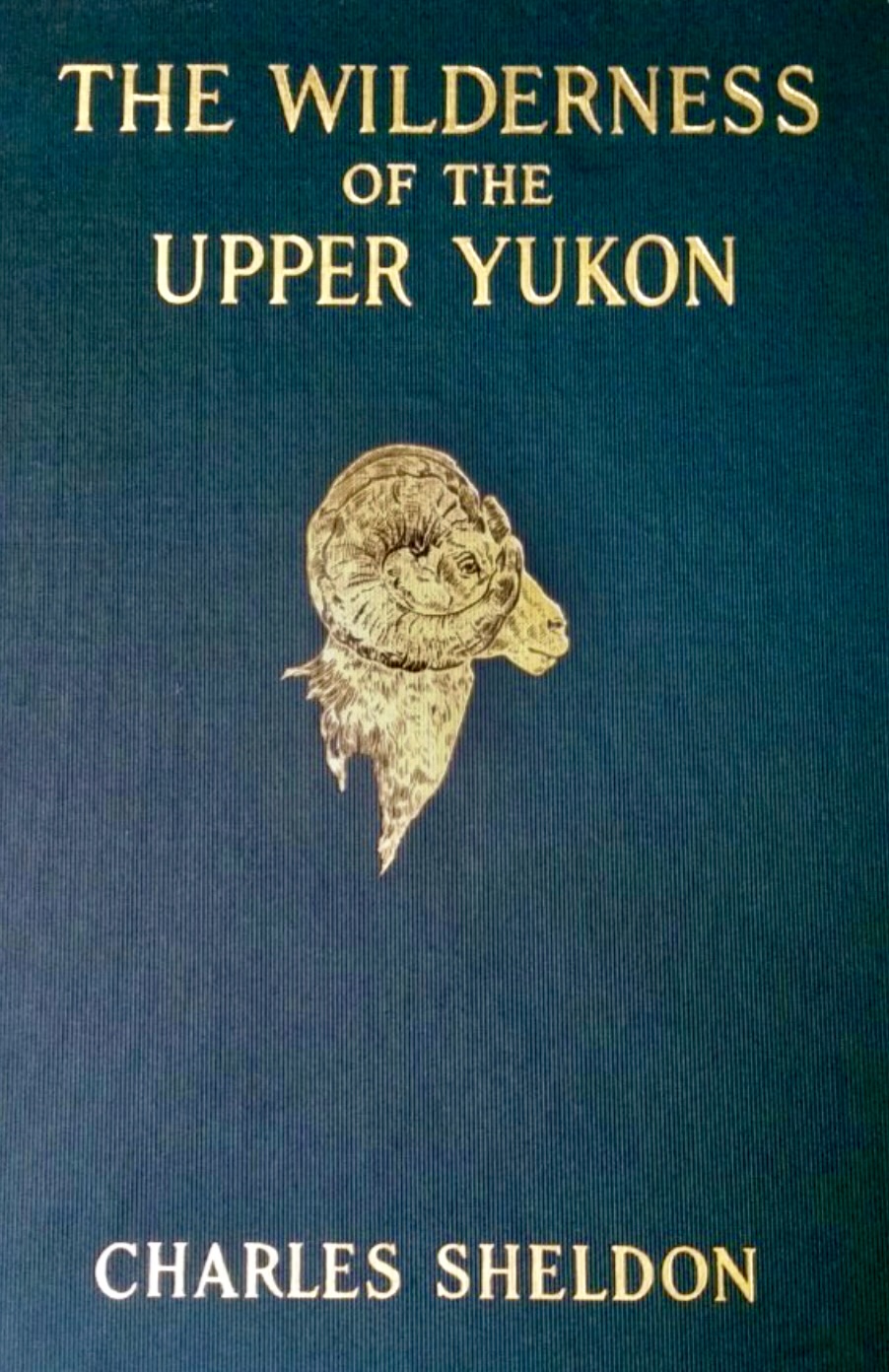
The frontispiece to Sheldon’s 1911 book on Dall Sheep hunting is a painting by Carl Rungius of three rams. A vignette on the book’s cover from a sketch by Rungius shows a “Full Curl” ram, a male whose horns has grown in a complete circle, indicating a mature and dominant animal in its prime. This is one of the most valued trophy head configurations and is given special status by the American “Ovis Grand Slam Club,” founded in 1949 to incentivize hunters to collect trophies from all four native bighorn species.
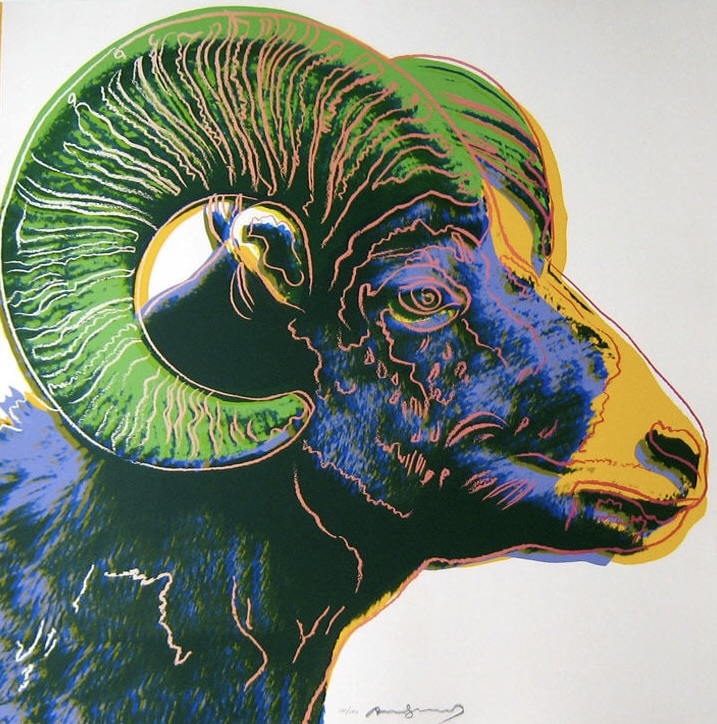
Mountain sheep trophy head iconography is parodied by pop artist Andy Warhol in a print that is part of his 1983 “Endangered Species” portfolio, aimed to highlight wild animals threatened by extinction and draw attention to the need for habitat conservation. This is the same goal as the 1942 Dall Sheep Diorama yet the museum display also serves the contradictory and unstated purpose of legitimating the sport of trophy hunting, a practice that is still widely practised, especially by Americans, and is glorified online with “victor and vanquished” photos. This barbaric association with certain wild animals lies behind the creation and patronage of the Hall of North American Mammals at the American Museum of Natural History and deserves recognition. Times have changed and our understanding of the relationship between humans and nature has shifted, as signalled by the removal in 2022 of the monumental equine sculpture of Theodore Roosevelt at the entrance to the museum.