The Warren Bog Diorama, located in the Botany Hall of the Carnegie Museum of Natural History, is part of a visionary series of seven dioramas conceived by the curator of botany, and later museum director, Otto Jennings. He sought to illustrate how environmental factors like temperature and moisture drive ecological succession, and to showcase the biodiversity of specific plant habitats. In a progressive move for the 1920s, Jennings hired husband and wife artists Ottmar von Fuehrer (1896 – 1967) and Hanne née Hering, perhaps due to his own wife (Grace Kinzer), who took part in fieldwork with him. The von Fuehrers completed five major dioramas between 1928 and 1934 that were recognized for their scientific and botanical artistry: the Pennsylvania Spring Flora Group; Arizona Desert Group; Tropical or Florida Group; Alpine Meadow Group; and the Warren Bog Group. The groups represented specific sites in nature at certain times of year and were meticulously researched in the field by collecting specimens, making sketches and models and taking photographs. Dozens of plant species were recreated in each group by thousands of hand modelled and painted leaves and flowers. The dioramas were supported by the Garden Club of Allegheny County in their mission to educate the public about the endangered plants and their habitats in nature.
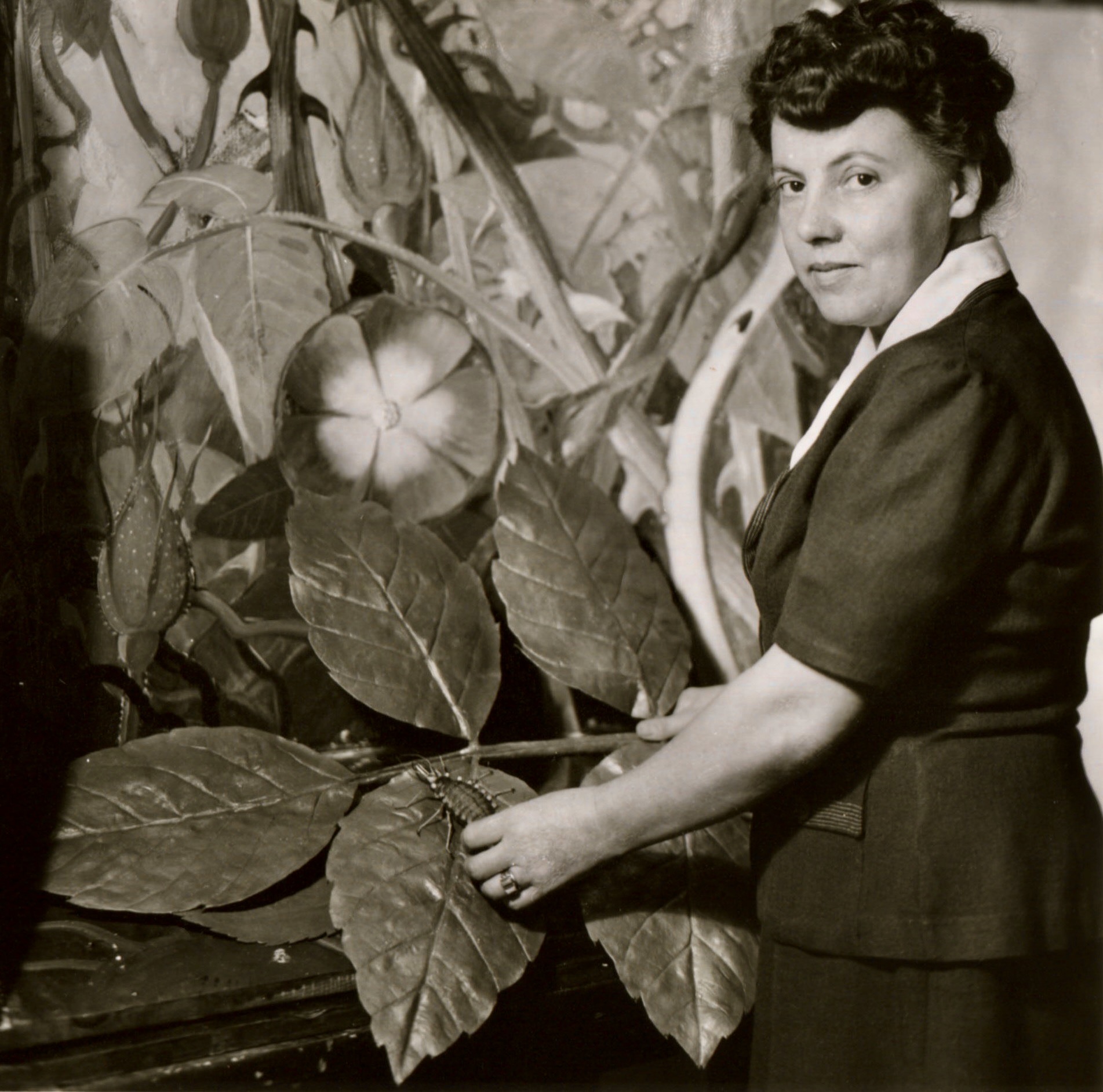
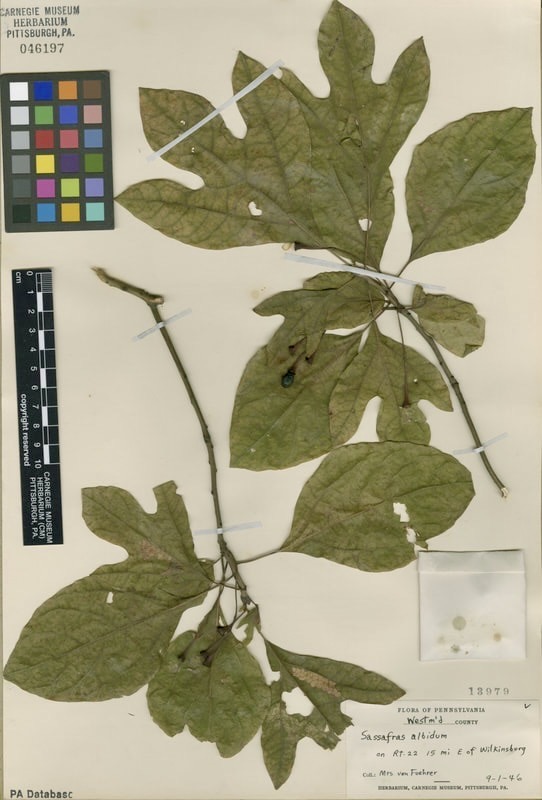
The foregrounds of habitat dioramas in natural history museums are primarily composed of botanical and zoological specimens with representational precedents in both two dimensional art and illustrations and three dimensional models and sculpture. Like botanical illustrations, which traditionally functioned as exact copies for scientific analysis, plant models in habitat dioramas aim to be facsimiles of the living specimen. Organic plant matter is susceptible to rapid decomposition and cannot be preserved for long term display. The labour intensive process of producing facsimile plant models in the museum involves collecting field specimens for anatomical study, as exemplified by the Sassafras leaves Hanne von Fuehrer gathered for the Carnegie Museum to document their morphological diversity. Her technical proficiency in fabricating foliage from molds, wax, and paper resulted in the production of thousands of botanical replicas as documented in a photo showing her with a handcrafted model of a larvae and rose leaf.
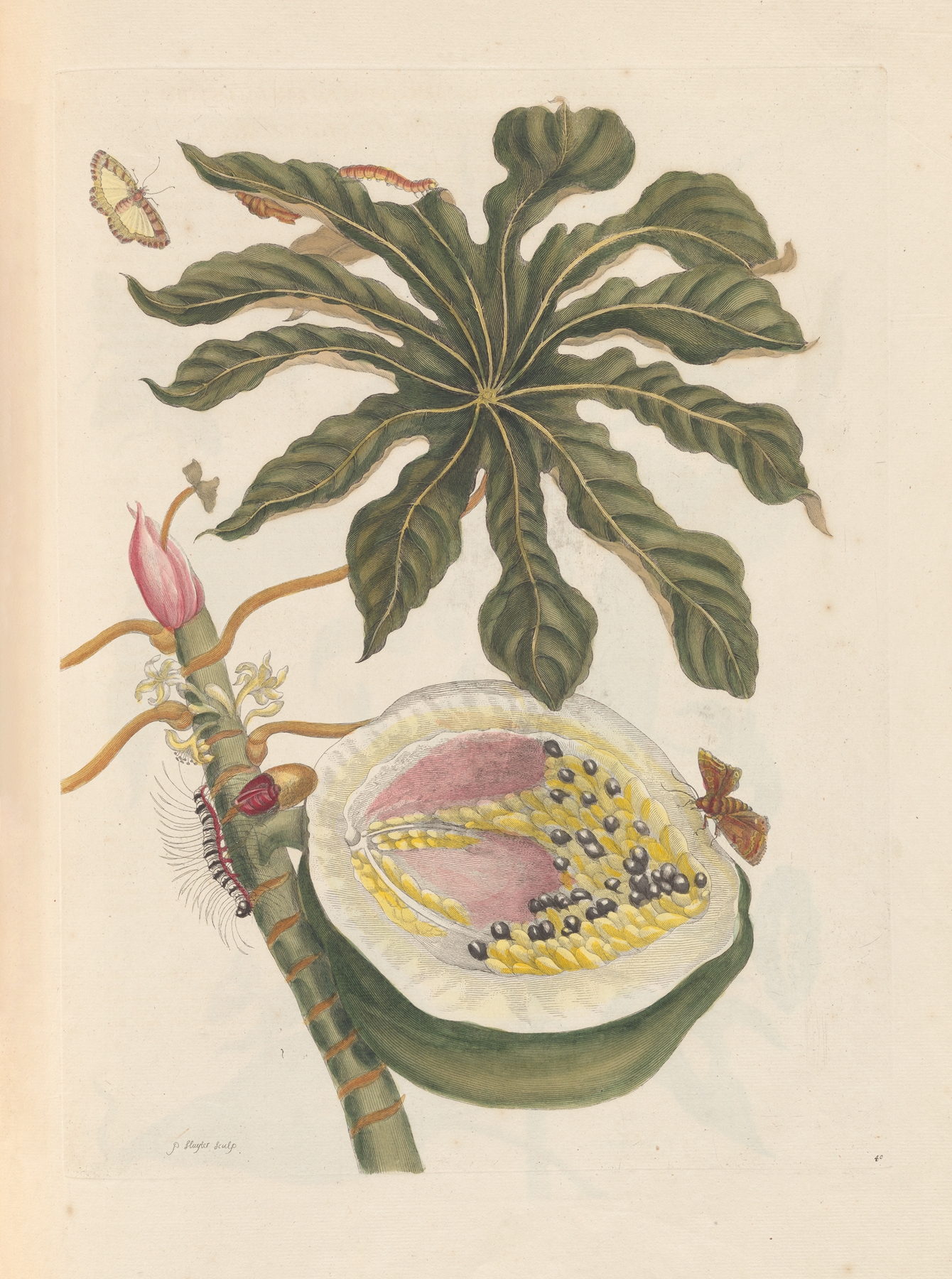
The 19th century tradition of botanical illustration was a feminized field of expertise in which the scientific contributions by women often went uncredited and were unpaid, viewed as a genteel pastime rather than a profession. Banned from universities and professional scientific societies, women dominated the production of botanical art, which was seen as a hobby or craft much like embroidery. An early exception was Maria Sibylla Merian (1647 – 1717), a German entomologist, naturalist and artist who took part in a scientific collecting expediition to Suriname. Her detailed depictions of plants and insects were based on direct observations; an example is her engraving of a papaya plant (Carica papaya), featuring both fruit and flowers, alongside various life stages of caterpillars and butterflies, published in her remarkable book Metamorphosis Insectorum Surinamensium (1705). The contributions of women in botanical representation continued to go unrecognized for two more centuries, including in the museum world of natural history display as in the case of the English plant modeller Mrs. Mogridge, for whom no dates or photographs exist.
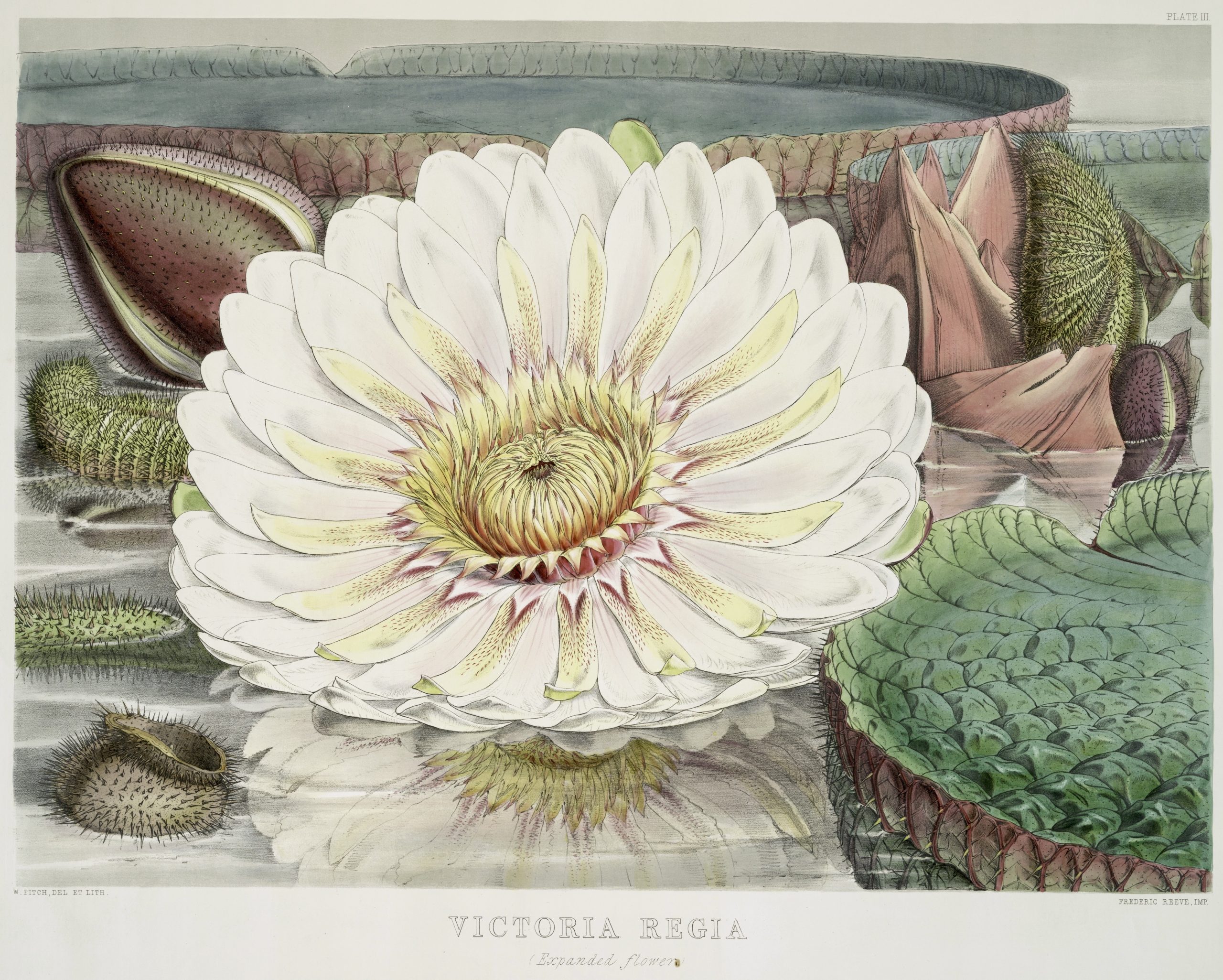
E. S. Mogridge (née Mintorn, 1903) was a British modeller in wax who used her skill in blending artistry with scientific precision to create the foregrounds of zoological groups at the British Museum and the American Museum of Natural History. She was a member of the Mintorn family business in London, renowned for its lifelike wax flower models. Most famous of these were the Mintorn wax facsimiles of the celebrated Victoria Regia Royal Waterlily that were widely displayed in 1850 and introduced the botanical sensation to the public. An illustration of the gigantic species accompanied a description by Sir W. J. Hooker, director of the Kew Gardens. Wax flowers were exhibited widely at the Great Exhibition of 1851. They were first of all artistic creations, much loved by Queen Victoria, rather than specifically botanical. Yet the Mintorn “Victoria Regia” can be described as the apotheosis of the Victorian wax flower movement. Few of these models survived due to the fugitive quality of wax, so this was yet another product of feminine domestic labour and artistic accomplishment that simply vanished.
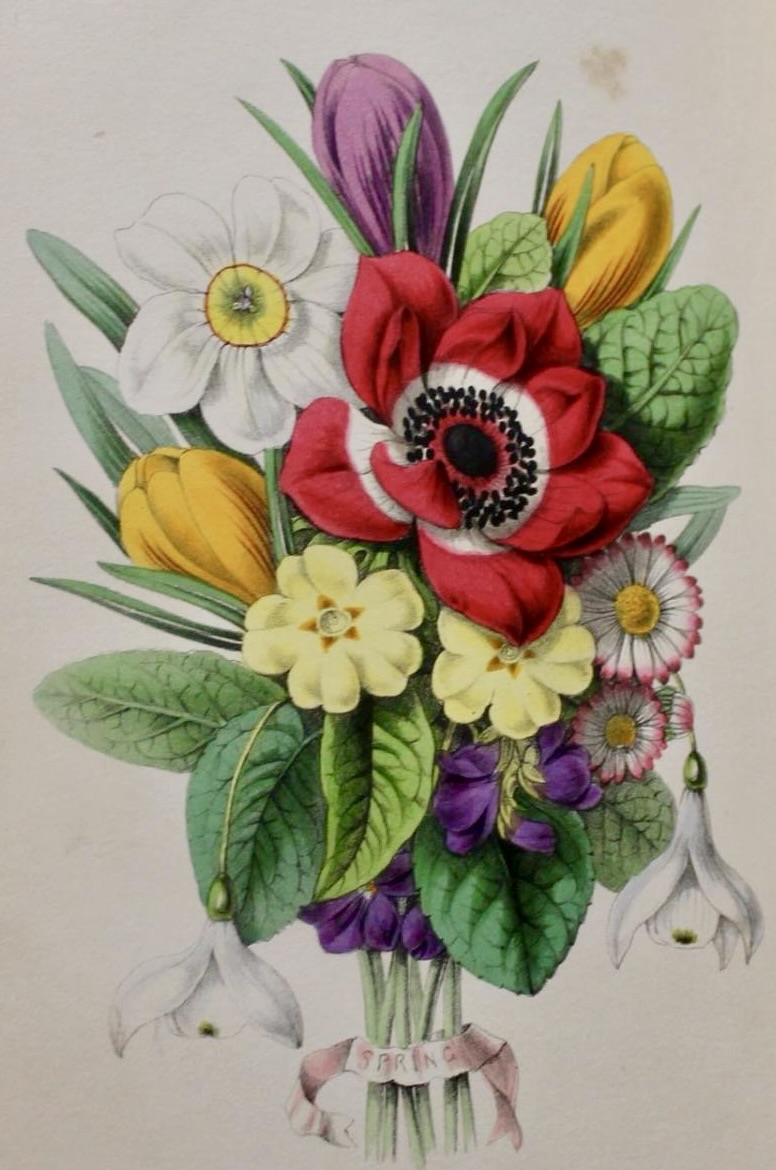
A number of popular handbooks on the techniques for producing the wax models were published in the mid 19th century. One of these was by Emma Peachey (died 1875) who was appointed “Artiste in Wax Flowers” to Queen Victoria in 1839. Her influential manual The Royal Guide to Wax Flower Modelling (1851) reveals the gendered bridge between artistic expression and scientific observation. The hand coloured frontispiece to Peachey’s book featured a vibrant bouquet of spring flowers including anemones, daffodils, and crocuses. Peachey elaborates on the techniques and materials required for wax flower modelling but confines her creativity to the socially acceptable class boundaries of domestic feminine decorative labour.
Mrs. Mogridge (as she was known) was an innovative path breaker in the art of making wax models. She made the transition from purely decorative floral motifs to natural history models that reproduced botanical specimens with scientific accuracy. In 1879, Mogridge began to create wax models for the British Museum’s natural history department, creating botanical facsimiles for over a hundred ornithological displays. She also modelled caterpillars on plants for the entomologist Thomas de Grey (Lord Walsingham), and later created educational plant models at larger than life size for the botanist William Carruthers at the British Museum.
The ability of Mogridge to mimic the textures of moss, rotting wood, and delicate wildflower petals was seen as a major advancement in exhibition technique. None of these early displays by Mogridge were credited and it is unfortunate that none survive today in the UK despite the importance they had as forerunners to a new form of natural history exhibition that stressed the biological relations of zoological specimens. When the American Museum of Natural History president visited the British Museum, he much admired the work by Mogridge and invited her and her brother Horatio Mintorn to New York.
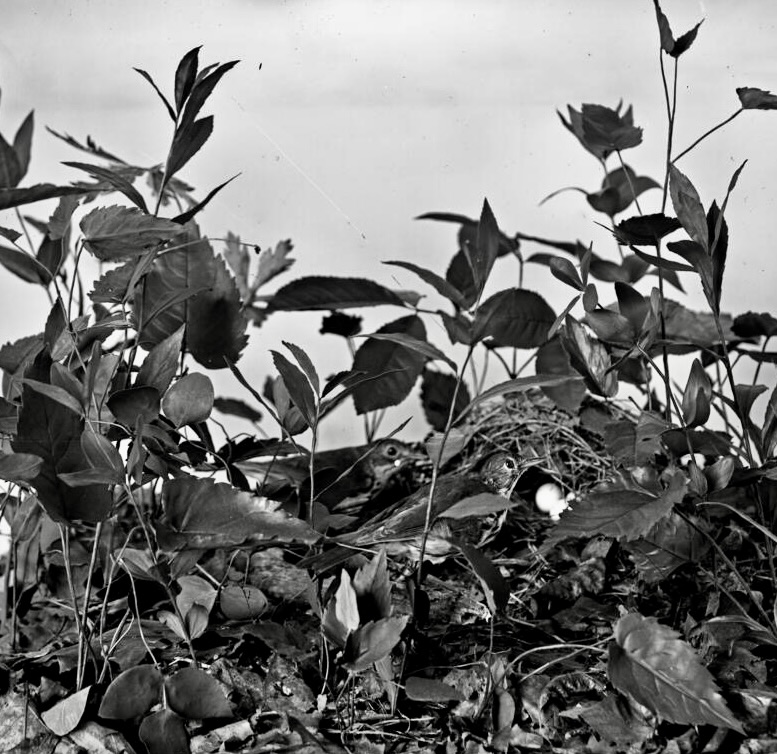
Upon their arrival in New York in the mid 1880s, Mogridge and her brother began collaborating with Jenness Richardson, the museum taxidermist. By early 1887, twelve bird cases with eighteen grouped specimens were completed, showcasing the mounted birds and their nesting habits. The American Robin (Turdus migratorius) Group was the first of these displays which had been funded by Mary Stuart, widow of a founder of the American Museum of Natural History and its president until 1881. Preparatory field work involved shooting the specimens in situ and collecting their nests and vegetation for transport to the museum.
Mogridge initially kept secret her techniques for reproducing the foliage and flowers that were the principal accessories of these groups. Later however she taught her methods to others and engaged in the preparation of botanical models and accessories in Washington, Chicago, Brooklyn, Pittsburgh, and Springfield (MA). Mogridge returned to the museum in the 1890s; her later work included models illustrating the destructive impact of insects on trees, an achievement lauded by Scientific American for its “very perfect reproduction of natural environment in every detail.”
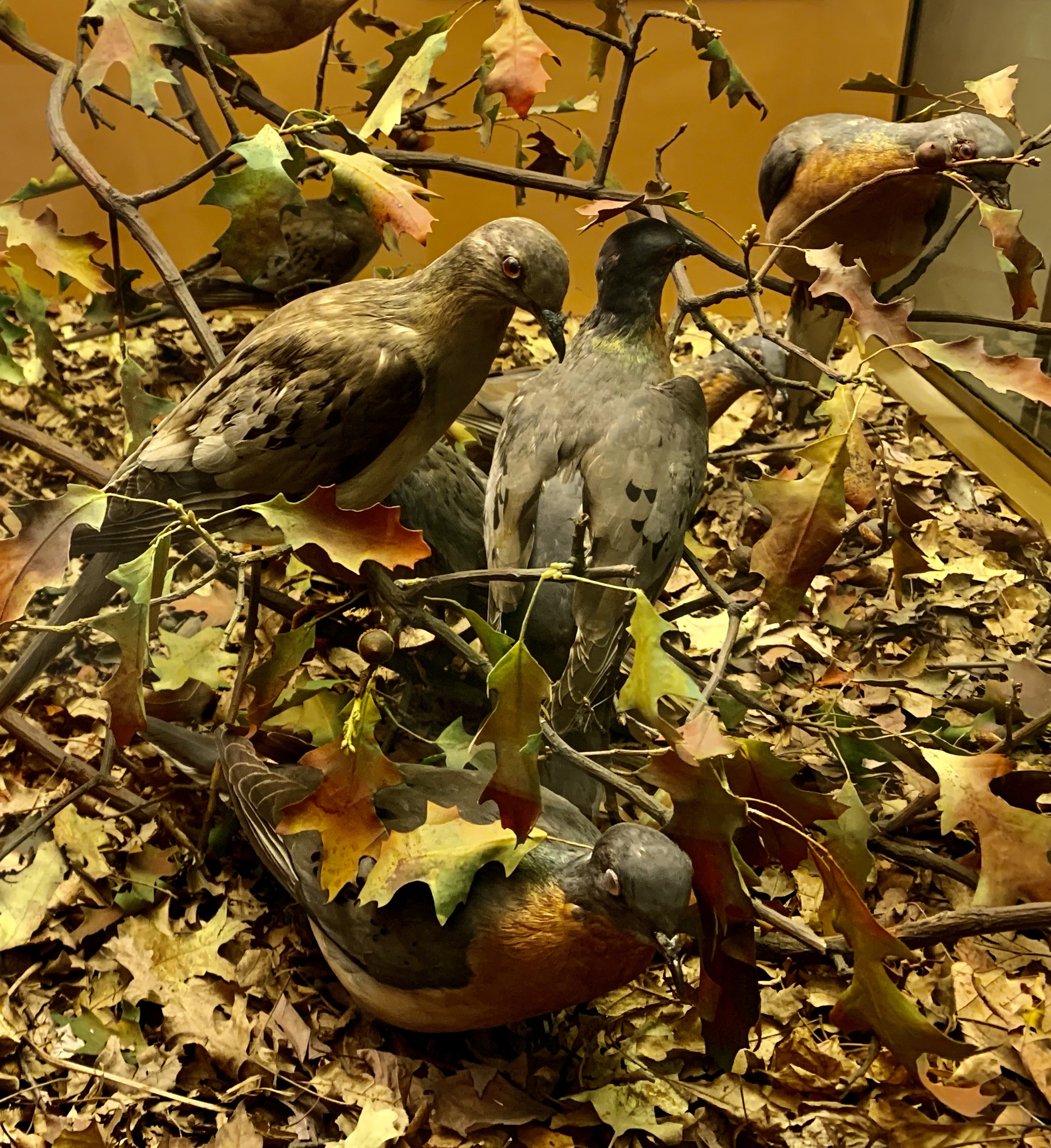
A rare extant example of Mrs. Mogridge’s modelling skill is the Passenger Pigeon (Ectopistes migratorius) Group at the American Museum of Natural History. Produced during a period of drastic population decline driven by industrial scale hunting, the exhibit underscored the precarious status of a species that had once been North America’s most populous bird. This display emerged from a broader 1880s initiative spearheaded by ornithologist Frank M. Chapman, who envisioned museum exhibits as primary pedagogical tools for avian conservation. The urgent need to protect bird species was passionately articulated by the distinguished zoologist J.A. Allen, the first Curator of Mammals and Birds at the American Museum, in his essay, “The Present Wholesale Destruction of Bird Life in the United States,” published in 1886 in Science
Working alongside her brother, Mogridge contributed to approximately forty museum exhibits, including the first mounted group of American bison. Her foregrounds achieved significant accolades; notably, an 1898 review in Science commended the “microscopic care and verisimilitude” of her foregrounds, while botanists cited her plant reproductions for their taxonomic fidelity. Through these technical innovations, Mogridge played a pivotal role in redefining the standards of biological representation and ecological realism in late 19th century museum displays.
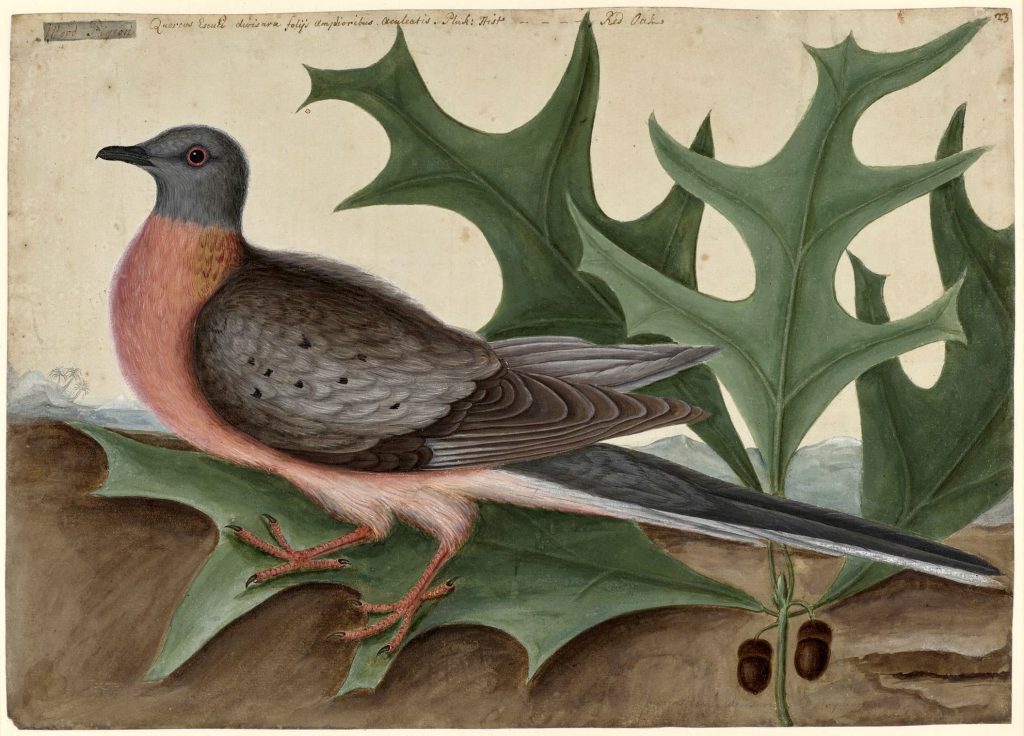
The English naturalist Mark Catesby provided the first artistic representation of the passenger pigeon nearly two centuries before the species’ extinction in 1914. During the 1720s, Catesby observed the birds within their natural forest habitats in Virginia, where massive flocks nested and subsisted on mast, such as oak acorns. He also noted the pigeons were hunted in incredible numbers and were a major food source for colonists. His watercolour “Pigeon of Passage and the Red Oak,” is described by him as depicting a bird seen in Virginia during winter; the inclusion of oak leaves and acorns provides critical ecological context regarding the species’ habitat. Linnaeus later relied on Catesby’s work in the field to formally classify the species in 1768. While Catesby’s illustration was acquired by George III and safely resides in the UK Royal Collection, the subject of his illustration has been extinct since 1914. Today 1532 preserved specimens remain in museum collections and habitat dioramas.
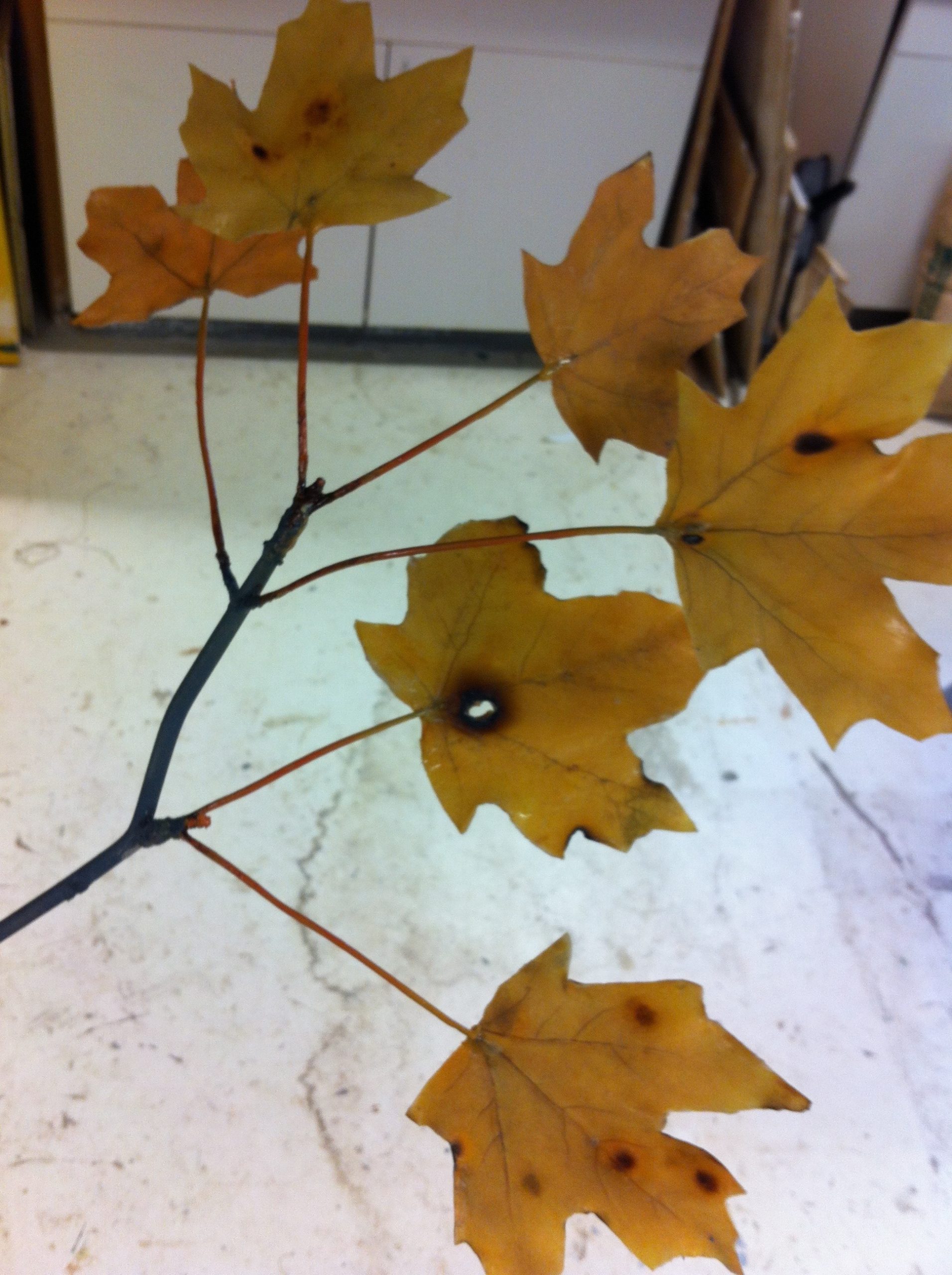
Another challenge in fabricating new leaves to restore an older foreground was presented by the 1950 Forest Margin Diorama at the Peabody Museum which featured an overhead canopy of Sugar Maple leaves illuminated from above. Anderson explains how preparator Ralph Morrill had choreographed the complex production of leaves in the late 1940’s: “He had a team of art students from Southern Connecticut University cutting leaves one by one out of crepe paper. Lines were penned in along the central and secondary veins with some tertiary veins added. Wires were glued along the central vein and the leaves were dipped in colored wax with a quick spin to remove excess wax. Final touches included spattering oil paint over the surface, burning insect holes, and adding thin spray blushes of color. The leaves are translucent just like the originals and produce a stunning effect backlit in the diorama.”
Over the years, the diorama leaves had cracked and become more fragile, drooping down like butterflies that had closed their wings. To replace them, Anderson created epoxy leaves on aluminum branches that included small bud remnant details and exhibited symptoms of tar spot, a common fungal disease affecting maple trees.
The preparation of foregrounds in museum groups has become highly specialized and relies on a broad range of techniques. Even in the 19th century, the success of Mrs. Mogridge’s models was due in part to a special fabric she invented that was a durable wax product based on “silk lisse” coated with wax and chemicals that could be coloured using oil paints. A 1911 guide on making leaves described this “Mousselaine de Soie” as being largely superseded by the use of cotton batting and outlined a new method for replicating foliage in wax by dipping muslin in coloured wax, using plaster molds, and utilizing celluloid processes for delicate parts.
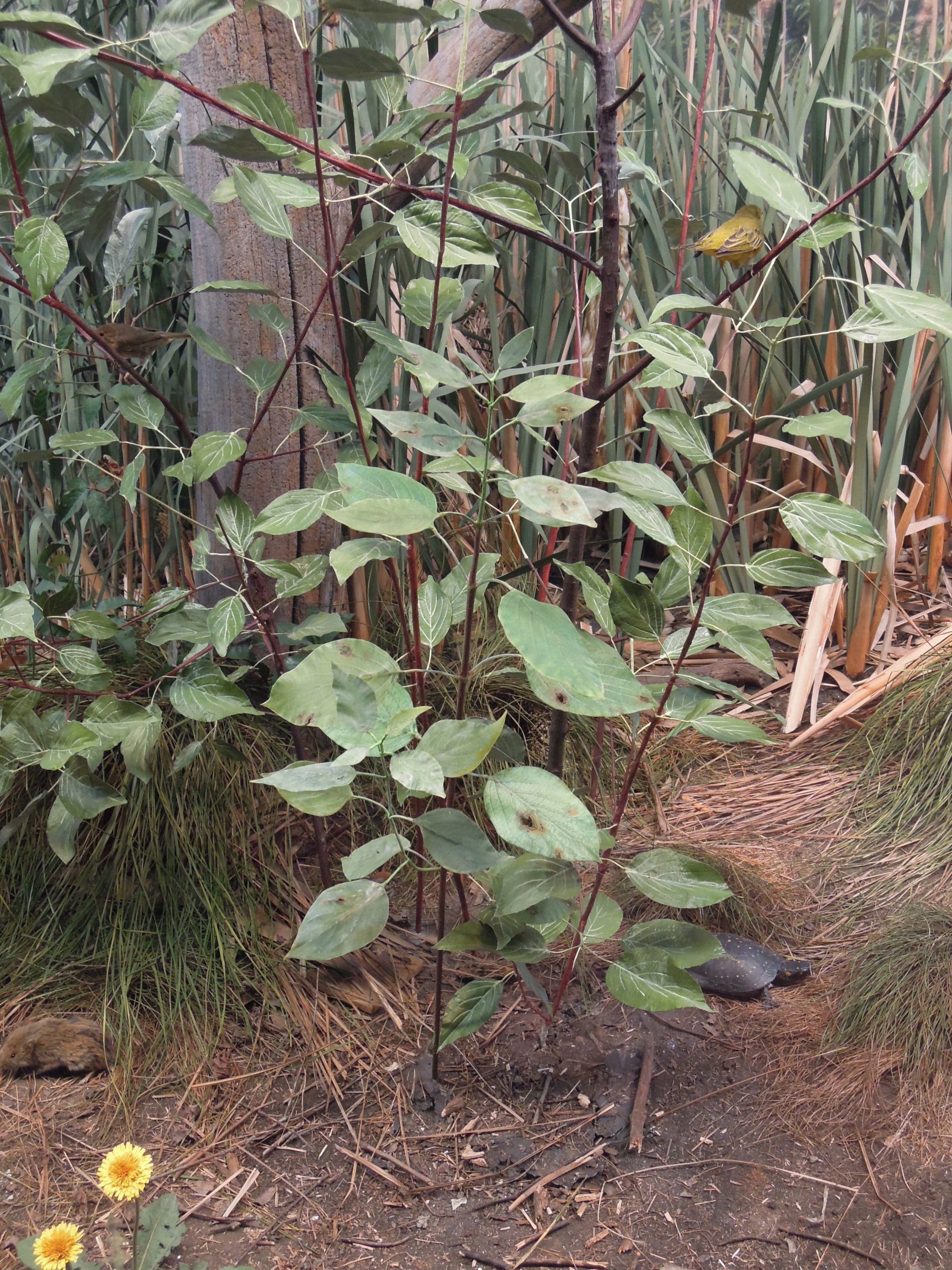
Michael Anderson worked as a preparator at the Yale Peabody Museum of Natural History for 30 years and writes about some of the challenges he faced In his blog “Museum Model Making at Yale Peabody.” For example, he needed to replace a sprig of Red Osier Dogwood in an older habitat diorama that had faded and to make the leaves, he used a special 3D fabric that could be printed upon.
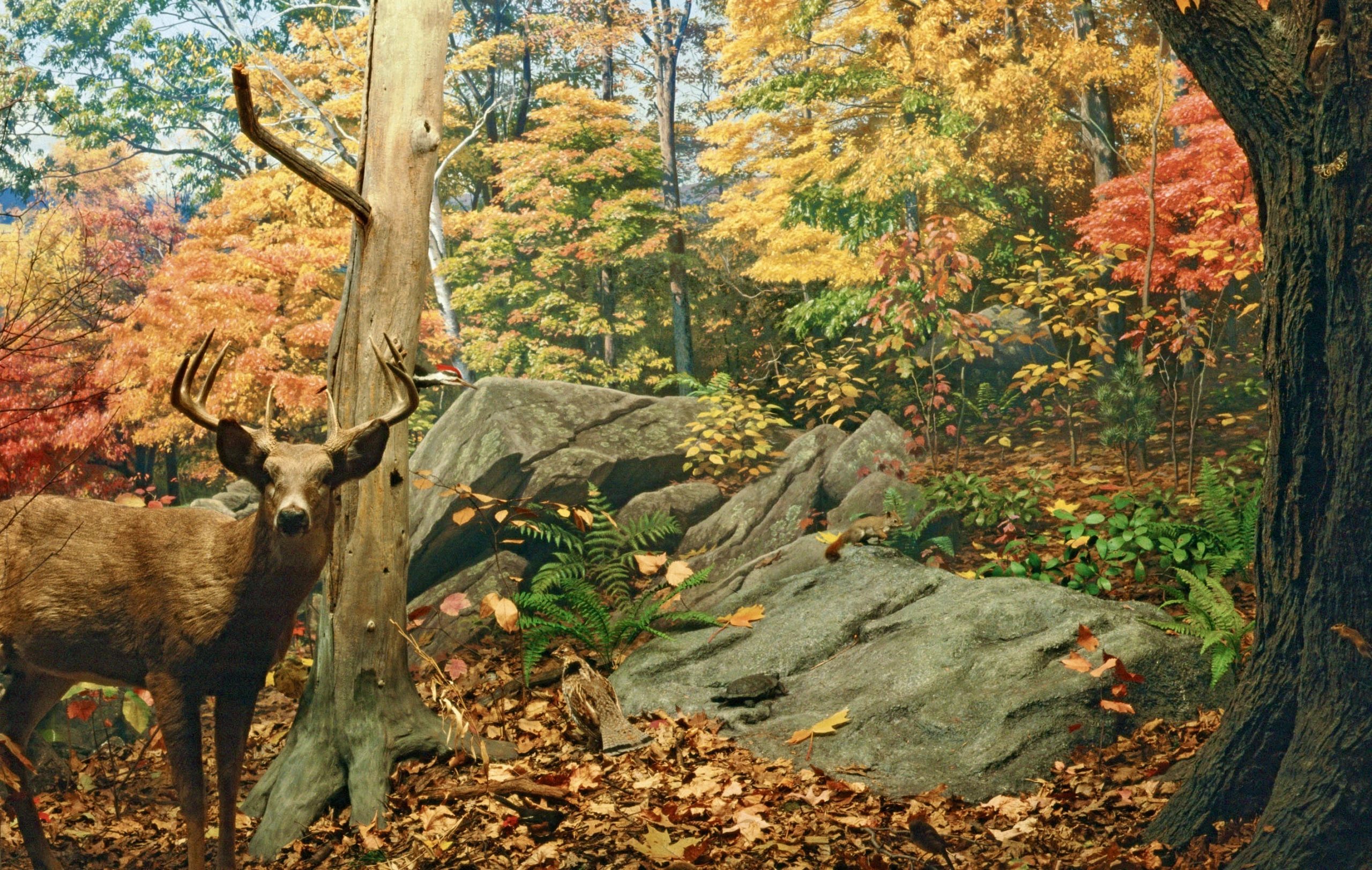
The Forest Margin Diorama at the Yale Peabody Museum is one of three showcasing Connecticut’s ecosystems and regional habitats. It depicts a woodland scene in the New England fall with its colourful autumn foliage. Another 35 feet long diorama depicts the beach and salt marsh of the Connecticut Coastal Region at Milford Point at 11 am on June 15. The Cold Bog Diorama depicts a specialized, acidic New England wetland habitat. The backgrounds for these dioramas were painted by James Perry Wilson and are considered masterworks for their precise attention to scientific detail and the rendering of an illusion of distance and space in the landscape. Longtime preparator Ralph C. Morrill worked with the artist on the foregrounds of the dioramas; he created the taxidermic mounts and reproduced lifelike foliage and ground cover.
As with the representation of plants, the depiction of animals in scientific illustration developed through a distinct history of pictorial conventions that ultimately shaped the emergence of the habitat concept. During the 19th century, zoological imagery underwent a shift when animals increasingly came to be understood not as isolated specimens defined by morphology, but as living organisms embedded within ecological relations.
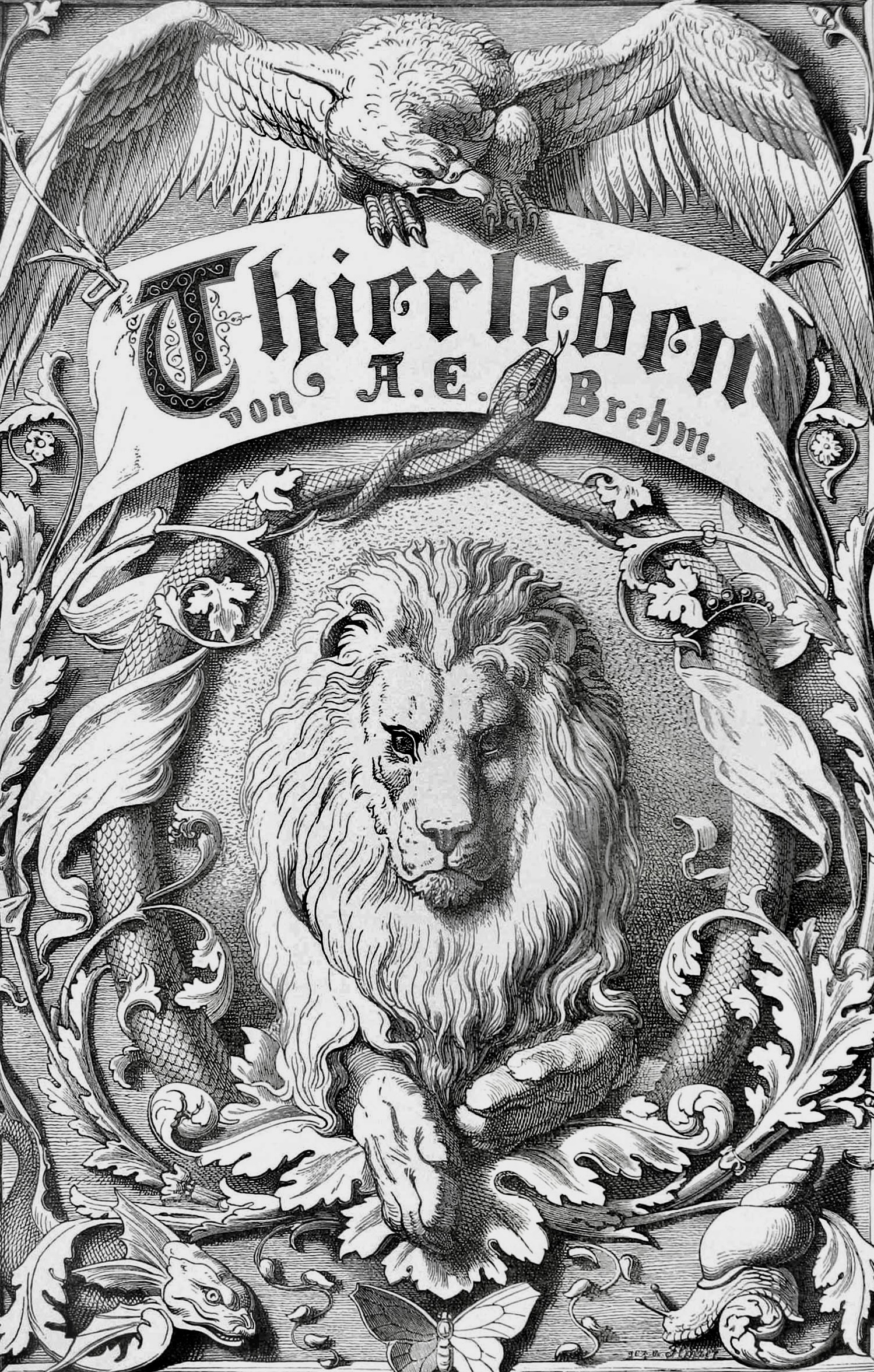
A major catalyst for this transformation was the encyclopedia of the animal world Thierleben (Animal LIfe) by Alfred Edmund Brehm (1829 – 1884). With over 1,500 illustrations. The main contributor of the illustrations was Robert Kretschmer. First published in six volumes between 1864 and 1869, it was widely disseminated and reprinted hundreds of times. The popularizing effect of Brehm’s work is analogous to wildlife films such as Life on Earth by David Attenborough, bringing vivid representations of wildlife around the globe to a mass audience.
Illustrations by German artists Gustav Mützel, and August and Friedrich Specht, were added to the expanded 1886 second edition of Brehms Tierleben, which had a frontispiece by Fedor Flinzer featuring a symbolic male lion’s head. Brehm maintained throughout his life that “among all animals birds have always possessed the greatest attraction for me.” For Brehm, birds were not merely zoolical specimens but the most aesthetically compelling organisms in which he could blend firsthand, systematic natural history observations with comprehensive anatomical accuracy.
Brehm’s massive work was influential in Sweden, where it was translated as Djurens lif and published between 1882 and 1888. Gustaf Kolthoff’s concept of the 1893 biological museum in Stockholm as showing the “levnadssätt” (way of living) of the animals on display has a parallel with the illustrations in Tierleben which sought to depict the habits and habitats of the animals.
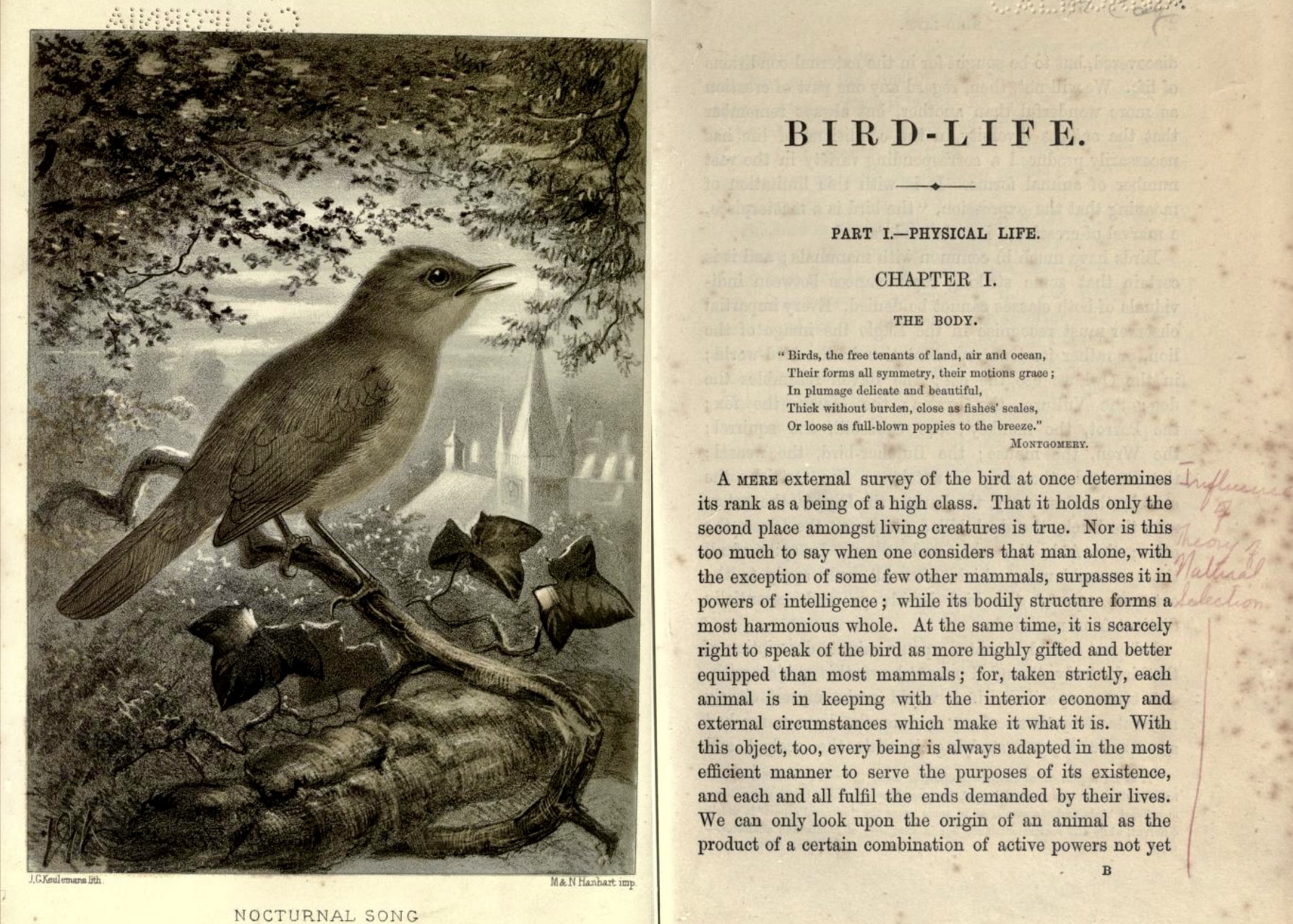
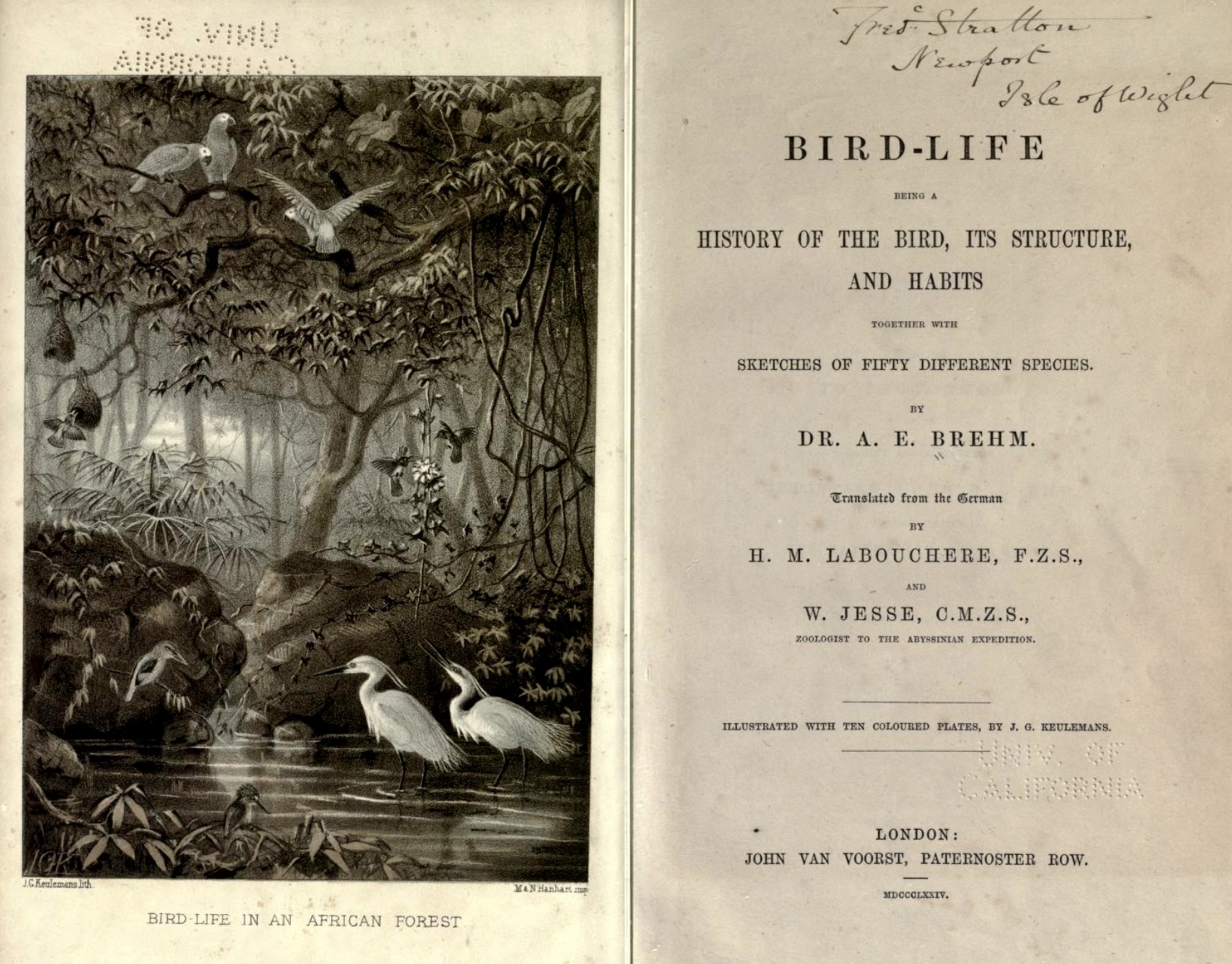
Brehm’s book Das Leben der Vögel (The Life of Birds), was first published c. 1861. It provides a detailed overview of bird behavior, structure, and habits, together with sketches of fifty different species. The book is dedicated to Brehm’s father, Christian, a pastor and noted ornithologist. The second edition, which was published in English in 1874, had eleven hand tinted lithographic plates by the acclaimed Dutch bird artist J. G. Keulemans (1842 – 1912), who illustrated many of the best known 19th century ornithology books. The frontispiece is entitled “Bird Life in the African Forest,” and the first chapter is preceded by an illustration entitled “Nocturnal Birds.” The illustrations depict the birds in their native habitats. As Brehm explained in the foreword: ‘every being is always adapted in the most efficient manner to serve the purposes of its existence, and each and all fulfil the ends demanded by their lives.
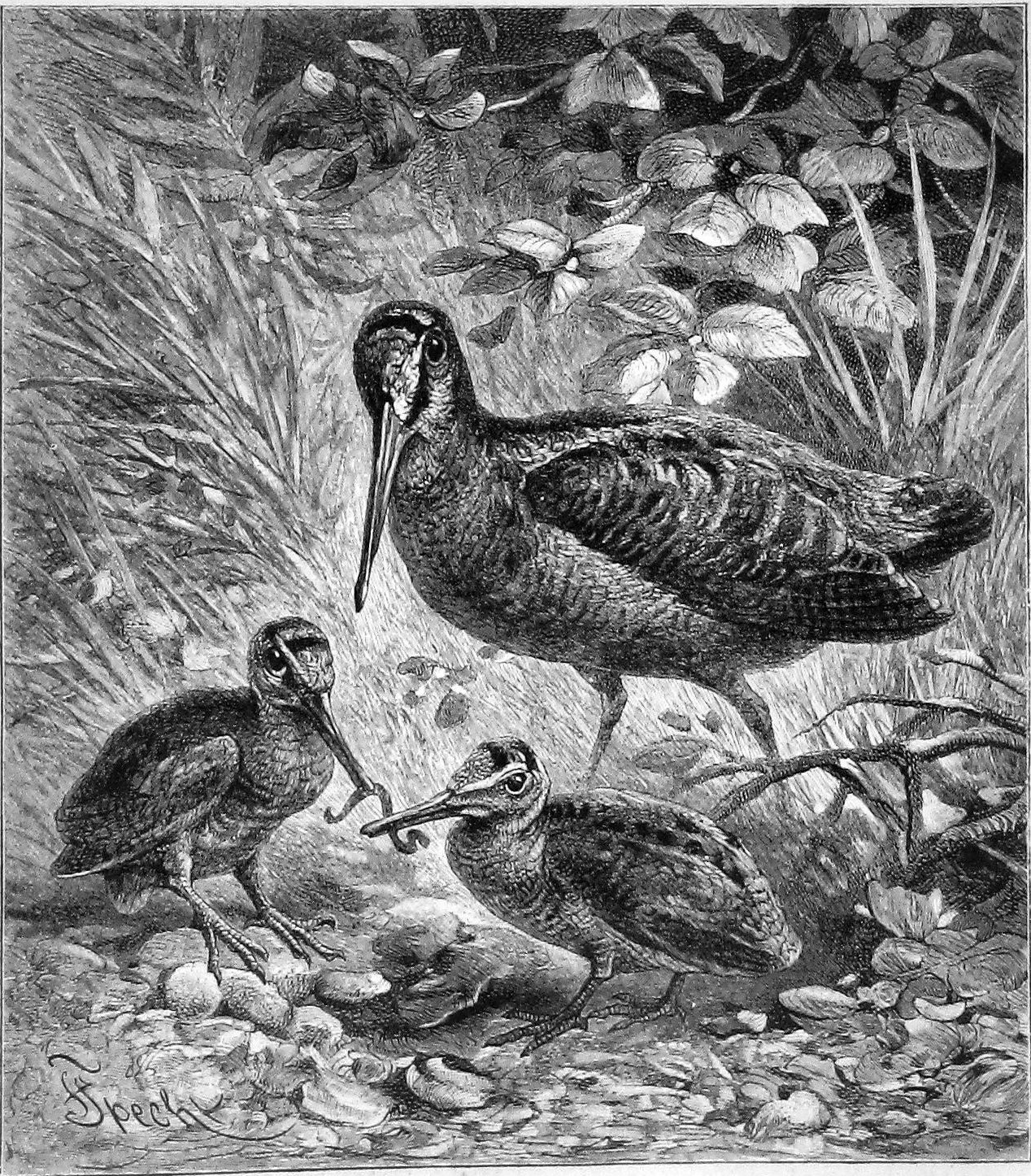
Scientists praised the high quality illustrations in Thierleben; even the illustrious Charles Darwin described them as “admirable” in an 1881 letter to Brehm. The edition refered to by Darwin included more than 2,000 illustrations, a mix of in text woodcuts, black and white illustrations, and colored plates. One of the artists who contributed to Brehm’s work was Friedrich Specht, a renowned animal illustrator. His woodcut illustration of a mother “Waldschnepfe” (Eurasian Woodcock) with her chicks is representative of the new direction in ornithological imagery.
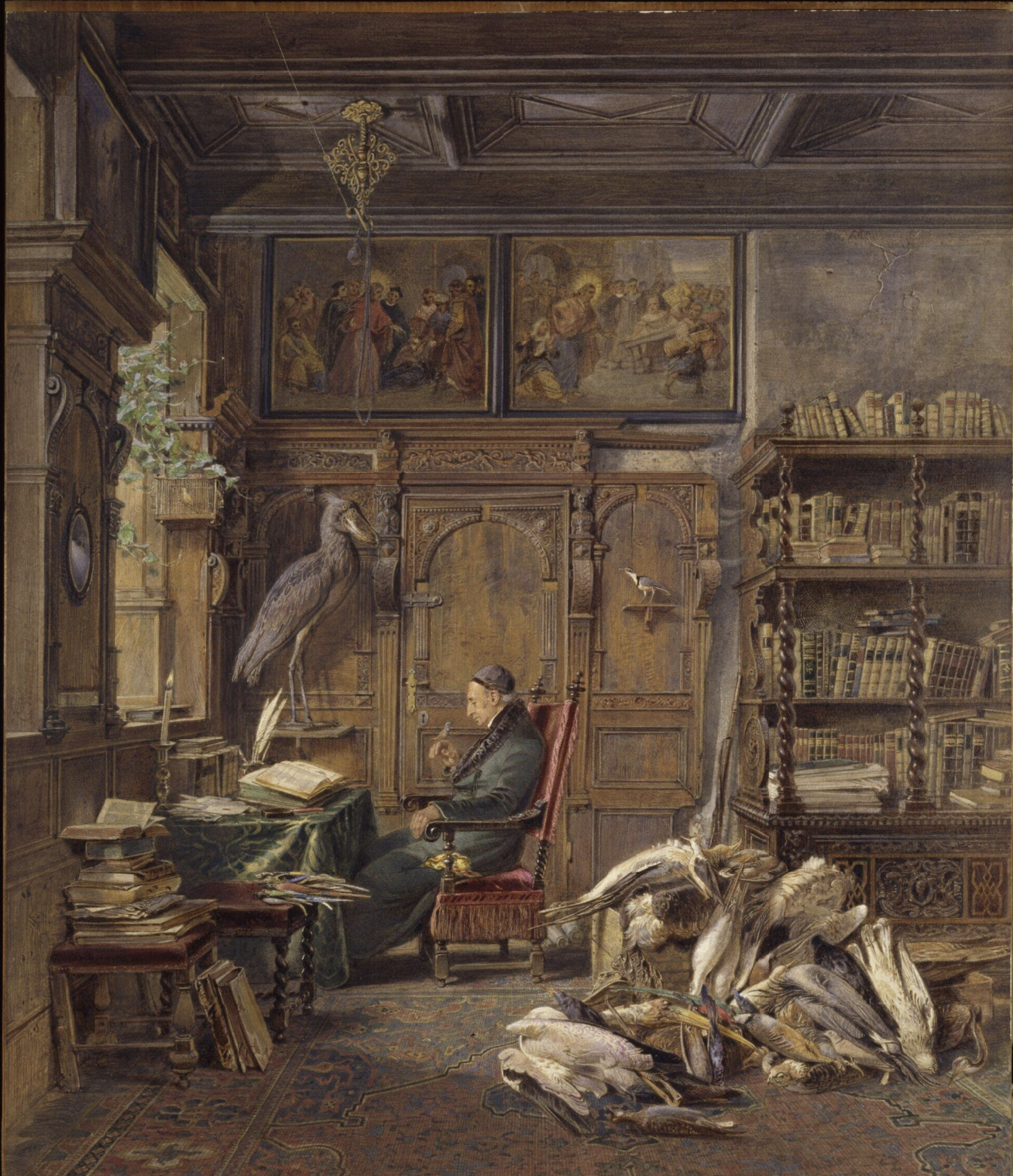
Alfred Brehm traveled to Sudan and the Blue Nile in the late 1840s and early 1850s. The Shoebill in the portrait serves as a “trophy” of these expeditions. In the context of Christian Ludwig Brehm’s work, the Shoebill signifies a taxonomic puzzle; At the time, naturalists struggled to determine if it was a stork, a heron, or a pelican. By placing it prominently in his study, the portrait highlights Brehm’s role as a systematist—someone dedicated to classifying the “order” of nature through physical comparison. The presence of the Shoebill stork (Balaeniceps rex) in the portrait of Christian Ludwig Brehm signifies more than just a rare specimen; it represents the frontier of 19th-century ornithology and the global reach of the Brehm family’s scientific network. A Symbol of the “Exotic” DiscoveryDuring the mid-1800s, the Shoebill was a biological sensation in Europe. Scientific Rarity: The bird was only “discovered” by Western science in the early 1850s. Its prehistoric, almost statuesque appearance made it a coveted prize for any serious collector. owning a Shoebill specimen was a mark of extreme prestige.signified that the Brehms were at the center of a global exchange network of skins and data. It cemented Christian Ludwig Brehm’s status as the “Vogelpastor” (Bird Pastor), a man whose small parsonage held treasures that rivaled major national museums in Berlin or Vienna.
Habitat destruction and degradation, hunting, disturbance, and illegal capture are all contributing factors to the decline of this species.
Linnaeus classified the Ivory-billed Woodpecker as Picus principalis in the landmark 10th edition of his Systema Naturae in 1758.
principalis (Latin for “principal” or “first,” likely referring to its large size and distinct appearance).
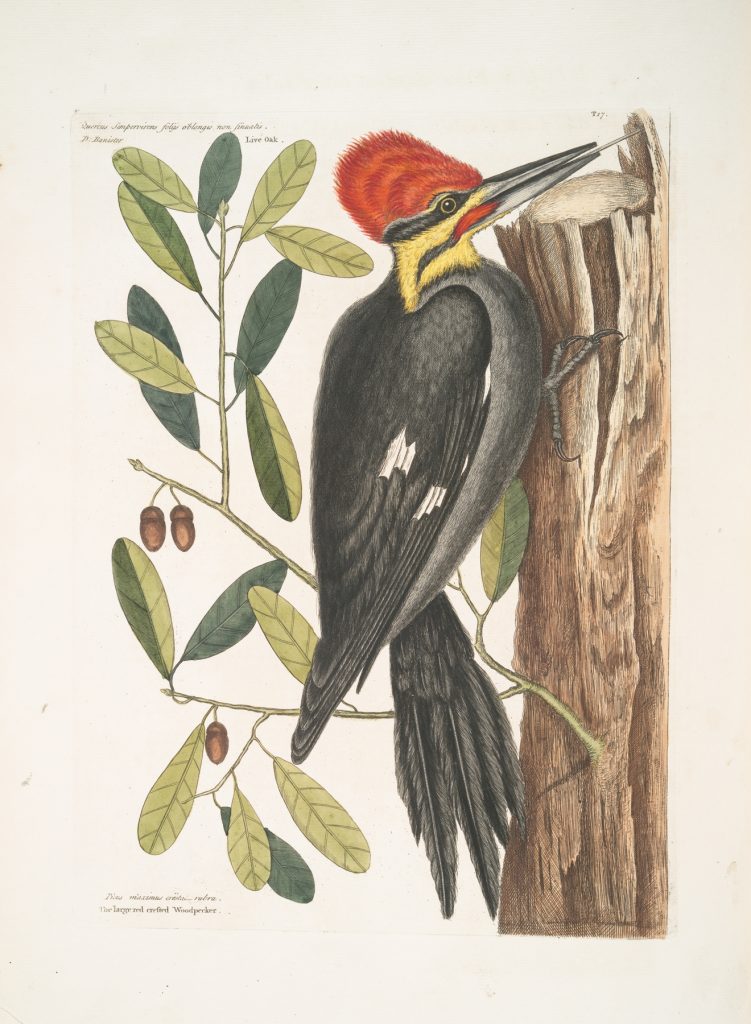
Description: Linnaeus based his classification on the work of English naturalist Mark Catesby, who had described the bird in 1731 as Picus maximus rostro albo (“the largest white-bill woodpecker”).Mark Catesby (1683–1749) was the first naturalist to document and paint the Ivory-billed Woodpecker, featuring it in his seminal 18th century work, Natural History of Carolina, Florida, and the Bahama Islands. Catesby referred to it as Picus maximus rostro albo (“Largest White-billed Wood-pecker”). Catesby published the first description and illustration of the bird in 1731, which was later used by Linnaeus in 1758 to formally name the species Picus principalis. Catesby noted that the bills of these woodpeckers were highly valued by “Canada Indians” (likely referring to indigenous nations in the Southeast) who used them to make “coronets” for their leaders. Catesby’s original illustration was noted for showing a square tail rather than the typical blunt, arrowhead shape, though it remained a foundational scientific image of the species.
considered extinct after habitat loss due to deforestation severely reduced its population, with the last commonly accepted sighting in the U.S. in 1944
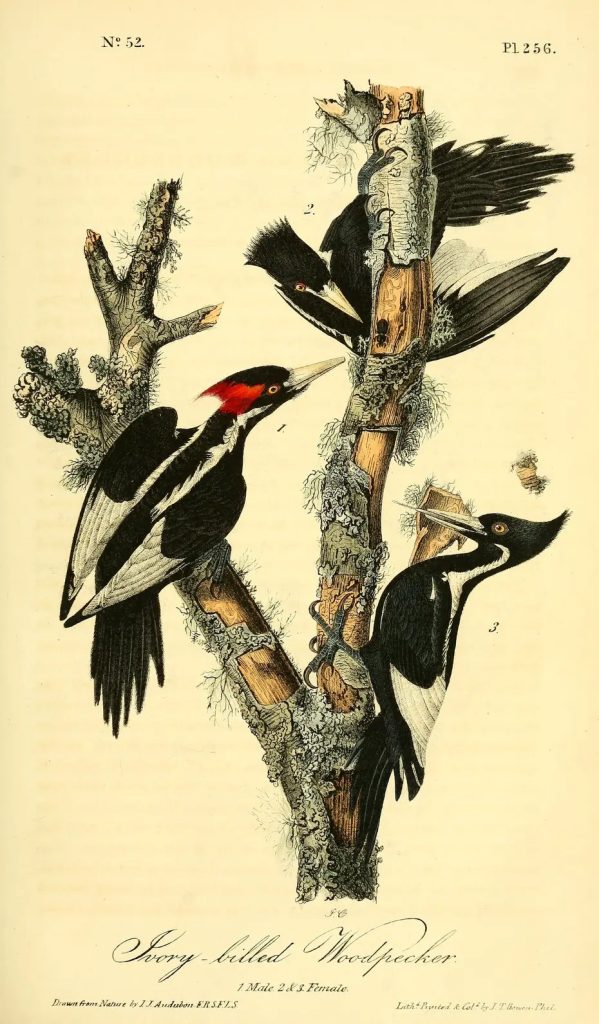
James Audubon described the Ivory-billed Woodpecker as the “Great Chieftain of the Woodpecker Tribe” and a masterpiece of nature, highlighting its “shiny deep black” plumage with white, neck-to-back stripes and a brilliant, carmine-red crest on males. He noted their, “ivory-white bill” that gleamed like a dagger and their “graceful in the extreme” flight with long, swooping glides. Audubon noted the bird’s large size and brilliant plumage, which he believed closely matched the coloring of the artist Van Dyck. The plumage was a “shiny deep black” with blue or purple tints, accented by white lines running from the cheeks down to the back. He depicted the male with a “rich carmine” (red) pendent crest, whereas the female’s crest was black. Audubon noted their “vigorous galloping flight” and described them as acting in a “fierce, almost savage” manner when landing. He observed that they rarely attacked living trees except to procure food, which helped eliminate insects damaging the trees. He observed they moved in pairs, stating “Their mutual attachment is, I believe, continued through life”. Audubon’s detailed, life-size paintings and written accounts in his Ornithological Biography captured the bird in its natural, heavily wooded habitat, which he observed in the Southern United States.
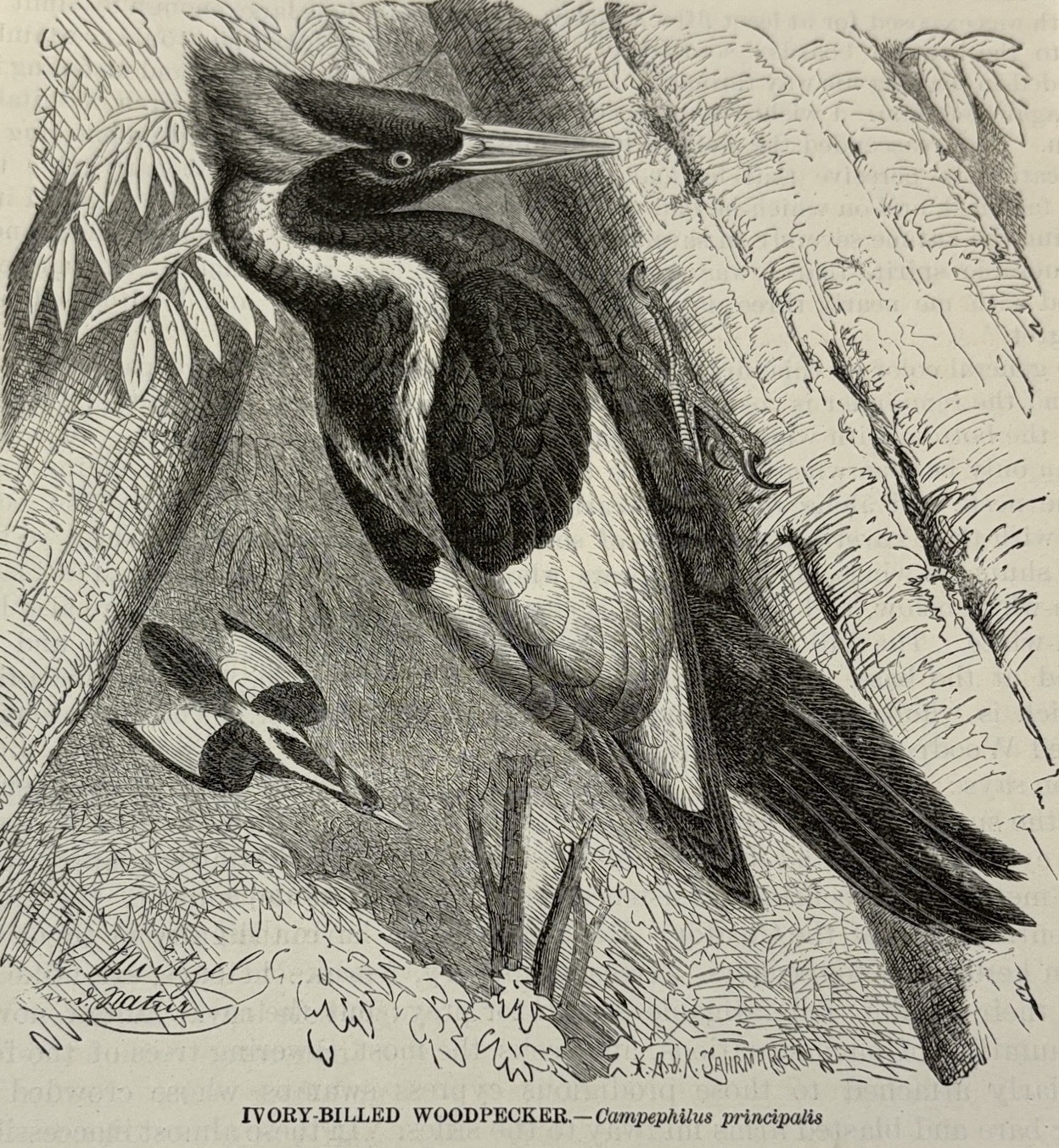
Ivory-billed Woodpecker , Campephilus principalis, woodcut or engraving. Key to North American Birds (1872) by Elliott Coues Coues utilized the woodcut illustration of the Ivory-billed Woodpecker from Brehm’s Thierleben, illustrated by “upwards of 250 woodcuts”. Utilizing existing woodcut blocks from renowned European publishers like Brehm was a common, cost-effective way to provide high-quality imagery without the immense expense of creating new engravings for every species. Using an image from this source offered a recognizable, reputable depiction of the bird. Coues aimed to produce a manual that would bring the study of ornithology to a wider audience, moving away from expensive, large-folio works (like those of Audubon). the use of European-sourced woodcuts for American species was standard publishing practice for scientific manuals at the time to manage costs while ensuring accurate anatomical representation.The 1903 5th Edition of Elliott Coues’ Key to North American Birds is a seminal two-volume ornithological work, profoundly revised from earlier editions to feature updated classifications, comprehensive species accounts, and detailed illustrations of North American birdlife. Extensively illustrated with both black and white, and color plates, it is a landmark text in century American ornithology.
Frank M. Chapman the renowned American Museum of Natural History ornithologist, documented the Ivory-billed Woodpecker in the late 19th and early 20th centuries. Notably, he collected specimens in Florida in 1890 and described their call as “the distant note of a penny trumpet”. On March 24, 1890, Chapman collected a male Ivory billed Woodpecker on the Suwanee River in Florida. In 1916, Chapman described the species as “wild, shy bird[s]” that were difficult to follow and not inherently noisy unless disturbed.
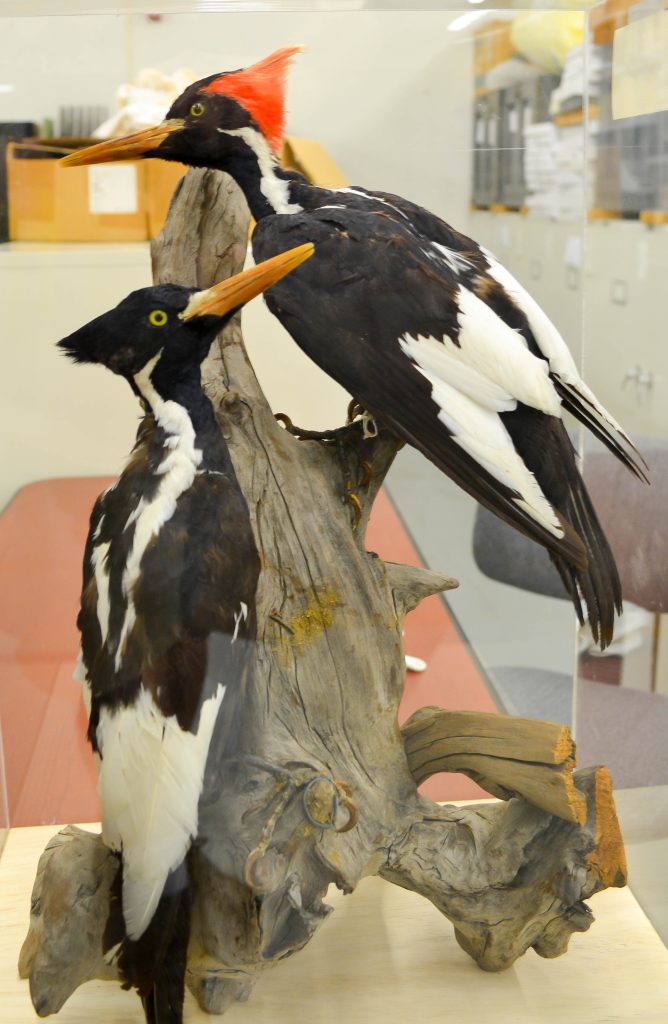
There are 413 reported Ivory-billed Woodpecker (Campephilus principalis) specimens (41 in the American Museum of Natural History [AMNH]) housed among collections of 90 institutions, mostly in North America and Europe