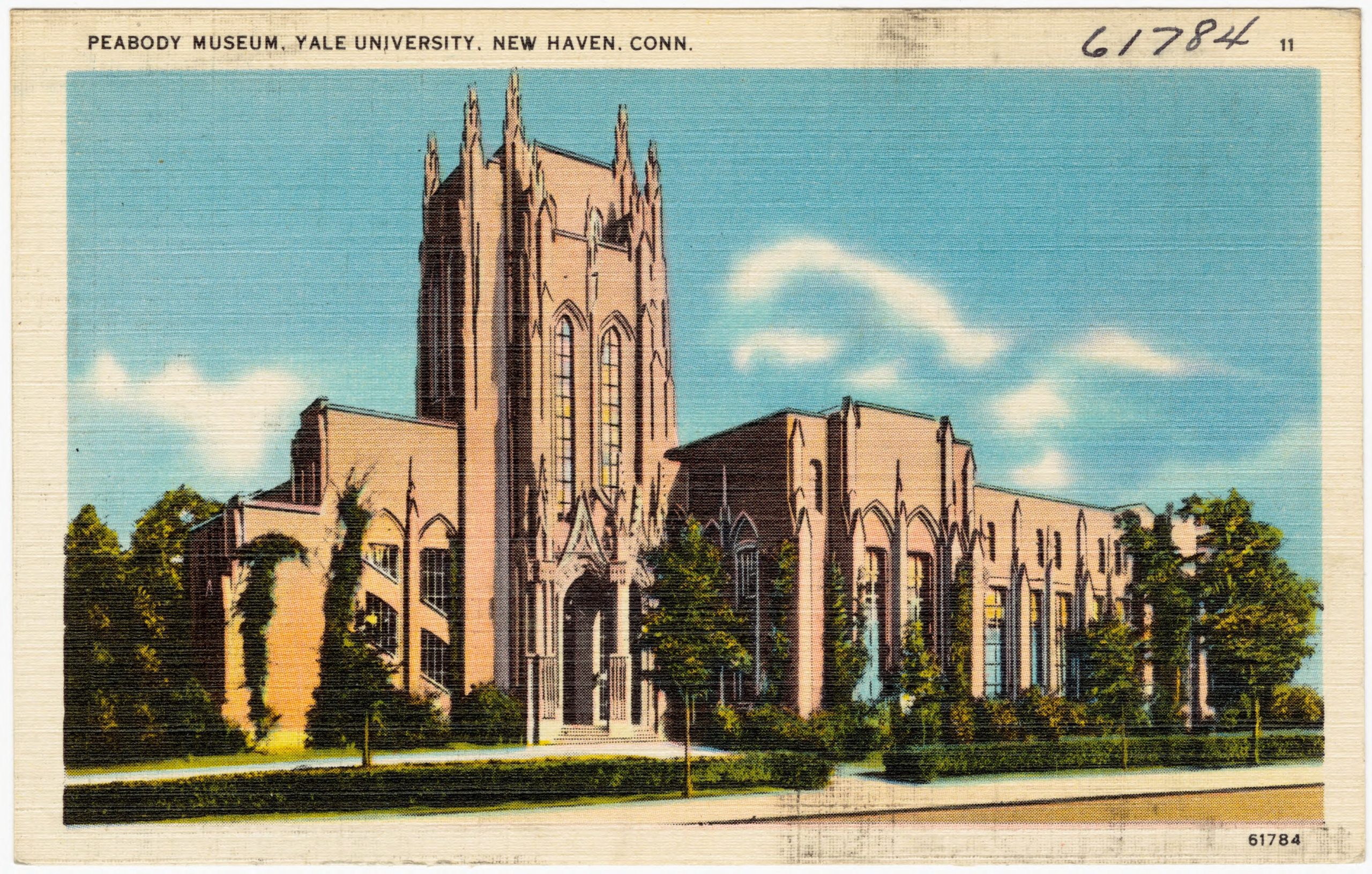
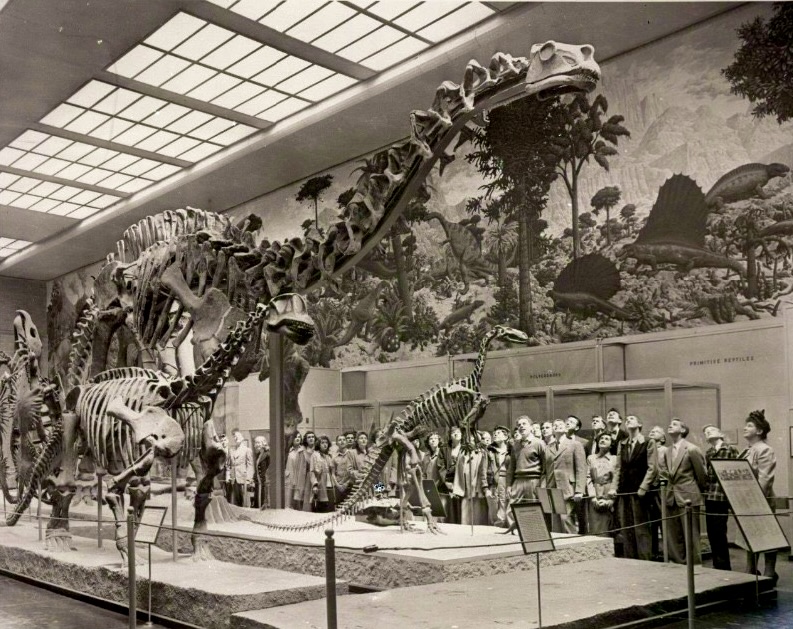
The creation of a habitat diorama requires the effort of many museum specialists, trained in different areas of expertise, including the realistic reproduction of plants and animals, the illusion of atmospheric space and the design of an architectural alcove. Above all, museum dioramas require an institutional home that is committed to the considerable planning and costs that installing such exhibits requires. At the Yale Peabody Museum of Natural History, the exhibition of its specimens has always had a priority alongside cutting-edge scientific research. The current Museum building, opened in 1925, features a Great Hall specifically designed for its remarkable dinosaur collection. As a backdrop to the Brontosaurus and other dinosaurs, the Museum commissioned artist Rudolph F. Zallinger to paint a 110 foot long mural showing the evolutionary history of the Earth. Completed in 1947, “The Age of Reptiles” mural depicted prehistoric plants and animals in realistic landscapes based on the artist’s collaboration with scientists. Today it is touted as Yale University’s most recognizable feature.
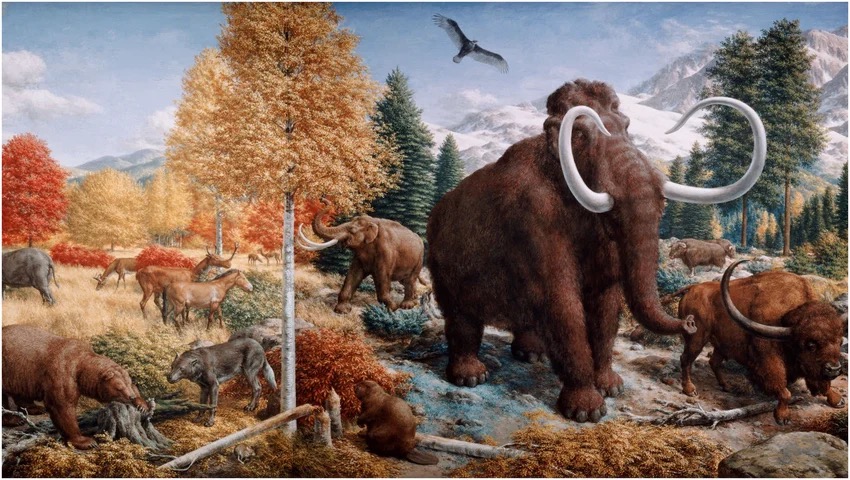
Like “The Age of Reptiles” mural, the 11 habitat dioramas of the Yale Peabody Museum of Natural History are regarded as masterpieces of a specialized form of art merged with science. This new approach was instigated by museum director Albert Eide Parr, a scientist who went on to bring his innovative ideas based on ecology and public education to the American Museum of Natural History. Most of the habitat dioramas were created between the 1940s and 1960s by artists James Perry Wilson, Francis Lee Jaques, and preparator Ralph Morrill. These three-dimensional landscapes portray a variety of North American biotopes and illustrate how geology and climate shape biological diversity, and how animal and plant species evolve in relation to specific ecological conditions in nature.
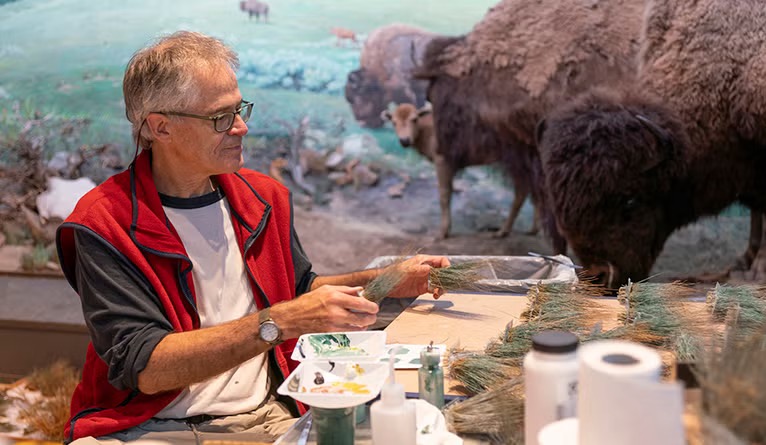
Continuing a rich tradition of merging art and science in its displays, in 2005, the Yale Peabody Museum unveiled a 21 foot lifesize bronze sculpture of Torosaurus. The most famed of the dinosaur discoveries made by the Museum’s founder, it was created by sculptor and preparator Michael Anderson. After some 30 years at the Museum, Anderson led a four year restoration of the Hall of North American Dioramas which concluded in 2019. This involved the extensive cleaning and repair of the taxidermy mounts and the restoring and replacing of botanical specimens and models in the foreground. In his informative “behind the scenes” blog Museum Model Making at Yale Peabody, Michael provides extensive documentation of this fascinating and highly skilled painstaking work.
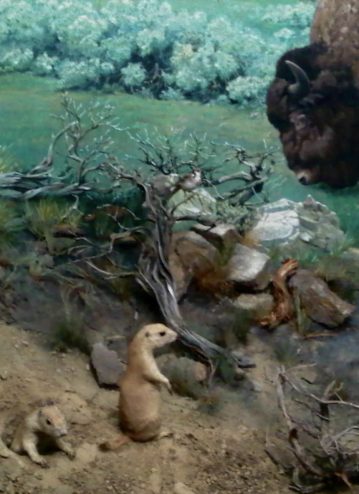
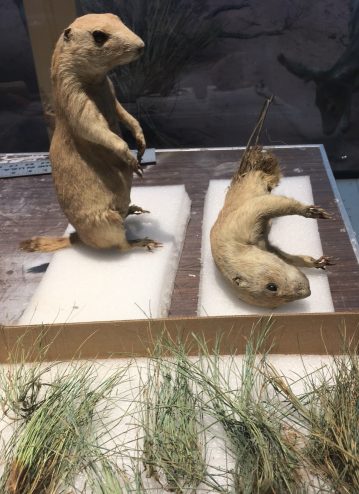
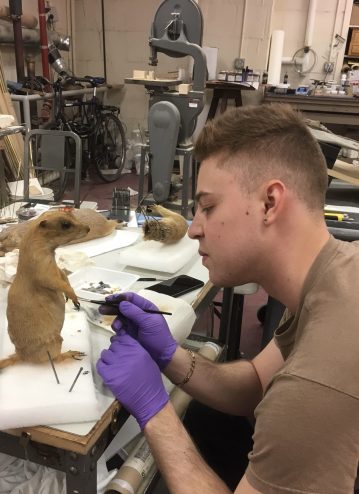
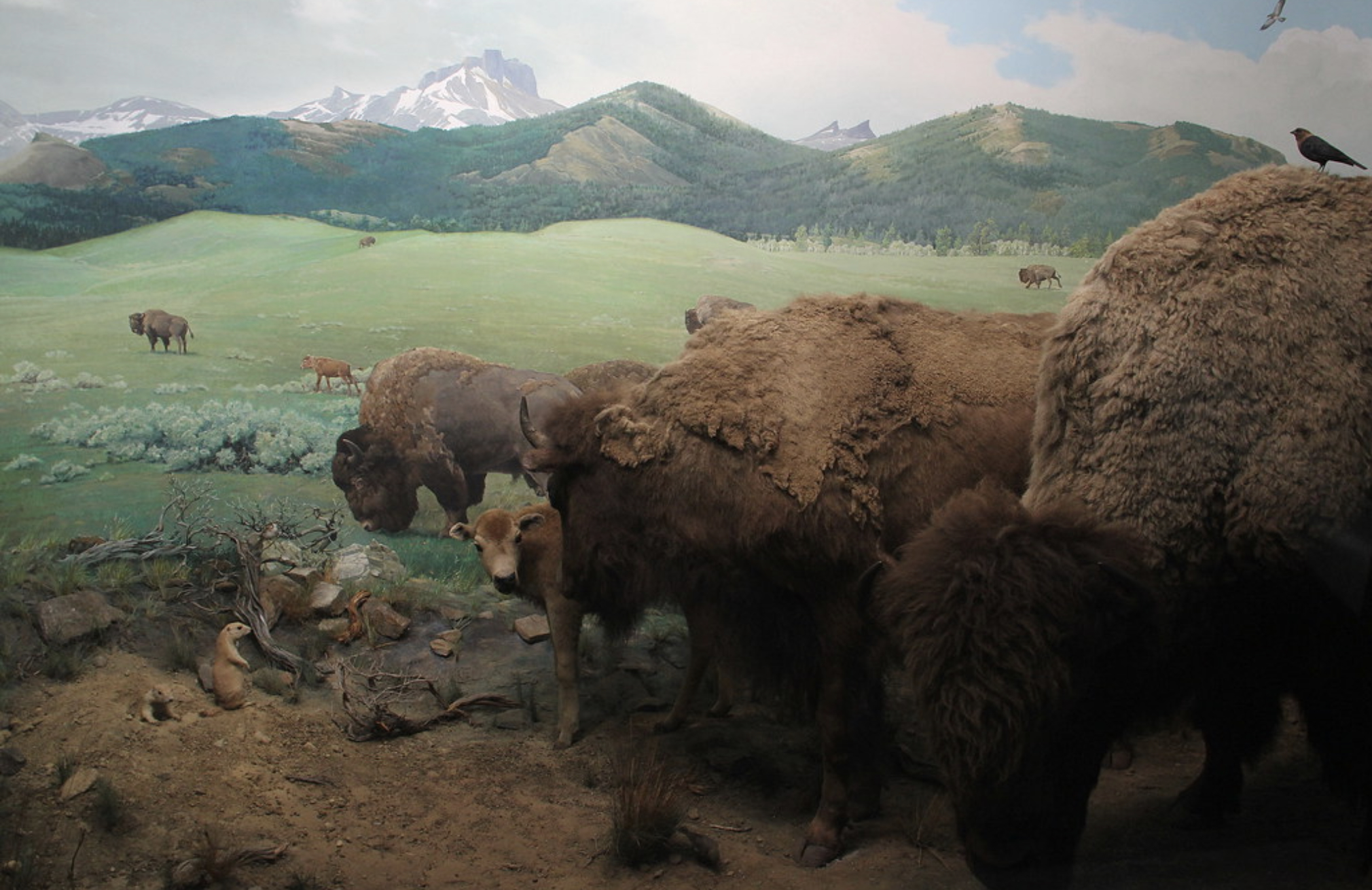
Despite being behind glass, over the many decades that the Bison Diorama had been on public display at the Yale Peabody Museum, it deteriorated with age. During its recent restoration, the diorama was given new life; the tears and cracks in the skins of the mounted bison specimens were repaired along with their broken tails. The fur of the bison and the Black-tailed Prairie Dogs had become faded and underwent a careful recolouration process.
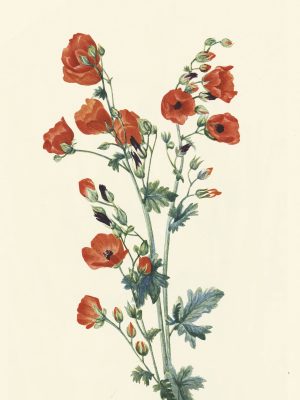
Also the foreground vegetation required more botanically accurate and realistic looking specimens of “buffalo grass,” for example, and of the orange coloured Scarlet Globemallow (Sphaeralcea coccinea), a common forage species for bison. The small scale of this plant was challenging for the sculpting, moldmaking and casting process. New additions to the Bison Diorama included a small lizard (skink), created using 3D printing technology, and a small “cowbird” perched on a bison’s back to illustrate symbiotic relationships of wild animals in nature.
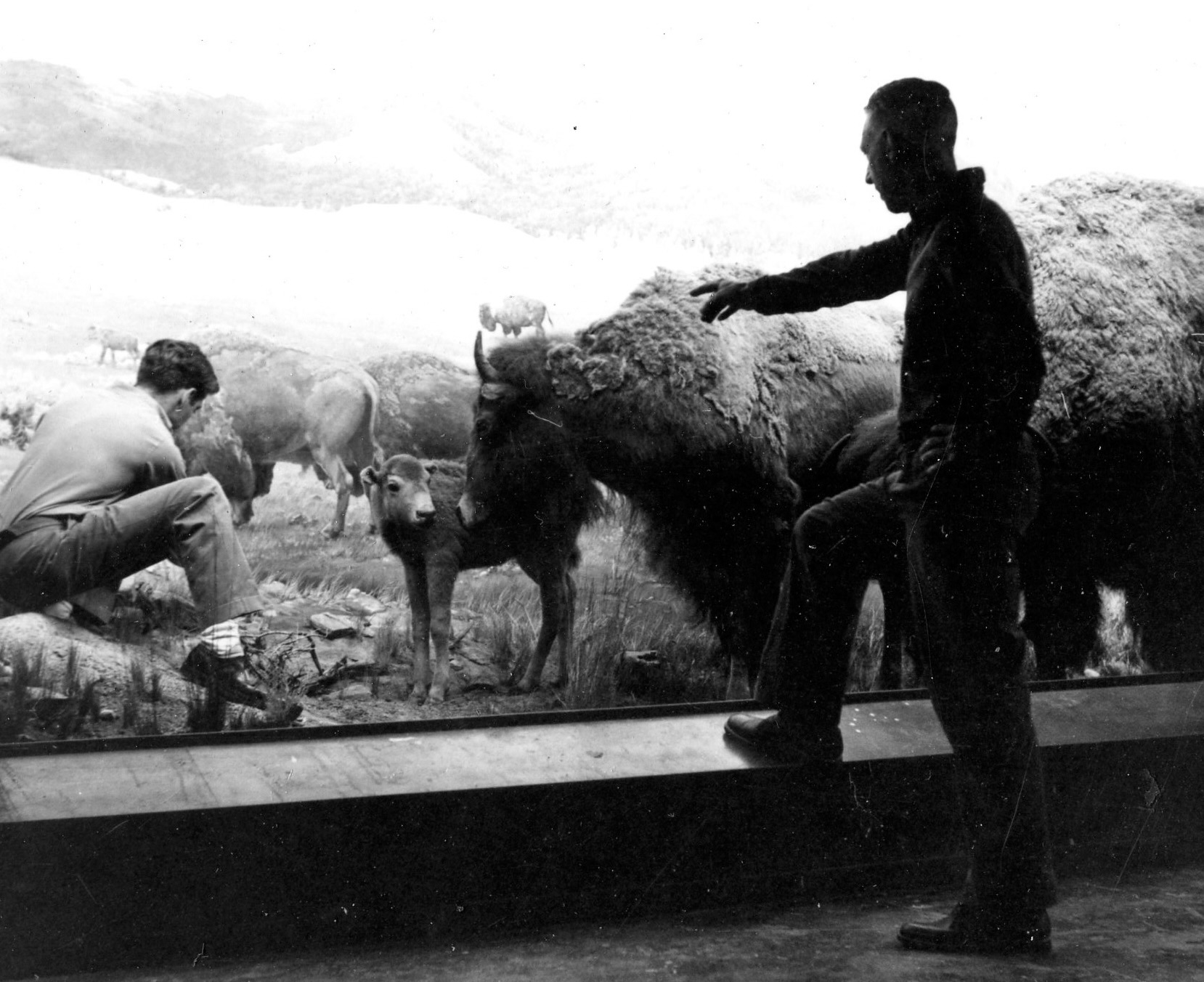
The three specimens in the Bison Diorama (a bull, a cow and a calf) were originally collected in Wyoming in 1888 during a museum expedition led by Jenness Richardson, chief taxidermist at the American Museum of Natural History. At the time, this iconic national species was near extinction and natural history museums were in competition to collect some of the last remaining wild animals for their zoological displays and scientific collections. The US National Museum had initiated this trend in 1886 when it sent taxidermist William T. Hornaday to Montana to collect six bison specimens.
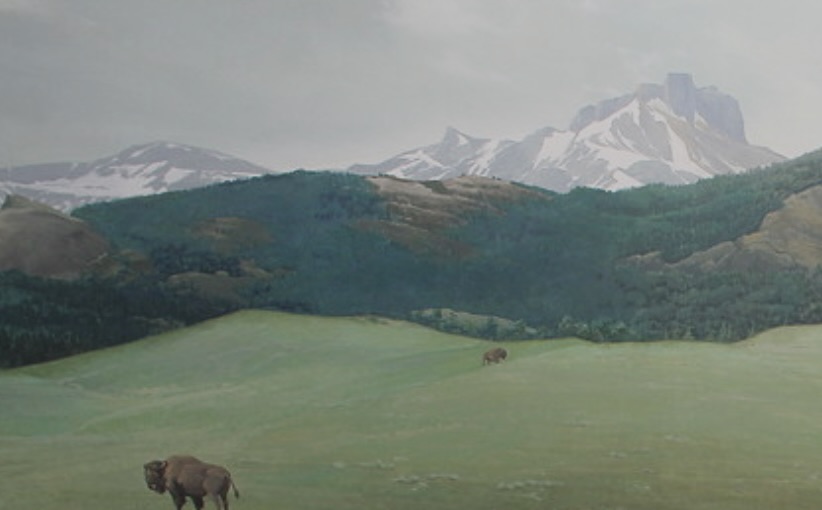
The Yale Peabody Museum acquired three of the historic bison specimens from New York in 1945 and these became the centrepiece of a specially designed display in the Hall of North American Dioramas. The background painting of a specific landscape in Wyoming was done by the well-known artist Francis Lee Jaques (1887‒1969) and te sculptural foreground for the diorama was created by Ralph Morrill and Dave Parsons.
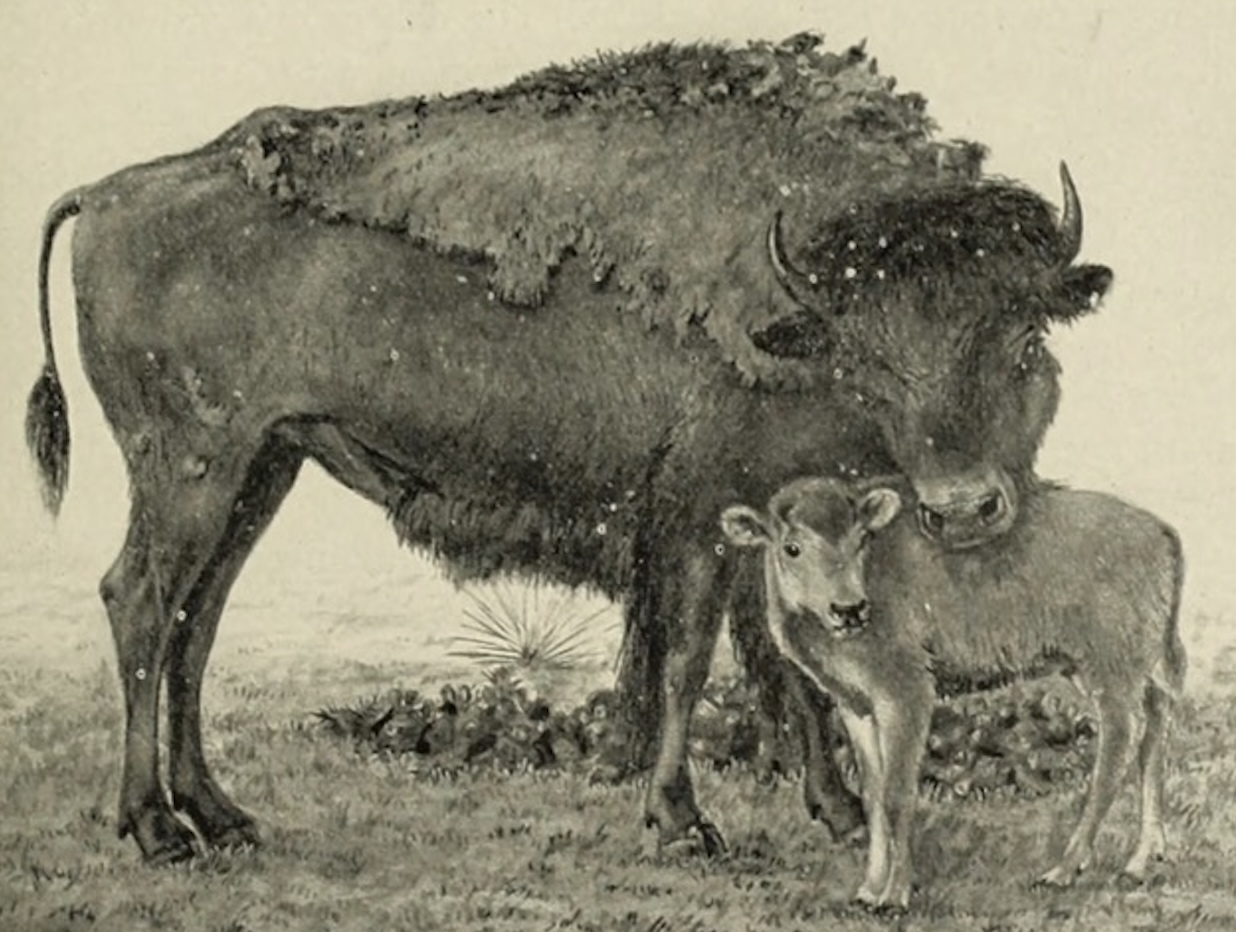
The bison group created by Richardson in 1889 was a new and controversial form of museum exhibition, considered by opposing curators to be non scientific. A published illustration of the display depicts two specimens, a bison cow and her calf, positioned in a family group that conveys a caring maternal relationship. Also the natural habitat of the two animals is represented in the foreground of Richardson’s display, an auxiliary component not normally included in the conventional scientific displays of natural history museums.
This early example of an animal group later came to be recognized for its cultural significance and artistic innovation. Increasingly museum taxidermists followed the example of Richardson and began to use sculptural techniques to produce more lifelike and animated recreations of zoological specimens. An important factor in the evolution of such groups was the art of reproducing foliage and other accessories that made up the exhibit foreground.