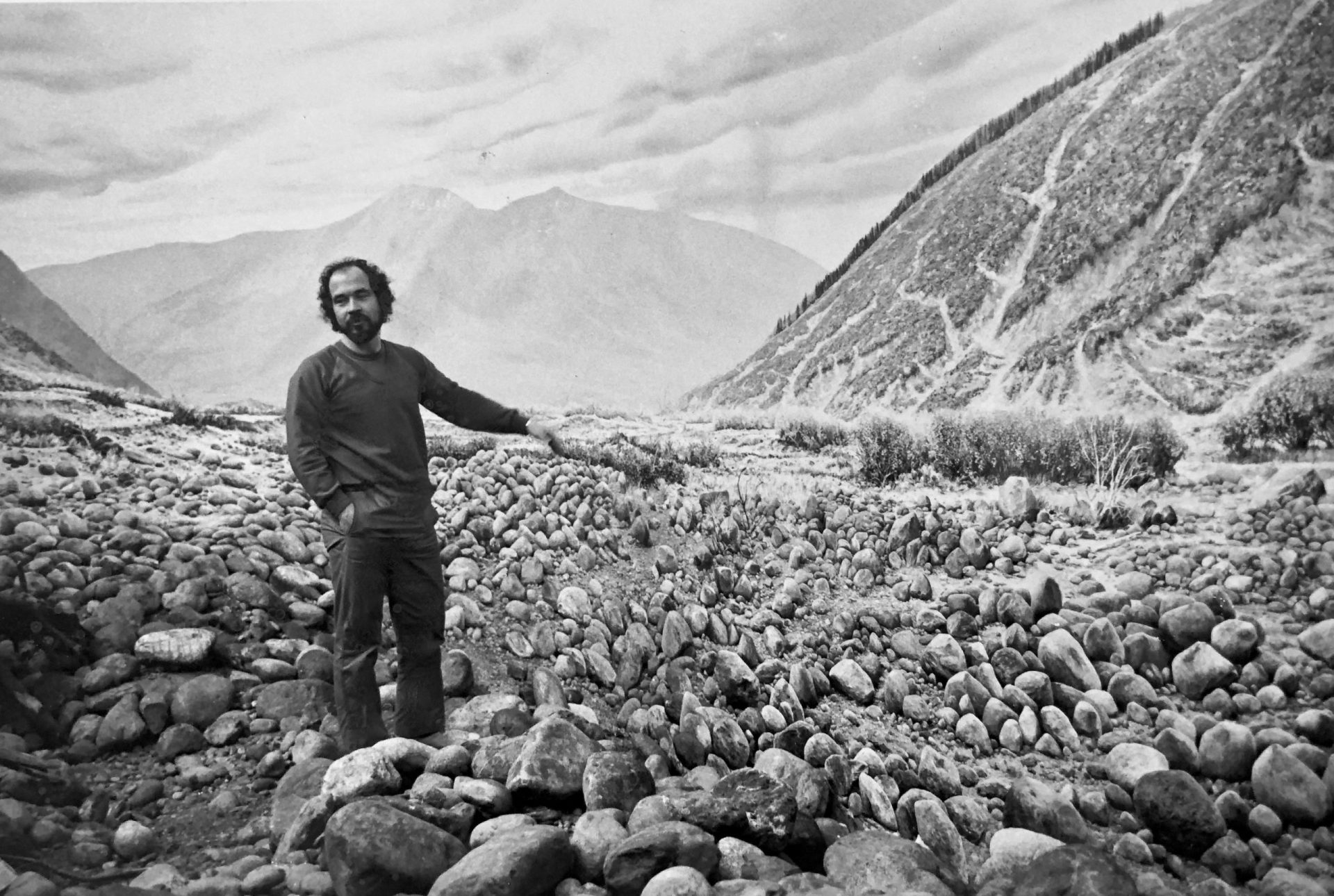
Background painter Jan Vriesen is seen standing inside of the Barkerville Diorama in 1980 in a photograph taken by Karen Wonders while she was an intern studying under him at the Royal British Columbia Museum. Why this diorama works as a convincing spatial experience is due to the skill of the artist who uses paint to make the boundary between real and painted space become undetectable.
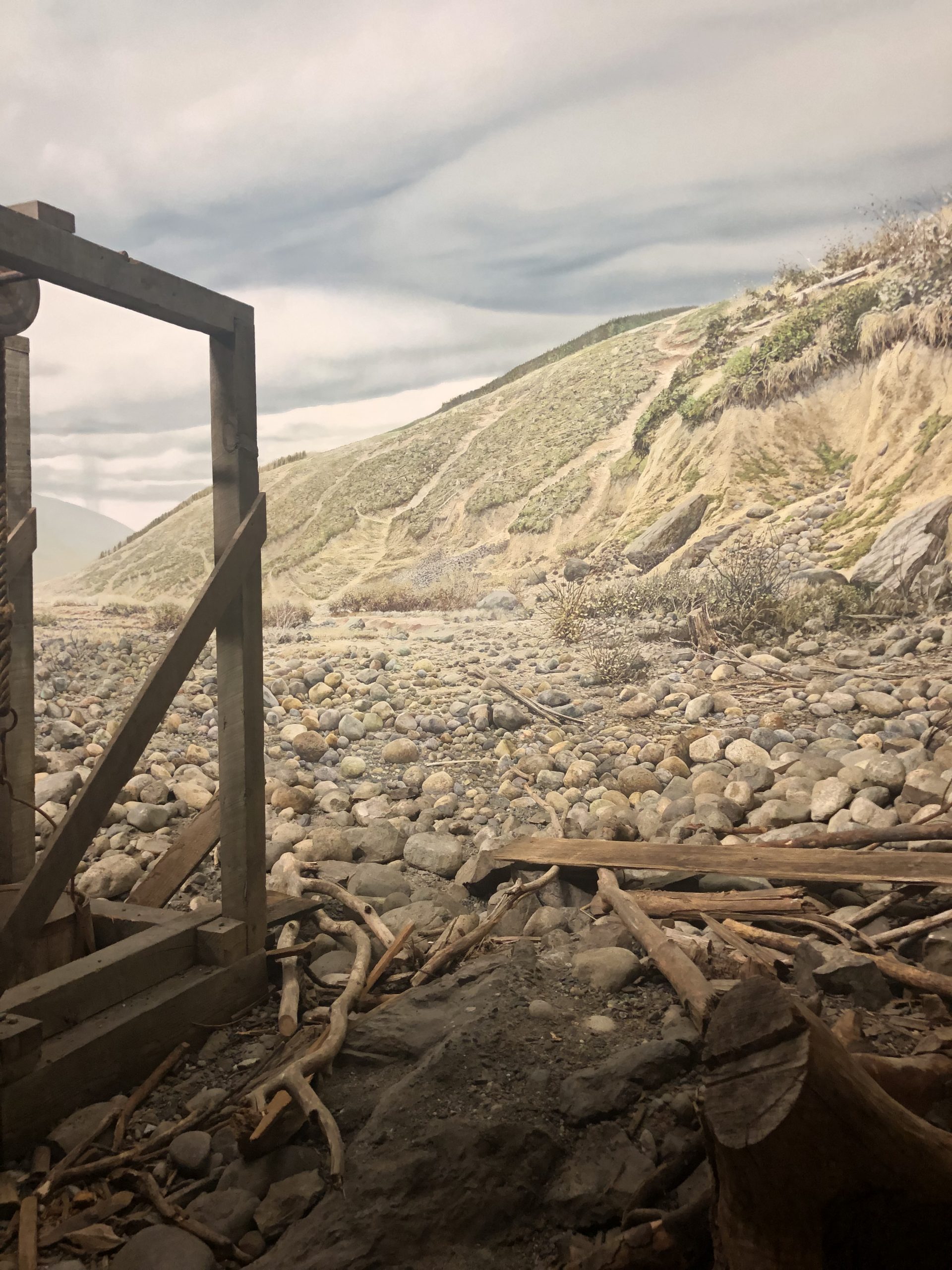
Part of the Human History Gallery, the Barkerville Diorama illustrates the ecological devastation of a watershed caused by the use of arsenic in rampant placer mining for gold during the 1860s. The museum closed the Gallery to the public in 2022, officially to decolonize its Eurocentric narrative, and only reopened after a public outcry. Despite its astonishing illusion and its important lesson in environmental history, this diorama is at risk of being dismantled so that the hall can be recurated and redesigned.
This website is about the art of habitat dioramas and was created by Karen Wonders to explore the potential that these natural history scenarios or tableaux have as a popular art idiom to communicate ideas about the loss of biodiversity. Indeed this was the founding concept behind the origin of the habitat diorama at the turn of the 19th century. It was a complex marriage of science and art that required the initiative, expertise and talent of many individuals as well as institutional and private patronage.
As the art form developed, the background painter’s role became evermore important in holding the illusionistic function of the three-dimensional display together. The aspiration is paradoxical: to conjure vast atmospheric depth on a shallow, often curved surface, and to do so in such a way that the illusion aligns seamlessly with foreground tableaux. In fact, this “feeling” of space and distance is a convergence of optical, painterly, and perceptual strategies that are derived from visual observations and traditions of aerial perspective that date back to the Renaissance.
James Perry Wilson (1889-1976), the most accomplished artists of this genre, viewed diorama painting as one of the highest forms of art. Not only does it require a scientific understanding of light and how it is perceived but in order for the visual magic of the background landscape to work, it must imperceptibly “tie in” to real objects. What the artist is doing, he said, is “controlling what the public sees with every brush stroke and from every angle.” The crutial “tie in” area of the Barkerville Diorama cannot be seen, it is a seamless transition due to the painter (Jan Vriesen) and foreground preparators Tom Palfrey, Tom Pudnam and Carol Christianson.
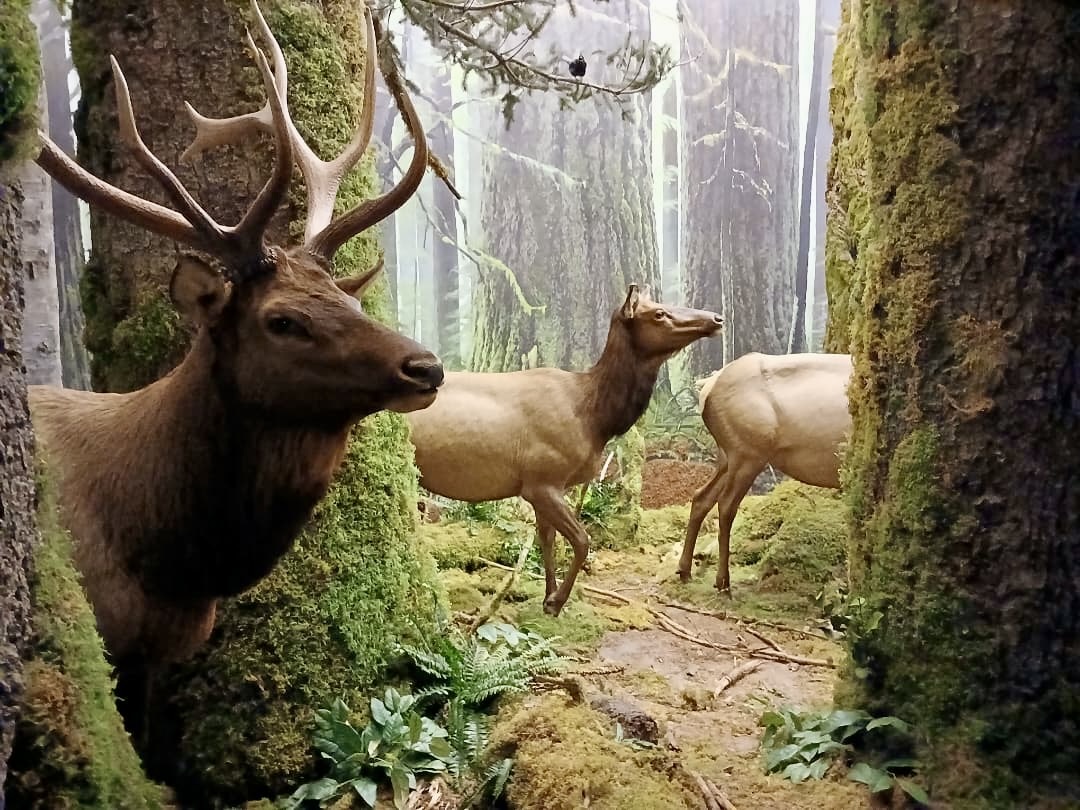
In the Living Forest Diorama at the Royal British Columbia Museum, a Roosevelt elk (Cervus canadensis roosevelti) bull is seen alongside two cows in his harem. The huge Sitka spruce trees in the dense ancient temperate rainforest habitat of this species are replicated in the foreground by the exhibit preparators and repeated in the background landscape painted by Jan Vriesen. Such old growth forests, found in the nutrient rich flood plains of coastal rivers on Vancouver Island, provide Roosevelt elk with critical foraging habitat.
Yet despite being a species of concern due to ever diminishing numbers, there is no adequate protection plan to prevent the destruction of the elk’s ancient rainforest habitat caused by relentless commercial logging. While this diorama reinforces the government’s tourism campaign promoting Vancouver Island as a nature paradise, the reality is something quite the opposite. For a visual narrative of the destruction of ancient forests, see Karen Wonders: Cathedral Grove.
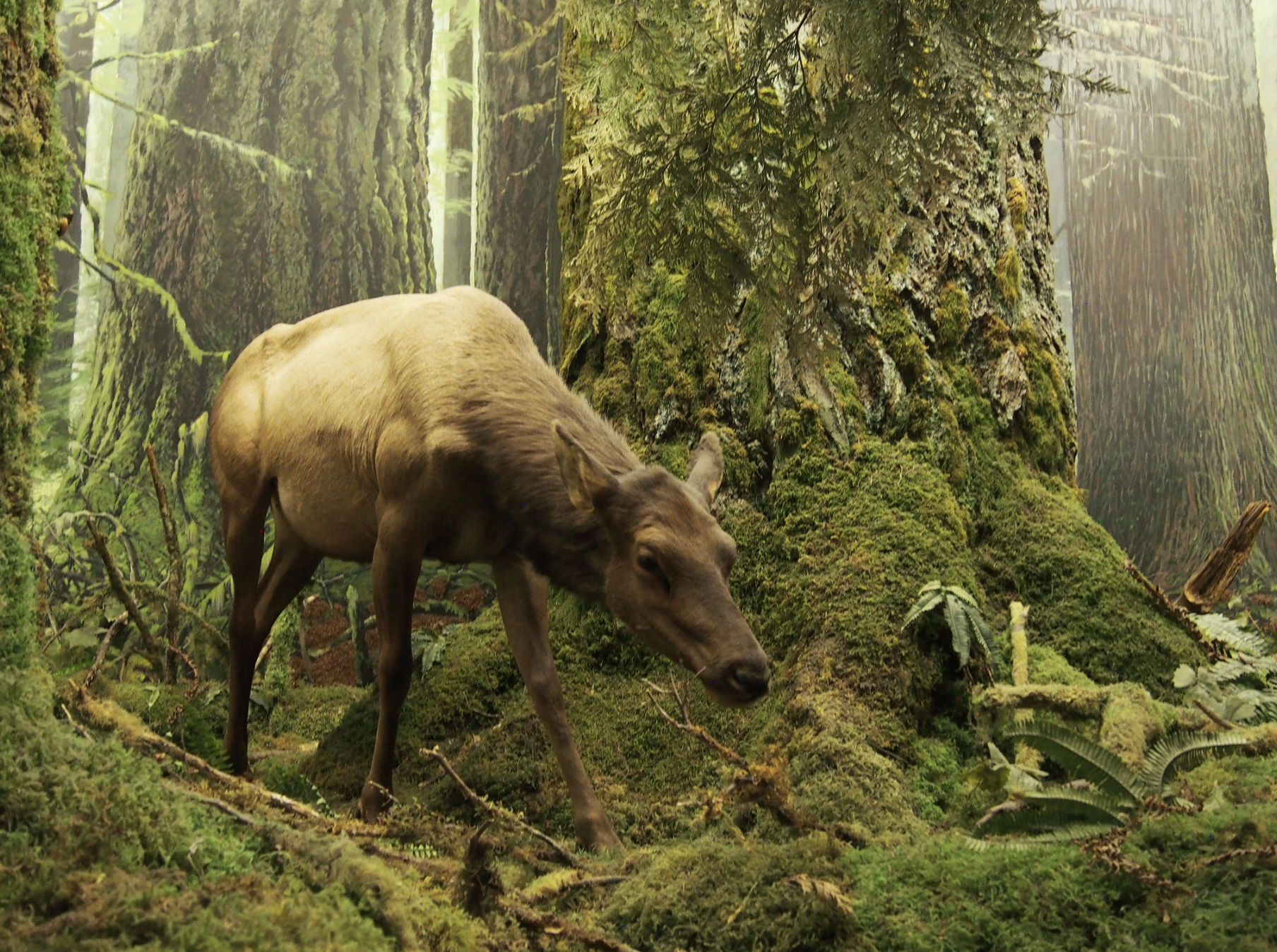
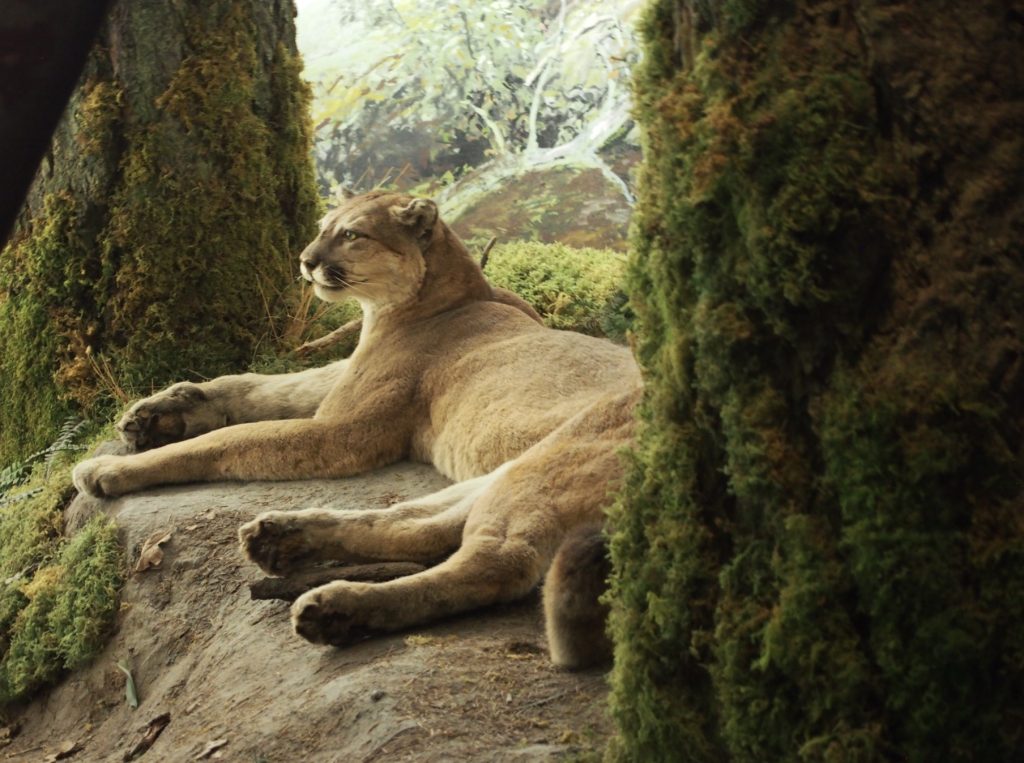
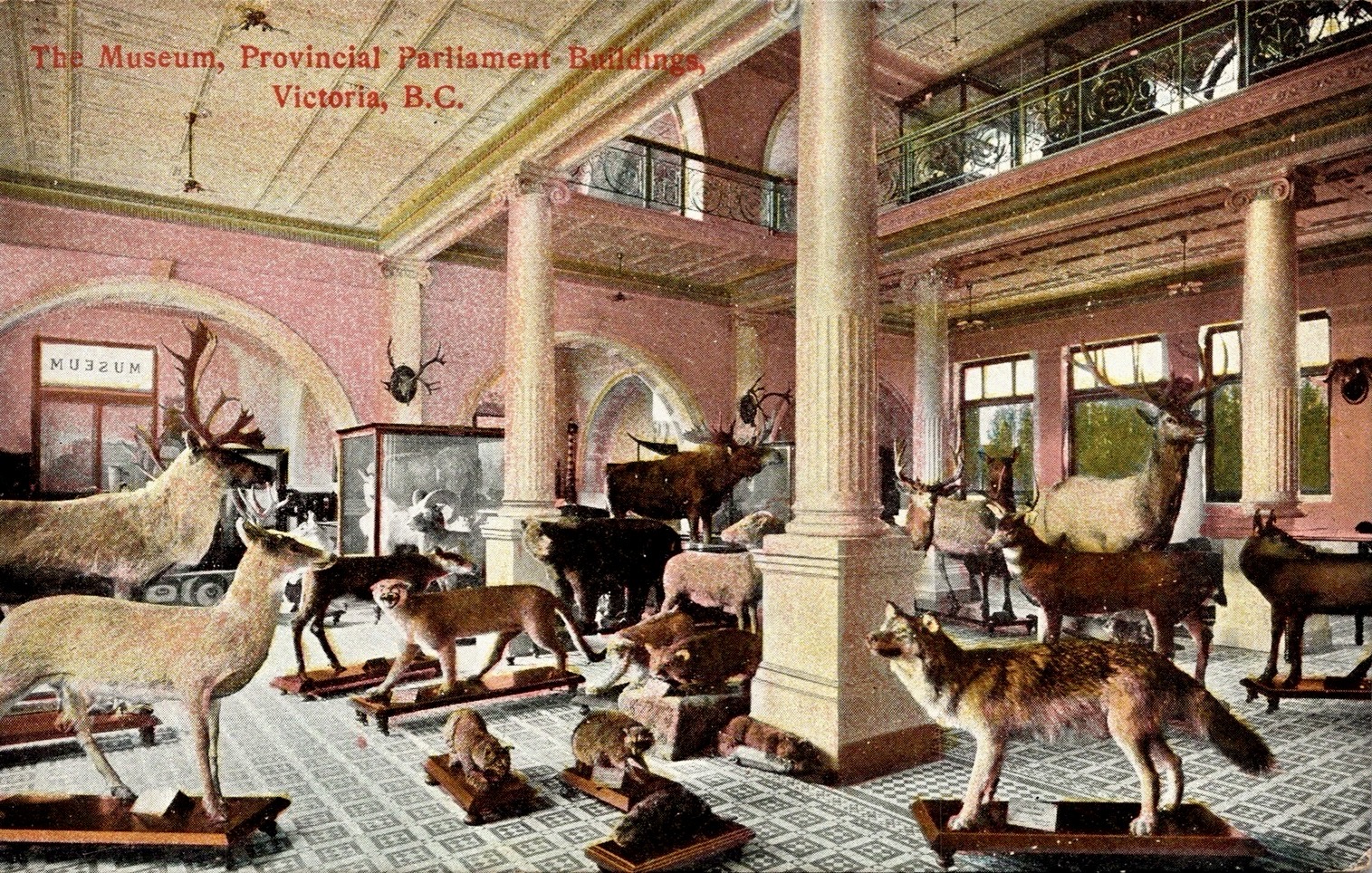
Big game species such as the Roosevelt elk were a major part of the earliest natural history collections of the British Columbia Provincial Museum which was founded in 1886. The first curator, John Fannin, was a taxidermist and a hunter naturalist who donated many of his own specimens to the museum. The museum’s mandate was to secure and preserve specimens illustrating the provincial natural history and to collect anthropological material relating to the Indigenous peoples of the province. A postcard shows off its exceptional big game collection and conventional mounts but Fannin had toured some international museums and learned about the new group method. After his visit to the Provincial Museum in 1898, the director of the American Museum of Natural History noted that special attention had been given to “groups of birds and mammals presented in their natural environments.”
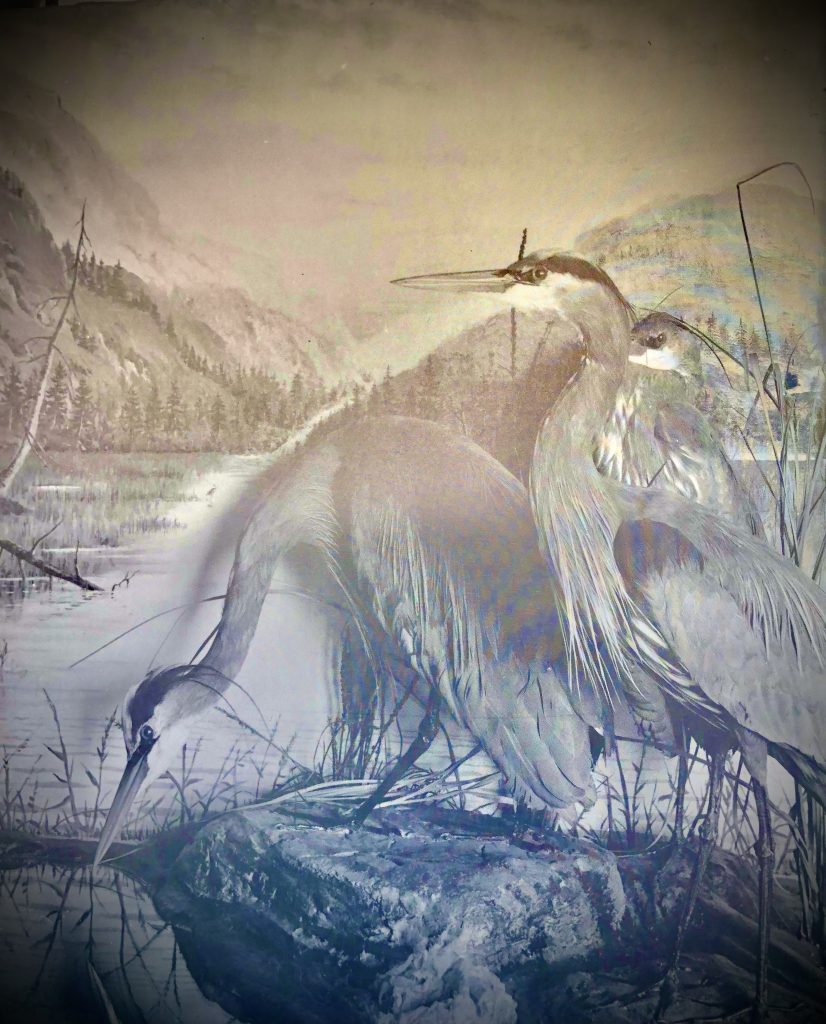
One of the earliest such “environmental” groups at the Provincial Museum was a pre 1900 display case of several egret specimens mounted in lifelike poses and arranged in a naturalistic foreground with a painted background landscape. The descriptive term “habitat group” was first used in the museum context in 1909 to refer to natural history displays that typically featured mounted zoological specimens arranged in a foreground that replicated their native surroundings (haunts or habitats) in the wild and included a landscape painting that had been done from field sketches of the actual geographical location.
The museological development of the habitat group (or diorama as it later came to be called) has varied in its didactic function, its style of presentation and the natural history objects that it displayed. When humans were represented (most commonly Indigenous people), the displays were called “life groups.”
Among the variations of habitat groups that evolved for specialized exhibition purposes were: simple groups (no background landscape); miniature groups (not life scale); composite groups (many species in one locale); serial groups (several continuous settings); systematic groups (related zoological species that inhabit different geographical areas); picturesque groups (theatrical in effect); trophy groups (big game specimens with record dimensions); narrative groups (portraying the relationships between species); and zonal groups (illustrating the effect of altitude and climatic zones on the evolution and distribution of plants and animals).
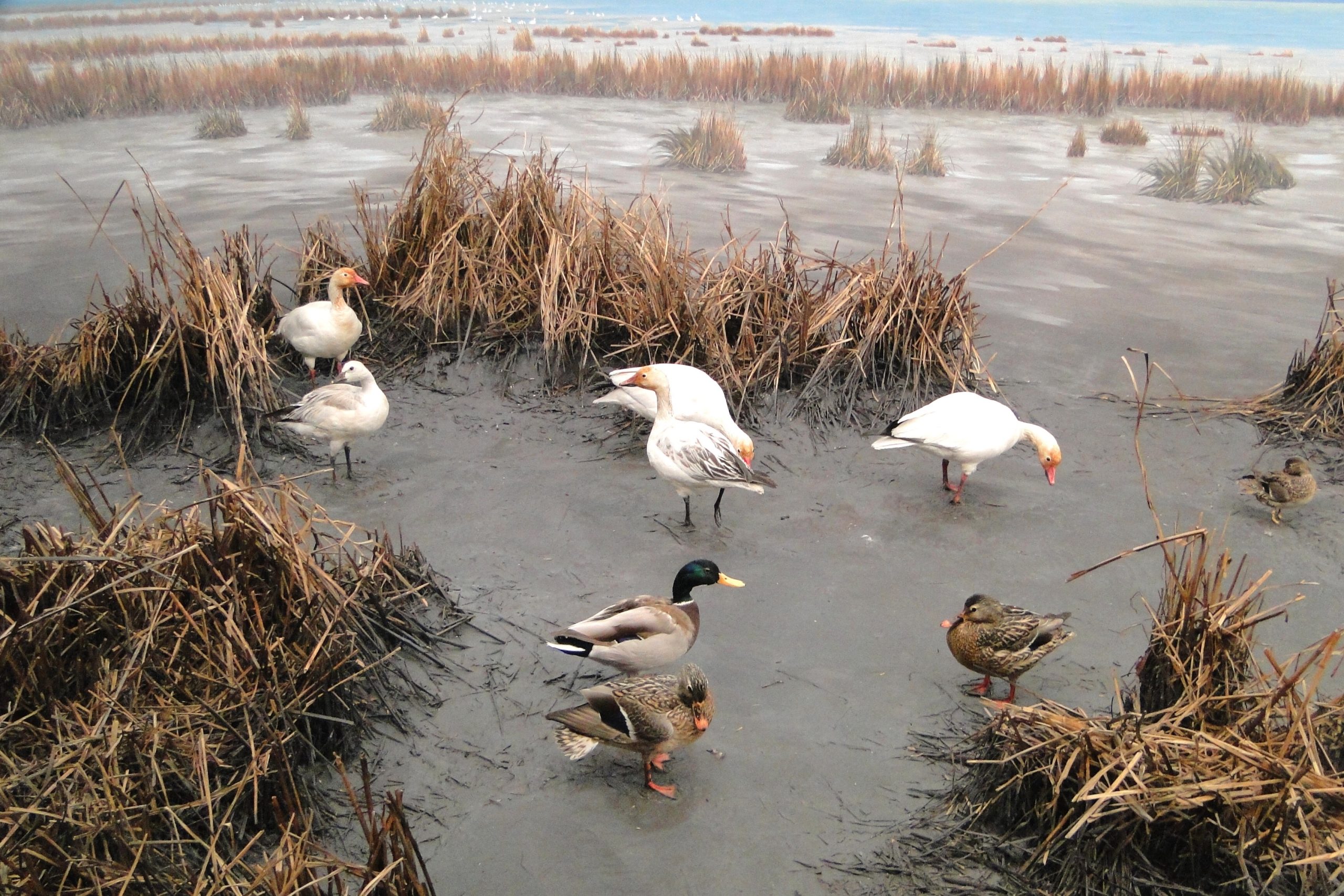
During the 20th century, a transition took place in museums across North America from simple groups in contained display cases to elaborate habitat dioramas with scientifically accurate foregrounds and panoramic landscapes. An example is the Seabirds Diorama at the Royal British Columbia Museum, created in 1978 by the exhibits staff and the American freelance mural painters Elma and Jerome Connolly.
The diorama features a coastal ecosystem near Triangle Island and includes a group of Snow Geese (Anser caerulescens) and Mallard ducks (Anas platyrhynchos) in a tidal marshland of mudflats and dried grasses. The diorama illustrates the natural history of the Fraser River Delta, a critical overwintering habitat for migrating species that is currently being destroyed by the industrial expansion of the Port of Vancouver, by heavily increasing oil tanker transport and by persistent pollution.
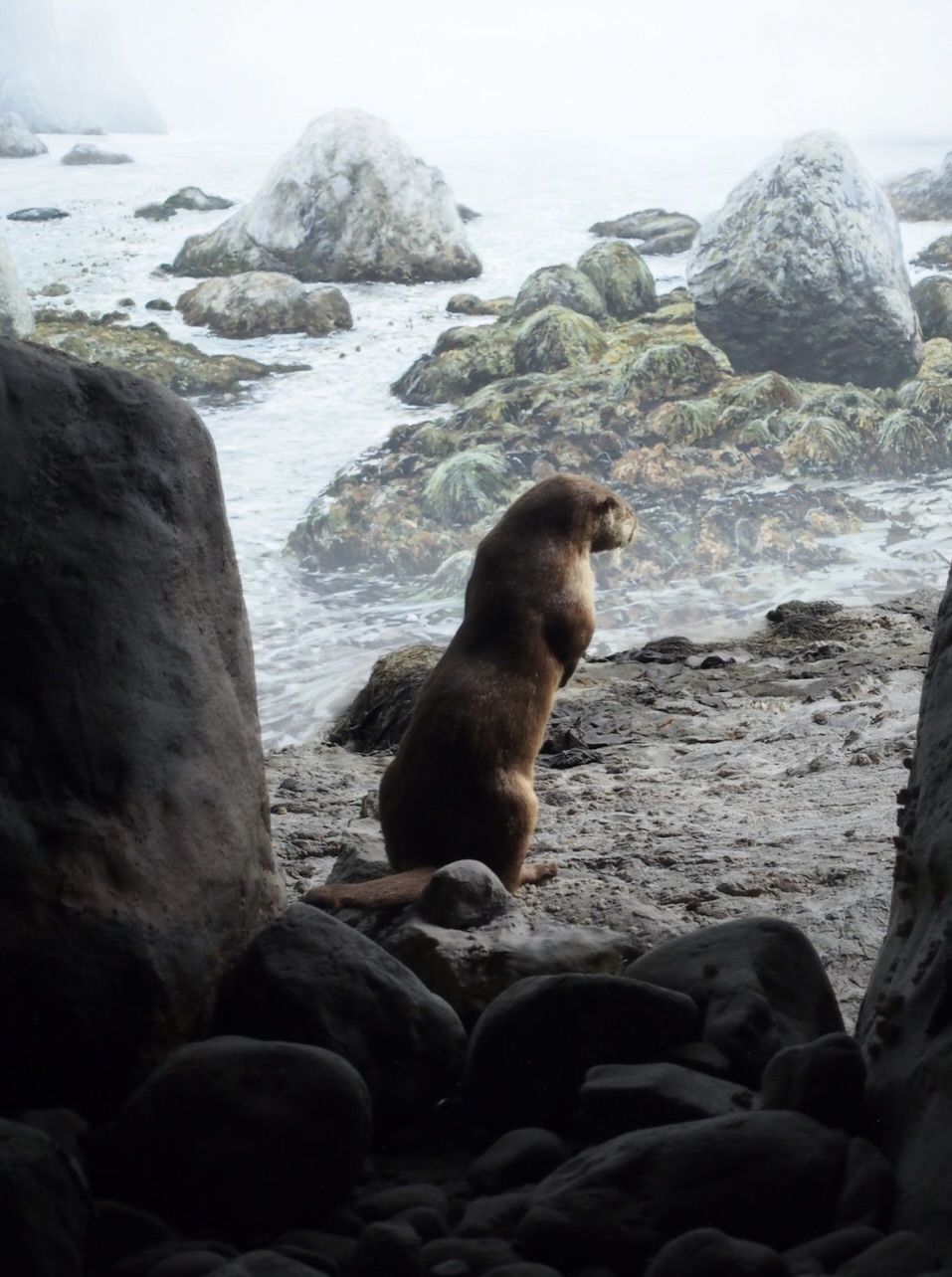
The natural history galleries at the Royal British Columbia Museum were designed to be “living landscapes” with lifelike taxidermy, real elements such as tide pools with live creatures, and audio visual technology. This innovative concept for creating an immersive experience of BC’s ecosystems was initiated by the talented French exhibition designer Jean Jacques Andre during the 1970s when a new building was being planned for the museum. Museum visitors can peer through a cave in the Living Ocean Diorama to catch a glimpse of a Sea Otter (Enhydra lutris) foraging for sea urchins. The rocks and foreshore were prepared by the exhibits staff and the background landscape was painted by Jan Vriesen.
Sea otters were named incorrectly by Linnaeus in 1758 and it was not until 1991 that the northern subspecies (seen here) was identified and named. The last Sea Otter was shot on Vancouver Island in 1929, leading to the extirpation of the species. This followed its near total extinction caused by the maritime fur trade of seals and sea otters in the 18th and 19th centuries. By 1900 Victoria had become the world centre for the industrial slaughter of these animals. They were saved from total eradication only because commercial hunting was banned in 1911 by the signing of the International Fur Seal Treaty. In the 1970s, the Sea Otter was reintroduced to Vancouver Island from Alaska and although it has recovered, it is still listed as a species of “Special Concern.”
The visual representation in taxidermic displays of seal, otter and walrus specimens in natural history museums at the turn of the century contributed to the public awareness of the threat of extinction faced by these species and spurred the campaign for their conservation.
Habitat dioramas can be described as a form of ecological theatre in which the animal actors star in an evolutionary play. But they also may function as mausoleums of a vanishing heritage, erected in museums for the education of an urban public alienated from its natural past. The rapid rate of species extinction and habitat degradation means that certain wildlife species and their native habitats in the wild may no longer exist except in their preserved museum context. This may be true even of the Living Ocean and Living Forest Dioramas.
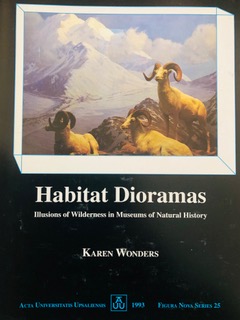
Much of this website’s historical content and many of its illustrations are from the book by Karen Wonders: Habitat Dioramas: Illusions of Wilderness in Museums of Natural History (Uppsala: 1993). The website further explores how these illusionistic scenarios are windows on nature, from intimate biological habitats to vast wilderness panoramas. In addition the website looks at how habitat dioramas reflect the way in which humans imagine themselves both apart and within the world of nature during a tumultuous century that spans from natural history narratives to evolutionary biology to the current age of epic biodiversity loss.