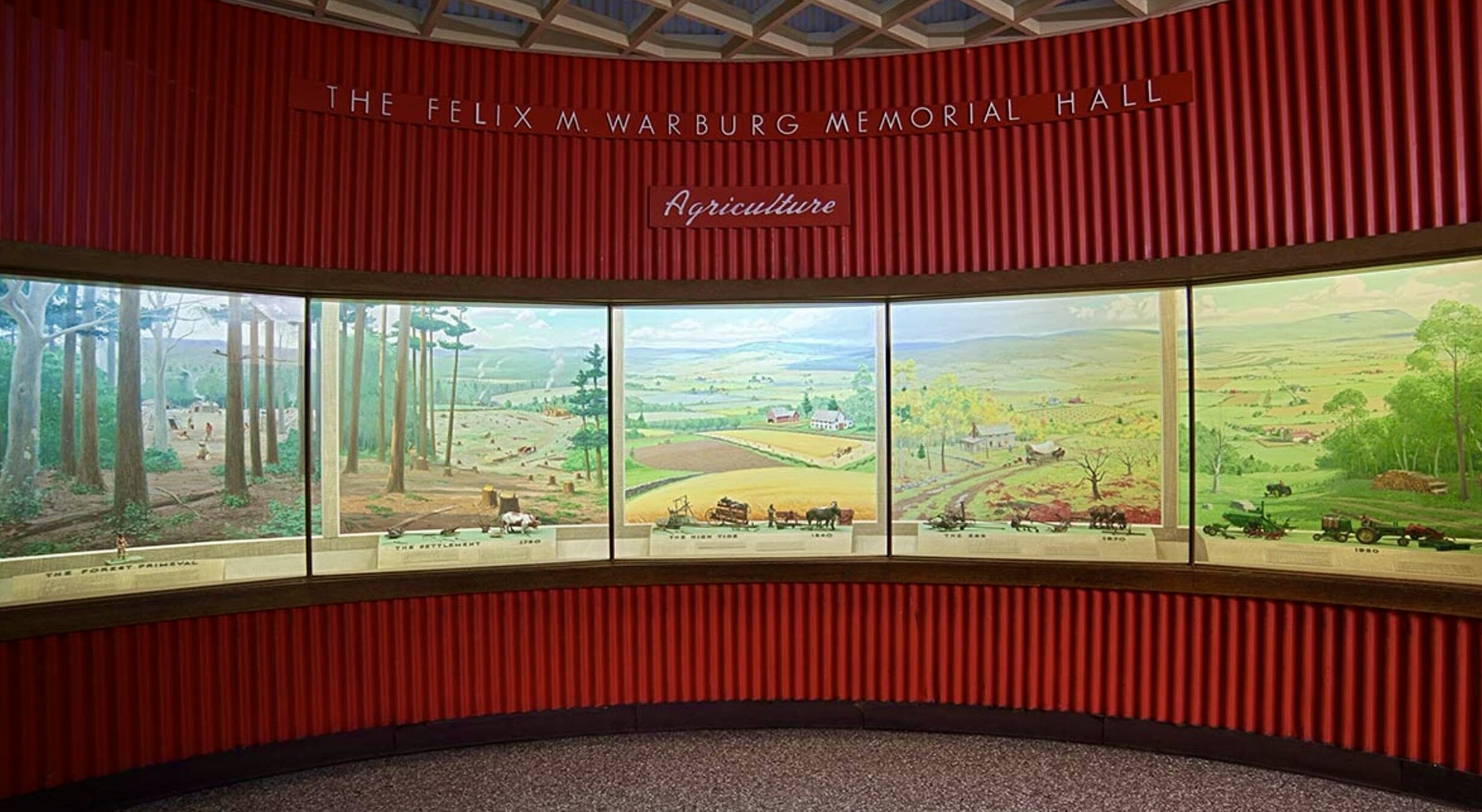
The Agriculture Diorama is a five part panorama of reduced scale vignettes set behind convex windows. It illustrates the historical transformation of a wilderness landscape from a primeval forest inhabited by Algonquin Indians “who did little to alter the conditions of nature,” to the degraded agricultural fields that resulted from European settlement. It is located in the Felix M. Warburg Memorial Hall of New York State Environment at the American Museum of Natural History. Opened in 1951, the hall was named after an influential Jewish American banker who was a museum trustee, secretary and donor. The curatorial mandate of the hall was to showcase the interaction between nature and humans using as a case study forty square miles in the Pine Plains area of Dutchess County, 90 miles north of New York.
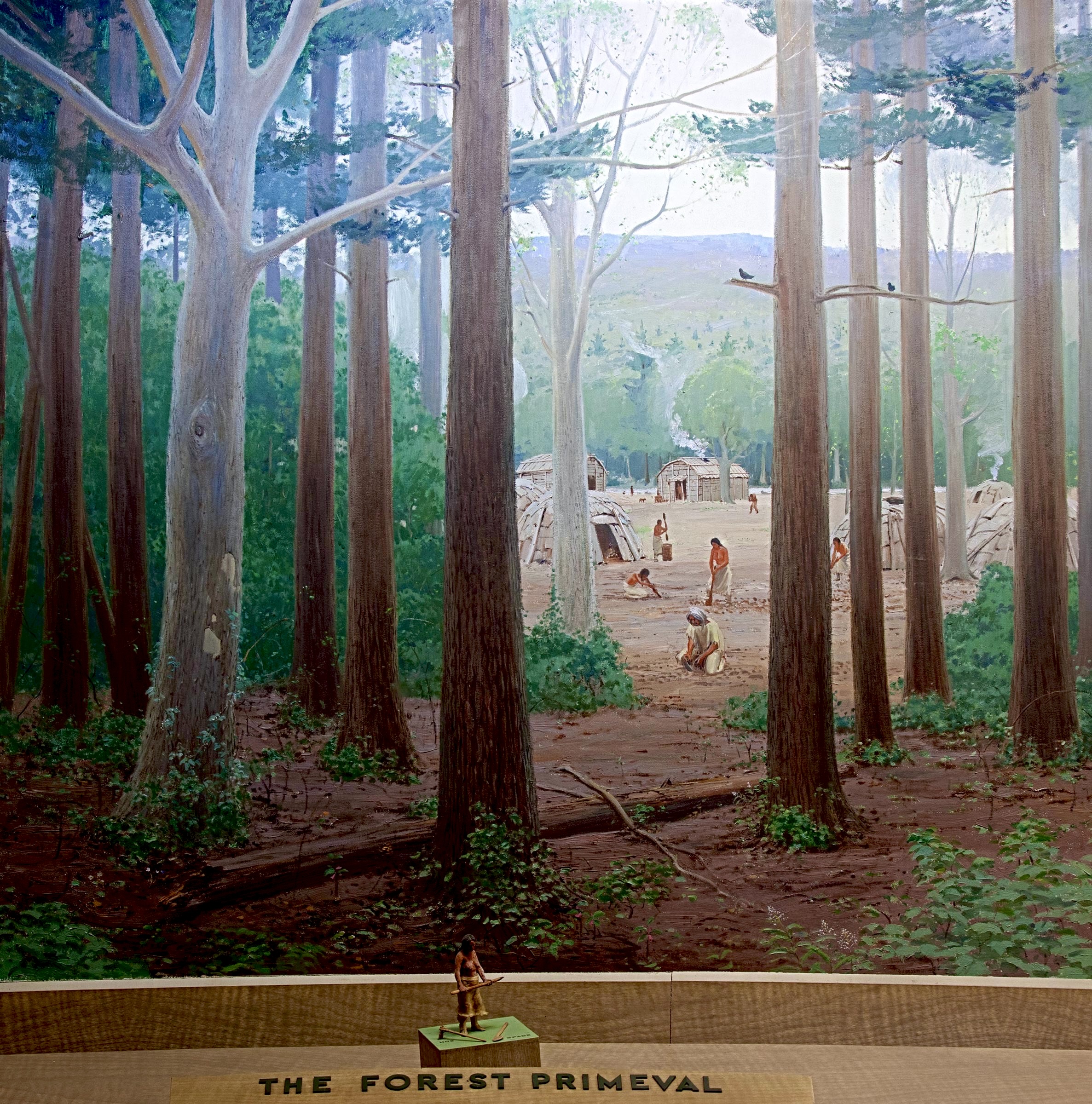
A miniature model of an Indigenous person appears in front of “The Forest Primeval” section on the left side of the “Agriculture Diorama” and on the right side there are models of farm equipment. These models are part of the explanatory panel in front of the exhibit that serves a didactic function. The new exhibit philosophy of the Warburg Hall was controversial in its attempt to present the natural world as a living landscape that included the human environmental impact.
Habitat dioramas are “in situ” exhibitions, a form of ecological theatre in which many complex elements produce for the viewer an illusion of the natural world in place. Not only are the objects on display in a diorama inseparable from their surroundings in the larger ecosystem being represented, but the diorama itself is dependent on a physical locality within a specific architecturally designed museum alcove. Thus the diorama’s in situ quality is basic not only to the actual geographic site and ecosystem being replicated in the display but to the curatorial intention to both preserve the scientific facts and to convey the relational integrity of a place. Historically, this approach was central to the exhibition philosophy of institutions such as the American Museum of Natural History, where early 20th century curators sought to overcome the limitations of conventional taxonomic displays.
The exhibition policies that individual museum directors chose to instigate was critical to whether habitat dioramas were undertaken or not given the considerable cost and commitment that these elaborate in situ displays required. And once the dioramas were built, the issue of preservation became essential as the dioramas aged. In addition, as scientific knowledge evolved and exhibit philosophies changed, habitat dioramas often became the subject of controversy regarding their pedagogical function within the natural history museum.
The landscape concept of the Warburg Hall originated with Albert E. Parr, an oceanographer and ichthyologist who served as director of the American Museum of Natural History from 1942 to 1959. “Heretofore, our exhibits have shown undisturbed nature,” Parr explained, “Now, for the first time on a considerable scale, we introduce man as part of nature, and show nature as his environment. Man is so important that nature without his influence will soon be a thing of the past.”
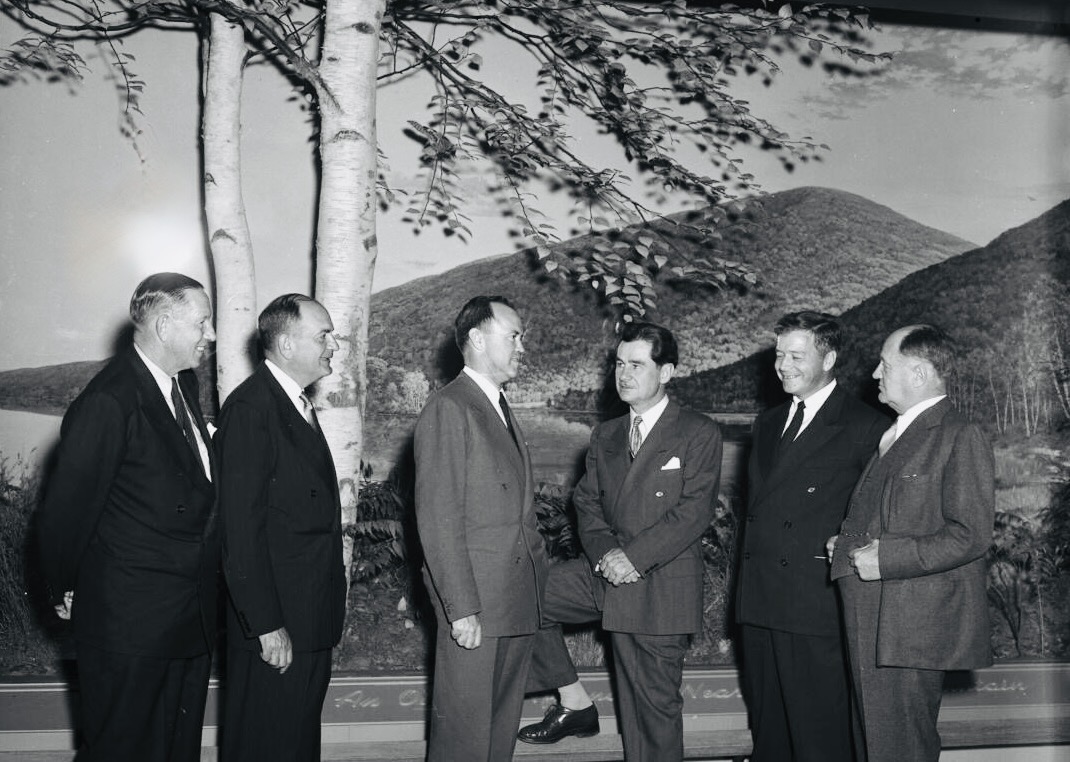
When the Warburg Hall opened in May 1951, it was a grand occasion attended by hundreds of guests and various public figures served by “trim maids who passed trays of cocktails and canapés.” A press photo taken in the Warburg Hall shows the distinguished Museum president F. Trubee Davison (fourth from the right) talking with Frederick M. Warburg, a prominent trustee and donor like his father, to whom the Hall was dedicated. Museum director Albert E. Parr is second from the right. A review in the New Yorker, praised the new landscape hall as an “Ecological Exhibit” that “makes humanity part of the habitat.”
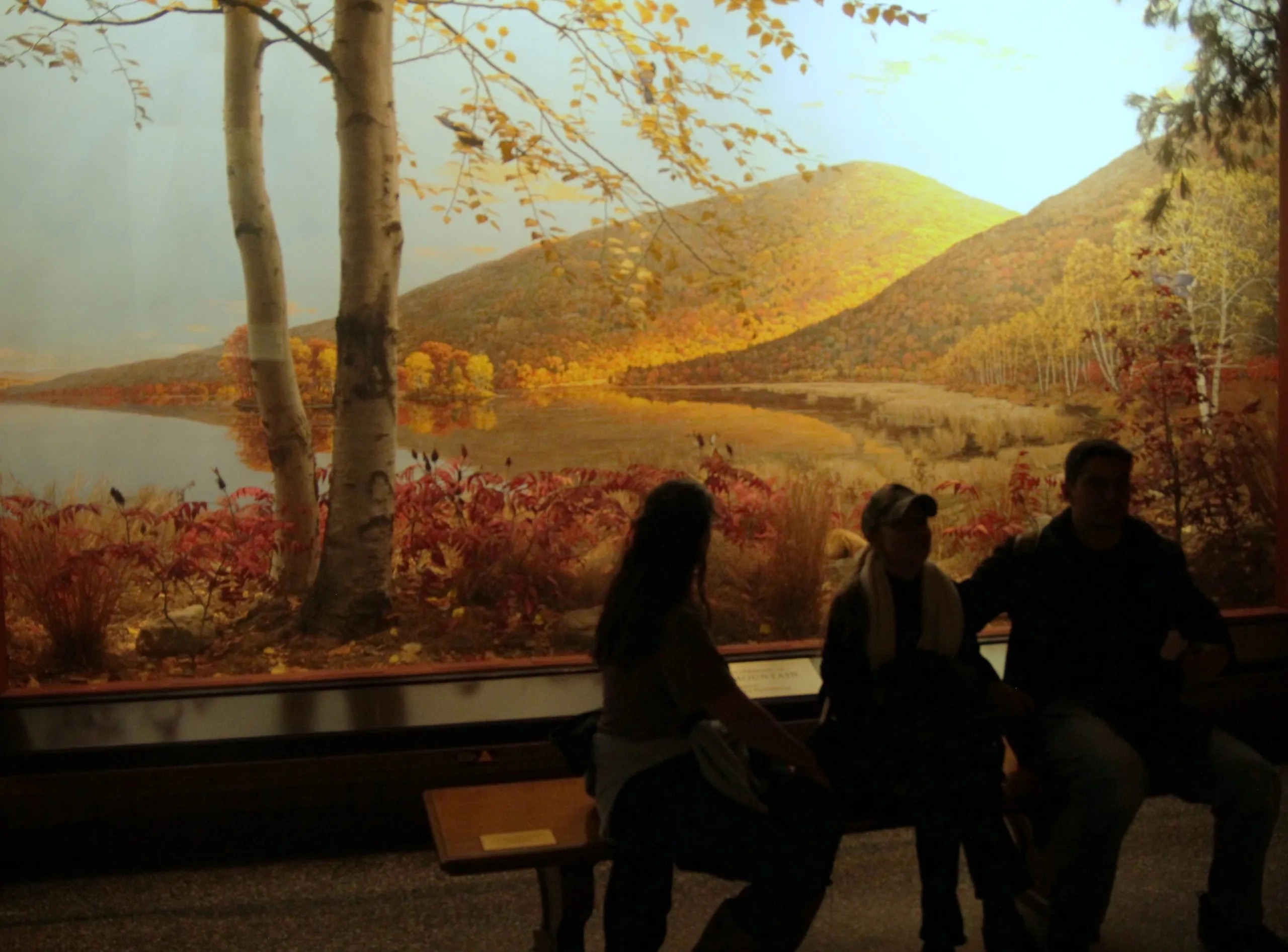
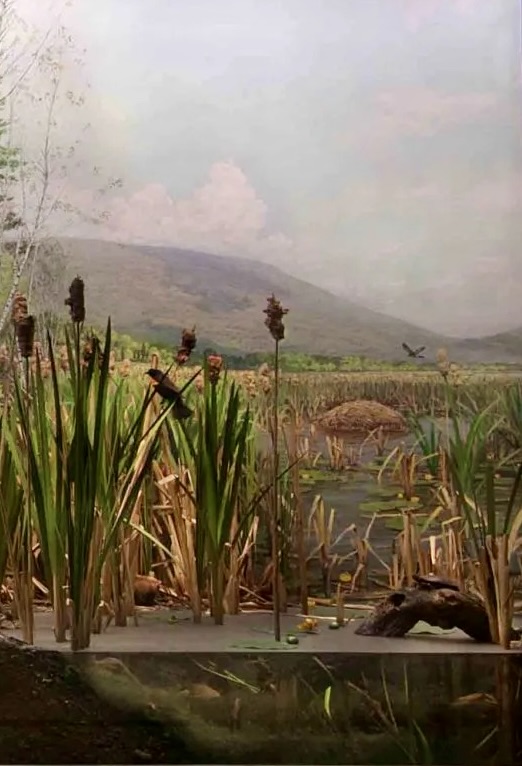
Seen behind the men posed in the museum press photo is the habitat diorama titled “An October Afternoon Near Stissing Mountain.” Just as it did some 75 years ago, this diorama continues to usher in visitors and remains a star attraction, undiminished by time. Here the visitor can repose on a bench and enjoy the illusionistic mountain vista in its full autumn splendour just as one might do in the real world.
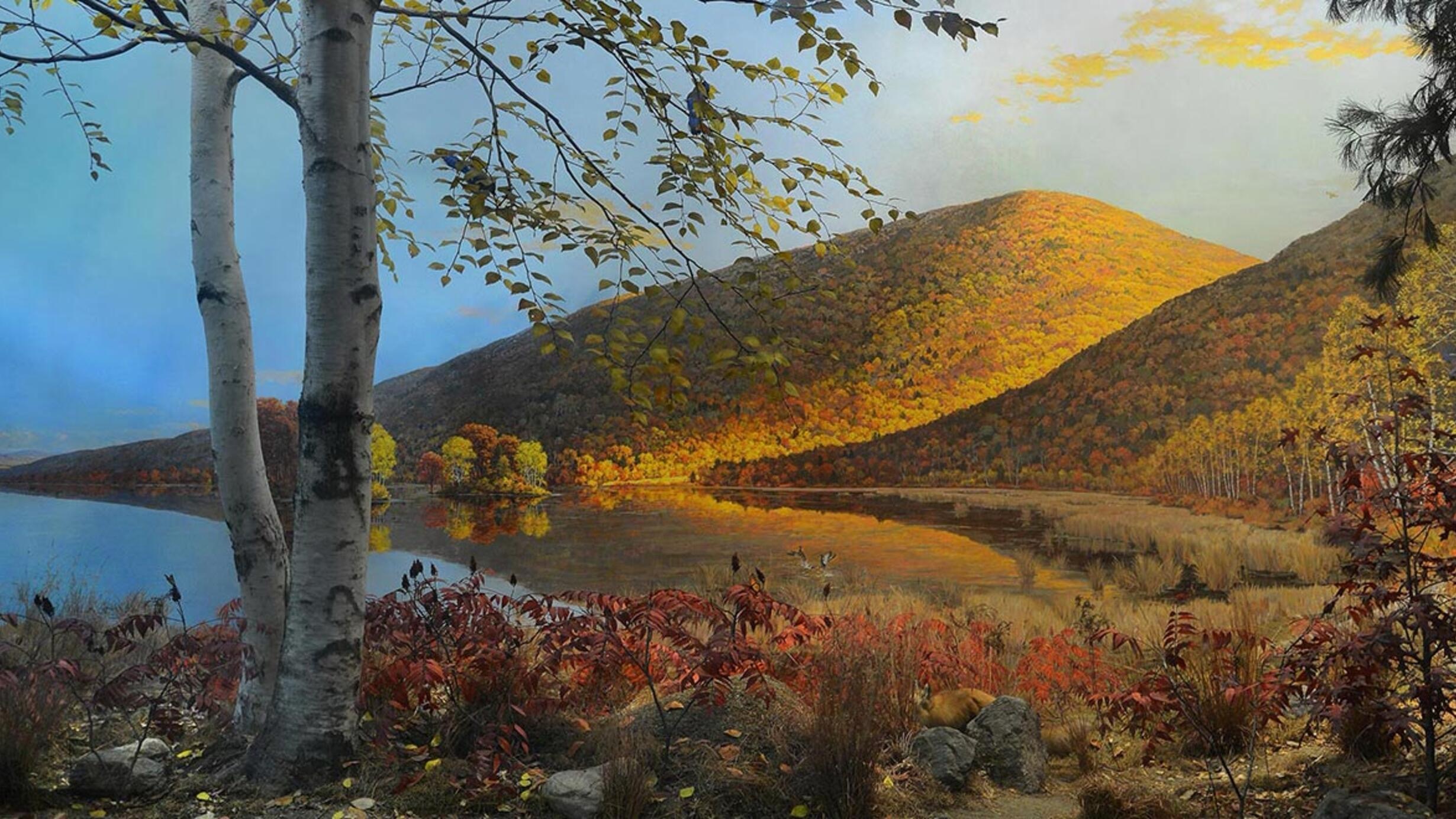
Over the years the Stissing Mountain Diorama has continued to invite the public to contemplate the beauty of the landmark site and at the same time appreciate its biological richness and geological past as an ecosystem. A sign reminds the viewer: “Every living thing, over a long period of time, has become adjusted to survive in a particular habitat.” While A. E. Parr paid tribute to the attraction of such dioramas, he believed that displays must also serve an educational or story-telling function and his primary motivation in the Warburg Hall was to present scientific information in a stimulating visual context.
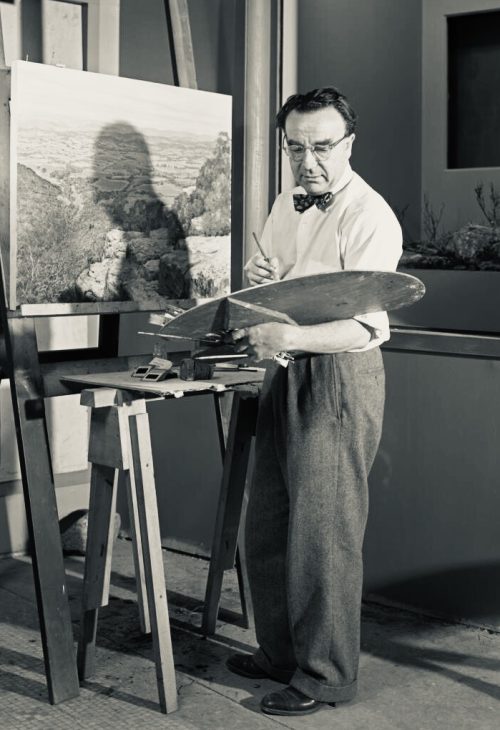
The background painter of the Stissing Mountain Diorama was Matthew Kalmenoff (1905–1986), an accomplished natural history artist and paleontological illustrator, employed at the American Museum of Natural History from the 1950s through the early 1970s. His work can be found in the Hall of North American Forests, the renovated Hall of North American Birds, and in the Small Mammal Corridor of the Hall of North American Mammals. Like his mentor, James Perry Wilson, Kalmenoff often visited the actual geographic sites depicted in the dioramas and made in situ field sketches to capture the precise colour of the light and atmosphere.
According to museum president F. Trubee Davison, who led the institution through a period of expansion from 1933 to 1951, “The study of natural history is, literally, the study of life – life as it was, as it is, and as it will be.” The application of science and art to study nature is manifested in the diorama idiom. As a discipline, natural history links the past, present and future into a single narrative of life and in a sense the habitat diorama embodies a similar narrative while justifying the museum’s ambition to function as an archive, laboratory and pedagogical guide.
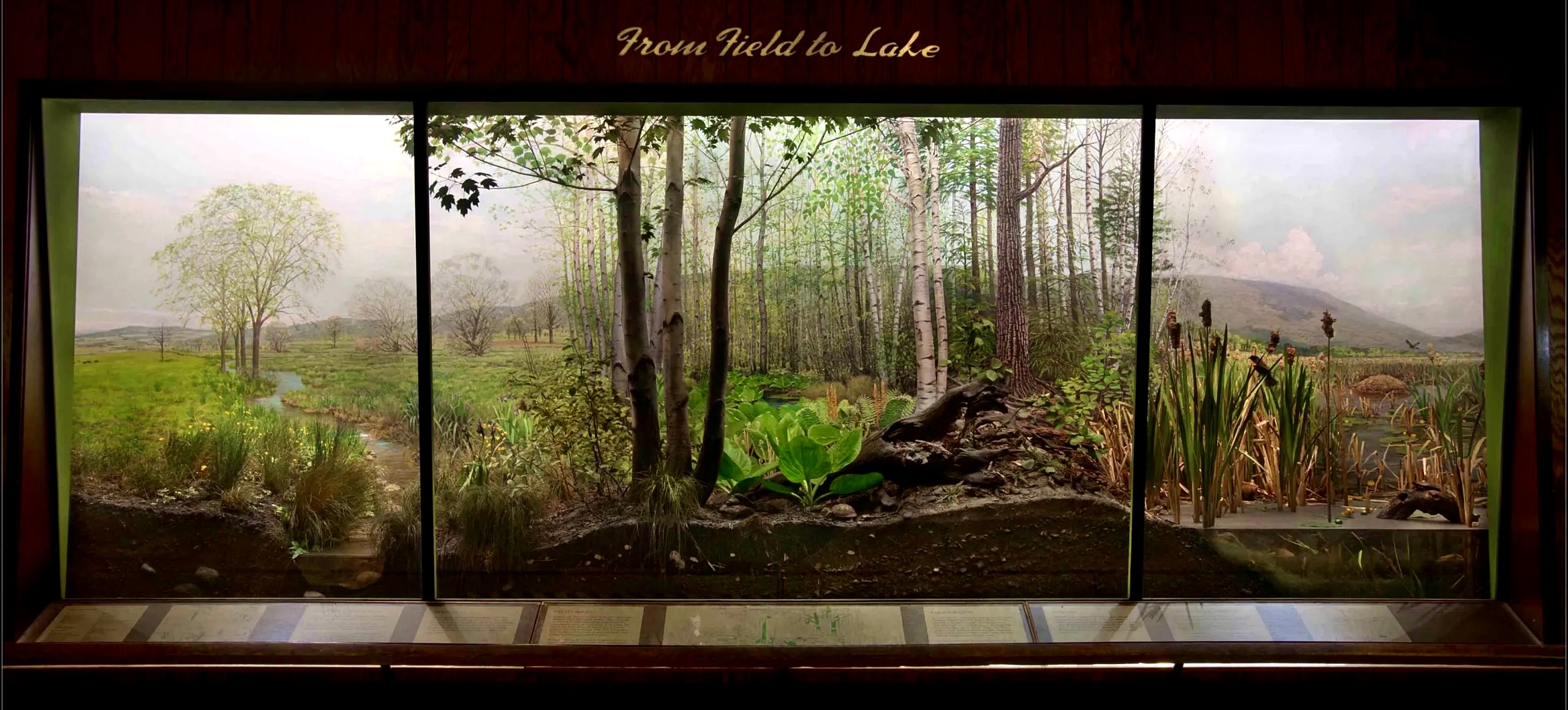
A second diorama in the Warburg Hall, “From Field to Lake,” illustrates the evolution of the landscape that is represented by six habitats: lake, marsh, woods, swamp, field and stream. These function as a timeline of a changing environment over thousands of years. The plants and animals of each scene are represented both above and below the ground and are labeled in didactic panels in front of the display. This complicated exhibit was produced by a collaborative team of scientific consultants and exhibition department staff including background painters Robert Kane and Raymond deLucia. Foreground artist and preparator George Peterson led the task of meticulously crafting wax and plastic replicas of plants like the Skunk Cabbage, Cinnamon Fern and Yellow Pond Lily.
Rather than display singular objects or create illusionistic habitat dioramas of singular and pristine in situ wilderness sites, the curatorial mandate in the Warburg Hall was to illustrate the ecological processes of seasonal and natural cycles, of plant and animal life, of soil composition and decay, of forest and wetland ecosystems and so on and relate this scientific knowledge to human caused degradation and extinction. The goal was to teach museum visitors about the need for conservation.
Albert E. Parr viewed the habitat diorama as a staged narrative with animals typically taking the leading role. Because this type of classic diorama did not include humans, he believed it to be an inadequate display form to address the environmental problems of modern society which he believed natural history museums had a moral obligation to do. While the human centred exhibit philosophy of the Warburg Hall was Parr’s solution to this problem, it is ironic that the the Stissing Mountain Diorama, which was envisaged as a picturesque introduction to the hall’s didactic ecological displays, has best endured the passing of time and still evokes an aesthetic pleasure in the beauty of undisturbed nature.
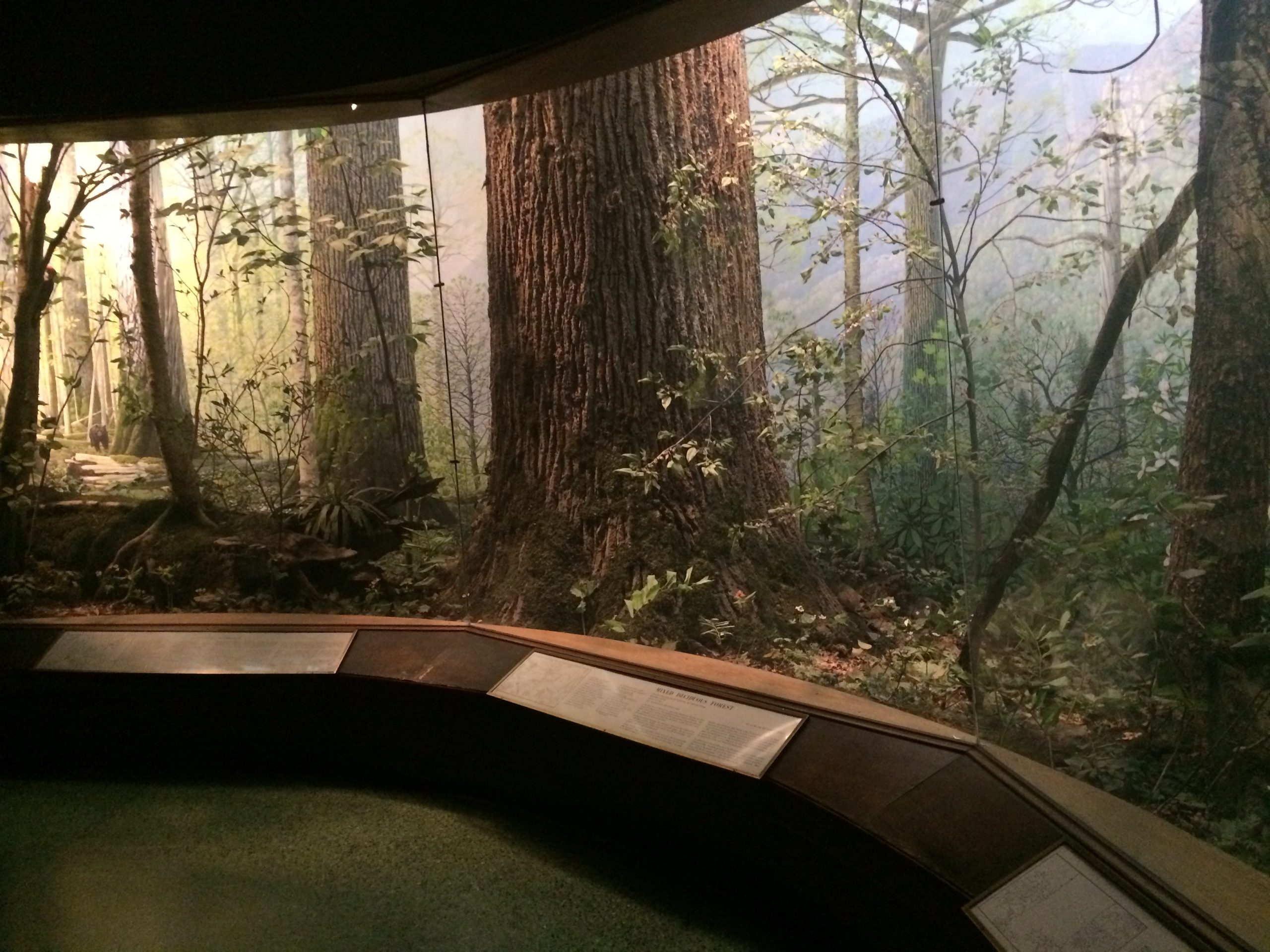
At the end of the Warburg Hall, museum visitors enter the Hall of North American Forests, which opened in 1958 and was also planned and created during the tenure of Albert E. Parr. His directive to illustrate specific botanical and geological principles rather than simply replicate scenic vistas is evident in part in the “Mixed Deciduous Forest Diorama,” where didactic panels are positioned in front of the display. Yet it is the overall illusion of the forest scene that attracts and impresses museum visitors. Parr recognized this despite his ideological opposition to dioramas and discussed the need to create a “vision of transcendence,” whereby the viewer looks through a window into the natural world. The carefully constructed boundary between specimen, foreground, and painted landscape encourages visitors to experience the display as a continuous space rather than as an assemblage of museum objects. In this sense, the diorama achieves the kind of imaginative encounter with nature that Parr sought to preserve, even as he questioned its scientific value.
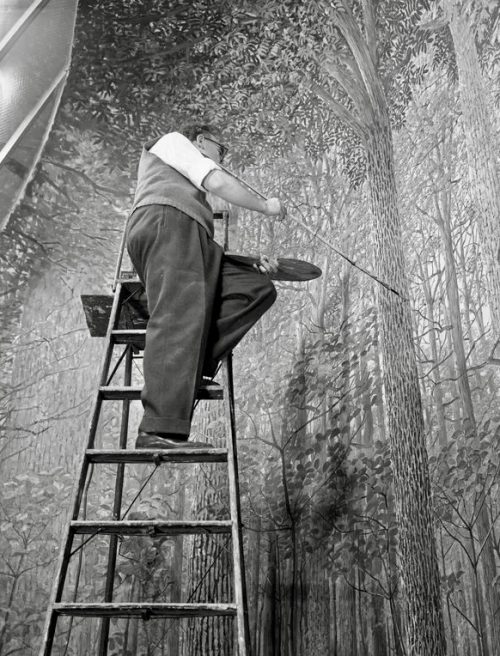
The background of the “Mixed Deciduous Forest Diorama” was painted by Matthew Kalmenoff. Also known as the Great Smoky Mountains Diorama, the scene represents a southern Appalachian hardwood forest. A photograph of Kalmenoff painting the foliage of the diorama background with an extra long brush shows how the finely detailed surface is distorted at the top of the curved museum alcove where it is invisible to the viewer yet adds to the illusion of space.
In situ or field based observations and documentation of the site in nature to be reproduced in the museum are essential to the diorama background painters and foreground preparators as well as collections on site of both organic and non organic material. The most scientifically accurate habitat dioramas replicate entire ecosystems into spacial models from the data obtained on museum expeditions. Careful empirical observations on the geography, morphology, climate, vegetation and animals are made, alongside with the collection of specimens. In this sense, the diorama participates in the classificatory and documentary aims of the natural history museum, extending them from taxonomical hierarchies toward ecological relationships.
The resulting scene transforms empirical field knowledge of natural history into a spatial and visual model of a biological ecosystem, bringing together observation, collection, classification, and artistic representation. What appears to the visitor as a seamless window onto nature is therefore the synthesis of extensive scientific expertise by the museum curators and artistic skill by the preparation teams and landscape painters.