
The Coastal Redwood Habitat Diorama is in the Hall of North American Forests, which opened in 1958 at the American Museum of Natural History. It features the redwood tree (Sequoia sempervirens), among the tallest and longest lived trees on Earth. Towering redwood trunks, deep shade from the overhead canopy, and lush understory vegetation are represented, along with two Indigenous inhabitants of the forest grove, seen in the distance harvesting planks from a fallen tree.
Although the diorama shell has a depth of only seven feet and a viewing window just two feet wide, an astonishing illusion of deep space and vertical height was created by background artist James Perry Wilson (1889 – 1976) and foreground preparator Tomas Newberry. Wilson is widely considered one of the greatest background painters in the history of museum exhibition, in part for his innovative use of grid based forced perspective. He worked at the American Museum of Natural History from the 1930s through the 1950s, producing dozens of backgrounds distinguished by exacting perspective, atmospheric realism, and carefully calibrated colour values.
The Coastal Redwood Habitat Diorama was based on field expeditions to a specific site in Humboldt County, California, where specimens were collected and scientific and artistic observations made. Artists and preparators photographed the landscape, painted plein-air studies, collected bark, plants, and other foreground materials, and recorded light conditions and atmospheric effects. This process, combining direct field observation with studio reconstruction, was fundamental to the diorama tradition at the American Museum of Natural History. The coastal redwood display represents a specific geographic ecosystem, the grandeur of North American forests, and ecological relationships among plants, animals, and humans.
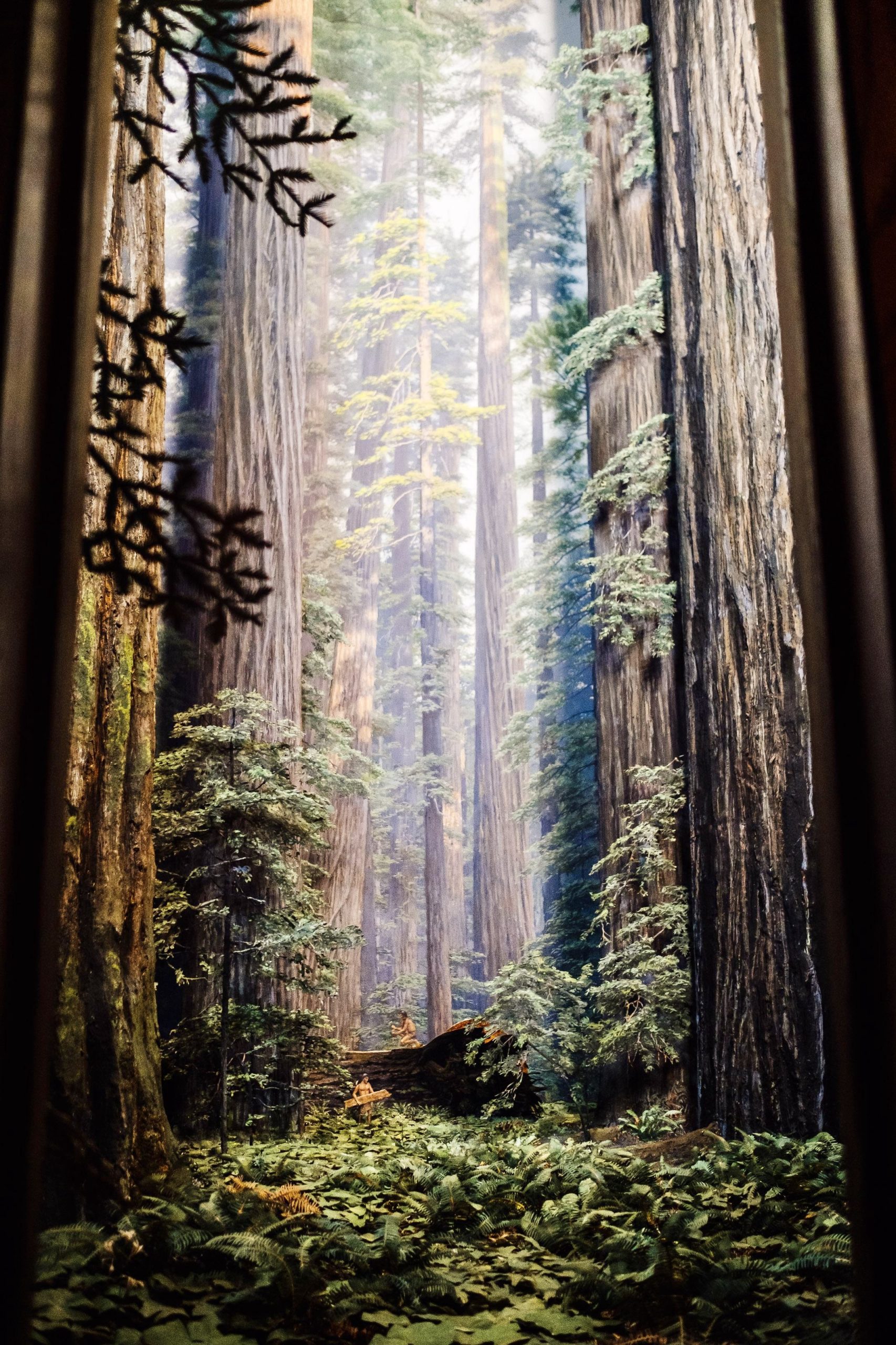
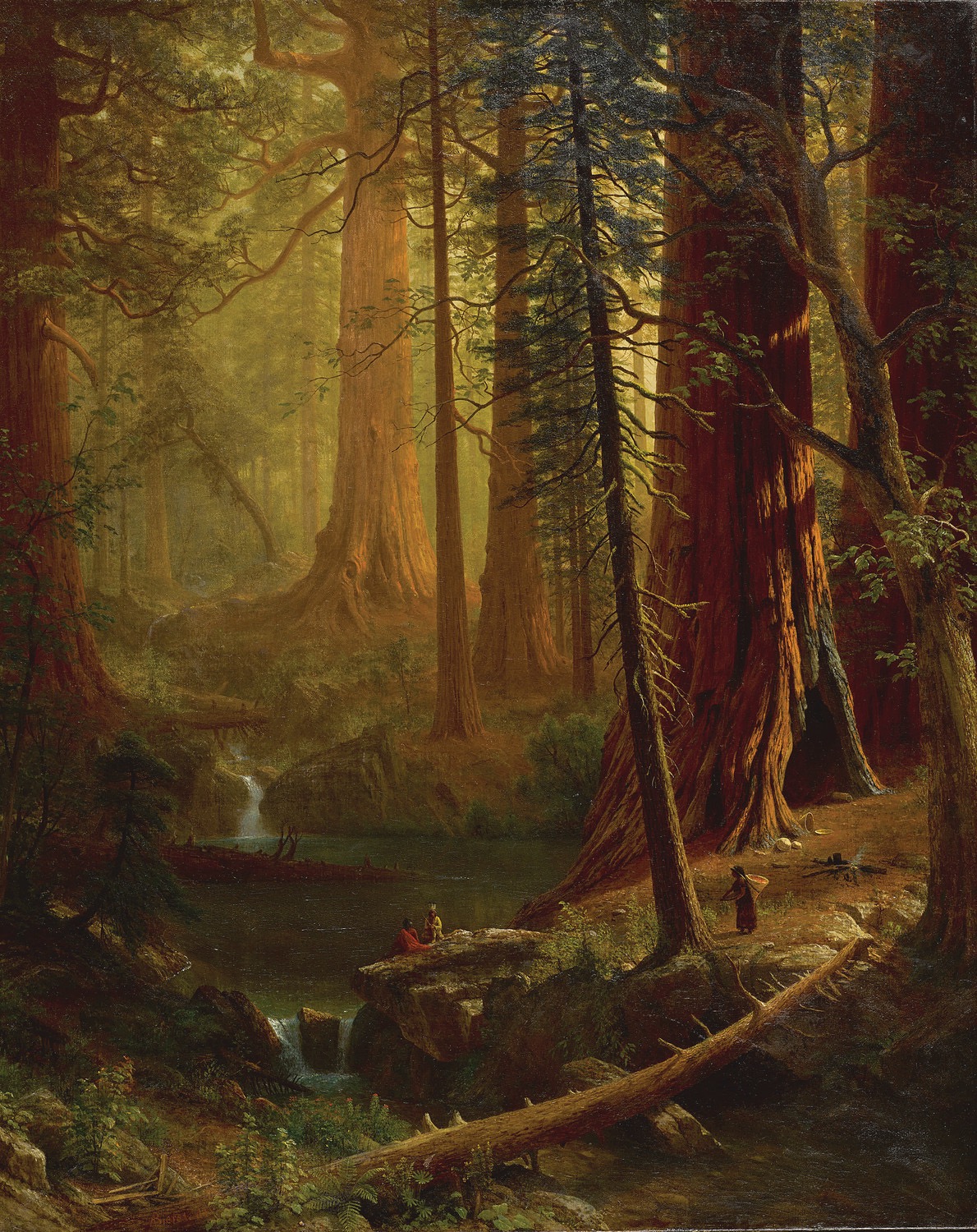
Habitat dioramas are presented as objective reconstructions of nature, as exact ecological scenes derived from field observation and scientific knowledge. Importantly, the diorama scene is also shaped by aesthetic conventions, cultural assumptions, and historical choices, thereby exposing a fundamental truth about history itself: even when based on evidence, representations of the past are inevitably filtered through human ideas about nature. Apart from its scientific mandate, the diorama conveys a romantic view of nature as sublime wilderness, the ancient forest grove as a cathedral of nature, and Indigenous people as symbolic inhabitants of this primeval world.
The narrative theme, iconography, and composition of the diorama can be seen in the 1874 painting “Giant Redwood Trees of California,” by Albert Bierstadt (1830 – 1902). Like Wilson, Bierstadt carefully documented his subject by travelling to the redwood groves and making pleinair sketches. He too situated Indigenous figures within the scene to convey the scale of the enormous trees and impart a sense of primordial timelessness. Both forms of representation also embody a national identification with big trees as spectacular natural monuments unique to America. Yet behind these scenes of picturesque wilderness lies the history of the mass killing and dispossession of Indigenous inhabitants and the commercial destruction of the redwood forests following the arrival of settlers in California. Thus, both painting and diorama reveal a culture capable of destroying irreplaceable ancient trees while simultaneously memorializing them through aesthetic reverence.
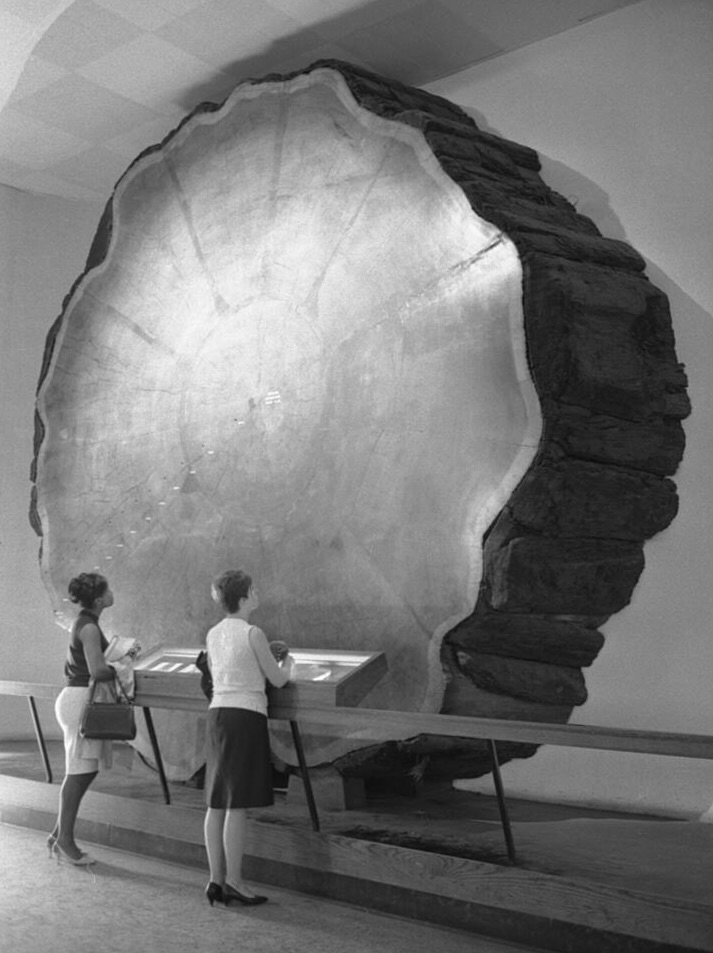
Another species of big tree native to California is on view at the entrance to the Hall of North American Forests. The famous “Giant Sequoia” display is a 16 foot cross section of a 1,400 year old sequoia (Sequoiadendron giganteum) that weighs 9 tons and has 1,342 annual rings with markers for major historical events; its life history. Known as the Mark Twain Tree, it began growing about 550 CE and was 300 feet high when it was felled in 1891 during an era when ruthless logging was making the Sequoia extinct. Because of the symmetrical proportions of the Mark Twain Tree, “one of the most perfect trees in the grove,” it was selected to provide cross sections for public display at the American Museum of Natural History and the Natural History Museum in London: “We can begin to picture in our imagination the span of life that has been enjoyed by this hardy forest Methuselah,” A Tree’s Life Through Thirteen Centuries.
The rare and ancient redwood and sequoia groves of California were lauded in popular literature as America’s cathedrals of nature at the same time that they were being exterminated for roof shingles and planks by the logging industry. For a visual narrative of how big tree iconography shifted from sacred symbol to industrial stumpage, see the website by Karen Wonders: Cathedral Grove.
The domination of one view of nature over another is revealed in the history of the habitat diorama. Like the cut down ancient tree giants that were memorialized in photographs and displayed in museums as trophies of human hegemony, big game heads and horns were often similarly presented as symbols of masculinity and conquest in museum dioramas and interwoven with national identity.
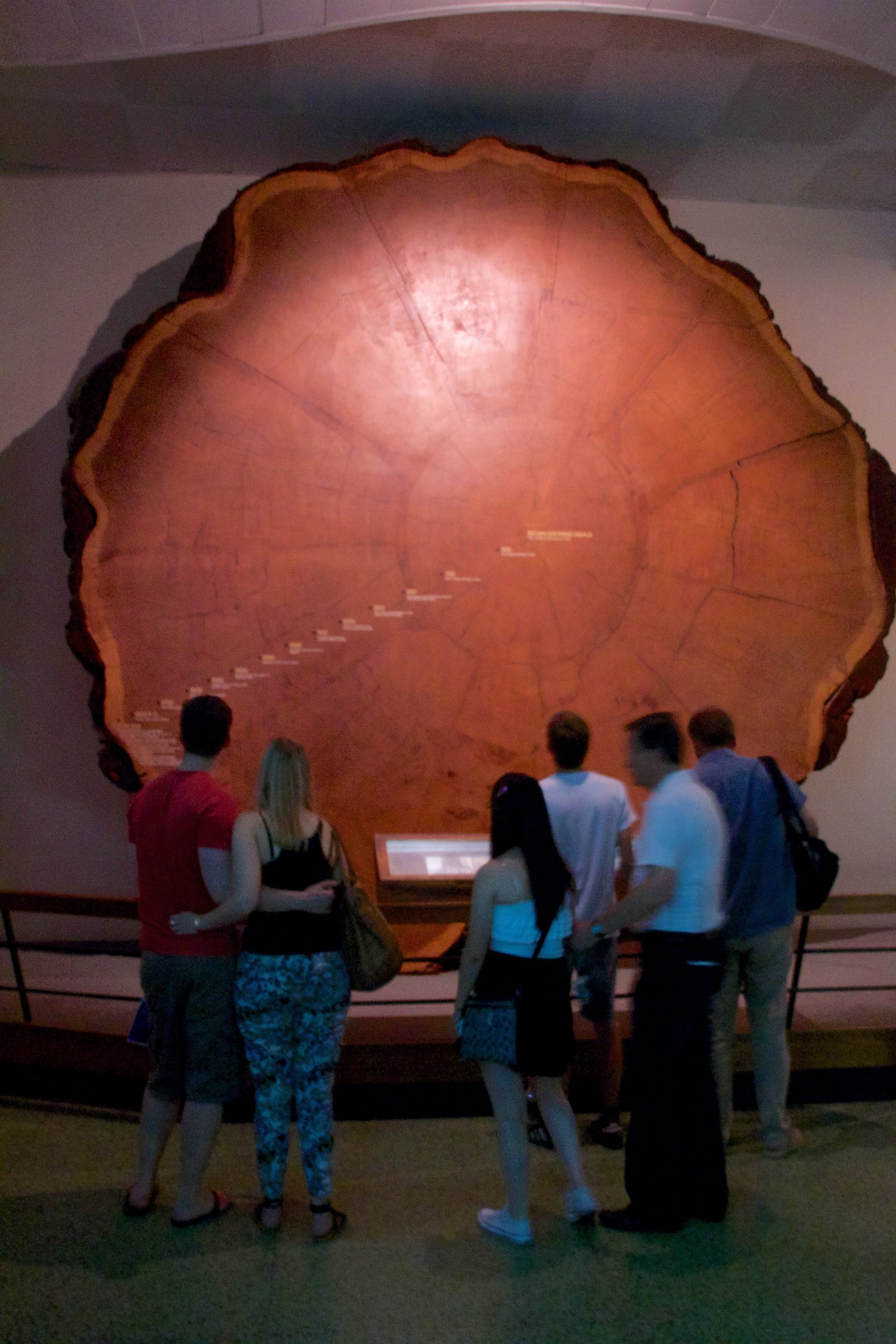
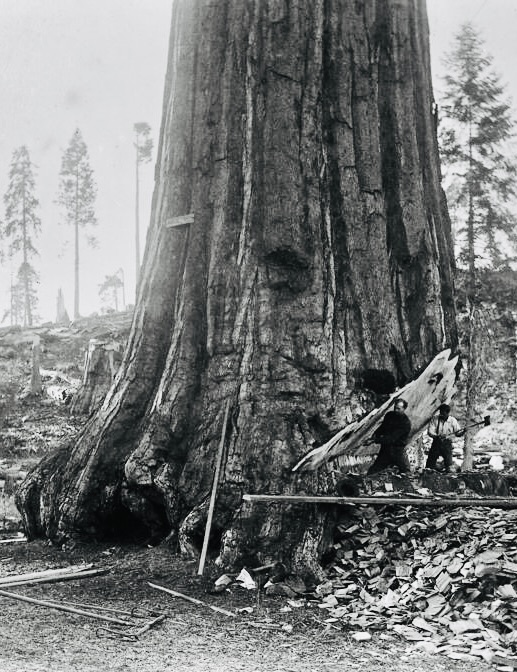
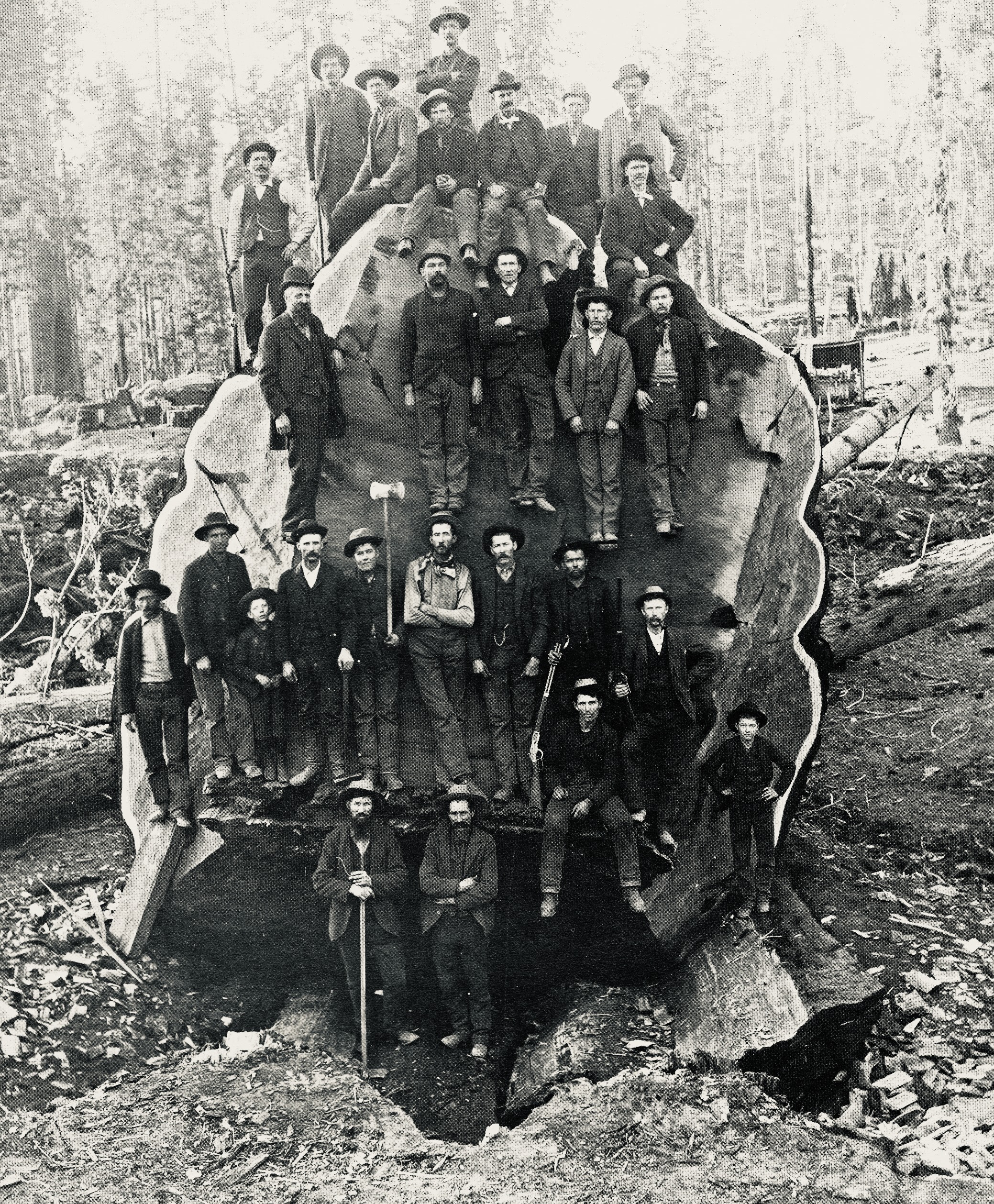
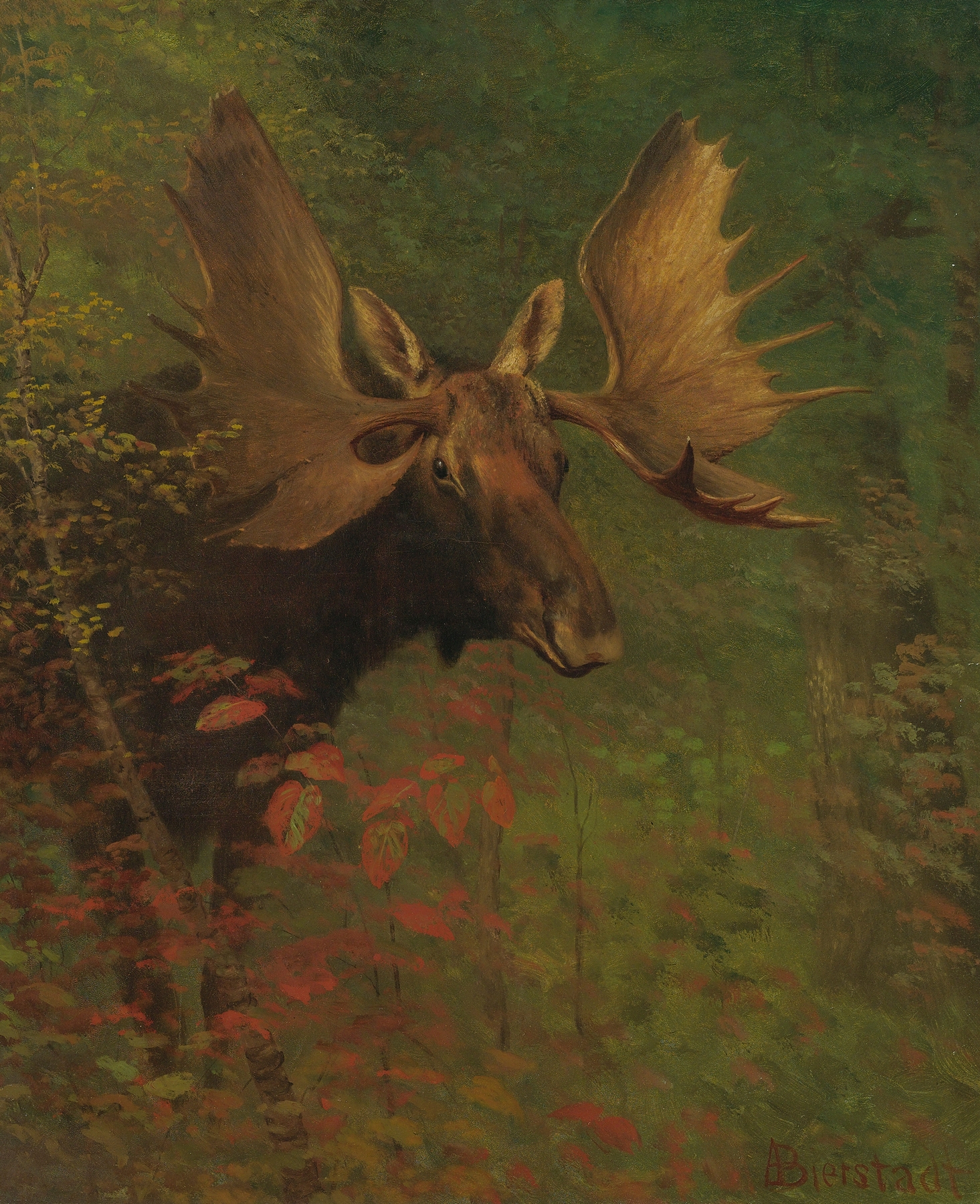
A photo of the felling of the iconic Mark Twain Tree shows two men standing inside the fatal cut their axes had made into the giant stem. The celebration of male ingenuity and strength are also values that inform the European tradition in art of representing wild animals as hunting trophies. Bierstadt, for example, was a hunter and often included big game animals in his romantic paintings of western wilderness landscapes. He even featured his own antler trophy in a painting of a regal bull moose (Alces alces) that he shot in Maine in c. 1880. It had the eighth largest antlers recorded by the Boone and Crockett Club, of which Bierstadt was a member. These antlers were donated to the New York Zoological Society and later to the Boston Museum of Science. By the end of the century, due to over-hunting and habitat loss, the moose was rapidly becoming extinct.
The moose is associated with national pride due to its large size and above all its antlers which are also the defining scientific character of the animal. These have an unusual broad and palmate (open hand shape) configuration that is scored for trophy status according to exact measurements: of the total width (spread) between the two antlers; of the size of each palm; of the mass or circumference of the beam (central shaft) between the burr (base) and the palm; and of the number and size of the tines or points (spikes on the palm). Mounted moose specimens in habitat dioramas often have trophy sized racks weighing up to 80 pounds. A similar iconography occurs in the earliest illustrations of the moose and continues in the 20th century emergence of wildlife art.
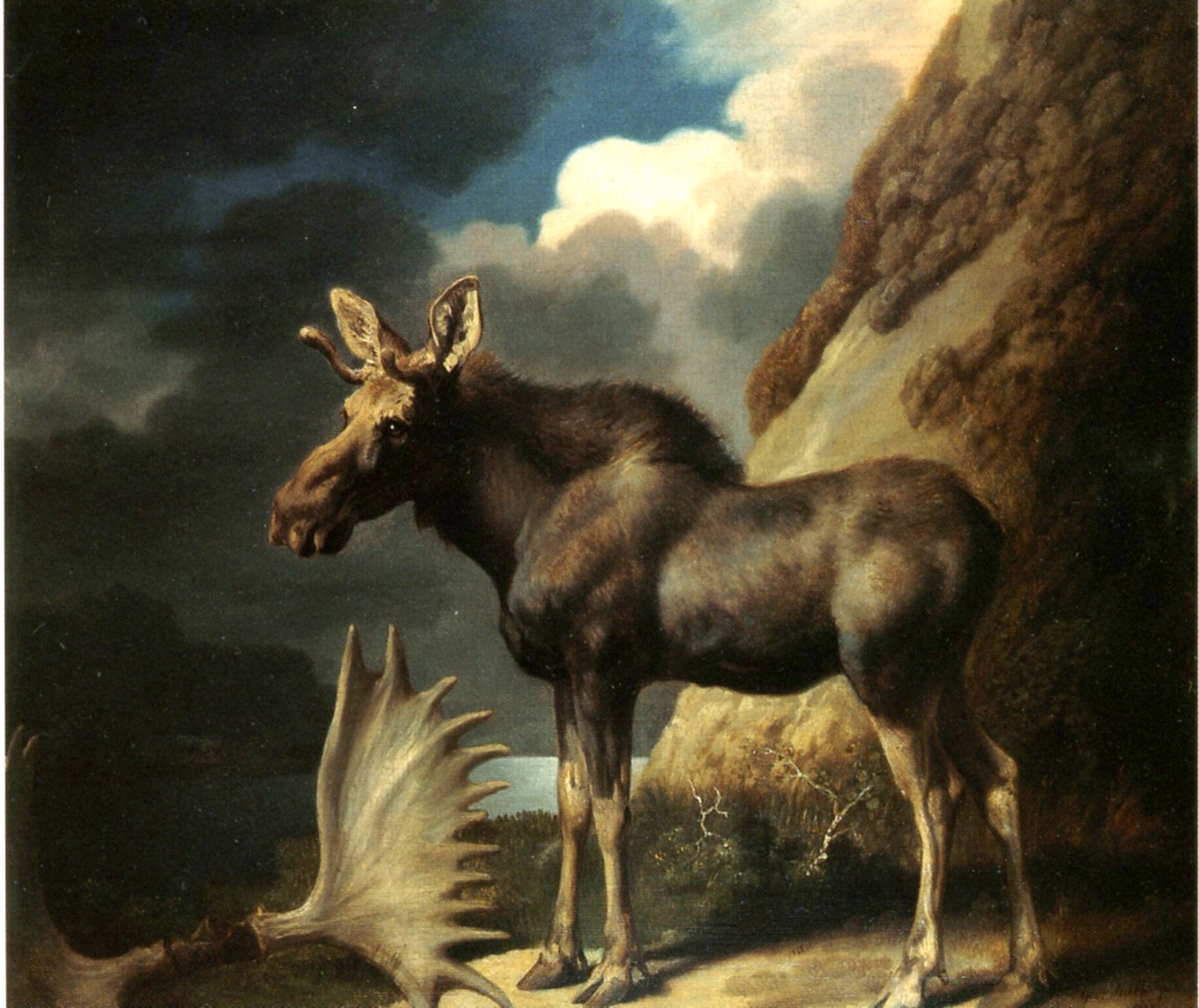
18th century European depictions of the North American moose were both scientific and subjective and contributed to the Linnaean discourse on species as well as to the debate on the extinction of this mysterious creature. In Nordic countries, where the moose had not been exterminated, its representation in art and science took on a different historical perspective. One of the earliest depictions of the moose was by the English artist George Stubbs (1724 – 1806), who specialized in horses. In 1770 he was commissioned by the anatomist William Hunter to paint a young live bull moose from direct observation. Sent from the Govenor of Quebec to the Duke of Richmond, this was the first animal to arrive in England from the New World. Too young to have antlers, Stubbs included the antlers from another mature moose in his painting. Clearly the trophy value of the antlers was of utmost importance to his royal patron. Stubbs’ painting was engraved as a scientific illustration and published in Thomas Pennant’s Arctic Zoology (1784) despite its imaginative flourishes such as the generic romantic landscape, the pronounced equine musculature of the moose and his prominent eyelashes.
Part of the confusion surrounding the North American “Moose Deer” was caused by Carl von Linné (Linnaeus), who had observed the European moose (“älg” in Swedish) in the forests around his home in Uppsala. In his classification, however, he placed the species in the large genus Cervus and gave it the specific name alces, derived from the Latin name for the animal. Later zoologists recognized that the moose was sufficiently distinct, particularly in its palmate antlers, to warrant its own genus, Alces, giving the species its present name, Alces alces. The name “moose,” derived from an Algonquian language and adopted by European settlers in North America, endured as the common name, while “elk,” the English name for the moose, came to designate a different species in the New World. Thus, this history of Linnaean nomenclature illustrates both the fallibility and Eurocentrism of classification. Just as the history of science aspires to objectivity yet is shaped by human concepts, habitat dioramas are not neutral reproductions of nature but carefully composed works of art that embody both natural history and cultural narratives.
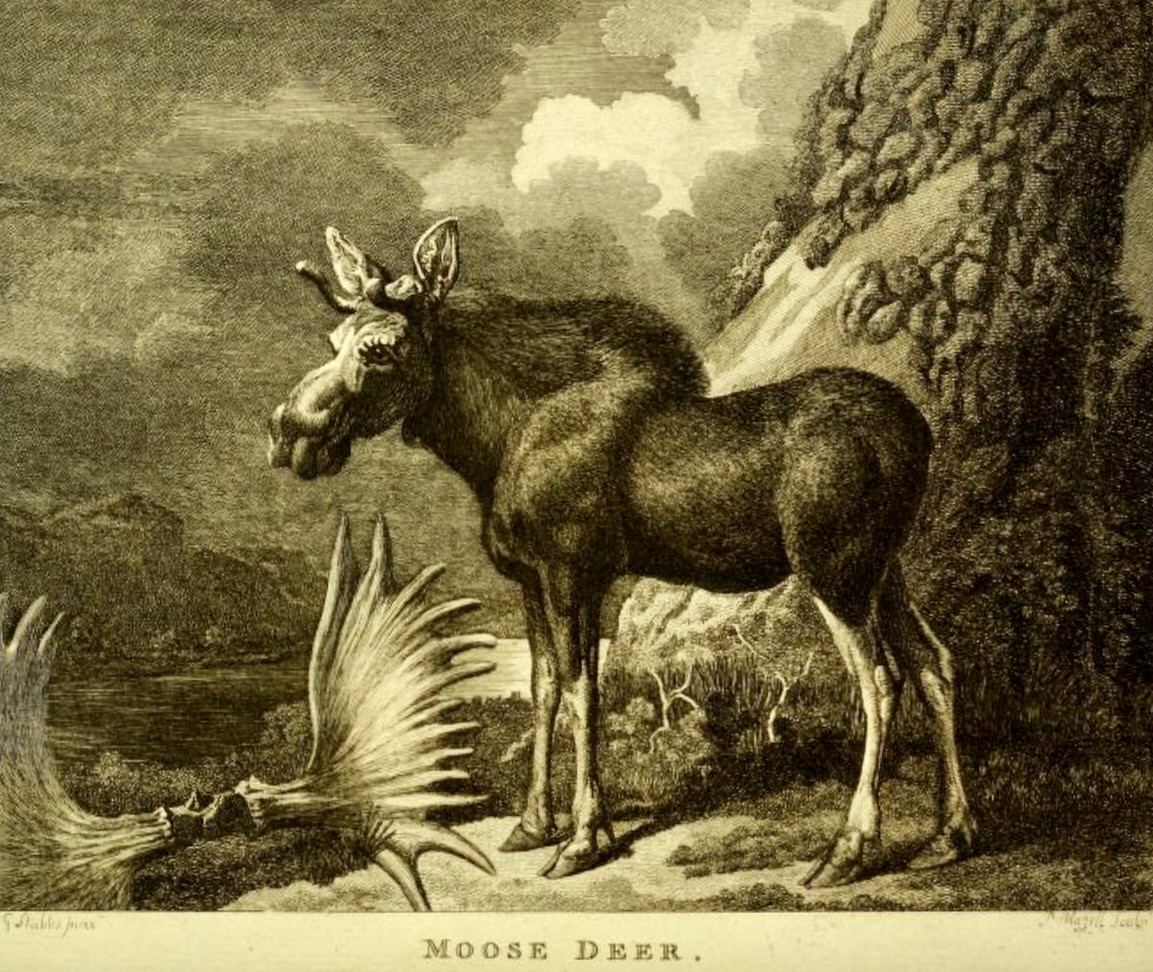
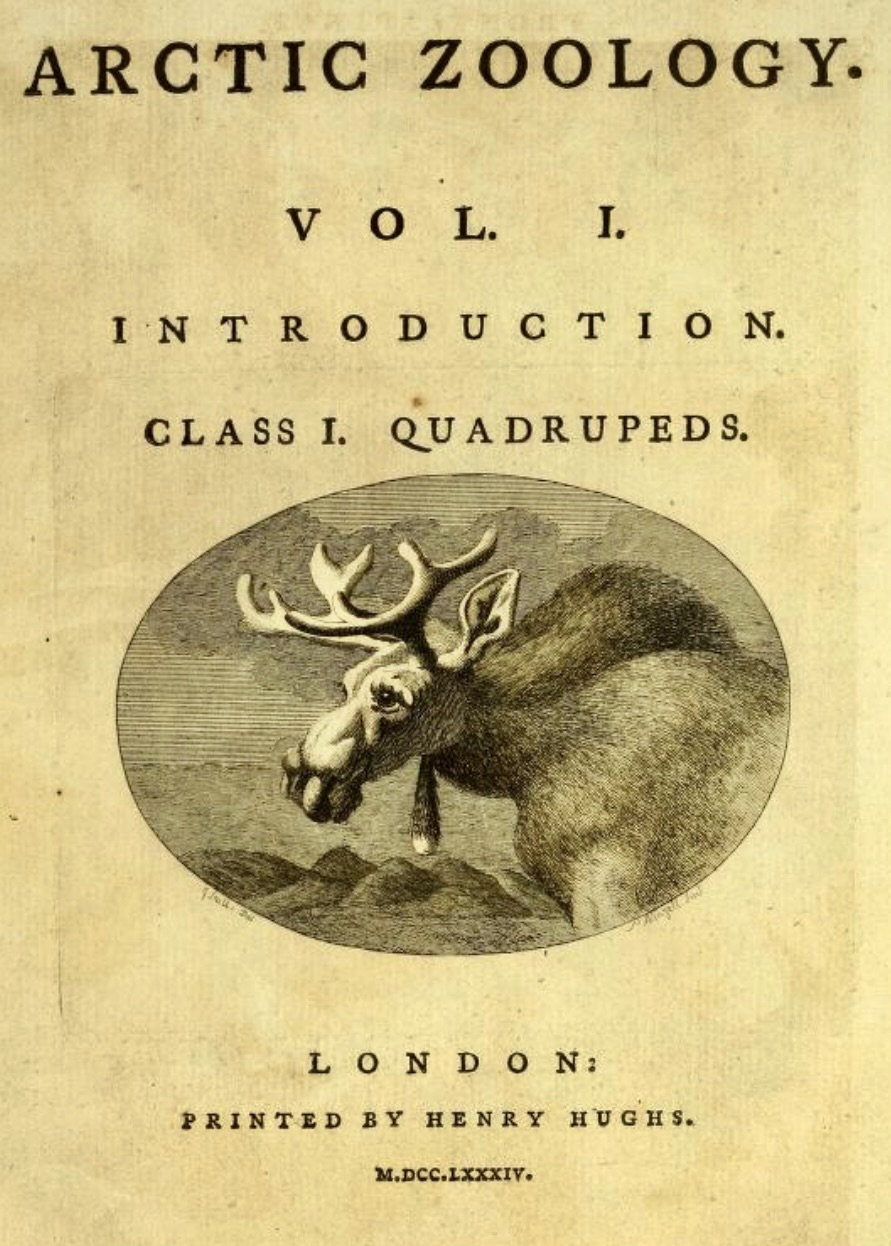
The “Moose Deer” engraving in Arctic Zoology also appeared as a vignette on the frontispiece of the two volume work. Despite the importance of this early contribution to scientific nomenclature, the moose was incorrectly identified as a deer. The vignette was also not a direct copy of George Stubbs’s original moose painting. Rather, the moose head was embellished with a set of trophy antlers and a prominently dangling dewlap, or bell. Like the antlers, this morphological feature serves a sexual display function during the rut, but what was communicated in the vignette was not so much scientific information as the entrenched medieval iconography of the hunt and the display of game animals.
Stubbs’s original moose painting was commissioned in part as scientific evidence to challenge the theory of the distinguished French naturalist Comte de Buffon, who argued that the native North American moose was an inferior derivative of the prehistoric Irish elk. The elk’s enormous antlers, displayed in numerous European natural history collections, had become symbols of status and superiority.
Buffon’s theory that “the animals common both to the old and New World are smaller in the latter” was also challenged by the American polymath Thomas Jefferson. He arranged for a trophy sized bull moose from the forests of New Hampshire to be killed and had its skin, skeleton, and antlers sent to Buffon. When the various parts of the moose arrived in Paris in 1787, they were so badly degraded, apart from the antlers, that it was impossible to reconstruct a taxidermic specimen. Nevertheless, Jefferson presented the animal as evidence of the “stature and majesty of American quadrupeds.”
Even today, the tenth edition of Linnaeus’s Systema Naturae, published in 1758, is considered foundational to modern zoological nomenclature. In the early 18th century, natural history increasingly became a means by which European states categorized and represented their territorial resources. Collecting and naming plants, animals, and minerals was therefore not only a scientific quest but also part of a national agenda. Sweden’s systematic study of its natural resources strengthened the nation, and Linnaeus’s work contributed to this effort.
Systema Naturae helped prepare the way for the systematic cataloguing of Swedish flora and fauna, the identification of economically useful plants, and the scientific documentation of the nation’s natural wealth. Linnaeus’s collecting travels throughout Sweden gave the country’s landscapes and natural resources a national identity that became part of the Swedish tradition of natural history that flourished in the 19th century.
The illustrator of the frontispiece for the 1760 edition of Systema Naturae was the German Gottfried August Gründler (1710 – 1775), who served as curator of the Naturalienkabinett in Halle, one of the significant scientific institutions of the period. Gründler worked within a natural history tradition informed by physico theology, which sought to demonstrate divine design through the study of the natural world.
The iconography of the frontispiece embodies this view while also incorporating established symbolism associated with antlers. The branching antlers of the two stags positioned at the base of Diana, or Mother Nature (Natura Multimammia), reinforce the Linnaean ordering of nature through the visual differentiation of their multiple tines or points. These are not simply taxonomic features but also carry the associations of heraldry, aristocratic status, and the right to hunt. The reclining pose of the stags further evokes the conventional presentation of the hunted animal as a royal and noble trophy.
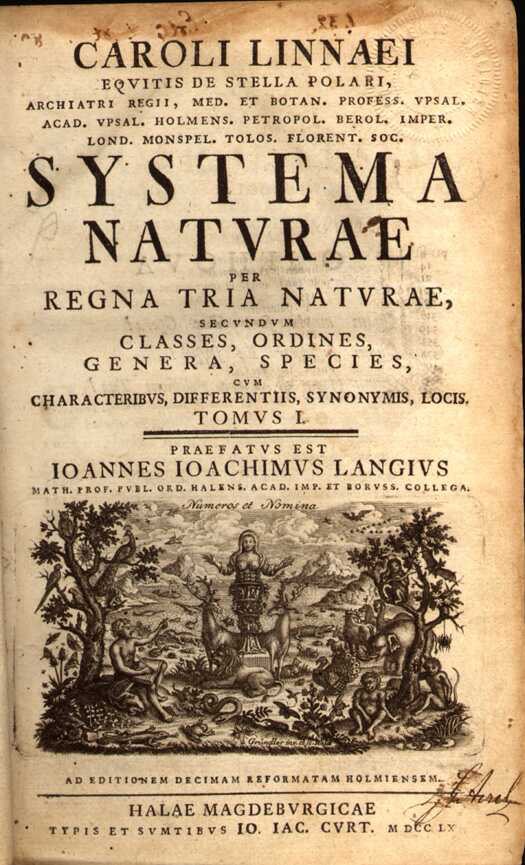
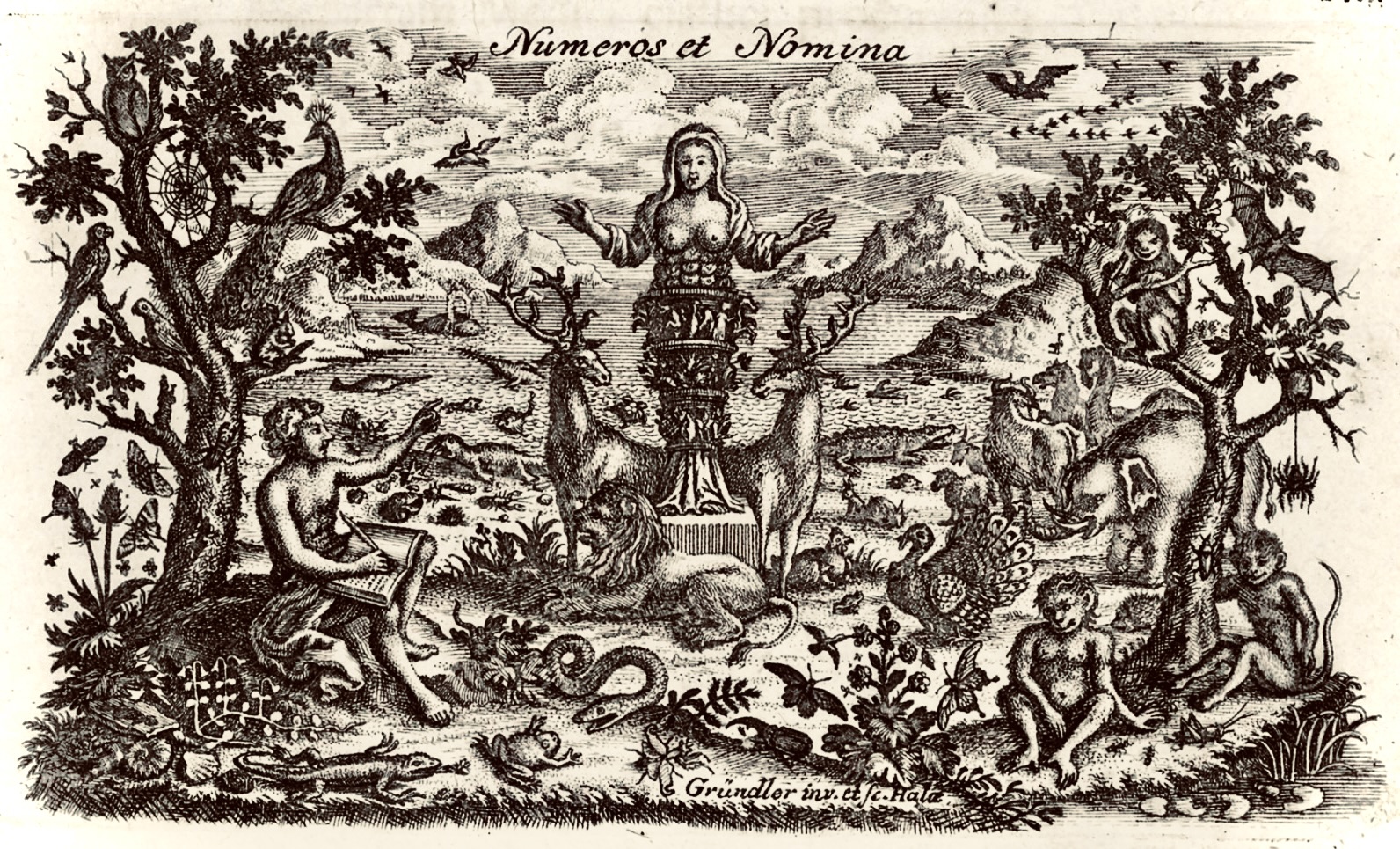
The landscape setting in Gründler’s engraving recedes into the distance and includes mountains, a body of water, different types of vegetation, and various animals drawn from the specimens in his Naturalienkabinett. It reveals an ambition to survey the natural world within a single conceptual framework and anticipates, in a limited sense, the later Humboldtian vision of nature, although its emphasis remains on classification rather than ecological relationships and habitat. The scene is arranged like a curated stage or theatrical tableau, framed by two trees that function as a natural proscenium. In essence, the engraving is a visual manifesto of Linnaean natural history, portraying plants, animals, and minerals as an ordered system that humans can name, classify, and comprehend, and as such it can be seen as a precursor to the ecological holism later embodied in the habitat diorama.
The Linnaean natural history tradition in Sweden encouraged an early and strong patriotic identification with Nordic flora and fauna. Sweden’s biological museums were pioneered by the hunter naturalist and conservator Gustaf Kolthoff (1845 – 1923), who sought to educate the public about native wildlife by displaying mounted specimens in illusionistic natural settings. When the Biologiska museet opened in Stockholm in 1893, it was among the earliest examples of a natural history museum organized around large scale habitat tableaux. Still in existence, the museum features a bull moose with an impressive set of antlers. As in North America, the moose became a species associated with national identity in Sweden and was celebrated by hunters as a noble big game trophy. Other animals represented in the naturalistic landscape tableaux include a bear, two lynxes, foxes, hares, wolves, reindeer, and numerous birds, including sea eagles, owls, falcons, puffins, grouse, swans, cranes, storks, geese, and ducks.
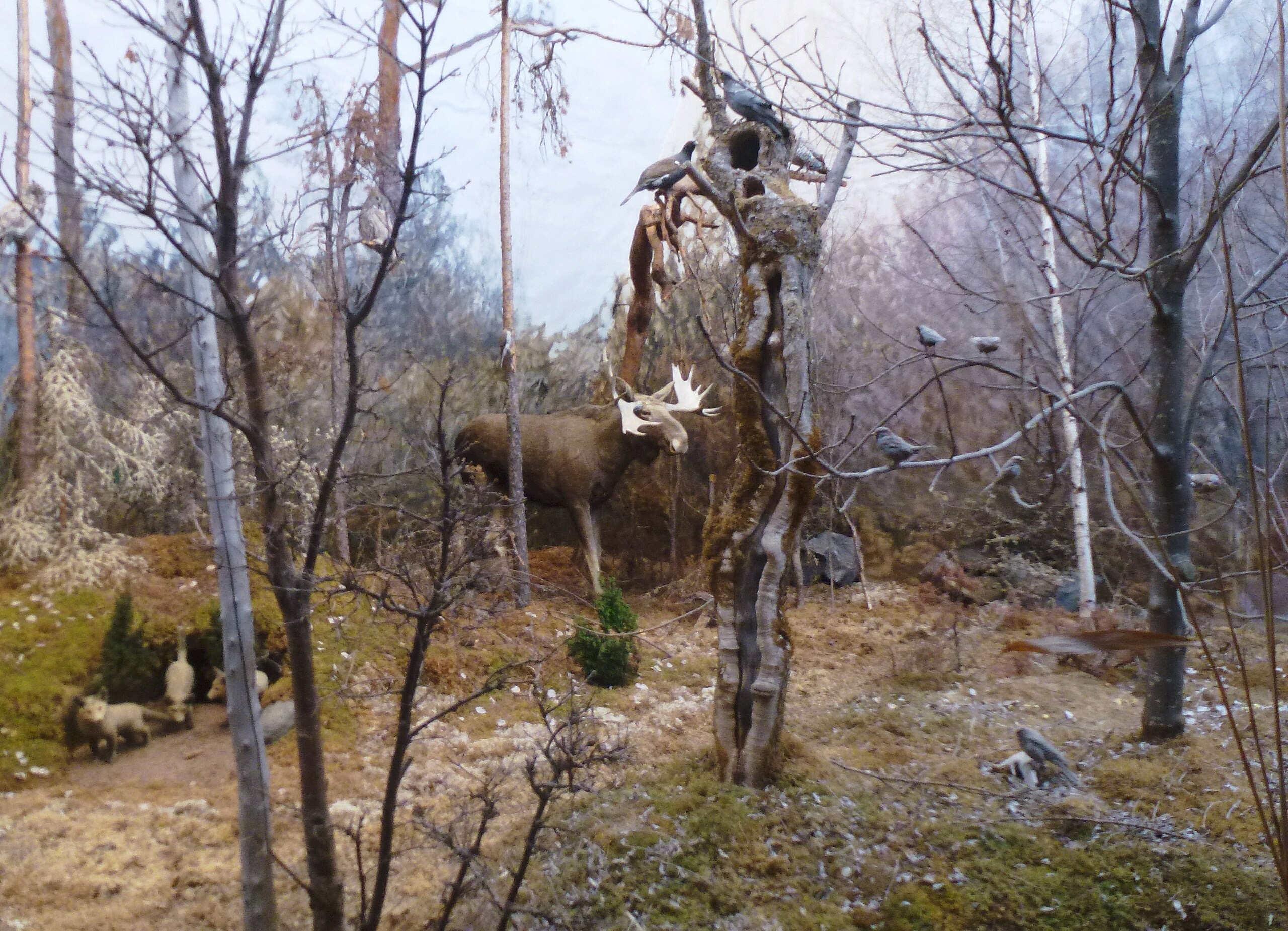
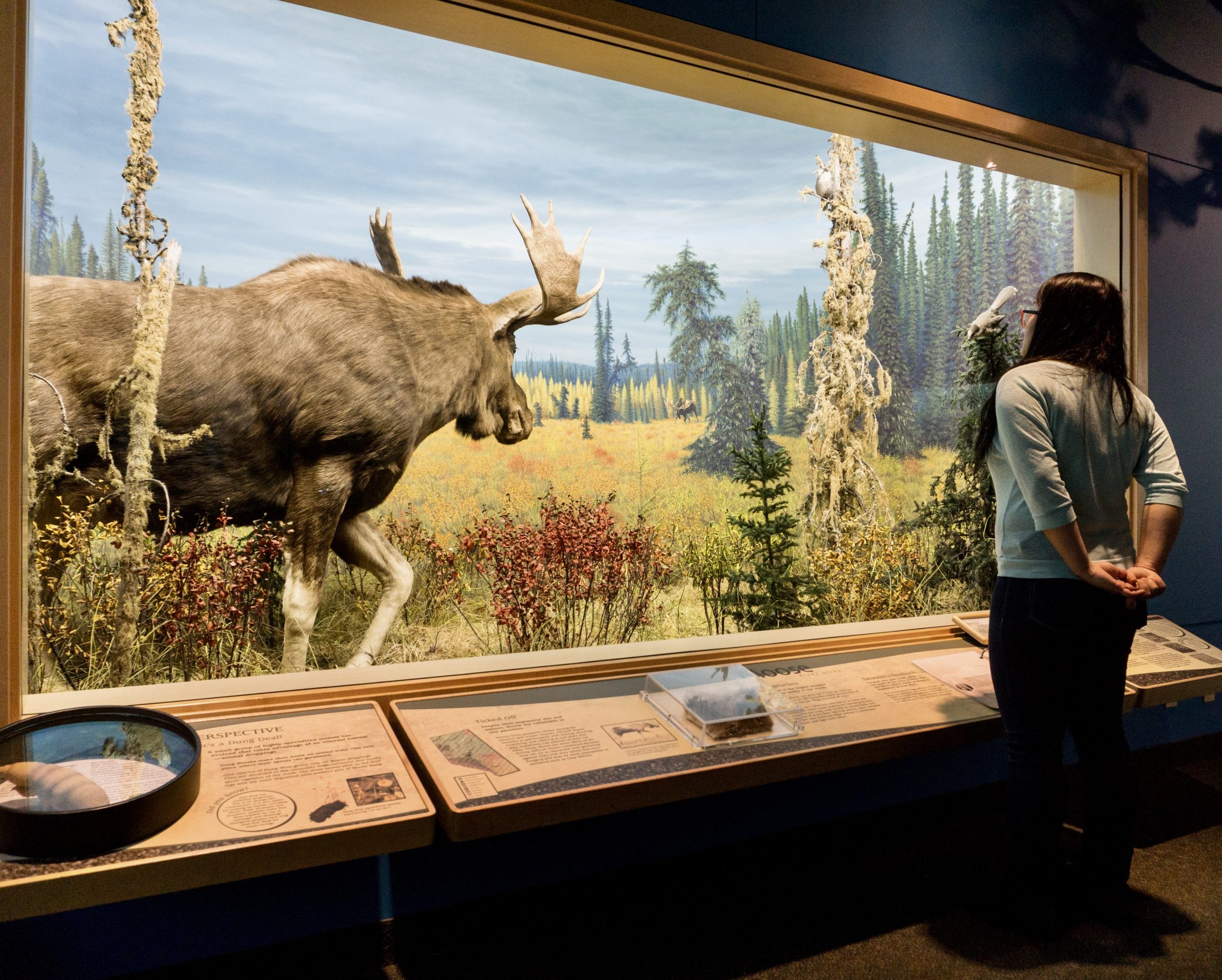
In Canada, habitat dioramas also frequently display moose specimens, such as the one at the Royal Alberta Museum, with a boreal forest background painted by the professional Canadian wildlife artist Clarence Tillenius (1913 – 2012).
Habitat dioramas appear to present nature as objective fact, yet they are historical constructions shaped by the priorities of the periods in which they were produced. The zoological specimens within them, particularly large game mammals such as moose, often reflect an iconography inherited from a masculine hunting culture in which antlers and other trophy features carried particular significance.
As a result, displays that ostensibly reconstruct ecological relationships may foreground the animal as a specimen of size, rarity, or exceptional antler spread rather than as part of a living system. Interpreting these dioramas historically therefore reveals how scientific display, museum practice, and the aesthetics of the trophy tradition have combined to shape what viewers understand as “nature.”